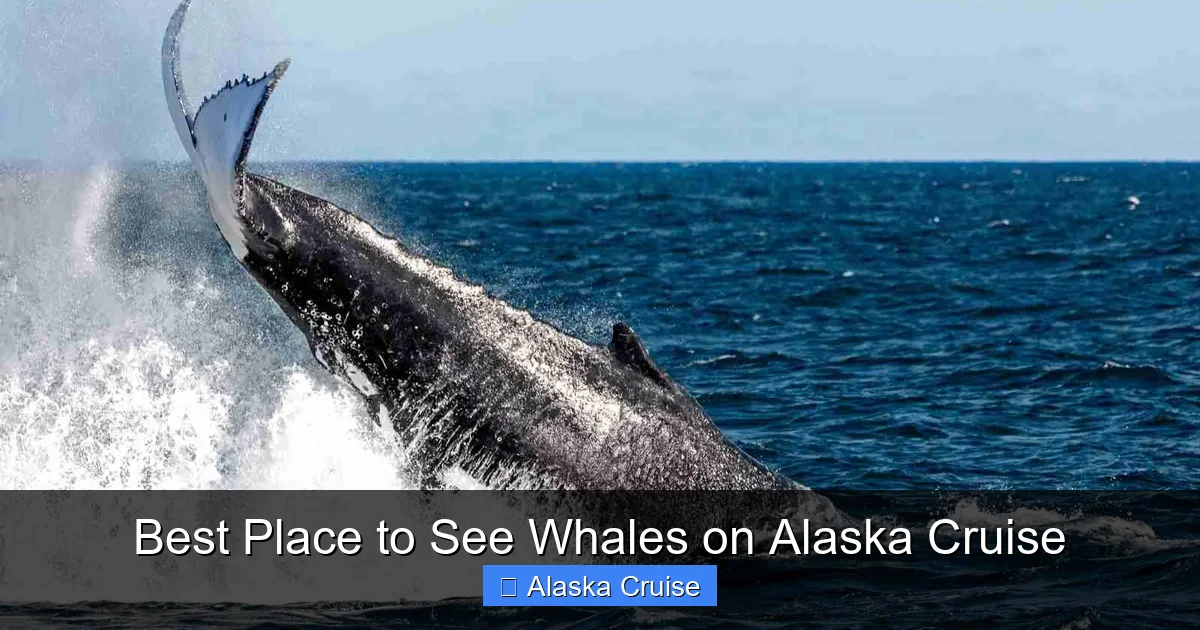
If you’re dreaming of close encounters with majestic whales, an Alaska cruise is your golden ticket. The best place to see whales on Alaska cruise routes is Glacier Bay National Park and the waters around Icy Strait Point, where humpbacks, orcas, and gray whales gather in stunning numbers. With expert guides and pristine wilderness, these locations offer unforgettable wildlife experiences.
Imagine standing on the deck of a cruise ship, the crisp Alaskan breeze brushing your face, the scent of salt and pine in the air. Suddenly, a spout of water shoots into the sky, followed by the powerful arc of a humpback whale breaching just a few hundred yards away. This isn’t a scene from a nature documentary—it’s a real-life moment you can experience on an Alaska cruise. For wildlife lovers and adventure seekers alike, seeing whales in their natural habitat is a once-in-a-lifetime thrill. And when it comes to the best place to see whales on Alaska cruise itineraries, a few standout locations consistently deliver unforgettable encounters.
Alaska’s coastal waters are among the richest marine ecosystems on the planet. Fed by cold, nutrient-dense currents from the Pacific Ocean, these waters support massive populations of krill, herring, and other small fish—whales’ favorite meals. From May to September, several species of whales migrate to Alaskan waters to feed, breed, and raise their young. This seasonal abundance makes Alaska one of the world’s premier whale-watching destinations. But not all cruise routes are created equal. Some ports and natural parks offer far better whale sightings than others, and knowing where to go can make all the difference in your experience.
In this guide, we’ll explore the best places to see whales on Alaska cruise, highlight the top species you’re likely to encounter, and share insider tips to maximize your chances of a close encounter. Whether you’re a first-time cruiser or a seasoned traveler, you’ll come away with everything you need to plan a whale-watching adventure you’ll never forget.
Key Takeaways
- Glacier Bay National Park is a top whale hotspot: This UNESCO World Heritage site offers calm waters and abundant marine life, making it ideal for spotting humpback whales.
- Icy Strait Point delivers front-row whale action: Located near Hoonah, this area is known for high whale activity, especially during summer months.
- Humpback whales are the most commonly seen species: These acrobatic giants are frequently spotted breaching, tail-slapping, and feeding in Alaskan waters.
- Timing matters—summer is peak whale season: June through August offers the best chances to see whales due to warmer waters and abundant food sources.
- Choose a cruise with expert naturalists: Ships with onboard marine biologists enhance your experience with real-time insights and commentary.
- Binoculars and patience improve sightings: Bring your own binoculars and stay alert—whales can appear suddenly, even near the ship.
- Respect wildlife viewing guidelines: Always follow distance rules to protect whales and ensure safe, ethical encounters.
📑 Table of Contents
Why Alaska Is a Whale-Watching Paradise
Alaska isn’t just a beautiful destination—it’s a marine wildlife mecca. The state’s long, rugged coastline, dotted with fjords, glaciers, and protected bays, creates the perfect environment for whales to thrive. The cold, oxygen-rich waters of the North Pacific support a complex food web that begins with plankton and ends with some of the largest animals on Earth. This abundance of life draws whales from thousands of miles away, especially during the summer months when daylight stretches up to 19 hours a day.
One of the key reasons Alaska is such a hotspot for whale watching is its location along major migratory routes. Humpback whales, for example, travel over 3,000 miles from Hawaii and Mexico to feed in Alaskan waters each summer. Gray whales migrate even farther, journeying from Baja California to the Bering Sea. These long-distance travelers rely on Alaska’s rich feeding grounds to build up fat reserves before returning south for the winter.
Another factor that makes Alaska ideal for whale sightings is the presence of protected marine areas. National parks like Glacier Bay and marine sanctuaries like the Alaska Maritime National Wildlife Refuge help preserve critical habitats and limit human disturbance. These conservation efforts ensure that whale populations remain healthy and accessible for responsible wildlife viewing.
Cruise ships also play a role in enhancing the whale-watching experience. Many Alaska cruise lines partner with marine biologists and naturalists who provide live commentary, identify species, and explain whale behavior. Some ships even use hydrophones to listen to whale songs beneath the surface—adding an auditory dimension to the visual spectacle.
The Role of Seasonal Migration
Whale sightings in Alaska are highly seasonal. The peak whale-watching season runs from late May through September, with the highest concentrations typically seen in July and August. During these months, the waters are warm enough to support massive schools of fish, and the long daylight hours give whales plenty of time to feed.
Humpback whales arrive in Alaska in late spring, often appearing in groups called “super pods” during feeding frenzies. These gatherings can include dozens of whales working together to corral fish using bubble nets—a coordinated hunting technique that’s both fascinating and awe-inspiring to witness.
Gray whales, on the other hand, are more commonly seen in the spring and fall during their migration. While they don’t stay in Alaska as long as humpbacks, their predictable travel patterns make them easier to spot along certain coastal routes.
Orcas, or killer whales, are present year-round in some areas, but they’re most frequently seen in summer when they follow salmon runs. Minke and fin whales also make appearances, though they’re less common and often more elusive.
Top Whale-Watching Destinations on Alaska Cruises

Visual guide about Best Place to See Whales on Alaska Cruise
Image source: ultimatewhalewatch.com
Not all Alaska cruise itineraries are equal when it comes to whale sightings. Some routes pass through remote, untouched waters where whales gather in large numbers, while others stick to more developed ports with fewer wildlife encounters. To help you choose the best cruise for whale watching, here are the top destinations where you’re most likely to spot these magnificent creatures.
Glacier Bay National Park
Glacier Bay National Park is widely regarded as the best place to see whales on Alaska cruise routes. This UNESCO World Heritage site, located in the heart of the Inside Passage, is a protected wilderness area spanning over 3.3 million acres. Its deep, glacially carved fjords and nutrient-rich waters create an ideal feeding ground for humpback whales.
Cruise ships typically spend a full day navigating Glacier Bay, moving slowly through the park’s calm waters while park rangers come aboard to provide educational commentary. This is one of the few places where you can see whales feeding just a few hundred yards from the ship. Humpbacks are the most common sight, often seen lunge-feeding near the surface or slapping their tails in playful displays.
One of the most memorable experiences in Glacier Bay is hearing the haunting songs of humpback whales through a hydrophone. Many cruise ships are equipped with underwater microphones that allow passengers to listen to these vocalizations in real time—a truly magical moment.
The park’s strict visitor limits and conservation policies help preserve the natural environment, ensuring that whale populations remain healthy and undisturbed. Because of this, sightings in Glacier Bay are often more intimate and less crowded than in other locations.
Icy Strait Point
Located near the town of Hoonah on Chichagof Island, Icy Strait Point is another top contender for the best place to see whales on Alaska cruise. This area is famous for its high concentration of humpback whales, with some estimates suggesting that over 200 individuals visit the strait each summer.
What makes Icy Strait Point special is its combination of accessibility and wildlife density. Unlike more remote areas, this port is equipped with whale-watching tours that launch directly from the dock. Many cruise passengers opt for a zodiac or kayak tour that takes them into the heart of the strait, where they can observe whales up close in their natural environment.
One of the most popular activities at Icy Strait Point is the “Whale Watch & Zipline Adventure,” which combines a thrilling zip-line ride with a guided boat tour. But even if you skip the zipline, the whale-watching boats are well-equipped with knowledgeable guides who know exactly where to find the action.
Humpbacks in Icy Strait are known for their acrobatics. It’s not uncommon to see them breach—launching their entire bodies out of the water—or slap their pectoral fins on the surface. These behaviors are often signs of communication, play, or feeding, and they make for unforgettable photo opportunities.
Frederick Sound and Stephens Passage
Frederick Sound, located between Admiralty Island and the mainland, is another prime whale-watching area. This deep, open body of water is a major migration corridor for humpback whales traveling between feeding grounds in Glacier Bay and the open Pacific.
Cruise ships passing through Frederick Sound often slow down or stop to allow passengers to scan the horizon for spouts and dorsal fins. The sound’s wide expanse means whales can be seen from greater distances, but binoculars are essential for spotting them.
Stephens Passage, which connects Frederick Sound to the Inside Passage, is equally rich in marine life. This narrow channel funnels whales and other marine mammals into a concentrated area, increasing the odds of sightings. Orcas are occasionally spotted here, especially in late summer when they follow salmon runs.
Both Frederick Sound and Stephens Passage are less developed than ports like Juneau or Ketchikan, which means fewer crowds and more natural encounters. If your cruise itinerary includes a slow transit through these waters, keep your camera ready—you never know when a whale might appear.
Ketchikan and the Tongass National Forest
Ketchikan, often called the “Salmon Capital of the World,” is another port where whale sightings are common. Located in the heart of the Tongass National Forest—the largest national forest in the U.S.—Ketchikan offers a mix of cultural experiences and wildlife viewing.
While Ketchikan itself is more developed, the surrounding waters are rich in marine life. Humpback whales are frequently seen feeding near the mouth of the Tongass Narrows, especially during the summer salmon runs. Many cruise passengers book local whale-watching tours that depart from the harbor and head into the protected inlets nearby.
One of the best ways to see whales near Ketchikan is on a small-group boat tour. These excursions often last 2–3 hours and take you into areas where larger cruise ships can’t go. Guides use hydrophones and local knowledge to locate whales, and many tours guarantee a sighting—or your next trip is free.
Juneau and Auke Bay
Juneau, Alaska’s capital city, is another popular stop on Alaska cruise itineraries. While the city itself is bustling, the nearby waters of Auke Bay offer excellent whale-watching opportunities.
Auke Bay is a protected inlet just a short drive from downtown Juneau. It’s a known feeding ground for humpback whales, which are often seen lunge-feeding near the surface. Many cruise passengers take a half-day whale-watching tour from Juneau, which includes transportation to the bay and a guided boat ride.
One of the highlights of whale watching in Juneau is the chance to see “bubble-net feeding,” a cooperative hunting technique used by humpbacks. In this behavior, a group of whales swims in a circle beneath a school of fish, blowing bubbles to create a “net” that traps their prey. Then, they surge upward with mouths open, swallowing hundreds of gallons of water and fish in one gulp.
Types of Whales You Can See in Alaska
Alaska is home to several species of whales, each with unique behaviors and migration patterns. While humpbacks are the most commonly seen, you may also spot orcas, gray whales, minke whales, and even the occasional fin whale. Here’s a closer look at the whales you’re most likely to encounter on an Alaska cruise.
Humpback Whales
Humpback whales are the stars of Alaska’s whale-watching scene. Known for their long pectoral fins, knobby heads, and acrobatic displays, these gentle giants can grow up to 50 feet long and weigh as much as 40 tons.
Humpbacks are highly social and often travel in small groups. They’re famous for their complex songs, which can last for hours and are believed to play a role in mating and communication. During feeding season, they use a variety of techniques to catch fish, including bubble-net feeding, lunge feeding, and tail slapping.
One of the most thrilling sights in Alaska is a humpback breaching—launching its entire body out of the water and crashing back down with a thunderous splash. While the exact reason for breaching is still debated, it may be a form of communication, a way to dislodge parasites, or simply play.
Orcas (Killer Whales)
Orcas, or killer whales, are apex predators and one of the most intelligent marine mammals. They’re actually the largest members of the dolphin family and are known for their distinctive black-and-white coloring and tall dorsal fins.
In Alaska, orcas are divided into two main types: resident and transient. Resident orcas feed primarily on fish, especially salmon, and are often seen in family pods. Transient orcas, on the other hand, hunt marine mammals like seals and sea lions and are more solitary.
Orcas are most commonly spotted in the waters around Juneau, Glacier Bay, and the Inside Passage. They’re fast swimmers and can be difficult to track, but when you do see them, it’s a breathtaking experience. Their coordinated hunting strategies and vocalizations make them fascinating to observe.
Gray Whales
Gray whales are long-distance migrators, traveling up to 12,000 miles round-trip between their breeding grounds in Baja California and their feeding grounds in the Bering and Chukchi Seas. During their migration, they pass through Alaskan waters in the spring and fall.
Unlike humpbacks, gray whales are bottom feeders. They dive to the ocean floor and suck up sediment, filtering out amphipods and other small crustaceans through their baleen. This behavior often leaves visible trails of mud on the surface, making them easier to spot.
Gray whales are generally more solitary than humpbacks and are less likely to breach. However, they’re known for being curious and may approach boats, especially in areas like Icy Strait Point.
Minke and Fin Whales
Minke whales are the smallest baleen whales in Alaska, typically reaching lengths of 25–30 feet. They’re fast swimmers and often travel alone or in small groups. While they’re less commonly seen than humpbacks, they do appear in Alaskan waters during the summer.
Fin whales, the second-largest whale species after the blue whale, are occasionally spotted in deeper offshore waters. They’re sleek and fast, with a distinctive asymmetrical color pattern on their lower jaw. Sightings are rare, but when they do occur, they’re a special treat for whale watchers.
Tips for Maximizing Your Whale-Watching Experience
Seeing whales in the wild is thrilling, but it requires patience, preparation, and a bit of luck. Here are some practical tips to help you make the most of your whale-watching adventure on an Alaska cruise.
Choose the Right Cruise Line and Itinerary
Not all Alaska cruises are created equal when it comes to whale watching. Look for itineraries that spend time in Glacier Bay, Icy Strait Point, and Frederick Sound—these are the top whale hotspots. Smaller ships and expedition-style cruises often offer better wildlife viewing because they can navigate closer to shore and spend more time in key areas.
Cruise lines like UnCruise Adventures, Lindblad Expeditions, and Princess Cruises are known for their focus on wildlife and natural history. Many of these ships carry naturalists and marine biologists who provide expert commentary and help passengers spot whales.
Bring the Right Gear
A good pair of binoculars is essential for whale watching. Look for binoculars with 7x or 8x magnification and a wide field of view. Waterproof models are ideal, especially in Alaska’s damp climate.
A camera with a zoom lens will help you capture close-up shots, but remember that whales can appear suddenly—so keep your camera ready at all times. A waterproof phone case or dry bag can protect your electronics from sea spray.
Dress in layers and wear waterproof clothing. Even on sunny days, the ocean breeze can be chilly, especially when the ship is moving slowly to watch whales.
Be Patient and Stay Alert
Whale sightings can’t be guaranteed, but your chances improve if you stay alert and scan the horizon regularly. Whales often surface briefly before diving for long periods, so it’s important to keep watching even after a sighting.
Sit or stand on the windward side of the ship—this is usually where the best views are. Avoid crowded areas and find a quiet spot where you can focus on the water.
Follow Wildlife Viewing Guidelines
Responsible whale watching is essential for protecting these amazing animals. Always follow the guidelines set by the National Oceanic and Atmospheric Administration (NOAA):
– Stay at least 100 yards away from whales.
– Avoid sudden movements or loud noises.
– Do not feed or touch whales.
– Let whales approach you—don’t chase them.
Most cruise ships follow these rules automatically, but it’s good to be aware of them, especially if you take a smaller tour boat.
Conclusion
An Alaska cruise offers one of the most spectacular opportunities on Earth to see whales in their natural habitat. From the icy fjords of Glacier Bay to the bustling waters of Icy Strait Point, the best place to see whales on Alaska cruise routes combines pristine wilderness, abundant marine life, and expert guidance. Whether you’re watching a humpback breach in Frederick Sound or listening to orca calls through a hydrophone, these moments create memories that last a lifetime.
By choosing the right itinerary, bringing the right gear, and respecting wildlife guidelines, you can maximize your chances of a close encounter. And even if you don’t see a whale on your first try, the beauty of Alaska’s coastline, glaciers, and wildlife ensures that every moment at sea is worth it.
So pack your binoculars, charge your camera, and set sail for an adventure you’ll never forget. The whales are waiting.
Frequently Asked Questions
What is the best time of year to see whales on an Alaska cruise?
The best time to see whales on an Alaska cruise is from June through August. During these months, the waters are warm, food is abundant, and whale activity peaks. Humpbacks, orcas, and gray whales are most commonly seen during this period.
Can you see whales from the cruise ship itself?
Yes, many whale sightings occur directly from the cruise ship, especially in areas like Glacier Bay and Frederick Sound. Ships often slow down or stop to allow passengers to watch whales, and naturalists provide live commentary to enhance the experience.
Are there guarantees that I’ll see whales on my cruise?
While no cruise can guarantee whale sightings, the chances are very high in prime locations like Icy Strait Point and Glacier Bay. Many local whale-watching tours offer a “see a whale or your next trip is free” guarantee, but this doesn’t usually apply to main cruise ships.
What should I bring for whale watching on an Alaska cruise?
Bring binoculars, a camera with a zoom lens, waterproof clothing, and layers for changing weather. A dry bag or waterproof case for your electronics is also recommended to protect against sea spray.
Are there ethical concerns with whale watching?
Yes, it’s important to follow responsible wildlife viewing practices. Always maintain a safe distance, avoid disturbing whales, and choose tour operators that follow NOAA guidelines. Most cruise lines prioritize ethical wildlife encounters.
Can children enjoy whale watching on an Alaska cruise?
Absolutely! Whale watching is a family-friendly activity that captivates kids and adults alike. Many cruise ships offer kid-friendly programs and naturalists who explain whale behavior in engaging ways. Just make sure children are supervised and dressed warmly.