The best months to cruise in Alaska are typically June through August, offering the warmest weather, longest daylight hours, and peak wildlife activity. However, shoulder months like May and September provide unique advantages, including lower prices, fewer tourists, and stunning fall colors. Choosing the right time depends on your priorities—whether it’s bear viewing, glacier calving, or simply enjoying mild temperatures.
Key Takeaways
- June to August is peak season: Warmest weather, longest days, and best access to wildlife and ports make these months ideal for first-time cruisers.
- May offers early-season value: Lower prices, fewer crowds, and blooming landscapes, though some excursions may be limited.
- September brings fall beauty: Crisp air, vibrant foliage, and active wildlife, especially bears, with fewer tourists and lower fares.
- Wildlife viewing varies by month: Whale watching peaks in July and August, while bears are most visible in September near salmon runs.
- Glacier viewing is best in summer: Calving activity increases with warmer temperatures, especially in July and August.
- Weather is unpredictable: Pack layers and rain gear regardless of the month—Alaska’s climate can change quickly.
- Book early for summer cruises: Popular itineraries fill fast, so reserve 6–12 months in advance for the best cabins and deals.
📑 Table of Contents
- Introduction: Why Timing Matters for Your Alaska Cruise
- Understanding Alaska’s Cruise Season
- Best Months to Cruise in Alaska: A Month-by-Month Breakdown
- What to Expect: Weather, Wildlife, and Scenery by Month
- Choosing the Right Cruise Based on Your Priorities
- Final Tips for Planning Your Alaska Cruise
- Conclusion: When Is the Best Time for You?
Introduction: Why Timing Matters for Your Alaska Cruise
Imagine standing on the deck of a cruise ship, wrapped in a cozy jacket, as a massive glacier calves into the icy blue water with a thunderous crack. Or picture yourself spotting a humpback whale breaching just yards away, its spray catching the golden light of the midnight sun. These are the moments that make an Alaska cruise unforgettable—and the time of year you go can make all the difference.
Alaska’s cruising season is relatively short, typically running from May to September. Unlike tropical destinations that welcome visitors year-round, Alaska’s climate and natural rhythms create a narrow window of opportunity. The best months to cruise in Alaska depend on what you want to experience: warm weather and long days, abundant wildlife, lower prices, or the quiet beauty of the shoulder season. Whether you’re a first-time cruiser or a seasoned adventurer, understanding the seasonal nuances will help you choose the perfect time for your journey.
Understanding Alaska’s Cruise Season
Alaska’s cruise season is shaped by its subarctic climate, with long, cold winters and short, mild summers. Most major cruise lines—such as Holland America, Princess, Norwegian, and Royal Caribbean—operate between mid-May and late September. This six-month window aligns with the region’s brief period of accessible ports, open hiking trails, and active wildlife.
Why the Season Is Limited
The primary reason for the short season is weather and daylight. From October to April, many coastal towns become inaccessible due to snow, ice, and extreme cold. Ports like Skagway and Ketchikan may shut down, and roads leading to attractions like the Mendenhall Glacier can be impassable. Additionally, daylight hours shrink dramatically in winter, with some areas experiencing near-total darkness.
By May, the snow begins to melt, daylight increases, and cruise ships can safely navigate the Inside Passage and Gulf of Alaska. The season peaks in July and August, when temperatures are warmest and wildlife is most active. By late September, daylight shortens again, and many cruise lines conclude their Alaska operations for the year.
How Cruise Lines Schedule Itineraries
Most Alaska cruises follow similar routes, typically departing from Seattle or Vancouver and visiting ports like Juneau, Ketchikan, Skagway, and Glacier Bay. Some longer itineraries include stops in Seward or Whittier, offering access to Denali National Park via overland tours.
Cruise lines adjust their schedules based on demand and weather. For example, ships may spend more time in Glacier Bay during July when calving is most dramatic. In May and September, some excursions—like dog sledding on glaciers—may be unavailable due to snow conditions. Understanding these variations helps you set realistic expectations for your trip.
Best Months to Cruise in Alaska: A Month-by-Month Breakdown
To help you decide when to go, let’s break down each month of the Alaska cruise season, highlighting the pros and cons of traveling during different times.
May: The Quiet Start to the Season
May marks the beginning of Alaska’s cruise season. While it’s still early, this month offers several advantages for travelers seeking value and tranquility.
Weather: Average temperatures range from 40°F to 60°F (4°C to 15°C). Days are getting longer, with up to 16 hours of daylight by the end of the month. Rain is common, so waterproof gear is essential.
Wildlife: Bears are emerging from hibernation and can be spotted near rivers as salmon begin to run. Whales are less common in May, but early-season sightings of orcas and humpbacks are possible.
Pros: Lower cruise fares, fewer crowds, and blooming wildflowers. Many ports are just reopening, giving you a first look at the season’s beauty.
Cons: Some excursions may be limited or canceled due to lingering snow. Glacier Bay access can be restricted if ice remains in the water.
Tip: If you’re flexible and don’t mind cooler weather, May is a great time to save money and enjoy a more intimate cruise experience.
June: The Start of Peak Season
June is when Alaska truly comes alive. The weather warms up, daylight stretches into the evening, and wildlife becomes increasingly active.
Weather: Temperatures average 50°F to 65°F (10°C to 18°C). Rainfall increases, but sunny days are common. The “midnight sun” effect begins, with nearly 18–20 hours of daylight in northern ports.
Wildlife: Whale watching improves significantly, especially in areas like Icy Strait Point and Frederick Sound. Bears are frequently seen along riverbanks, and bald eagles soar overhead. Sea lions and otters are common along the coast.
Pros: Excellent weather, full access to ports and excursions, and vibrant green landscapes. It’s a great balance of comfort and activity.
Cons: Prices rise compared to May, and popular cabins may sell out quickly. Some travelers find the constant daylight disorienting.
Tip: Book early for June cruises, especially if you want a balcony cabin or specific shore excursions like whale watching or flightseeing.
July: The Heart of Summer
July is the most popular month to cruise in Alaska—and for good reason. It’s the peak of the season, with ideal conditions for sightseeing and outdoor adventures.
Weather: Average temperatures range from 55°F to 70°F (13°C to 21°C). Rain is frequent but usually brief. Days are long, with up to 19 hours of daylight in some areas.
Wildlife: This is prime time for whale watching. Humpbacks, orcas, and even rare blue whales can be spotted. Bears are highly active, especially near salmon streams. Puffins, sea otters, and moose are also commonly seen.
Glacier Viewing: July is one of the best months for glacier calving. Warm temperatures cause glaciers like Hubbard and Mendenhall to shed massive ice chunks into the sea, creating dramatic photo opportunities.
Pros: Warmest weather, full excursion availability, and peak wildlife activity. It’s perfect for families and first-time cruisers.
Cons: Highest prices and largest crowds. Popular ports like Juneau and Skagway can feel busy, and shore excursions may require advance booking.
Tip: Arrive a day early to explore your departure city, and consider booking private tours to avoid crowds at major attractions.
August: Still Summer, But Changing
August continues the summer magic, though the season begins to wind down toward the end of the month.
Weather: Similar to July, with temperatures averaging 50°F to 68°F (10°C to 20°C). Rainfall increases slightly, and fog can occur in coastal areas.
Wildlife: Whale watching remains excellent, and bears are still active. Toward the end of August, salmon runs peak, drawing bears to riverbanks in large numbers—ideal for bear viewing excursions.
Glacier Viewing: Calving activity remains high, and glaciers are still accessible. However, some glaciers may show signs of summer melt, altering their appearance.
Pros: Great weather, strong wildlife sightings, and slightly fewer crowds than July. It’s a solid choice for those who want summer conditions without peak-season prices.
Cons: Prices are still high, and some travelers report more rain than in July. Daylight begins to shorten noticeably by late August.
Tip: If you’re interested in bear viewing, aim for a late-August cruise and book a bear-watching tour in places like Pack Creek or Anan Creek.
September: The Shoulder Season Advantage
September offers a unique blend of fall beauty, active wildlife, and fewer tourists—making it an increasingly popular choice for savvy cruisers.
Weather: Temperatures range from 40°F to 60°F (4°C to 15°C). Days are cooler and shorter, with about 12–14 hours of daylight by month’s end. Rain is common, but crisp, clear days are also possible.
Wildlife: This is prime time for bear viewing. Salmon runs are at their peak, and bears gather in large numbers along rivers and streams. Whale sightings are still good, especially early in the month.
Scenery: Fall colors begin to appear in late September, especially in inland areas like Haines and Skagway. The contrast of golden aspens against snow-capped mountains is stunning.
Pros: Lower cruise fares, fewer crowds, and incredible wildlife opportunities. It’s ideal for photographers and nature lovers.
Cons: Some excursions may be reduced or canceled due to weather. Glacier Bay access can be limited if storms occur. Daylight shortens significantly by the end of the month.
Tip: Pack warm layers and rain gear. Consider a cruise that includes a bear-watching excursion or a visit to a wildlife sanctuary.
What to Expect: Weather, Wildlife, and Scenery by Month
Alaska’s natural beauty changes dramatically throughout the cruise season. Understanding these shifts helps you prepare and set realistic expectations.
Weather Patterns and Packing Tips
Alaska’s weather is famously unpredictable. Even in summer, temperatures can vary by 20°F (11°C) in a single day. Rain is common, especially in coastal rainforests like Ketchikan.
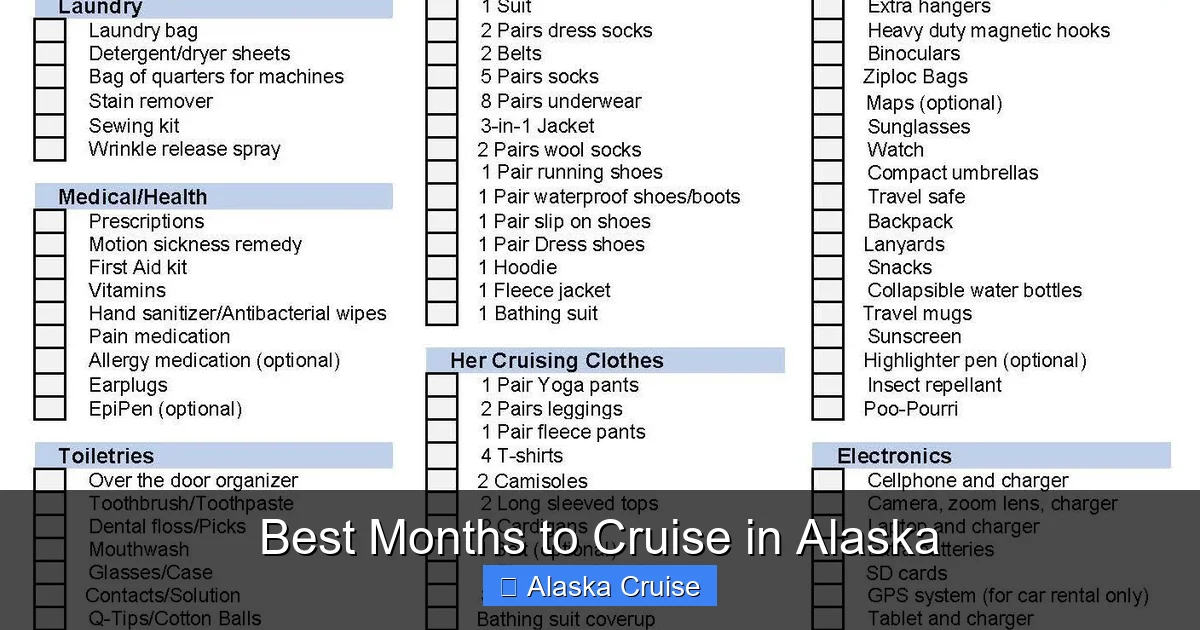
Packing Essentials:
- Waterproof jacket and pants
- Layered clothing (thermal base layers, fleece, sweaters)
- Sturdy, waterproof hiking boots
- Hat, gloves, and scarf (even in summer)
- Sunglasses and sunscreen (UV rays reflect off snow and water)
- Binoculars for wildlife viewing
Pro Tip: Pack a small daypack for shore excursions. Many cruisers leave bulky items in their cabins and carry only essentials on land.
Wildlife Viewing Opportunities
Alaska is a wildlife paradise, but sightings depend on the time of year and location.
Whales: Humpback whales are most commonly seen from June to August. Orcas appear sporadically, while gray whales migrate through in spring and fall.
Bears: Brown and black bears are active from May to September. September is best for bear viewing due to salmon runs.
Birds: Puffins nest on coastal cliffs from May to August. Bald eagles are visible year-round, especially near fish-rich waters.
Marine Life: Sea otters, sea lions, and harbor seals are common. Dall’s porpoises often ride the bow waves of ships.
Tip: Bring binoculars and a camera with a zoom lens. Wildlife can be distant, and patience pays off.
Glacier and Landscape Changes
Glaciers are a highlight of any Alaska cruise, but their appearance changes with the seasons.
In May, glaciers are still snow-covered and less active. By July and August, melting increases calving activity, creating dramatic splashes and icebergs. In September, glaciers may appear more exposed, with blue ice visible beneath the snow.
Landscapes transform too. May brings budding greenery, June offers lush forests, and September showcases fall colors. Coastal rainforests remain green year-round, but inland areas like the Yukon Territory show more seasonal variation.
Choosing the Right Cruise Based on Your Priorities
Not all Alaska cruises are the same. Your ideal month depends on what matters most to you.
For Families and First-Time Cruisers
If you’re traveling with kids or new to cruising, June to August offers the most reliable weather and full excursion availability. These months provide a stress-free experience with plenty of activities and comfort.
For Wildlife Enthusiasts
Wildlife lovers should consider July for whales or September for bears. Both months offer peak animal activity, though in different forms.
For Budget-Conscious Travelers
May and September offer the best value. You’ll save on cruise fares and airfare, and enjoy fewer crowds. Just be prepared for cooler weather and possible excursion limitations.
For Photographers and Nature Lovers
September’s fall colors and dramatic light make it a favorite among photographers. July’s long days also provide excellent shooting conditions.
For Adventure Seekers
If you want to hike, kayak, or go flightseeing, aim for June to August when trails are clear and weather is stable.
Final Tips for Planning Your Alaska Cruise
No matter when you go, a few smart planning tips can enhance your experience.
Book Early: Summer cruises sell out fast. Reserve 6–12 months in advance for the best selection.
Choose the Right Itinerary: Decide whether you prefer a round-trip cruise from Seattle or a one-way voyage between Vancouver and Seward. One-way cruises often include overland tours to Denali.
Research Shore Excursions: Popular tours like whale watching, dog sledding, and glacier hiking fill quickly. Book in advance or consider private tours.
Check Visa and Travel Requirements: If your cruise visits Canadian ports, ensure you have the necessary documentation.
Travel Insurance: Consider comprehensive coverage, especially for weather-related delays or cancellations.
Stay Flexible: Weather can impact schedules. Build in buffer time and embrace the unexpected—it’s part of the Alaskan adventure.
Conclusion: When Is the Best Time for You?
So, what are the best months to cruise in Alaska? The answer depends on your goals. June through August offers the warmest weather, longest days, and most reliable access to ports and wildlife—making it ideal for first-timers and families. May and September, the shoulder months, provide lower prices, fewer crowds, and unique seasonal beauty, perfect for budget travelers and nature enthusiasts.
Ultimately, there’s no wrong time to visit Alaska. Each month offers its own magic, from the blooming landscapes of spring to the golden hues of fall. By understanding the seasonal rhythms and planning accordingly, you can craft an Alaska cruise that’s as unforgettable as the glaciers, whales, and wild coastlines that define this remarkable destination. Whether you’re chasing the midnight sun or the call of a bald eagle, Alaska awaits—ready to surprise and inspire.
Frequently Asked Questions
What is the best month to see whales in Alaska?
The best months for whale watching in Alaska are July and August. Humpback whales are most active during this time, and sightings are frequent in areas like Icy Strait Point and Frederick Sound.
Can you cruise to Alaska in October?
Most major cruise lines do not operate in Alaska after late September due to cold weather, reduced daylight, and port closures. October cruises are rare and typically limited to small expedition ships.
Is September too cold for an Alaska cruise?
September temperatures range from 40°F to 60°F (4°C to 15°C), which is cool but manageable with proper layers. It’s not too cold for most travelers, especially with waterproof gear and warm clothing.
Are there mosquitoes on Alaska cruises?
Mosquitoes are more common in inland areas and during warmer months. On the ship and in coastal ports, they are rarely an issue. Bring insect repellent for shore excursions in forested areas.
Do I need a passport for an Alaska cruise?
If your cruise departs and returns to the same U.S. port (like Seattle), a passport is not required but recommended. If your itinerary includes Canadian ports, a passport or passport card is necessary.
What should I wear on an Alaska cruise?
Pack layers, including a waterproof jacket, fleece, thermal base layers, and sturdy shoes. Even in summer, temperatures can drop, especially on deck or during excursions.