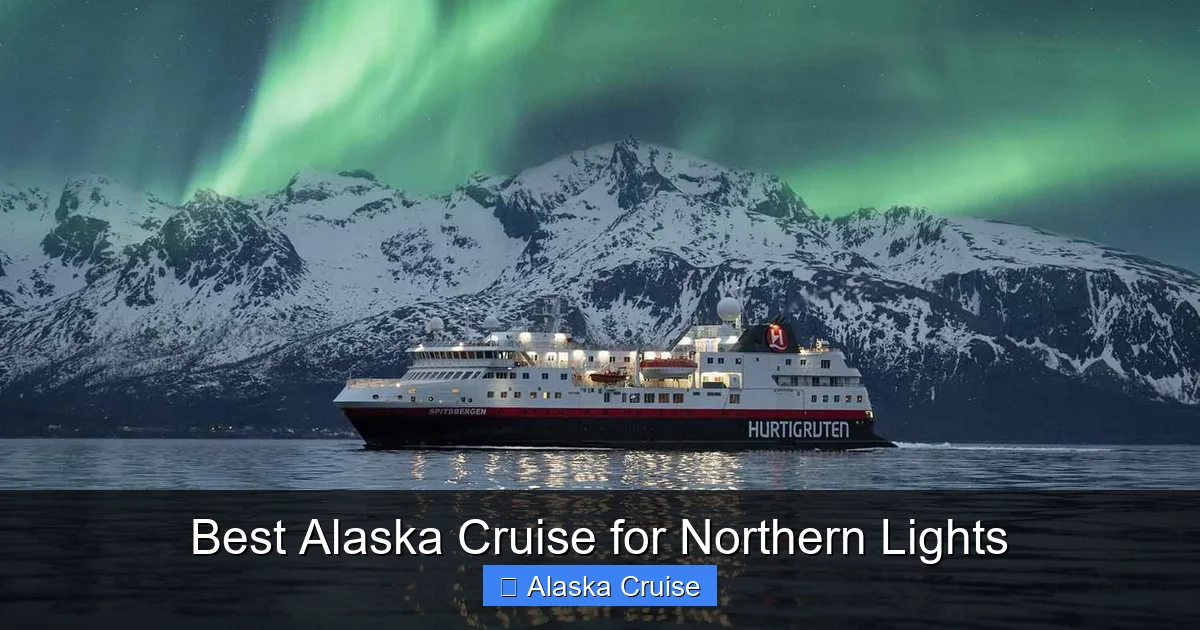
Seeing the northern lights in Alaska is a once-in-a-lifetime experience, and the right cruise can make it truly magical. While Alaska’s summer cruises are famous for glaciers and wildlife, a few special fall and early winter sailings offer the rare chance to witness the aurora borealis dancing across the night sky. With the right timing, destination, and cruise line, you can combine Alaskan adventure with a front-row seat to nature’s most dazzling light show.
Key Takeaways
- Best Time to See Northern Lights: Late September to early April offers the darkest skies and highest chances of aurora activity, with peak viewing in winter months.
- Ideal Cruise Itineraries: Cruises that include ports like Fairbanks, Anchorage, or remote coastal towns increase your odds of clear skies and aurora sightings.
- Top Cruise Lines: Holland America, Princess Cruises, and small expedition ships like those from UnCruise Adventures offer specialized northern lights cruises.
- Onboard Aurora Alerts: Some ships provide aurora wake-up calls or observation decks with heated loungers for comfortable viewing.
- Land Extensions Matter: Combining your cruise with a land tour to interior Alaska (like Fairbanks) greatly improves your chances of seeing the lights.
- Weather and Location Are Key: Coastal areas have more cloud cover; inland destinations offer clearer skies and better visibility.
- Pack Smart: Bring warm clothing, a good camera with manual settings, and red-light flashlights to preserve night vision.
Why Alaska Is a Prime Destination for Northern Lights
Alaska is one of the world’s top destinations for viewing the northern lights, thanks to its location directly under the “Auroral Oval”—a ring-shaped zone around the North Pole where aurora activity is most frequent and intense. Unlike places in Scandinavia or Canada, Alaska offers a unique blend of rugged wilderness, Indigenous culture, and accessible travel options, making it ideal for both adventure seekers and first-time aurora chasers.
While many people associate Alaska with summer cruises filled with glaciers, whales, and lush greenery, the real magic for northern lights enthusiasts happens when the days grow short and the nights stretch long. From late September through March, the extended darkness provides ample opportunity to catch the aurora borealis in all its glory. The lights appear as shimmering curtains of green, pink, purple, and even red, dancing across the sky in response to solar winds interacting with Earth’s magnetic field.
What makes Alaska especially special is the variety of landscapes where you can view the lights. Whether you’re anchored in a quiet fjord, standing on a snowy tundra, or relaxing in a hot spring under the stars, the experience feels otherworldly. And because Alaska is sparsely populated, light pollution is minimal, giving you some of the clearest, most vivid views of the night sky anywhere on Earth.
The Science Behind the Lights
The northern lights, or aurora borealis, occur when charged particles from the sun collide with gases in Earth’s atmosphere. Oxygen emits green and red light, while nitrogen produces blue and purple hues. The intensity and color of the lights depend on the altitude of the collision and the type of gas involved. In Alaska, the best displays typically happen between 10 p.m. and 2 a.m., though they can appear anytime after sunset.
Solar activity follows an 11-year cycle, with periods of high activity (solar maximum) producing more frequent and vivid auroras. Experts predict the next solar maximum will peak around 2025, meaning the next few years could offer some of the best northern lights displays in over a decade. This makes now an ideal time to plan your Alaska cruise with aurora viewing in mind.
Alaska’s Unique Advantages
Compared to other aurora hotspots like Iceland or Norway, Alaska offers longer nights during the winter months, increasing your chances of a sighting. Additionally, many Alaskan communities celebrate the aurora with cultural events, storytelling, and guided tours led by local experts who understand the rhythms of the sky.
Another advantage is the variety of ways to experience the lights. You can view them from a cozy cabin window, a heated observation deck, or even a dog sled under the stars. Some lodges even offer wake-up calls when the aurora is active, so you never miss a moment.
Best Time to Cruise Alaska for Northern Lights
Timing is everything when it comes to seeing the northern lights. While Alaska’s cruise season traditionally runs from May to September, those months offer nearly 20 hours of daylight—great for sightseeing, but terrible for aurora viewing. To maximize your chances, you’ll want to aim for the shoulder or off-season months when nights are long and dark.
The ideal window for combining an Alaska cruise with northern lights viewing is from late September to early April. September and October offer a unique blend of fall colors, crisp air, and the first real darkness of the season. By November, the nights are long and the skies are often clear, especially in the interior. December through February are peak aurora months, with the longest nights and highest solar activity. March brings slightly longer days but still offers excellent viewing opportunities, especially in the early morning hours.
Why September and October Are Surprising Favorites
Many travelers don’t realize that September and October can be excellent months for northern lights in Alaska. While the cruise season is winding down, some lines still operate special “shoulder season” sailings that include aurora-focused itineraries. These cruises often visit ports like Seward, Juneau, and Ketchikan, and may include land extensions to Fairbanks or Denali.
One major advantage of traveling in early fall is the weather. While winter brings snow and subzero temperatures, September and October offer milder conditions, making outdoor viewing more comfortable. The fall colors—golden aspens, red fireweed, and purple alpine flowers—add a stunning backdrop to nighttime skywatching. Plus, with fewer tourists around, you’ll have a more intimate and peaceful experience.
Winter Cruises: The Ultimate Aurora Adventure
For serious aurora chasers, winter cruises (December to March) offer the best odds. These sailings are less common and often operated by smaller expedition ships or luxury lines that specialize in off-season travel. They typically include longer stays in key viewing areas and may offer guided aurora tours, photography workshops, and cultural experiences with local Indigenous communities.
One popular option is a cruise that begins or ends in Anchorage, with a land tour to Fairbanks—often called the “Aurora Capital of North America.” Fairbanks sits directly under the Auroral Oval and has some of the clearest skies in Alaska, making it one of the most reliable places to see the lights. Some cruise packages even include stays at aurora-viewing lodges with heated glass roofs or outdoor hot springs.
Keep in mind that winter cruises require extra preparation. Temperatures can drop well below freezing, and daylight hours are short. But for those willing to brave the cold, the reward is an unforgettable display of nature’s most spectacular light show.
Top Cruise Lines for Northern Lights in Alaska
Not all Alaska cruises are created equal when it comes to northern lights viewing. While most major lines focus on summer itineraries, a few stand out for their aurora-friendly schedules, knowledgeable staff, and special onboard programming. Here are the top cruise lines offering the best Alaska cruise for northern lights.
Holland America Line: Classic Comfort with Aurora Focus
Holland America is known for its elegant ships, attentive service, and enriching onboard experiences. In recent years, they’ve introduced special “Aurora Borealis” cruises that run from late September to October. These sailings often include longer port stops in places like Seward and Ketchikan, with optional land tours to Fairbanks or Denali National Park.
What sets Holland America apart is their onboard astronomy program. Many of their ships feature an onboard astronomer who gives lectures about the northern lights, helps guests identify constellations, and even provides wake-up calls when aurora activity is detected. Their observation lounges are designed for comfort, with heated seats and large windows perfect for skywatching.
One popular itinerary is the “Alaska Aurora” cruise, a 14-day journey that combines a roundtrip sailing from Seattle with a land tour to Fairbanks. Guests spend three nights in Fairbanks, where they can take guided aurora tours, visit the University of Alaska’s Geophysical Institute, and relax in natural hot springs under the stars.
Princess Cruises: Land-and-Sea Aurora Packages
Princess Cruises offers some of the most comprehensive land-and-sea packages for northern lights viewing. Their “Aurora Explorer” itinerary includes a 7-day cruise through the Inside Passage, followed by a 3- to 5-day land tour to Fairbanks or Anchorage. These packages are ideal for travelers who want the full Alaska experience—glaciers, wildlife, and the northern lights—all in one trip.
Princess ships are equipped with outdoor viewing areas and often host special aurora-themed events, such as stargazing parties and photography workshops. Their partnership with local tour operators ensures guests have access to the best viewing spots, including remote areas with minimal light pollution.
One standout feature is their “Aurora Alert” system. Using real-time data from the Geophysical Institute, Princess provides guests with updates on solar activity and aurora forecasts. If the lights are active, staff will make announcements and guide guests to the best viewing locations on deck.
UnCruise Adventures: Intimate Expeditions for Aurora Hunters
For a more adventurous and intimate experience, UnCruise Adventures offers small-ship expeditions that focus on wildlife, wilderness, and—yes—the northern lights. Their ships carry fewer than 100 passengers, allowing for flexible itineraries and access to remote areas that larger ships can’t reach.
UnCruise’s “Alaska Aurora” itinerary runs in September and October and includes stops in Sitka, Hoonah, and Glacier Bay, with optional extensions to Haines or Juneau. Their expert naturalists provide daily talks on astronomy and aurora science, and the ships are equipped with red-light flashlights to preserve night vision during evening excursions.
One of the biggest advantages of UnCruise is their focus on immersive experiences. Guests can go kayaking under the stars, take guided night hikes, or enjoy a campfire on the beach while waiting for the lights to appear. It’s a more hands-on, adventurous way to experience Alaska—and the aurora.
Other Notable Options
Other cruise lines that occasionally offer northern lights-focused sailings include Celebrity Cruises (with their “Beyond the Lights” program) and Silversea (luxury expeditions with astronomy experts onboard). Additionally, some independent operators and charter companies offer private aurora cruises in smaller vessels, ideal for small groups or families.
When choosing a cruise line, look for itineraries that include at least one night in a high-probability aurora zone (like Fairbanks or the interior), offer onboard educational programs, and provide flexibility for night viewing. Also, check if the ship has an open observation deck and whether they offer wake-up calls for aurora alerts.
Best Itineraries and Ports for Aurora Viewing
While the northern lights can technically be seen from any dark location in Alaska, some ports and itineraries offer better odds than others. The key is to balance coastal cruising with time spent in areas with clearer skies and higher auroral activity.
Fairbanks: The Aurora Capital
Fairbanks is widely regarded as the best place in Alaska to see the northern lights. Located in the interior, far from coastal cloud cover, it experiences some of the clearest skies and most frequent aurora displays. Many cruise packages include a land extension to Fairbanks, where guests can spend multiple nights at aurora-viewing lodges or take guided tours.
Popular activities in Fairbanks include visiting the Chena Hot Springs Resort, where you can soak in warm mineral water while watching the lights dance overhead. The resort even offers an “Aurora Wake-Up Call” service, ensuring you don’t miss the show.
Anchorage and the Kenai Peninsula
Anchorage, Alaska’s largest city, offers a mix of urban comfort and access to wilderness. While light pollution can be an issue in the city center, nearby areas like Chugach State Park or the town of Girdwood provide excellent dark-sky viewing. Some cruises begin or end in Anchorage, making it a convenient gateway for aurora chasers.
The Kenai Peninsula, home to Seward and Whittier, offers dramatic coastal scenery and access to glaciers. While coastal areas are more prone to cloud cover, clear nights can produce stunning reflections of the aurora on the water. Some cruise lines offer evening excursions from Seward to remote viewpoints with minimal light pollution.
Juneau and the Inside Passage
Juneau, Alaska’s capital, is accessible only by boat or plane and offers a unique blend of rainforest, mountains, and marine life. While the coastal location means more clouds, September and October often bring clearer skies. Some cruise ships offer late-night deck parties with hot cocoa and aurora alerts.
The Inside Passage, which includes ports like Ketchikan and Skagway, is famous for its lush scenery and wildlife. While not the most reliable for aurora viewing, the combination of a summer cruise with a fall land tour can give you the best of both worlds—glaciers by day, northern lights by night.
Remote and Off-the-Beaten-Path Destinations
For the ultimate aurora experience, consider itineraries that include remote areas like the Arctic Circle, Nome, or Barrow (Utqiaġvik). These locations offer some of the darkest skies and highest auroral activity, though they require more planning and often involve small-ship expeditions or charter flights.
Some luxury cruise lines offer multi-week journeys that combine coastal cruising with overland travel to the Arctic. These trips are ideal for serious aurora enthusiasts who want to maximize their chances of a sighting while experiencing Alaska’s most remote and beautiful landscapes.
Tips for Maximizing Your Northern Lights Experience
Even with the best cruise and itinerary, seeing the northern lights isn’t guaranteed. But with a little preparation and know-how, you can greatly increase your chances of a magical encounter.
Check the Aurora Forecast
Before your trip, monitor aurora forecasts using reliable sources like the University of Alaska Fairbanks Geophysical Institute or apps like My Aurora Forecast & Alerts. These tools provide real-time data on solar activity, cloud cover, and the KP index—a measure of geomagnetic activity. A KP index of 3 or higher is ideal for aurora viewing in Alaska.
Dress for the Cold
Winter nights in Alaska can be brutally cold, even on a cruise ship. Pack thermal layers, a heavy parka, insulated boots, gloves, and a warm hat. Consider bringing hand and foot warmers, especially if you plan to spend hours outside waiting for the lights.
Bring the Right Gear
A good camera with manual settings is essential for capturing the aurora. Use a tripod, set a long exposure (10–30 seconds), and adjust the ISO to 800–3200. A wide-angle lens will help you capture more of the sky. Don’t forget extra batteries—cold weather drains them quickly.
Use Red Lights
White light ruins night vision, making it harder to see the aurora. Use a red-light flashlight or headlamp to read maps or adjust camera settings. Many cruise ships provide red lights for this purpose.
Be Patient and Flexible
The northern lights are unpredictable. You might see them on your first night—or not at all. Stay flexible with your plans, and don’t get discouraged. Even if you don’t see the lights, Alaska’s winter beauty, wildlife, and culture offer plenty of rewards.
Combine with Other Winter Activities
Make the most of your trip by adding dog sledding, snowshoeing, or ice fishing to your itinerary. These activities not only keep you warm but also deepen your connection to Alaska’s winter landscape.
Conclusion
Choosing the best Alaska cruise for northern lights is about more than just picking a ship and a date—it’s about crafting an experience that combines adventure, education, and a little bit of magic. While summer cruises offer glaciers and wildlife, the real treasure for aurora seekers lies in the quiet, dark nights of fall and winter, when the sky comes alive with color and movement.
With the right timing, itinerary, and cruise line, you can witness one of nature’s most breathtaking phenomena in one of the world’s most beautiful settings. Whether you’re sipping hot cocoa on a heated deck, soaking in a hot spring under the stars, or learning about the science of the aurora from an onboard expert, the experience will stay with you long after the lights fade.
So pack your warmest clothes, charge your camera, and get ready for the adventure of a lifetime. The northern lights are waiting—and Alaska is the perfect place to see them.
FAQs
Can you see the northern lights on a summer Alaska cruise?
No, summer cruises (May to September) have nearly 20 hours of daylight, making aurora viewing impossible. The northern lights are only visible in darkness, so you’ll need to travel in fall or winter.
Which cruise line is best for northern lights in Alaska?
Holland America, Princess Cruises, and UnCruise Adventures offer the best Alaska cruises for northern lights, with specialized itineraries, onboard experts, and land extensions to prime viewing areas like Fairbanks.
Do I need to book a land tour to see the northern lights?
While not required, a land tour to interior Alaska greatly increases your chances. Coastal areas have more cloud cover, while places like Fairbanks offer clearer skies and higher auroral activity.
What should I pack for an Alaska northern lights cruise?
Pack thermal clothing, insulated boots, gloves, a warm hat, a camera with a tripod, extra batteries, and a red-light flashlight. Hand and foot warmers are also helpful for long nights outdoors.
How likely is it to see the northern lights in Alaska?
Alaska is one of the best places in the world to see the aurora, especially in the interior. With clear skies and high solar activity, your chances are good—especially if you stay multiple nights in a prime location.
Are there aurora wake-up calls on cruise ships?
Yes, some cruise lines like Holland America and Princess offer aurora wake-up calls or alerts when the lights are active. Check with your cruise line before booking to see if this service is available.
This is a comprehensive guide about best alaska cruise for northern lights.
Key Takeaways
- Understanding best alaska cruise for northern lights: Provides essential knowledge
Frequently Asked Questions
What is best alaska cruise for northern lights?
best alaska cruise for northern lights is an important topic with many practical applications.