Alaska offers some of the most breathtaking photo opportunities on Earth, and the right cruise excursion can make all the difference. From towering glaciers to wild bears and dramatic fjords, these handpicked excursions are designed to help photographers of all levels capture Alaska’s raw beauty with confidence and creativity.
Key Takeaways
- Glacier-focused tours deliver iconic ice formations and calving events perfect for dramatic shots. Excursions like glacier kayaking or boat tours put you up close with massive ice walls and turquoise waters.
- Wildlife excursions offer rare chances to photograph bears, whales, eagles, and sea otters in their natural habitat. Guided wildlife tours increase your odds of safe, ethical, and stunning animal encounters.
- Scenic train rides provide elevated viewpoints and smooth travel for capturing mountain vistas and river valleys. The Alaska Railroad’s coastal routes are a photographer’s dream with panoramic windows and photo stops.
- Small-group and photography-specific tours offer expert guidance and optimal shooting conditions. These tours are led by professional photographers who know the best angles, lighting, and timing.
- Timing and weather play a huge role in photo quality—early morning and late afternoon light are golden. Plan excursions around sunrise or sunset for warm, soft lighting that enhances textures and colors.
- Packing the right gear—like a telephoto lens, polarizing filter, and sturdy tripod—can elevate your shots. Be prepared for variable weather and rugged terrain to protect your equipment and maximize opportunities.
- Respect nature and follow ethical photography practices to preserve Alaska’s fragile ecosystems. Keep a safe distance from wildlife and avoid disturbing natural behaviors for both safety and sustainability.
📑 Table of Contents
- Why Alaska Is a Photographer’s Paradise
- Top Glacier Excursions for Stunning Ice Photography
- Wildlife Photography: Capturing Alaska’s Majestic Animals
- Scenic Train Rides: Capturing Alaska’s Landscapes from New Angles
- Photography-Focused Tours: Learn While You Shoot
- Packing and Preparation Tips for Photographers
- Ethical Photography: Respecting Nature and Culture
- Conclusion
Why Alaska Is a Photographer’s Paradise
Alaska isn’t just a destination—it’s a living postcard. From the moment your cruise ship glides into Glacier Bay or docks in the charming port of Juneau, you’re surrounded by a landscape that seems almost too beautiful to be real. Towering snow-capped peaks, emerald-green forests, icy fjords, and abundant wildlife create a visual feast that’s hard to match anywhere else on the planet. For photographers, whether amateur or professional, Alaska offers an unparalleled canvas of natural wonders waiting to be captured.
What makes Alaska especially special for photography is the sheer diversity of subjects in a relatively compact area. In a single day, you might photograph a breaching humpback whale, a grizzly bear fishing for salmon, a glacier calving into the sea, and a rainbow arching over a misty waterfall. The light—especially during the summer months—is long and golden, with up to 18 hours of daylight in June and July. This extended daylight gives photographers more time to chase the perfect shot, whether it’s the soft glow of sunrise over a mountain range or the dramatic shadows of late afternoon on a glacier face.
But capturing Alaska’s magic isn’t just about being in the right place. It’s about being in the right place at the right time, with the right gear and the right guidance. That’s where choosing the best Alaska cruise excursions for photography becomes essential. Not all tours are created equal when it comes to photo opportunities. Some prioritize speed and sightseeing, while others are designed with photographers in mind—offering extended stops, expert commentary, and access to remote locations. The key is to select excursions that align with your photographic goals, whether you’re chasing wildlife, landscapes, or cultural moments.
Top Glacier Excursions for Stunning Ice Photography
Visual guide about Best Alaska Cruise Excursions for Photography
Image source: i.pinimg.com
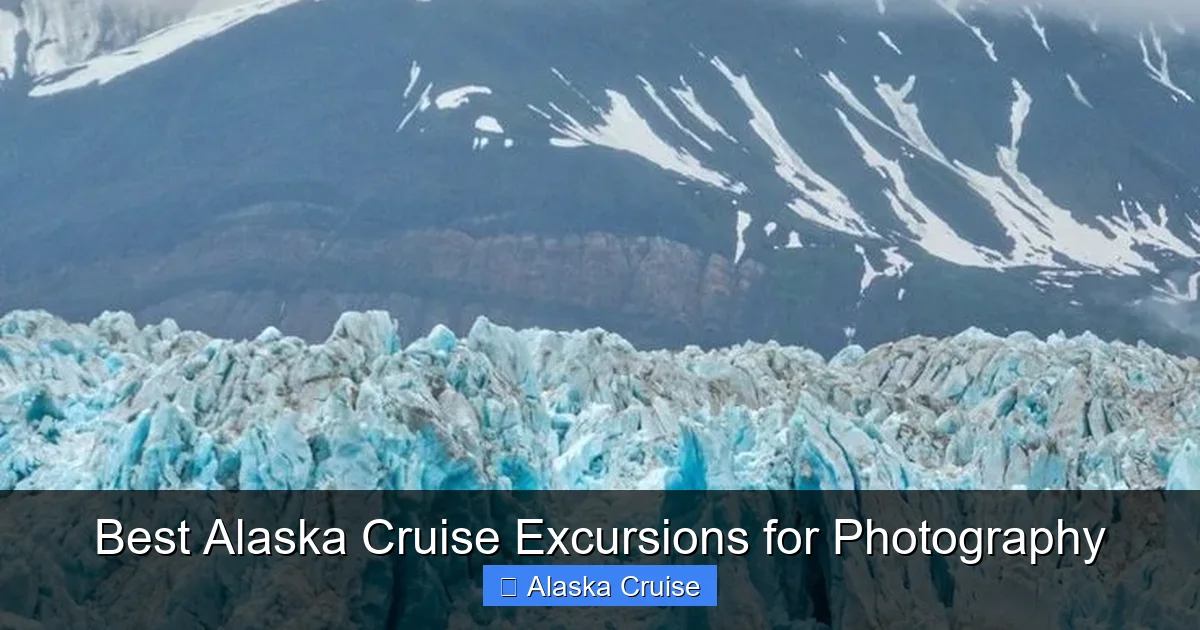
Glaciers are one of Alaska’s most iconic features, and for good reason. These massive rivers of ice carve through mountains, crash into the sea, and shimmer with otherworldly blues and whites. Capturing them on camera is a bucket-list experience for many photographers. Fortunately, several cruise excursions offer front-row seats to these frozen giants.
Glacier Bay National Park Boat Tours
One of the most popular and accessible ways to photograph glaciers is through a boat tour in Glacier Bay National Park. These excursions typically depart from Gustavus, a small town accessible by air or a short cruise ship tender ride. The park is a UNESCO World Heritage Site and home to over a dozen active glaciers, including the famous Margerie and Johns Hopkins Glaciers.
What makes this excursion ideal for photographers is the slow, quiet approach of the tour boats. Unlike larger cruise ships that must stay at a distance, smaller expedition vessels can get much closer to the ice—sometimes within a few hundred feet. This proximity allows for dramatic wide-angle shots of towering ice walls and close-ups of intricate ice formations. The best time to visit is mid-morning, when the light hits the glaciers at a low angle, enhancing the textures and deep blue hues within the ice.
Photographers should bring a polarizing filter to reduce glare off the water and ice, and a telephoto lens to zoom in on details like crevasses and calving events. Calving—when chunks of ice break off and crash into the water—is unpredictable but thrilling to capture. Be ready with a fast shutter speed and continuous shooting mode. Many tour operators also offer naturalist guides who can point out interesting features and help you anticipate action.
Kayaking Among Icebergs in Tracy Arm
For a more intimate and adventurous glacier experience, consider a kayaking excursion in Tracy Arm. This narrow fjord, located near Juneau, is flanked by steep granite walls and ends at the face of the Sawyer Glaciers. Paddling among floating icebergs gives you a unique perspective that’s impossible from a boat.
Kayaking allows you to move quietly and slowly, which is perfect for photography. You can position yourself for the best angles without engine noise disturbing the scene. The reflections of ice and mountains in the calm water create stunning mirror-like images, especially during overcast days when the light is soft and even.
This excursion is best suited for photographers with some kayaking experience, as the waters can be choppy and the weather unpredictable. Dress in layers and use a waterproof camera bag or dry sack to protect your gear. A fisheye or wide-angle lens works well for capturing the vastness of the fjord, while a macro lens can highlight the intricate patterns in ice crystals.
Helicopter Tours to Remote Glaciers
If you’re looking to go above and beyond, a helicopter tour offers a bird’s-eye view of Alaska’s glaciers that’s simply unmatched. These tours typically take off from Juneau or Skagway and fly over massive ice fields, including the Mendenhall Glacier and the Juneau Icefield.
From the air, you can capture the sweeping scale of glaciers as they flow down from mountain peaks like slow-moving rivers. The contrast between the white ice, dark rock, and blue sky creates powerful compositions. Many tours include a landing on a glacier, giving you the chance to photograph ice caves, moulins (vertical shafts in the ice), and seracs (towering ice formations).
Helicopter tours are weather-dependent and can be expensive, but they’re worth it for the unique perspectives they offer. Use a lens with image stabilization to counteract the vibrations of the helicopter, and shoot in burst mode to increase your chances of getting a sharp image. Be mindful of reflections from the windows—shoot at an angle or use a lens hood to minimize glare.
Wildlife Photography: Capturing Alaska’s Majestic Animals
Alaska is one of the last great wildernesses on Earth, and its wildlife is as diverse as it is abundant. From humpback whales breaching in the open sea to brown bears catching salmon in rushing rivers, the state offers some of the best wildlife photography opportunities in North America. The key to success is choosing excursions that prioritize animal encounters while respecting their natural behaviors.
Whale Watching in Icy Strait Point
Icy Strait Point, near Hoonah, is one of the best places in Alaska to photograph whales. This area is a hotspot for humpback whales, orcas, and even the occasional gray whale. The excursion typically involves a high-speed boat ride through the protected waters of Icy Strait, where guides use hydrophones to locate vocalizing whales.
What sets this tour apart is the high probability of close encounters. Humpbacks are curious and often approach boats, giving photographers the chance to capture everything from tail flukes to full-body breaches. The best time for whale photography is during the summer feeding season (June to August), when whales are most active.
Bring a telephoto lens (300mm or longer) to get tight shots of whales without disturbing them. Use a fast shutter speed (1/1000 or higher) to freeze motion, especially during breaches. A monopod or stabilizing rig can help reduce camera shake on a moving boat. Many tours also offer underwater hydrophone feeds, so you can hear the whales’ songs while you shoot—adding an auditory layer to your experience.
Bear Viewing in Pack Creek or Anan Creek
For bear photography, few places rival Pack Creek on Admiralty Island or Anan Creek near Wrangell. These remote locations are managed as bear sanctuaries, where brown bears (including grizzlies) come to feed on salmon during the summer runs.
Pack Creek offers a guided floatplane tour that lands on a beach near the creek. From a viewing platform, you can photograph bears fishing, playing, and interacting with their cubs—all from a safe and respectful distance. The lighting is often soft and golden in the early morning, making it ideal for portrait-style shots of bears.
Anan Creek is accessible by boat and features a wooden observation tower that overlooks a salmon stream. Bears often cross the stream right below, giving photographers a unique elevated perspective. This angle is great for capturing bears in motion against a natural backdrop.
Both excursions require advance booking and have limited daily permits to protect the bears and their habitat. Photographers should use long lenses (400mm or more) and avoid using flash, which can startle animals. Patience is key—bears may take time to appear, but when they do, the shots are unforgettable.
Sea Otter and Puffin Encounters in Ketchikan
Ketchikan, known as the “Salmon Capital of the World,” is also a great spot for photographing smaller marine wildlife. A guided boat tour through the Tongass National Forest can yield encounters with sea otters, puffins, and bald eagles.
Sea otters are incredibly photogenic, often floating on their backs while cracking shellfish on their chests. Their expressive faces and playful behavior make them a favorite subject. Puffins, with their colorful beaks and comical waddle, are best photographed on rocky outcrops or nesting cliffs.
Use a telephoto lens to capture details without getting too close. A fast shutter speed helps freeze the quick movements of otters and birds. Early morning tours often have calmer waters and better light, increasing your chances of success.
Scenic Train Rides: Capturing Alaska’s Landscapes from New Angles
While most people think of trains as a way to get from point A to point B, in Alaska, the journey itself is the destination. The state’s scenic rail routes offer some of the most photogenic travel experiences in the world, with panoramic windows, open-air viewing cars, and photo stops at key landmarks.
The Alaska Railroad: Coastal Classic Route
The Coastal Classic route runs from Anchorage to Seward, passing through the Kenai Fjords and alongside towering mountains, glacial rivers, and dense forests. This 4.5-hour journey is a photographer’s dream, with ever-changing views that demand constant attention.
The train features large windows and a glass-domed observation car, perfect for capturing wide landscapes. Many photographers recommend sitting on the right side of the train (facing forward) for the best views of the fjords and Resurrection Bay. The train also makes a stop at the scenic Spencer Glacier, where you can disembark for 30 minutes to photograph the ice and surrounding valley.
Bring a variety of lenses—wide-angle for sweeping vistas, telephoto for distant peaks, and a polarizing filter to reduce glare off the windows. The best light is often in the late afternoon, when the sun casts long shadows across the landscape.
White Pass and Yukon Route: A Historic Journey
This narrow-gauge railway, built during the Klondike Gold Rush, climbs from Skagway to the Canadian border through steep mountain passes and dramatic switchbacks. The route is rich in history and scenery, with wooden trestles, rushing streams, and views of the Sawtooth Range.
The train moves slowly, giving photographers plenty of time to compose shots. The open-air observation car is especially popular, though it can be windy and cold—dress accordingly. The best photo opportunities come during the ascent, when the train passes through tunnels and crosses high bridges with panoramic views.
Use a fast shutter speed to avoid blur from the moving train, and consider shooting in RAW format to capture maximum detail in both shadows and highlights. The historic locomotives themselves make great subjects, especially when framed against a mountain backdrop.
Photography-Focused Tours: Learn While You Shoot
For photographers who want more than just a sightseeing tour, specialized photography excursions offer expert guidance, small group sizes, and tailored itineraries. These tours are led by professional photographers who know the best locations, times, and techniques for capturing Alaska’s beauty.
Guided Photo Safaris in Denali National Park
While not directly accessible from cruise ships, many cruise lines offer pre- or post-cruise extensions to Denali National Park. A guided photo safari here focuses on the park’s iconic landscapes and wildlife, including caribou, moose, and Dall sheep.
These tours use large buses with special windows and roof hatches for unobstructed shooting. Guides know where animals are likely to be and can position the vehicle for optimal lighting and composition. The vast tundra and distant mountains create a sense of scale that’s hard to capture without expert help.
Photographers should bring a telephoto lens for wildlife and a wide-angle for landscapes. A tripod is useful for low-light conditions, especially during the early morning or late evening. Many tours also include a photography workshop component, where you can review your shots and get feedback from the guide.
Sunrise and Sunset Photo Walks in Juneau
Some cruise lines partner with local photography guides to offer sunrise or sunset photo walks in Juneau. These small-group excursions take you to hidden gems like the Mount Roberts Trail or the Mendenhall Glacier Overlook, where you can capture the golden hour light on ice and water.
The advantage of these walks is the personalized attention. Guides can help you with camera settings, composition, and even post-processing tips. They also know the best vantage points and how to avoid crowds.
Bring a lightweight tripod and a lens with a wide aperture (f/2.8 or lower) for low-light shooting. A headlamp or flashlight can be helpful for navigating trails in the early morning dark. These walks are usually 2–3 hours long and require a moderate level of fitness.
Packing and Preparation Tips for Photographers
No matter which excursions you choose, proper preparation is essential for successful photography in Alaska. The weather can change quickly, and conditions can be rugged. Here are some practical tips to help you make the most of your trip.
Essential Gear for Alaska Photography
Start with a durable, weather-resistant camera body and lenses. A full-frame DSLR or mirrorless camera offers the best image quality, but high-end point-and-shoots can also work well. Bring a variety of lenses: a wide-angle (16–35mm) for landscapes, a standard zoom (24–70mm) for versatility, and a telephoto (70–200mm or longer) for wildlife.
Protect your gear with a quality camera bag, rain cover, and silica gel packs to prevent moisture buildup. A sturdy tripod is a must for long exposures and low-light shots, especially during sunrise or sunset. Don’t forget extra batteries—cold weather drains them quickly—and memory cards with plenty of storage.
Clothing and Safety
Dress in layers, including a waterproof outer shell, insulated mid-layer, and moisture-wicking base layer. Waterproof boots with good traction are essential for hiking and wet conditions. Bring gloves that allow you to operate your camera, and consider a hat with a brim to protect your lens from rain and snow.
Always inform someone of your plans when heading out on excursions, especially remote ones. Carry a basic first-aid kit, a map, and a fully charged phone or satellite communicator. Respect wildlife and follow park guidelines to ensure your safety and the animals’ well-being.
Ethical Photography: Respecting Nature and Culture
Alaska’s beauty is fragile, and photographers have a responsibility to protect it. Always follow the principles of Leave No Trace: stay on designated trails, pack out all trash, and avoid disturbing wildlife.
When photographing animals, keep a safe distance and use a telephoto lens instead of approaching. Never bait or lure animals for a shot. For cultural photography, ask for permission before photographing people, especially in Indigenous communities. Many Alaskan Native groups have specific protocols around photography, and respecting them is part of being a responsible traveler.
By practicing ethical photography, you help preserve Alaska’s wild places for future generations—and ensure that your images are not only beautiful, but also meaningful.
Conclusion
Alaska is a photographer’s dream destination, offering a rare combination of dramatic landscapes, abundant wildlife, and pristine wilderness. The best Alaska cruise excursions for photography are those that put you in the right place at the right time, with the right tools and guidance. Whether you’re capturing the silent majesty of a glacier, the raw power of a breaching whale, or the golden light of a summer sunset, these experiences will leave you with images that tell the story of Alaska’s wild heart.
Choose excursions that match your interests and skill level, pack smart, and always respect the environment. With a little planning and a lot of passion, your Alaska cruise can become a photographic journey you’ll treasure for a lifetime.
Frequently Asked Questions
What is the best time of year for photography in Alaska?
The best time for photography in Alaska is during the summer months, from late May to early September. This period offers long daylight hours, mild weather, and peak wildlife activity, making it ideal for capturing everything from glaciers to bears.
Do I need special photography gear for Alaska cruises?
While you don’t need professional gear, a telephoto lens, polarizing filter, and sturdy tripod are highly recommended. Weather-resistant equipment and extra batteries are also essential due to the variable climate and remote locations.
Can I photograph wildlife safely on cruise excursions?
Yes, most wildlife excursions are designed with safety and ethics in mind. Guides maintain a respectful distance from animals, and using a telephoto lens allows you to capture close-up shots without disturbing them.
Are there photography tours specifically for beginners?
Yes, many cruise lines and local operators offer beginner-friendly photo tours with expert guides. These tours often include tips on camera settings, composition, and post-processing, making them great for learning while exploring.
How do I protect my camera from rain and moisture in Alaska?
Use a weather-sealed camera and lenses, a rain cover, and silica gel packs in your bag. Avoid changing lenses in wet conditions, and store gear in a dry place when not in use.
Can I edit my photos during the cruise?
Most modern cruise ships offer Wi-Fi, though it may be limited. You can edit photos on a laptop or tablet, but for extensive editing, consider waiting until you return home or use a portable hard drive to back up and organize your shots.