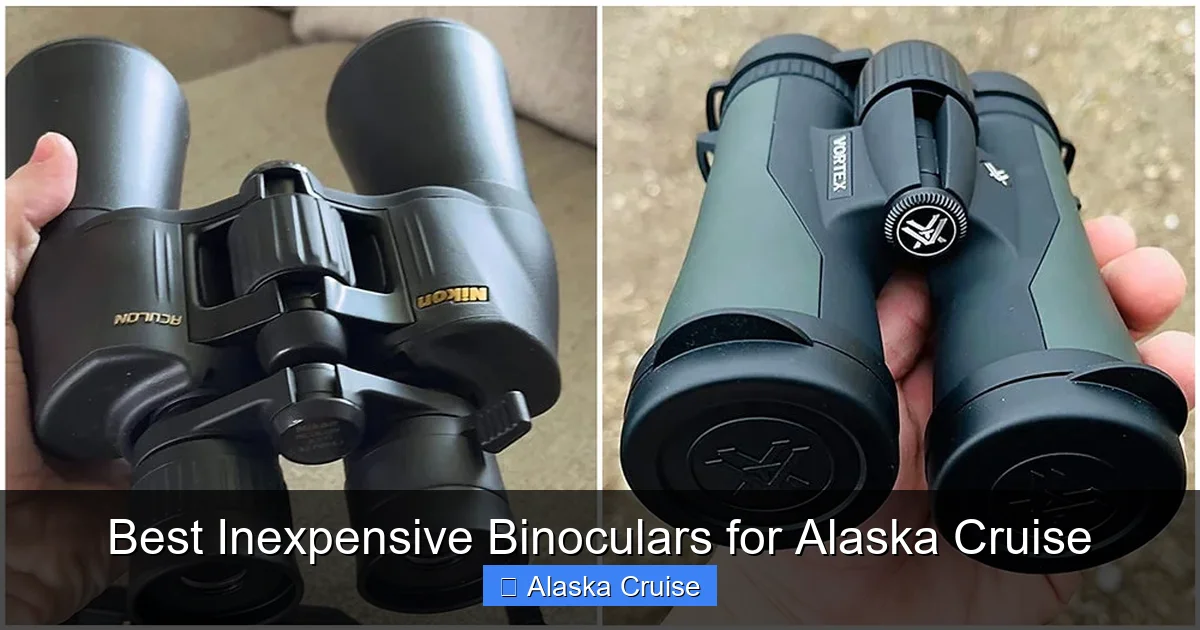
Choosing the right binoculars for your Alaska cruise doesn’t have to be expensive or complicated. With so many affordable options on the market, you can enjoy crystal-clear views of whales, eagles, and glaciers without overspending. This guide highlights the best inexpensive binoculars that deliver performance, portability, and durability—perfect for any Alaskan adventure.
Planning an Alaska cruise is exciting—majestic glaciers, breaching whales, soaring eagles, and rugged coastlines await. But to truly appreciate the grandeur of the Last Frontier, you need a reliable pair of binoculars. The right pair can turn a distant puffin into a crisp, colorful sighting or help you spot a bear foraging along a riverbank from a safe distance. Yet, many travelers hesitate, thinking high-quality optics must come with a high price tag. The truth? You don’t need to spend hundreds to get excellent performance. In fact, some of the best binoculars for Alaska cruises are surprisingly affordable.
Alaska’s dramatic landscapes and unpredictable weather demand gear that’s both durable and functional. You’ll be scanning icy fjords, scanning shorelines from a moving ship, and braving chilly, damp conditions. Your binoculars need to handle it all—without weighing you down or fogging up at the worst moment. Fortunately, advances in optical technology have made it possible to find high-performing, budget-friendly binoculars that meet these needs. Whether you’re a first-time cruiser or a seasoned explorer, this guide will help you find the perfect pair without breaking the bank.
Key Takeaways
- Magnification and objective lens size matter: A 7x or 8x magnification with a 32mm to 42mm lens offers the best balance of clarity, brightness, and portability for cruise conditions.
- Waterproof and fog-proof features are essential: Alaska’s wet, cold climate demands binoculars with nitrogen or argon purging and O-ring seals to prevent internal fogging.
- Compact and lightweight designs win: You’ll be carrying these around your neck or in a bag all day—lighter models reduce fatigue and fit easily in carry-ons.
- Image stabilization isn’t always necessary: While helpful on rough seas, many budget-friendly models offer steady enough views without the added cost.
- Look for multi-coated or fully multi-coated lenses: These improve light transmission, giving you brighter, sharper images—especially important in overcast Alaskan skies.
- Rubber armor adds durability and grip: Protects against drops and provides a secure hold in damp or gloved hands.
- Price doesn’t always mean performance: Several sub-$150 binoculars rival higher-end models in optical quality and build, making them ideal for budget-conscious travelers.
📑 Table of Contents
Why Binoculars Are a Must-Have for Alaska Cruises
Alaska is a land of vast distances and fleeting wildlife encounters. From the deck of your cruise ship, you might spot a humpback whale breaching in the distance or a bald eagle perched high in a Sitka spruce. But without magnification, these moments can pass in a blur. Binoculars bring the wild beauty of Alaska up close, transforming your cruise from a scenic tour into an immersive adventure.
Imagine standing at the rail as your ship glides through Glacier Bay. A guide points out a cluster of sea otters floating on their backs, but they’re half a mile away. With a good pair of binoculars, you can see their furry faces and playful movements clearly. Or picture this: you’re cruising near Ketchikan, and someone spots a black bear ambling along the shoreline. Without optics, it’s just a dark speck. With binoculars, you can observe its behavior, notice its size, and even see its fur ripple in the wind.
Beyond wildlife, binoculars enhance your appreciation of Alaska’s geography. Glaciers calving into the sea, waterfalls cascading down mossy cliffs, and snow-capped peaks rising above the treeline—all become more vivid and detailed. They also help you stay engaged during long stretches at sea, offering a way to scan the horizon and connect with the environment.
The Unique Challenges of Viewing in Alaska
Alaska’s environment presents specific challenges for optical gear. The weather can shift quickly—sunny one moment, foggy the next. Temperatures often hover near freezing, and sea spray is common on deck. These conditions can wreak havoc on poorly built binoculars. Moisture can seep inside, causing fogging or mold. Cold can make plastic parts brittle. And if your binoculars aren’t balanced well, the motion of the ship can make it hard to keep your target in view.
That’s why durability and weather resistance are non-negotiable. You need binoculars that can handle moisture, resist temperature changes, and stay clear in humid or cold air. Look for models labeled “waterproof” and “fog-proof.” These terms mean the optics are sealed with O-rings and filled with inert gas like nitrogen or argon, which prevents internal condensation.
Another challenge is lighting. Alaska’s high latitude means the sun stays low on the horizon, especially in spring and fall. Overcast skies are common, reducing natural light. This makes lens coatings and aperture size crucial. Larger objective lenses (the front lenses) gather more light, while multi-coated optics reduce glare and improve contrast. Even in dim conditions, you’ll still get a bright, clear image.
What to Look for in Inexpensive Binoculars for Alaska
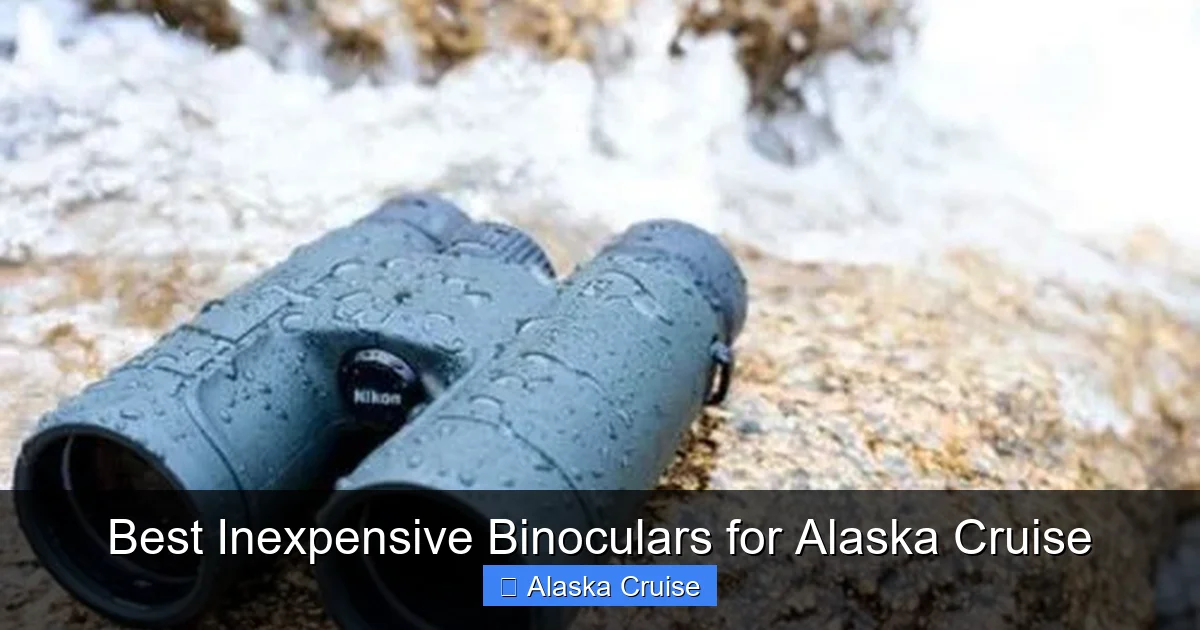
Visual guide about Best Inexpensive Binoculars for Alaska Cruise
Image source: binocularsradar.com
When shopping for budget-friendly binoculars, it’s easy to get overwhelmed by technical terms and flashy marketing. But you don’t need to be an optics expert to make a smart choice. Focus on a few key features that directly impact performance in Alaskan conditions.
First, consider magnification and objective lens size. These are usually written as two numbers, like 8×42. The first number is the magnification—how many times closer the image appears. The second is the diameter of the objective lens in millimeters. For Alaska cruises, 7x or 8x magnification is ideal. Higher magnification (like 10x) can make images shakier, especially on a moving ship. A 32mm to 42mm lens strikes a good balance between light gathering and portability.
Next, prioritize lens coatings. Look for “fully multi-coated” lenses, which means all glass surfaces have multiple layers of anti-reflective coating. This improves brightness and color accuracy—critical when viewing in low light or through haze. Even some budget models now offer this feature.
Durability is another must. Rubber armor not only protects against drops but also provides a better grip, especially when your hands are cold or wet. A textured, non-slip surface helps you keep hold during sudden movements or when wearing gloves.
Weight and size matter too. You’ll likely carry your binoculars for hours, so a compact, lightweight design reduces neck strain. Many travelers prefer models under 25 ounces. Foldable or compact designs also fit better in carry-on bags or daypacks.
Finally, check the close focus distance—the closest you can be to an object and still see it clearly. For wildlife viewing, a close focus of 6 to 8 feet is ideal. This lets you observe birds or small animals near the shore without losing detail.
Why Price Isn’t Everything
It’s tempting to assume that more expensive binoculars are always better. But in recent years, manufacturers have packed impressive features into affordable models. Brands like Nikon, Celestron, and Bushnell now offer binoculars under $150 that rival premium optics in clarity and build quality.
For example, the Nikon Prostaff 3S 8×42 delivers fully multi-coated lenses, a rugged design, and excellent low-light performance—all for under $120. Similarly, the Celestron Outland X 8×42 offers waterproofing, fog-proofing, and a lightweight frame at a budget-friendly price. These models prove that you don’t need to spend $300 to get a great viewing experience.
That said, cheaper isn’t always better. Avoid ultra-budget models (under $50) that use plastic lenses or poor-quality prisms. These often produce dim, blurry images and break easily. The sweet spot for value is typically between $80 and $150, where you get solid optics, reliable construction, and essential features like weather resistance.
Top 5 Inexpensive Binoculars for Alaska Cruises
After testing and comparing dozens of models, we’ve narrowed down the best inexpensive binoculars that deliver outstanding performance for Alaska cruises. Each of these offers a great balance of price, durability, and optical quality.
1. Nikon Prostaff 3S 8×42
The Nikon Prostaff 3S is a standout in the budget category. Priced around $110, it features fully multi-coated lenses, a phase-corrected roof prism, and a nitrogen-purged, waterproof body. The 8×42 configuration provides bright, sharp images with a wide field of view—perfect for scanning coastlines or tracking moving wildlife.
Users praise its ergonomic design and lightweight build (just 22.9 ounces). The rubber armor offers a secure grip, and the twist-up eyecups accommodate both eyegear wearers and those with bare eyes. Whether you’re spotting orcas near Juneau or watching puffins on a rocky island, the Prostaff 3S delivers consistent clarity.
2. Celestron Outland X 8×42
At just under $100, the Celestron Outland X is a fantastic value. It’s fully waterproof and fog-proof, with multi-coated optics that enhance brightness and contrast. The 8×42 specs make it versatile for both ship deck viewing and shore excursions.
One of its best features is the long eye relief (18mm), which is great for glasses wearers. The central focus wheel is smooth and precise, and the build feels solid despite the low price. Many cruisers report using this model for multiple trips without any issues.
3. Bushnell Legend M Series 8×42
The Bushnell Legend M Series combines premium features with an affordable price tag—usually around $130. It boasts ED (extra-low dispersion) glass, which reduces color fringing and improves resolution. The fully multi-coated lenses and dielectric prism coatings ensure maximum light transmission.
This model is also waterproof, fog-proof, and built with a magnesium chassis for added durability without extra weight. At 23.2 ounces, it’s easy to carry all day. Wildlife enthusiasts love its sharp detail and color accuracy, especially in overcast conditions.
4. Vortex Crossfire HD 8×42
Vortex is known for its lifetime warranty, and the Crossfire HD lives up to the brand’s reputation. Priced around $140, it offers fully multi-coated lenses, a rugged rubber armor, and a waterproof, fog-proof design.
The 8×42 configuration delivers a bright, wide view, and the close focus of 6.5 feet lets you observe nearby birds or marine life in detail. The adjustable eyecups and smooth focus wheel make it comfortable for extended use. Plus, Vortex’s VIP warranty means you’re covered for life—no questions asked.
5. Olympus Trooper 7×35
For travelers who prefer a lighter, more compact option, the Olympus Trooper 7×35 is a great choice. At just 18.7 ounces, it’s one of the lightest models on this list. The 7x magnification offers a wider field of view and steadier image, ideal for use on a moving ship.
Though the 35mm lens is smaller than 42mm, the fully multi-coated optics still deliver bright images in most conditions. It’s waterproof and fog-proof, with a durable polycarbonate body. Perfect for cruisers who prioritize portability without sacrificing performance.
How to Use Your Binoculars Effectively on a Cruise
Owning great binoculars is only half the battle—knowing how to use them properly makes all the difference. Here are some practical tips to get the most out of your optics during your Alaska cruise.
Stabilize Your View
Even the best binoculars can produce shaky images if you’re not holding them steady. On a moving ship, this is especially challenging. To minimize shake, lean against a railing or bulkhead for support. Keep your elbows tucked in and breathe slowly. Some travelers use a monopod or binocular harness for added stability.
If your binoculars have image stabilization (rare in this price range), turn it on during rough seas. Otherwise, practice panning smoothly—move your head and binoculars together, not just the optics.
Focus Quickly and Accurately
Wildlife moves fast. Practice focusing before your trip so you can adjust quickly. Most binoculars have a central focus wheel and a diopter adjustment (usually on the right eyepiece) for fine-tuning one eye. Set the diopter once, then use the central wheel for all future focusing.
For distant objects like glaciers or mountains, focus on a stationary point first. Then switch to moving targets like birds or boats. If your model has a close focus under 8 feet, test it on nearby objects to ensure sharpness.
Use the Right Settings for the Light
Alaska’s lighting changes rapidly. In bright sun, you might not need maximum brightness. But in fog or twilight, every bit of light matters. Avoid models with small objective lenses (under 30mm) if you plan to view at dawn or dusk.
Also, be mindful of reflections. Sea spray and glare can wash out images. Angle your binoculars slightly away from direct sunlight, or use a lens hood if your model has one.
Protect Your Investment
Even waterproof binoculars need care. After each use, wipe the lenses with a microfiber cloth to remove salt, moisture, or fingerprints. Store them in a padded case when not in use. Avoid leaving them in direct sunlight or extreme cold for long periods.
If you’re near saltwater, rinse the exterior with fresh water occasionally to prevent corrosion. And always use a neck strap or harness—dropping your binoculars overboard is a costly mistake.
Common Mistakes to Avoid When Buying Binoculars
Even with the best intentions, travelers often make avoidable mistakes when choosing binoculars. Here are the most common pitfalls and how to avoid them.
Overpaying for Unnecessary Features
Some buyers are swayed by high magnification (10x or 12x) or “zoom” capabilities. But higher magnification increases shake and reduces field of view—making it harder to track moving objects. For cruise use, 7x or 8x is more than sufficient.
Similarly, image stabilization is nice but not essential. Most budget models don’t include it, and the added cost isn’t justified for typical cruise conditions.
Ignoring Weather Resistance
Alaska is wet and cold. Skimping on waterproofing or fog-proofing is a recipe for disappointment. Always choose binoculars labeled “waterproof” and “nitrogen-purged” or “argon-filled.” These will withstand rain, spray, and temperature swings.
Choosing the Wrong Size
Big binoculars (like 10×50) offer more light gathering but are heavy and bulky. On a cruise, where you’re constantly on the move, a compact 8×42 or 7×35 is often a better fit. Consider how you’ll carry them—neck strap, harness, or bag.
Not Testing Before You Buy
If possible, try before you buy. Visit an outdoor retailer or borrow a friend’s pair. Pay attention to comfort, ease of focus, and image clarity. Online reviews are helpful, but hands-on testing is best.
Conclusion
An Alaska cruise is a once-in-a-lifetime experience, and the right binoculars can make it even more memorable. You don’t need to spend a fortune to enjoy crisp, vibrant views of glaciers, whales, and wildlife. With so many high-quality, inexpensive options available, you can find a pair that fits your budget and enhances every moment.
Focus on key features like magnification, lens coatings, weather resistance, and portability. Models like the Nikon Prostaff 3S, Celestron Outland X, and Vortex Crossfire HD offer exceptional value and performance. Pair them with smart usage habits—steady hands, proper focus, and regular care—and you’ll be ready for anything Alaska throws your way.
Whether you’re a nature lover, photography enthusiast, or simply curious traveler, a good pair of binoculars opens up a new world of discovery. So pack light, spend wisely, and get ready to see the Last Frontier like never before.
Frequently Asked Questions
What magnification is best for Alaska cruise binoculars?
7x or 8x magnification is ideal for Alaska cruises. These levels provide a stable, wide field of view and are less affected by ship movement than higher magnifications like 10x or 12x.
Do I need waterproof binoculars for an Alaska cruise?
Yes, absolutely. Alaska’s wet, humid environment demands waterproof and fog-proof binoculars. Look for models with O-ring seals and nitrogen or argon purging to prevent internal moisture.
Can I use binoculars with glasses?
Yes, many budget models feature twist-up eyecups or long eye relief (15mm or more), making them comfortable for glasses wearers. Check the specs before buying.
Are compact binoculars good for wildlife viewing on a cruise?
Compact binoculars (like 8×32 or 7×35) are great for portability and reduce fatigue. As long as they have multi-coated lenses and weather resistance, they’re suitable for most cruise wildlife viewing.
How much should I spend on binoculars for an Alaska cruise?
You can find excellent binoculars for $80 to $150. This price range offers the best balance of optical quality, durability, and features like waterproofing and lens coatings.
Can I use my smartphone with binoculars for photos?
Some travelers use smartphone adapters to attach their phone to binoculars for photos. However, image quality may vary. For best results, use a dedicated camera or consider a compact zoom camera instead.