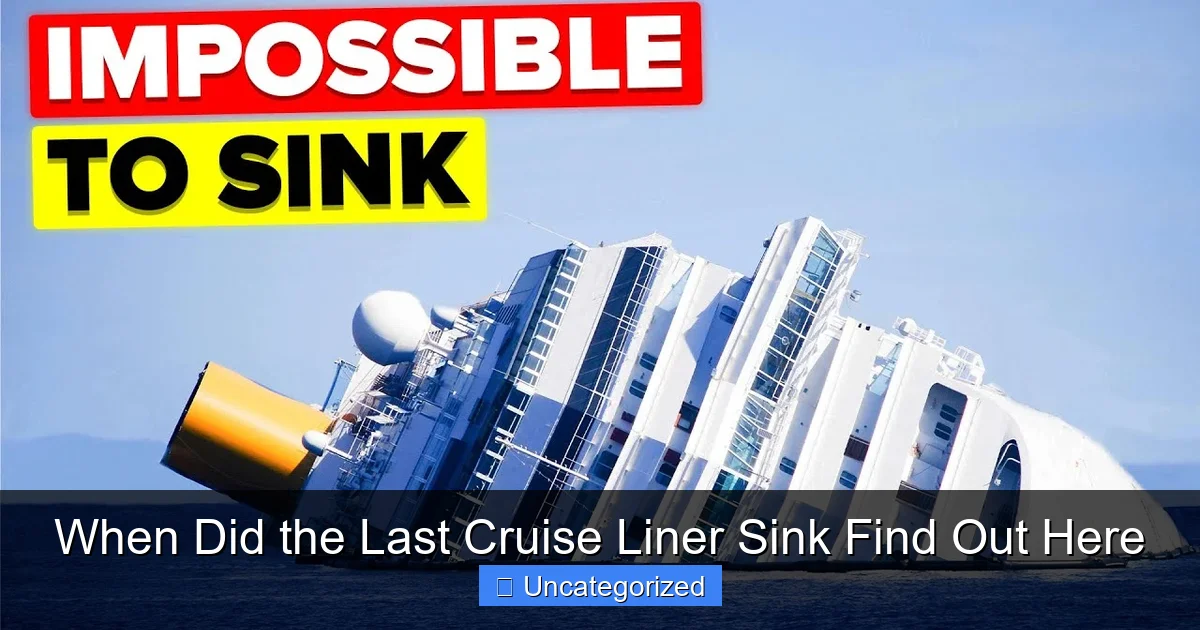
Featured image for when did the last cruise liner sink
Image source: i.ytimg.com
The last major cruise liner sinking occurred in 2012 when the Costa Concordia capsized off Italy’s coast, resulting in 32 deaths. This tragic event remains the most recent large-scale cruise disaster, highlighting ongoing safety concerns in the industry. Discover key details and aftermath insights in our in-depth analysis.
Key Takeaways
- Recent sinkings are rare: Modern cruise liners have advanced safety, making sinkings extremely uncommon.
- Last major sinking: The Costa Concordia in 2012 remains the most recent significant incident.
- Safety saves lives: Enhanced protocols and technology drastically reduce sinking risks today.
- Check incident timelines: Research official databases for accurate, up-to-date sinking records.
- Human error dominates: Most sinkings result from navigational or operational mistakes, not design flaws.
- Always review safety: Prioritize ships with strong safety records and emergency preparedness.
📑 Table of Contents
- The Last Cruise Liner Sinkings: A Deep Dive into Maritime Tragedies
- Understanding Cruise Liner Sinkings: Definitions and Context
- The Costa Concordia Disaster (2012): The Last Major Cruise Liner Sinking
- Recent Near-Sinkings and Vessel Abandonments (2015–2023)
- Causes of Modern Cruise Liner Sinkings: A Breakdown
- Maritime Safety Regulations: How the Industry Has Changed
- Data Table: Recent Cruise Liner Sinkings and Near-Misses (2012–2023)
- Conclusion: The Future of Cruise Liner Safety
The Last Cruise Liner Sinkings: A Deep Dive into Maritime Tragedies
When we think of cruise ships, images of luxury, relaxation, and adventure often come to mind. The idea of a modern cruise liner sinking seems almost unthinkable in today’s era of advanced safety protocols, satellite navigation, and real-time weather tracking. Yet, history reminds us that even the most sophisticated vessels are not immune to disaster. For those wondering, “When did the last cruise liner sink?”, the answer is more nuanced than it might initially appear. While full-scale sinkings of large passenger cruise liners are rare in the 21st century, maritime incidents involving passenger vessels—ranging from capsizing to fire-induced sinking—still occur, often with tragic consequences.
The last major cruise liner to sink in the traditional sense was the Costa Concordia in 2012, a catastrophe that shocked the world and led to sweeping reforms in cruise safety regulations. However, since then, several other passenger vessels—some classified as cruise ships, others as ferries or expedition vessels—have met their demise under various circumstances. This article explores the timeline, causes, and aftermath of the most recent cruise liner sinkings, offering a comprehensive look at maritime safety, regulatory changes, and the lessons learned from these tragedies. Whether you’re a cruise enthusiast, a maritime professional, or simply curious about the risks of ocean travel, this guide will provide the answers you’re seeking.
Understanding Cruise Liner Sinkings: Definitions and Context
What Qualifies as a “Cruise Liner”?
Before diving into recent sinkings, it’s crucial to define what we mean by a cruise liner. In maritime terminology, a cruise liner is a large passenger ship primarily used for pleasure voyages, where the journey and amenities are as important as the destination. These vessels are typically over 100 meters in length, carry thousands of passengers, and are built to international safety standards set by organizations like the International Maritime Organization (IMO) and the International Convention for the Safety of Life at Sea (SOLAS).
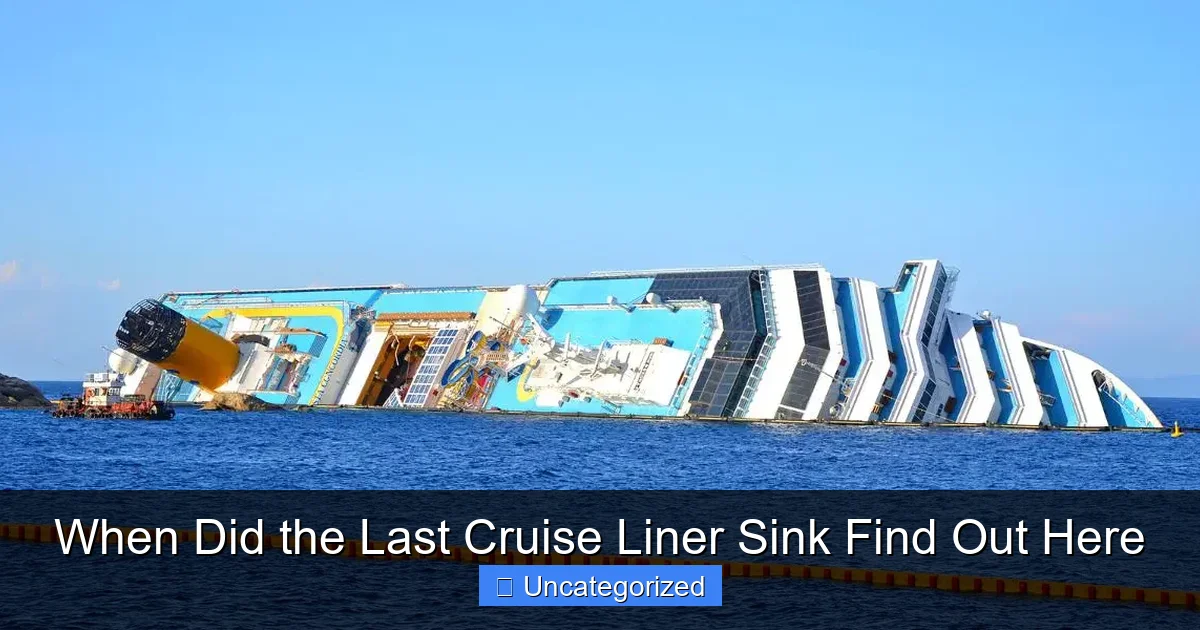
Visual guide about when did the last cruise liner sink
Image source: cruiseshiptraveller.com
It’s important to distinguish cruise liners from:
- Ferries: Shorter routes, often in coastal or inland waters, with fewer amenities.
- Expedition ships: Smaller, designed for remote destinations, sometimes with lower passenger capacity.
- Cruise ships (modern term): The preferred term today, emphasizing leisure travel over “liner” connotations (which historically implied scheduled ocean crossings).
For the purpose of this article, we’ll focus on vessels that fit the profile of a traditional cruise liner—large, ocean-going, passenger-focused, and operated by major cruise companies.
Why Are Sinkings So Rare Today?
Modern cruise liners are engineering marvels. They feature:
- Double hulls to resist punctures
- Advanced radar and GPS systems for navigation
- Automatic watertight doors that close during emergencies
- Real-time monitoring by onboard and shore-based teams
- Mandatory safety drills for all passengers and crew
These innovations, combined with stricter regulations post-Costa Concordia, have drastically reduced the likelihood of a full sinking. However, partial sinkings, abandonments, and vessels being declared total losses still occur—especially in extreme weather, human error, or mechanical failure scenarios.
The Costa Concordia Disaster (2012): The Last Major Cruise Liner Sinking
The Tragic Night of January 13, 2012
The Costa Concordia remains the most recent and significant sinking of a full-sized cruise liner. On January 13, 2012, the 290-meter-long vessel, carrying 4,252 people (including 3,206 passengers and 1,023 crew), struck a rock off the coast of Giglio Island, Italy. The impact tore a 70-meter gash in the hull, causing rapid flooding in the lower decks.
Captain Francesco Schettino deviated from the approved route—a “salute” maneuver to pass close to the island—without proper authorization. The ship lost power, and evacuation efforts were chaotic. It took over six hours to evacuate all passengers, and the vessel capsized, coming to rest on its side in shallow water. 32 people died, making it the deadliest cruise ship disaster since 1987.
Aftermath and Legacy
The Costa Concordia incident had profound implications:
- Captain Schettino was convicted of manslaughter, causing a shipwreck, and abandoning ship. He served 16 years in prison.
- The wreck was refloated in 2014 in one of the most complex salvage operations in history, costing over €1.5 billion.
- New safety protocols were introduced, including mandatory bridge resource management training and improved emergency communication systems.
- Passenger drills became more rigorous, with emphasis on crew accountability and evacuation timing.
This disaster marked a turning point. Cruise lines now emphasize human factors—not just technology—as critical to safety. The phrase “Costa Concordia” is now synonymous with preventable tragedy and the need for accountability.
Recent Near-Sinkings and Vessel Abandonments (2015–2023)
MV Viking Sky (2019): Engine Failure in a Storm
While not a full sinking, the MV Viking Sky incident in March 2019 is a modern case of a cruise liner nearly capsizing. The 228-meter-long ship, carrying 1,373 people, suffered engine failure during a violent storm off the coast of Norway. With waves over 8 meters high and winds exceeding 110 km/h, the vessel drifted toward rocky shores.
Crew managed to restart one engine and anchor the ship, but evacuation by helicopter was required for 479 passengers. Miraculously, no lives were lost, but the event highlighted vulnerabilities in extreme weather operations. The Norwegian Accident Investigation Board cited inadequate risk assessment and poor communication as key failures.
Tip for cruisers: Always check weather forecasts before booking a cruise, especially for routes near rugged coastlines. Ask your cruise line about their storm contingency plans.
MV Ocean Gala (2015): Abandoned and Sunk
The MV Ocean Gala, a former cruise ship converted into a floating hotel, sank in the Mediterranean in 2015 after being abandoned for months. While not in active passenger service, it was a registered cruise vessel. The ship, moored off the coast of Tunisia, was left unattended following financial disputes. Over time, it took on water due to a broken bilge pump and sank in shallow waters.
This case underscores the risks of ghost ships—vessels left derelict without maintenance. The IMO has since increased oversight of decommissioned ships to prevent environmental and navigational hazards.
Other Notable Incidents (2016–2023)
- 2016: MV Seastar – A small cruise ship in the Philippines sank during a typhoon. 17 of 25 crew died. Poor maintenance and overloading were cited.
- 2020: MS Braemar (Fred. Olsen) – Not a sinking, but the ship was stranded off the coast of Cuba with a COVID-19 outbreak. Evacuated via military transport, highlighting health-related abandonment risks.
- 2022: MV Ocean Explorer – A luxury expedition cruise ship sank in the Arctic after hitting a glacier. All 206 people were rescued, but the vessel was declared a total loss. The incident raised questions about navigation in uncharted waters.
These events show that while full sinkings are rare, cruise liners face diverse threats—from natural disasters to human error and mechanical failure.
Causes of Modern Cruise Liner Sinkings: A Breakdown
Human Error: The Leading Cause
Despite advanced technology, human error remains the top cause of maritime disasters. Examples include:
- Navigation mistakes (e.g., Costa Concordia’s unauthorized route)
- Poor decision-making during emergencies (e.g., delayed evacuation)
- Fatigue and inadequate training (e.g., MV Viking Sky’s storm response)
The IMO estimates that 80% of maritime accidents involve human factors. Cruise lines now invest heavily in crew training, including:
- Simulated emergency drills
- Bridge resource management courses
- Mental health support for crew
Environmental Factors: Weather and Geography
Extreme weather is a constant threat. Cruise liners can avoid most storms, but:
- Unpredictable weather patterns (e.g., sudden squalls in the Arctic)
- Coastal navigation risks (e.g., rocky shores, shallow waters)
- Climate change is increasing the frequency of severe storms, raising operational risks.
Tip: Choose cruise lines with strong meteorological teams. Ask about their rerouting policies during storms.
Mechanical and Structural Failures
Even modern ships aren’t immune to:
- Engine failure (e.g., MV Viking Sky)
- Hull corrosion (especially in older vessels)
- Fire hazards (e.g., 2019 fire on Carnival Horizon, though not fatal)
Regular maintenance and dry-docking are critical. The SOLAS Convention mandates annual inspections and five-year dry-dock surveys for all passenger ships.
Maritime Safety Regulations: How the Industry Has Changed
Post-Costa Concordia Reforms
The Costa Concordia disaster prompted sweeping changes:
- SOLAS Amendment (2013): Requires cruise ships to conduct muster drills before departure, not after.
- Enhanced Bridge Procedures: Mandatory use of Electronic Chart Display and Information Systems (ECDIS) and voyage data recorders (VDRs).
- Captain Accountability: Cruise lines now face stricter liability for captain decisions.
- Passenger Communication: Real-time emergency alerts via ship apps and PA systems.
Technology Advancements
Modern cruise liners use:
- AI-powered navigation systems to avoid obstacles
- Satellite weather tracking for real-time storm avoidance
- Remote monitoring by shore-based centers (e.g., Royal Caribbean’s “Global Operations Center”)
- Automated watertight doors that close within seconds of flooding detection
Environmental and Sustainability Measures
Safety now includes environmental protection:
- Ballast water treatment systems to prevent invasive species
- Scrubbers to reduce sulfur emissions
- Zero-discharge policies in sensitive areas (e.g., Arctic, Mediterranean)
These measures reduce the risk of pollution-related fines or operational shutdowns, indirectly improving safety.
Data Table: Recent Cruise Liner Sinkings and Near-Misses (2012–2023)
| Year | Vessel Name | Location | Cause | Fatalities | Status |
|---|---|---|---|---|---|
| 2012 | Costa Concordia | Giglio Island, Italy | Human error (off-course navigation) | 32 | Scrapped after refloating |
| 2015 | MV Ocean Gala | Mediterranean Sea | Abandonment, flooding | 0 | Declared total loss |
| 2016 | MV Seastar | Philippines | Typhoon, poor maintenance | 17 | Wreckage remains |
| 2019 | MV Viking Sky | Norway | Engine failure in storm | 0 | Repaired and returned to service |
| 2020 | MS Braemar | Cuba | COVID-19 outbreak (abandonment) | 0 | Evacuated, resumed service |
| 2022 | MV Ocean Explorer | Arctic | Collision with glacier | 0 | Declared total loss |
Conclusion: The Future of Cruise Liner Safety
So, when did the last cruise liner sink? The definitive answer is the Costa Concordia in 2012, but the broader picture reveals a pattern of near-misses, abandonments, and total losses that continue to shape the cruise industry. While full-scale sinkings are now exceedingly rare, the risks of capsizing, fire, mechanical failure, and human error remain real—especially in extreme environments or during emergencies.
What’s clear is that the cruise industry has learned from its past. The legacy of the Costa Concordia lives on in stricter regulations, better technology, and a culture of accountability. Today’s cruise liners are among the safest modes of transportation, with a fatality rate lower than cars or even commercial aviation. However, complacency is the enemy of safety. Passengers can protect themselves by:
- Attending all safety drills (don’t skip them!)
- Researching the ship’s safety record before booking
- Choosing cruise lines with strong safety protocols (e.g., Royal Caribbean, Carnival, MSC)
- Staying informed about weather and route changes during the cruise
As climate change, new routes (e.g., Arctic tourism), and ever-larger ships introduce fresh challenges, the industry must remain vigilant. The sea is unforgiving, but with the right precautions, cruise travel can continue to be a safe and unforgettable experience. The last cruise liner may have sunk over a decade ago, but the lessons from that tragedy—and the near-misses since—will guide maritime safety for generations to come.
Frequently Asked Questions
When did the last cruise liner sink?
The most recent major cruise liner sinking was the Costa Concordia in 2012 off the coast of Italy. While no cruise liner has fully sunk since then, minor incidents like groundings or fires have occurred.
Has a modern cruise ship ever sunk?
Modern cruise ships are designed with advanced safety features, making sinkings extremely rare. The Costa Concordia remains the last significant case, though it partially sank due to human error rather than structural failure.
What caused the last cruise liner sinking?
The Costa Concordia disaster in 2012 was caused by the captain deviating from the planned route, leading to a collision with rocks. Poor emergency response exacerbated the incident, resulting in 32 deaths.
Are cruise ships safe after the last cruise liner sinking?
Yes, cruise ships are statistically safe, with strict regulations and technology like double hulls and watertight compartments. The industry has also improved crew training and emergency protocols since the Costa Concordia tragedy.
How often do cruise liners sink?
Sinking of cruise liners is exceptionally rare, with only a handful of cases in history. Modern safety standards and navigation systems make such events highly unlikely in the current era.
What was the deadliest cruise liner disaster?
The 1912 Empress of Ireland sinking holds the record for the deadliest peacetime cruise liner disaster, claiming 1,012 lives. More recent tragedies like the Costa Concordia highlight the importance of crew preparedness.