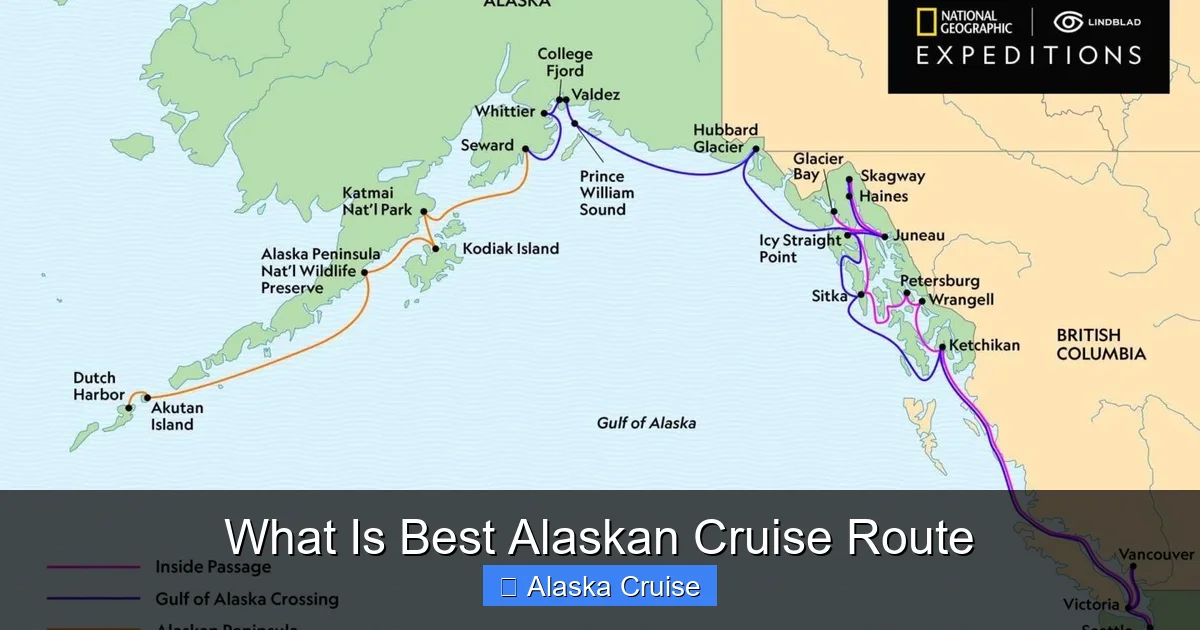
Choosing the best Alaskan cruise route depends on your interests, time, and travel style. Whether you prefer a roundtrip from Seattle, a one-way journey through the Inside Passage, or a Gulf Coast adventure, each route offers unique sights like glaciers, whales, and charming towns.
Key Takeaways
- Inside Passage Route: Ideal for first-time cruisers, this classic path from Seattle or Vancouver features lush rainforests, wildlife, and iconic stops like Juneau and Ketchikan.
- Gulf Coast Route: Offers deeper exploration with glacier-rich destinations like Hubbard Glacier and College Fjords, plus access to Denali National Park via land tours.
- Roundtrip vs. One-Way: Roundtrip cruises are convenient and cost-effective, while one-way itineraries allow for extended adventures with pre- or post-cruise land tours.
- Best Time to Cruise: May through September offers mild weather, longer days, and peak wildlife activity—July and August are busiest but most vibrant.
- Wildlife and Scenery: Look for routes that include Glacier Bay National Park, Tracy Arm Fjord, and Icy Strait Point for the best natural experiences.
- Cruise Line Matters: Different lines offer varied onboard experiences, shore excursions, and access to remote areas—choose based on your travel preferences.
- Port Highlights: Don’t miss Skagway’s gold rush history, Juneau’s whale-watching tours, and Ketchikan’s Tlingit culture and totem poles.
📑 Table of Contents
- What Is the Best Alaskan Cruise Route? A Complete Guide
- Understanding Alaskan Cruise Routes: An Overview
- The Classic Inside Passage Route: Perfect for First-Timers
- The Gulf Coast Route: For Glacier Lovers and Adventure Seekers
- Roundtrip vs. One-Way Cruises: Which Is Right for You?
- Best Time to Cruise Alaska: Timing Your Trip
- Choosing the Right Cruise Line for Your Route
- Conclusion: Finding Your Perfect Alaskan Cruise Route
What Is the Best Alaskan Cruise Route? A Complete Guide
Dreaming of snow-capped peaks, towering glaciers, and breaching humpback whales? An Alaskan cruise might just be the adventure you’ve been waiting for. But with so many routes, ports, and cruise lines to choose from, figuring out the best Alaskan cruise route can feel overwhelming. Don’t worry—we’ve got you covered.
Alaska is a land of extremes: vast wilderness, dramatic coastlines, and a rich cultural history shaped by Indigenous peoples and gold rush pioneers. A cruise is one of the most scenic and relaxing ways to experience it. Whether you’re a nature lover, history buff, or just looking to unplug and enjoy breathtaking views, there’s a perfect route for you.
But what makes one route “better” than another? It really depends on what you want out of your trip. Are you looking for glacier viewing? Wildlife spotting? Cultural immersion? Or maybe you just want to sail through calm waters with a hot cocoa in hand? The best Alaskan cruise route balances scenery, port experiences, and logistical ease. In this guide, we’ll break down the top routes, highlight must-see stops, and help you pick the one that fits your travel style.
Understanding Alaskan Cruise Routes: An Overview
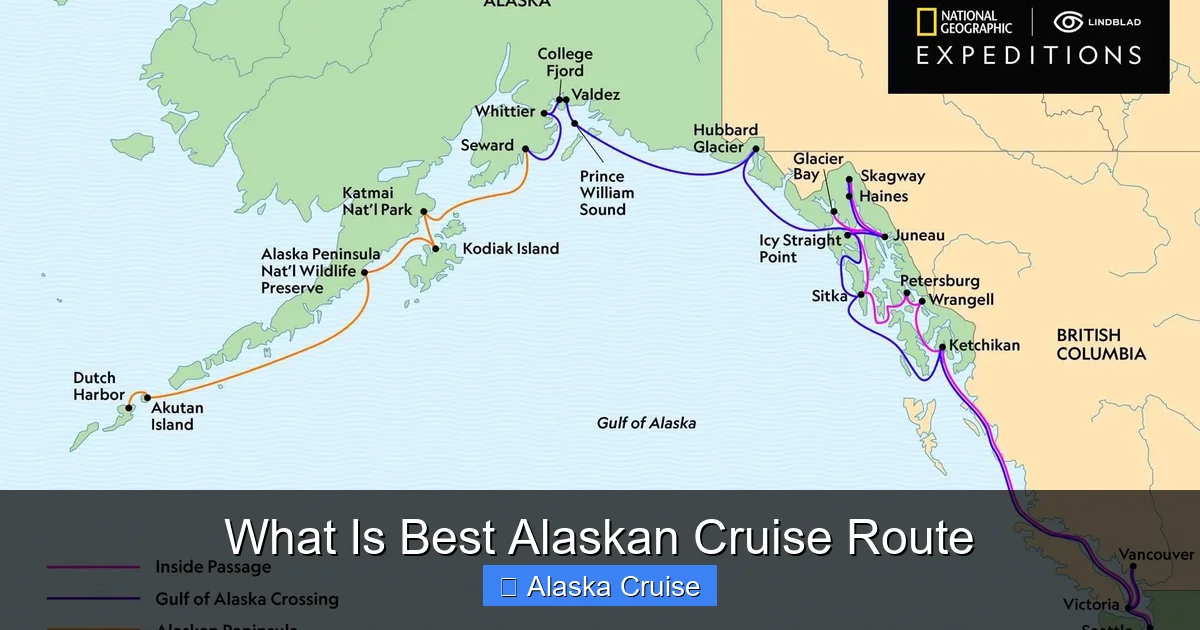
Visual guide about What Is Best Alaskan Cruise Route
Image source: eatsleepcruise.com
Before diving into specific itineraries, it’s helpful to understand the main types of Alaskan cruise routes. Most fall into two broad categories: the Inside Passage and the Gulf Coast (or open-ocean) routes. Each offers a different flavor of Alaska.
The Inside Passage is the most popular route, especially for first-time cruisers. It hugs the coastline of British Columbia and southeastern Alaska, winding through narrow channels, lush forests, and charming coastal towns. This route typically starts and ends in Seattle or Vancouver and includes stops like Juneau, Skagway, and Ketchikan. It’s known for its calm waters, frequent wildlife sightings, and easy access to major ports.
In contrast, the Gulf Coast route ventures further out into the Pacific Ocean and often includes more remote, glacier-heavy destinations. These cruises usually begin in Seattle or Vancouver and end in Seward or Whittier (near Anchorage), or vice versa. This one-way journey allows for deeper exploration and often pairs with land tours to Denali National Park or Fairbanks. You’ll see massive glaciers like Hubbard and Sawyer, and may even sail through the dramatic College Fjords.
Another key difference is whether the cruise is roundtrip or one-way. Roundtrip cruises are convenient—you fly into and out of the same city—and often more budget-friendly. One-way cruises, while sometimes pricier, offer the chance to extend your adventure with a land tour before or after the voyage. They also allow you to see more of Alaska without retracing your steps.
The Classic Inside Passage Route: Perfect for First-Timers
If you’re new to Alaska cruising, the Inside Passage is likely your best bet. This route is the most accessible, scenic, and family-friendly option, offering a gentle introduction to the state’s natural wonders.
Most Inside Passage cruises depart from Seattle or Vancouver and last 7 to 10 days. You’ll sail through protected waters, passing islands, fjords, and coastal rainforests. The calm seas make it ideal for travelers prone to motion sickness, and the frequent stops allow plenty of time to explore on land.
One of the biggest draws is the wildlife. Keep your camera ready for bald eagles, sea lions, porpoises, and even black bears along the shoreline. Whale-watching is especially popular—humpbacks, orcas, and gray whales are commonly spotted, particularly near Juneau and Icy Strait Point.
Top Ports on the Inside Passage
Juneau: Alaska’s capital city is only accessible by boat or plane, which adds to its charm. Here, you can take a helicopter tour to land on a glacier, go dog sledding on the Juneau Icefield, or join a whale-watching excursion. Don’t miss the Mendenhall Glacier, just 12 miles from downtown—it’s one of the most accessible glaciers in Alaska.
Skagway: Step back in time in this gold rush town. Walk the wooden boardwalks, visit the Klondike Gold Rush National Historical Park, or ride the White Pass and Yukon Route Railway—a scenic train journey that climbs steep mountain passes with breathtaking views.
Ketchikan: Known as the “Salmon Capital of the World,” Ketchikan is rich in Native Alaskan culture. Visit Totem Bight State Historical Park to see restored totem poles, or take a floatplane tour to Misty Fjords National Monument for jaw-dropping views of waterfalls and cliffs.
Why Choose the Inside Passage?
This route is ideal if you want a balanced mix of nature, culture, and comfort. It’s great for families, couples, and solo travelers alike. Plus, because it’s so popular, you’ll find a wide range of cruise lines and price points—from luxury ships to budget-friendly options.
One tip: Book early, especially if you’re traveling in July or August. These months are peak season, and cabins fill up fast. Also, consider adding a pre-cruise stay in Vancouver or Seattle to explore the cities before setting sail.
The Gulf Coast Route: For Glacier Lovers and Adventure Seekers
If you’re after bigger glaciers, wilder landscapes, and a more immersive Alaskan experience, the Gulf Coast route is for you. This one-way journey typically runs from Seattle or Vancouver to Seward or Whittier (near Anchorage), or the reverse.
These cruises often last 7 to 14 days and include more time at sea, which means you’ll have longer stretches to enjoy the scenery and onboard activities. But the payoff is worth it: you’ll sail past some of the most dramatic glaciers in North America.
Must-See Glaciers and Fjords
Hubbard Glacier: One of the largest tidewater glaciers in North America, Hubbard Glacier is a highlight of many Gulf Coast itineraries. As your ship approaches, you’ll hear the deep rumble of calving ice—chunks breaking off and crashing into the water. It’s a powerful, unforgettable sight.
College Fjords: Located near Valdez, this remote area was named after Ivy League colleges whose alumni funded the expedition that discovered it. The fjords are lined with towering cliffs and glaciers, and sightings of sea otters, seals, and mountain goats are common.
Tracy Arm and Sawyer Glacier: Though not always included due to ice conditions, Tracy Arm is a narrow, glacier-filled fjord that feels like sailing through a frozen canyon. Sawyer Glacier, at the end of the fjord, often calves dramatically, sending icebergs floating into the water.
Land Tour Extensions
One of the biggest advantages of a one-way Gulf Coast cruise is the opportunity to add a land tour. Many cruise lines partner with tour operators to offer multi-day packages that include stays in Denali National Park, Fairbanks, or Anchorage.
For example, you might cruise from Seattle to Seward, then take a train or bus to Denali for a wildlife safari. Or, start in Whittier and explore the Kenai Fjords before flying home from Anchorage. These extensions let you experience Alaska’s interior—something most cruise-only travelers miss.
Who Should Choose This Route?
The Gulf Coast route is best for travelers who want a more rugged, nature-focused experience. It’s ideal for photographers, hikers, and anyone who loves dramatic landscapes. Keep in mind that weather can be more unpredictable, and some ports are more remote, so shore excursions may be limited.
Also, because it’s one-way, you’ll need to plan for transportation at both ends. Flying into Seattle and out of Anchorage (or vice versa) is common, but make sure to allow extra time for connections, especially if you’re adding a land tour.
Roundtrip vs. One-Way Cruises: Which Is Right for You?
One of the first decisions you’ll make is whether to book a roundtrip or one-way cruise. Both have pros and cons, and the best choice depends on your travel style, budget, and time.
Roundtrip Cruises: Convenience and Value
Roundtrip cruises start and end in the same city—usually Seattle or Vancouver. This makes travel logistics simple: you fly in, cruise, and fly home from the same airport. It’s often cheaper, too, since you’re not paying for two different flights.
These cruises are great for first-timers or those who prefer a more relaxed pace. You’ll still see plenty of glaciers and wildlife, especially if your itinerary includes Glacier Bay National Park or Tracy Arm.
However, roundtrip cruises do have limitations. You’ll retrace your route on the way back, which means less variety in scenery. And you won’t have the option to explore Alaska’s interior unless you book a separate land tour before or after the cruise.
One-Way Cruises: Adventure and Flexibility
One-way cruises offer a more dynamic experience. You’ll see different parts of Alaska on the way out and back, and you can easily add a land extension. For example, a cruise from Vancouver to Seward can be paired with a 3-day Denali tour, giving you a full Alaskan adventure.
These cruises are ideal for travelers who want to maximize their time and see as much as possible. They’re also great for those who’ve already done a roundtrip and want to explore deeper.
The downside? One-way cruises can be more expensive, especially if you’re flying into one city and out of another. You’ll also need to coordinate transportation, which can be tricky if flights are delayed or canceled.
Tips for Choosing
– If it’s your first Alaska cruise, start with a roundtrip from Seattle or Vancouver.
– If you’re an experienced traveler or nature enthusiast, go for a one-way Gulf Coast route with a land tour.
– Compare total costs—sometimes a one-way cruise plus flights is cheaper than a roundtrip with expensive excursions.
– Check cruise line partnerships: many offer discounted airfare or bundled land tours.
Best Time to Cruise Alaska: Timing Your Trip
Timing is everything when it comes to an Alaskan cruise. The season runs from May to September, but each month offers a different experience.
May and Early June: Quiet and Crisp
These are the shoulder months—less crowded, lower prices, and still plenty of wildlife. You might see newborn bear cubs and migrating birds. The weather is cooler, and some ports may have limited services, but the scenery is stunning with snow-capped peaks and blooming wildflowers.
July and August: Peak Season
This is when most people cruise Alaska. The weather is warmest, days are longest (up to 18 hours of daylight), and all ports and excursions are fully operational. It’s also the best time for whale-watching and glacier viewing.
The downside? Crowds. Popular spots like Mendenhall Glacier and Skagway can get busy, and cabins sell out fast. Book at least 6–12 months in advance if you’re traveling during these months.
September: Fall Colors and Fewer Crowds
As summer winds down, September offers a quieter, more intimate experience. The fall colors are spectacular, especially in the Tongass National Forest. Wildlife is still active, and you might see bears fishing for salmon.
Some cruise lines reduce their schedules in September, so options may be limited. But if you can find a sailing, it’s a fantastic time to go.
Weather and Packing Tips
Alaska’s weather is unpredictable—even in summer, it can be cool and rainy. Pack layers: a waterproof jacket, fleece, warm socks, and comfortable walking shoes. Don’t forget binoculars, sunscreen, and insect repellent.
Choosing the Right Cruise Line for Your Route
Not all cruise lines are created equal—especially in Alaska. Some specialize in luxury, others in adventure, and some in family-friendly experiences. Your choice will shape your entire trip.
Luxury Lines: Crystal, Seabourn, and Silversea
These lines offer smaller ships, personalized service, and high-end amenities. They often visit remote areas and provide expert naturalists on board. Perfect for travelers who want comfort and exclusivity.
Mainstream Lines: Princess, Holland America, and Celebrity
These are the most popular choices for Alaska. They offer a good balance of comfort, activities, and shore excursions. Princess and Holland America, in particular, have long-standing relationships with local tour operators, so their excursions are often top-notch.
Adventure and Expedition Lines: Lindblad-National Geographic, UnCruise, and Hurtigruten
If you’re looking for a more immersive, active experience, consider an expedition cruise. These smaller ships focus on wildlife, photography, and outdoor adventures. You might kayak near glaciers, hike in remote fjords, or join a naturalist on a Zodiac tour.
Family-Friendly Options: Disney, Royal Caribbean, and Norwegian
These lines cater to families with kids’ clubs, entertainment, and a wide range of activities. Disney, in particular, is known for its exceptional service and themed experiences.
Tips for Choosing
– Read reviews and check itineraries carefully—some lines spend more time in port, others at sea.
– Consider the ship size: smaller ships can access narrower channels and remote areas.
– Look for included excursions or naturalist programs—these add great value.
Conclusion: Finding Your Perfect Alaskan Cruise Route
So, what is the best Alaskan cruise route? The truth is, there’s no single “best” route—only the one that’s best for you.
If you’re a first-time cruiser looking for ease, beauty, and a taste of Alaska’s culture, the Inside Passage from Seattle or Vancouver is hard to beat. It’s scenic, accessible, and packed with wildlife and charming towns.
If you’re a nature lover or adventure seeker, the Gulf Coast route offers deeper exploration, bigger glaciers, and the chance to combine your cruise with a land tour to Denali or the Kenai Peninsula.
And if you’re somewhere in between? Consider a one-way cruise with a mix of sea days and port stops, or a roundtrip with a pre-cruise stay in Vancouver.
No matter which route you choose, an Alaskan cruise is more than just a vacation—it’s a journey into one of the last great wildernesses on Earth. You’ll return home with memories of towering ice walls, silent fjords, and the quiet hum of nature. And maybe, just maybe, a newfound love for the great outdoors.
So pack your bags, grab your camera, and set sail. Alaska is waiting.
Frequently Asked Questions
What is the most scenic Alaskan cruise route?
The Gulf Coast route is often considered the most scenic, especially for glacier viewing. It includes highlights like Hubbard Glacier, College Fjords, and Tracy Arm, offering dramatic ice formations and remote wilderness.
Is a roundtrip or one-way cruise better for Alaska?
It depends on your goals. Roundtrip cruises are more convenient and affordable, while one-way cruises allow for land tours and more diverse scenery. Choose based on your budget and travel style.
When is the best time to see glaciers on an Alaskan cruise?
July and August offer the best glacier viewing, with calmer seas and longer daylight. However, glaciers can be seen from May to September, with earlier months offering fewer crowds.
Can you see whales on an Alaskan cruise?
Yes! Humpback, orca, and gray whales are commonly spotted, especially near Juneau, Icy Strait Point, and the Inside Passage. Peak whale-watching is in July and August.
Do I need to book excursions in advance?
Yes, especially for popular activities like helicopter tours, dog sledding, and wildlife safaris. Many sell out months in advance, particularly during peak season.
What should I pack for an Alaskan cruise?
Pack layers, including a waterproof jacket, warm fleece, gloves, and sturdy shoes. Don’t forget binoculars, sunscreen, and motion sickness medication—even on calm waters.