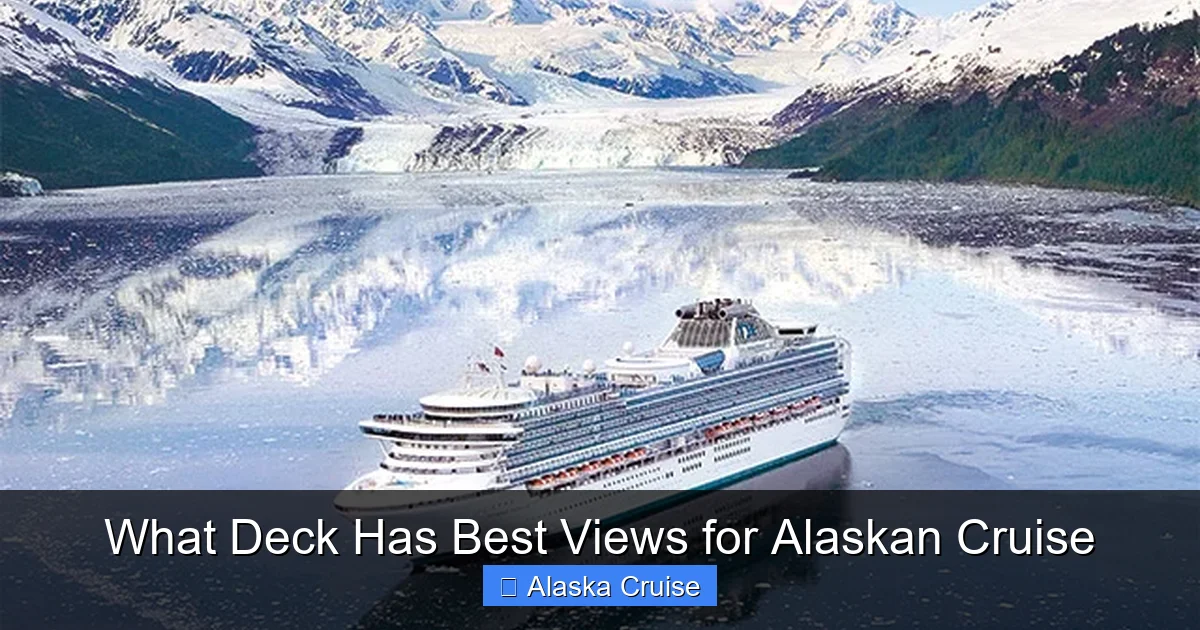
Choosing the right deck can make or break your Alaskan cruise experience. While every level offers something unique, higher decks generally provide the most expansive and unobstructed views of glaciers, wildlife, and rugged coastlines. This guide breaks down each deck’s strengths so you can pick the perfect spot for unforgettable Alaskan scenery.
Planning an Alaskan cruise is exciting—majestic glaciers, breaching whales, snow-capped peaks, and untouched wilderness await. But with so much natural beauty to take in, where should you be standing (or sitting!) to get the best views? The answer isn’t as simple as “the highest deck.” While elevation helps, factors like cabin orientation, ship design, weather conditions, and even the time of day play crucial roles in your viewing experience.
Alaska’s dramatic landscapes unfold slowly and majestically. Unlike tropical cruises where the scenery changes quickly, here you’ll spend hours gliding past towering ice walls, misty inlets, and forested shorelines. That means you’ll want a spot that’s not only visually rewarding but also comfortable for extended periods. Whether you’re sipping coffee at dawn or snapping photos of a calving glacier, your deck choice can dramatically impact how much you enjoy—and remember—your journey.
In this guide, we’ll walk you through every major deck type found on modern Alaskan cruise ships, from budget-friendly interior cabins to premium forward suites. You’ll learn which levels offer the clearest sightlines, where to avoid obstructions, and how to balance view quality with comfort and cost. By the end, you’ll know exactly what to look for when booking your cabin—and how to make the most of Alaska’s once-in-a-lifetime scenery.
Key Takeaways
- Higher decks (8–14) offer panoramic views: Elevated positions give you sweeping vistas of glaciers, fjords, and mountain ranges without obstruction.
- Forward-facing cabins maximize scenic exposure: Cabins and public areas at the front of the ship capture sunrise light and early-morning wildlife activity.
- Outdoor promenade decks are ideal for photography: Open-air spaces like the Promenade or Sun Deck let you move freely and shoot from multiple angles.
- Midship locations reduce motion sickness: If you’re prone to seasickness, staying near the center of the ship provides more stability during rough waters.
- Lower decks offer cozy, sheltered viewing: Great for rainy or windy days when you still want to enjoy the scenery from inside with large windows.
- Balcony cabins aren’t always necessary: Public observation decks often provide better views than private balconies, especially on older ships with limited overhangs.
- Timing matters as much as location: Early mornings and late afternoons offer golden-hour lighting that enhances glacier blues and mountain silhouettes.
📑 Table of Contents
- Understanding Cruise Ship Deck Layouts
- Why Higher Decks Often Win for Scenic Views
- The Case for Mid-Level Decks: Balance and Comfort
- Lower Decks: Cozy, Sheltered, and Surprisingly Scenic
- Forward vs. Aft: Which End Offers Better Views?
- Maximizing Your View: Timing, Weather, and Strategy
- Final Tips for Choosing Your Perfect Deck
Understanding Cruise Ship Deck Layouts
Before diving into which deck has the best views for an Alaskan cruise, it helps to understand how ships are structured. Most mainstream cruise lines sailing Alaska—like Holland America, Princess, Norwegian, and Royal Caribbean—use similar deck numbering systems, though specifics vary by vessel.
Typically, the lowest passenger decks (often labeled Deck 2 or 3) house crew areas, engines, and storage. Guest accommodations usually begin around Deck 4 or 5, with public spaces like dining rooms, theaters, and lounges spread across mid-levels. Higher decks (8 and above) feature outdoor areas, premium cabins, and observation zones.
Deck numbers don’t always correspond directly to height—some ships have “split” decks or unique naming conventions (e.g., “Verandah Deck” instead of a number). Always check your ship’s deck plan before booking. Most cruise lines provide interactive maps online that show exact cabin locations, window sizes, and nearby amenities.
One key thing to note: Alaska-bound ships are often specially outfitted for cold-weather cruising. This means reinforced hulls, heated outdoor areas, and larger windows designed to withstand icy conditions—all of which enhance your viewing experience regardless of deck level.
How Ship Design Affects Your View
Not all ships are created equal when it comes to sightlines. Newer vessels, especially those built in the last decade, prioritize guest experience with features like floor-to-ceiling windows, cantilevered balconies, and multi-level observation lounges. For example, Princess Cruises’ “Meds” ships (like the Grand Princess) include a glass-enclosed atrium with 360-degree views—perfect for watching wildlife without braving the cold.
Older ships may have smaller windows, narrower balconies, or structural supports that block parts of the view. However, many have been retrofitted with upgrades. Holland America’s ms Zaandam, for instance, added extra outdoor seating and heated windshields to its Crow’s Nest lounge after feedback from Alaskan cruisers.
When comparing ships, look for:
– **Overhang clearance**: Balconies that extend beyond the ship’s hull offer unobstructed views.
– **Window size and placement**: Larger, lower-set windows let you see water-level details like kayakers or sea otters.
– **Public observation areas**: Dedicated spots like the Bridge Wing or forward lounges often beat private balconies for visibility.
Why Higher Decks Often Win for Scenic Views
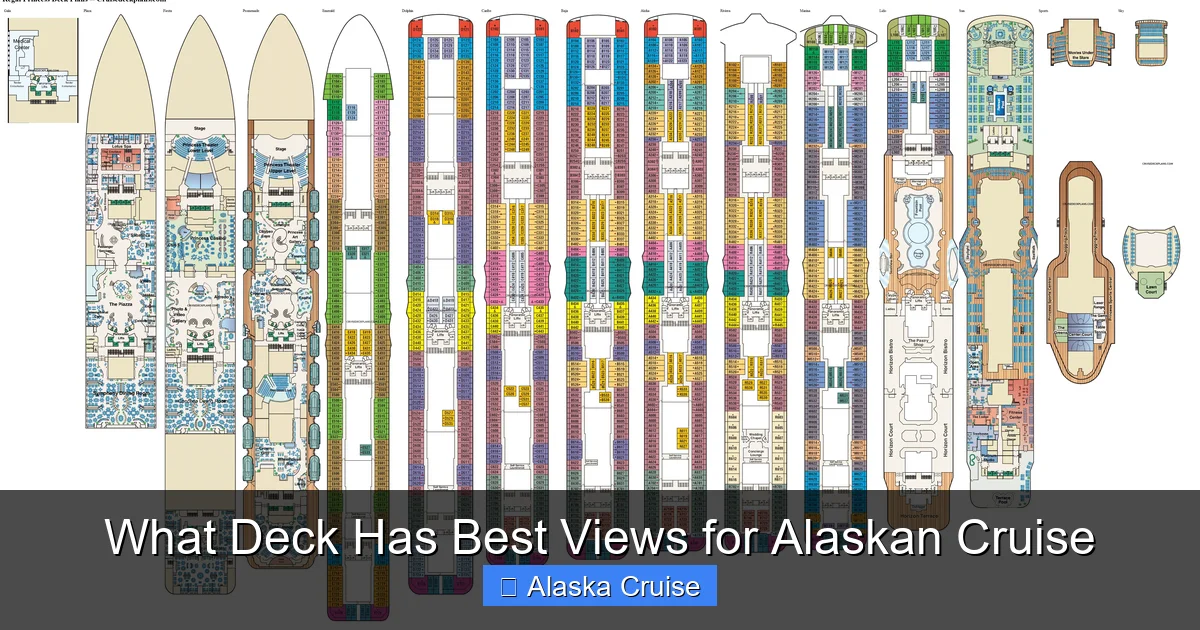
Visual guide about What Deck Has Best Views for Alaskan Cruise
Image source: cruisedeckplans.com
If you’ve ever stood on the top deck of a cruise ship watching a glacier calve into the sea, you know the power of elevation. Higher decks—typically Decks 8 through 14 on most Alaska ships—consistently deliver the most immersive and expansive views. Here’s why.
From an elevated position, your line of sight extends farther inland, allowing you to see mountain ridges, cloud formations, and entire fjord systems in one glance. You’re also above the “spray zone,” meaning you won’t get splashed by waves during rough passages (common in places like the Inside Passage or Glacier Bay). Plus, higher decks are usually quieter, with fewer foot traffic distractions—ideal for peaceful contemplation or photography.
Many premium cabins on these levels feature forward-facing orientations, giving you front-row seats to sunrise over the Tongass National Forest or a pod of orcas cruising alongside the ship. Even standard oceanview rooms on upper decks often have larger windows than those below, thanks to newer construction standards.
Best Public Spaces on High Decks
Don’t assume you need a pricey suite to enjoy top-tier views. Most ships reserve their highest decks for communal observation areas that are free and open to all passengers.
The **Sun Deck** (usually the very top level) is a favorite for unobstructed 360-degree views. It’s perfect for spotting wildlife at a distance or capturing wide-angle shots of glaciers. Just remember: it can get windy and cold, so bring layers.
The **Promenade Deck** (often one level down) wraps around the ship and offers sheltered walking paths with railings ideal for leaning on while gazing outward. Some ships even have heated sections here—a game-changer on chilly Alaskan mornings.
Forward-facing lounges like the **Crow’s Nest** (Holland America) or **Horizon Court** (Princess) combine comfort with killer views. These indoor-outdoor hybrids feature wraparound windows, cozy seating, and sometimes even telescopes or naturalist-led commentary during scenic passages.
When Higher Isn’t Better
While high decks excel in clear weather, they’re not always the best choice. During rain, fog, or heavy winds—common in Southeast Alaska—you may find yourself battling wind chill or limited visibility. In such conditions, mid-level indoor lounges with large windows can be more enjoyable.
Additionally, if you’re prone to motion sickness, the highest decks can feel the most movement during rough seas. The ship’s center of gravity is near the middle, so midship cabins on mid-level decks (Decks 6–8) tend to rock less. If stability is a priority, consider sacrificing a bit of height for comfort.
Finally, remember that very top decks can be crowded during peak scenic moments (like Glacier Bay transit). Arrive early to secure a good spot, or consider visiting during less busy times—like right after dinner when most passengers are indoors.
The Case for Mid-Level Decks: Balance and Comfort
While high decks steal the spotlight, mid-level decks (roughly Decks 5–8) offer a compelling blend of view quality, accessibility, and comfort—especially for travelers who prioritize practicality over panoramic perfection.
These decks typically house the main dining rooms, lounges, and family-friendly amenities, making them convenient hubs for daily activities. But they also provide excellent viewing opportunities, particularly in forward or aft sections.
Forward-facing cabins on mid-levels often have large picture windows that frame stunning vistas without the wind exposure of higher decks. Aft cabins (at the back of the ship) offer unique perspectives as you watch the ship’s wake disappear into the distance—a poetic way to reflect on the day’s adventures.
Indoor Viewing Havens
Alaska’s weather is famously unpredictable. One minute it’s sunny and calm; the next, it’s drizzling with 20 mph winds. That’s where mid-level indoor spaces shine.
Look for lounges with floor-to-ceiling windows, such as the **Atrium Lounge** on Carnival ships or the **Living Room** on Norwegian. These areas let you enjoy the scenery from warmth and comfort, often with complimentary coffee or hot chocolate. Many also feature live narration from onboard naturalists during key scenic passages—adding educational value to your viewing experience.
Some ships even have **glass-enclosed promenades** on mid-decks, combining the openness of an outdoor deck with the shelter of an indoor space. These are especially useful during early morning wildlife watches when temperatures are still low.
Family-Friendly Advantages
If you’re traveling with kids, mid-level decks often provide better access to pools, play areas, and casual eateries. This means you can keep an eye on little ones while still enjoying the view from a nearby lounge or balcony.
Additionally, cabins on these levels are usually more affordable than those on upper decks, freeing up budget for excursions or specialty dining. You might even find connecting rooms or family suites with partial ocean views—great for multi-generational trips.
Lower Decks: Cozy, Sheltered, and Surprisingly Scenic
It may seem counterintuitive, but lower decks (Decks 4–6) can be excellent choices for Alaskan cruising—particularly if you value comfort, quiet, and cost savings over unobstructed panoramas.
These levels are closest to the waterline, which means you’re more likely to see surface-level details: kayakers paddling near shore, sea lions basking on rocks, or fishing boats returning to port. The proximity to the water also creates a sense of intimacy with the landscape, as if you’re gliding just above the waves.
Interior Cabins with a View
Not all lower-deck cabins are windowless. Many feature **oceanview portholes** or **picture windows** that, while smaller than balcony doors, still offer charming glimpses of passing scenery. On newer ships, these windows are often larger and placed lower on the wall, improving visibility.
If you’re on a tight budget or plan to spend most of your time exploring ports rather than lounging on the ship, a lower-deck oceanview cabin can be a smart compromise. You’ll still catch the highlights—just from a cozier vantage point.
Quiet and Stability
Lower decks tend to be quieter, as they’re farther from noisy public areas like pools and nightclubs. They’re also less affected by ship movement, making them ideal for light sleepers or those prone to seasickness.
During stormy weather, being closer to the water can feel calming rather than unsettling—the ship rides more smoothly, and the sound of waves against the hull adds to the Alaskan ambiance.
That said, avoid cabins directly above engine rooms or near elevators, as noise and vibration can detract from the experience. Always check deck plans for potential disturbances.
Forward vs. Aft: Which End Offers Better Views?
Once you’ve chosen your deck level, the next decision is orientation: forward (front), midship (middle), or aft (back). For Alaskan cruising, **forward-facing locations generally win** for scenic immersion.
The Magic of the Bow
Standing at the bow (front) of the ship feels like leading the voyage. You’re the first to see what’s ahead—whether it’s a distant iceberg, a pod of humpback whales, or the entrance to a narrow fjord. The forward motion creates a sense of adventure, and the unobstructed sightlines are perfect for photography.
Many ships reserve premium suites for the forward section, but even standard forward cabins on mid-to-high decks offer exceptional views. Look for rooms with **forward-facing balconies** or **large windows angled toward the front**.
Public spaces like the **Bridge Wing** (an outdoor platform near the captain’s bridge) provide nearly 180-degree forward views. Access is sometimes restricted, but it’s worth asking staff if it’s open during scenic transits.
Aft Advantages: Reflection and Perspective
While less dramatic than the bow, aft (rear) cabins offer their own rewards. Watching the ship’s wake fade into the distance creates a meditative rhythm, especially at sunset. You’ll also see unique angles of ports as you depart—like the colorful buildings of Ketchikan receding into the mist.
Aft-facing balconies are often more private, as they’re less frequented by other passengers. They’re also great for spotting marine life that follows the ship, such as dolphins or seabirds riding the wake.
However, aft views can be partially blocked by the ship’s stern structure or lifeboats, depending on the vessel. Always verify sightlines using the ship’s deck plan.
Maximizing Your View: Timing, Weather, and Strategy
Even the best deck won’t deliver magic if you’re not there at the right time. Alaska’s light changes dramatically throughout the day, and weather can shift in minutes. Here’s how to optimize your viewing experience.
Golden Hours Are Golden
Early morning (6–8 AM) and late afternoon (5–7 PM) offer the most photogenic light. The low angle of the sun enhances textures in glaciers, casting deep blues and soft pinks across the ice. Wildlife is also more active during these times—bears foraging on shore, eagles soaring overhead, and whales feeding near the surface.
Set your alarm! Many cruisers sleep through the best moments, especially during long summer days when daylight lasts nearly 18 hours. Consider placing your cabin near a forward lounge so you can stumble out in pajamas for a quick peek.
Weather Wisdom
Rain and fog are part of the Alaskan experience—and they don’t have to ruin your views. Overcast skies actually soften harsh contrasts, making glacier details pop. Fog adds mystery, turning familiar landscapes into ethereal scenes.
Pack waterproof gear and consider booking a cabin with a window you can open slightly for fresh air (some ships allow this). If it’s pouring, head to an indoor lounge with heated windows—you’ll stay dry while still soaking in the drama outside.
Strategic Positioning
During key scenic passages (like Hubbard Glacier or Tracy Arm Fjord), popular decks fill up fast. Arrive 30–60 minutes early to claim a prime spot. Bring a portable chair or blanket if allowed, and don’t be afraid to move around—different angles reveal new details.
If you’re in a cabin, keep curtains open and blinds up. Even if you’re not actively watching, the changing scenery becomes part of your room’s ambiance.
Final Tips for Choosing Your Perfect Deck
With so many factors to consider, here’s a quick decision framework:
– **Prioritize view + budget?** Choose a mid-to-high forward cabin with a window or small balcony.
– **Want max comfort in bad weather?** Pick a mid-level indoor lounge near large windows.
– **Traveling with kids?** Opt for mid-deck family cabins near amenities.
– **Photography enthusiast?** Secure a high forward spot or Sun Deck access.
– **Prone to seasickness?** Stay midship on Decks 6–8.
Remember: no single deck is “best” for everyone. The ideal choice depends on your travel style, budget, and what you value most—whether that’s unobstructed vistas, cozy shelter, or easy access to activities.
And don’t forget to talk to past cruisers! Online forums like Cruise Critic or Facebook groups dedicated to Alaska voyages are goldmines of real-world deck reviews. Photos and firsthand accounts can reveal hidden gems—like a quiet aft corner on Deck 9 that offers stunning sunset views with no crowds.
Ultimately, Alaska’s beauty is so vast and varied that you’ll find wonder no matter where you stand. But with smart deck selection, you’ll ensure that every glance out the window—or over the rail—feels like a postcard come to life.
Frequently Asked Questions
Is a balcony cabin necessary for the best Alaskan cruise views?
Not necessarily. While private balconies offer convenience, public observation decks on higher levels often provide wider, less obstructed views. Many cruisers find that spending time in forward lounges or on the Sun Deck gives them better photo opportunities and more space to move around.
Which deck should I avoid on an Alaskan cruise?
Avoid cabins directly above nightclubs, pools, or engine rooms, as noise and vibration can disrupt sleep. Also, very low decks (below Deck 4) may have limited views or be closer to water spray during rough seas. Always check your ship’s deck plan for potential drawbacks.
Do all cruise ships have the same deck layout for Alaska?
No. Ship designs vary significantly by line and age. Newer ships often have more glass, larger windows, and dedicated observation areas. Always review your specific vessel’s deck plan before booking to understand view quality and cabin placement.
Can I see glaciers from inside the ship?
Yes! Many mid-level lounges feature floor-to-ceiling windows perfect for glacier viewing, especially during inclement weather. Ships like those from Princess and Holland America include heated, sheltered observation areas with naturalist commentary during scenic transits.
What time of day offers the best views in Alaska?
Early morning and late afternoon provide the most dramatic lighting, enhancing glacier colors and wildlife activity. Sunrise over the Inside Passage or sunset at Glacier Bay are particularly magical—set your alarm to catch these moments.
Are forward-facing cabins worth the extra cost?
If you love being first to see what’s ahead and enjoy sunrise views, yes. Forward cabins offer immersive, unobstructed scenery and often feel more spacious. However, if you prefer quiet or are prone to motion sickness, midship or aft cabins may be a better value.