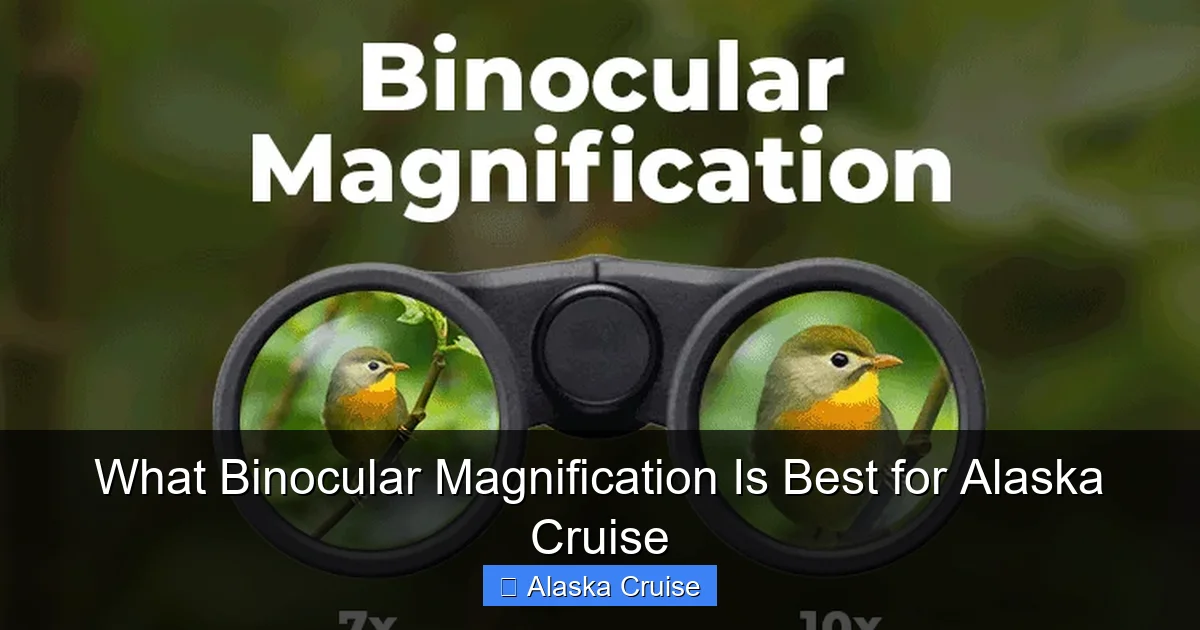
Choosing the right binocular magnification for an Alaska cruise can make or break your wildlife and scenery viewing experience. With vast landscapes, distant whales, and fast-moving birds, you need optics that balance power, stability, and portability. This guide breaks down everything you need to know to pick the perfect pair.
Planning an Alaska cruise is exciting—majestic glaciers, breaching whales, towering eagles, and dense coastal rainforests await. But to truly appreciate these wonders, you’ll want more than just your naked eye. That’s where binoculars come in. Whether you’re scanning the horizon from the deck of your ship or hiking a rugged trail on a shore excursion, the right pair of binoculars can transform your experience.
But with so many options on the market, how do you choose? Magnification is one of the most important factors—but it’s not the only one. Many travelers make the mistake of thinking “more power is better,” only to end up with shaky, unusable views. Others go too small and miss out on the detail that makes Alaska so breathtaking. The truth is, the best binocular magnification for an Alaska cruise strikes a balance between power, stability, and usability in real-world conditions.
In this guide, we’ll walk you through everything you need to know to pick the perfect binoculars for your Alaskan adventure. From understanding magnification numbers to evaluating lens quality and durability, we’ll help you make a smart, informed choice. Whether you’re a first-time cruiser or a seasoned nature lover, this guide will ensure you don’t miss a single moment of Alaska’s wild beauty.
Key Takeaways
- 8×42 is the ideal magnification for most Alaska cruise travelers: It offers a bright, stable image with a wide field of view, perfect for spotting wildlife and enjoying scenic vistas.
- Avoid high magnifications like 12x or 15x without a tripod: Handheld use leads to shaky images, making it hard to track moving animals like whales or eagles.
- Consider waterproof and fog-proof binoculars: Alaska’s damp, cold climate demands durable optics that won’t fail in rain or humidity.
- Compact models are great for portability but may sacrifice brightness: If you prioritize weight and size, ensure the lens diameter is at least 30mm for decent light gathering.
- Look for multi-coated or fully multi-coated lenses: These improve clarity and color accuracy, essential for spotting subtle details in forests and icy waters.
- Try before you buy: Comfort, grip, and ease of focus matter just as much as specs—especially when wearing gloves in cold weather.
- Rent or borrow high-end models if unsure: Some cruise lines or local outfitters offer rentals, letting you test premium binoculars before investing.
📑 Table of Contents
- Understanding Binocular Magnification: What the Numbers Mean
- Why 8×42 Is the Sweet Spot for Alaska Cruises
- When Higher Magnification Might Be Useful (and When to Avoid It)
- Other Critical Features to Consider Beyond Magnification
- Top Binocular Recommendations for Alaska Cruises
- Tips for Using Binoculars on an Alaska Cruise
- Conclusion
Understanding Binocular Magnification: What the Numbers Mean
When you look at binoculars, you’ll see a set of numbers like 8×42 or 10×50. These represent two key specs: magnification and objective lens diameter. The first number (e.g., 8x) tells you how much closer the subject appears compared to the naked eye. So, an 8x binocular makes something look eight times closer. The second number (e.g., 42) is the diameter of the front lens in millimeters—this affects how much light the binoculars can gather.
Magnification is important because it determines how detailed your view will be. But higher isn’t always better. For example, a 12x binocular might seem ideal for spotting a distant whale, but if you’re holding it in your hands on a moving ship, the image will likely be too shaky to see clearly. That’s why understanding the trade-offs is crucial.
Let’s break it down with examples. Imagine you’re on deck, watching a pod of orcas swim near the shore. With 8x magnification, the whales appear close enough to see their dorsal fins and splashes, and the image remains steady. But with 12x, even a slight hand tremor can make the image bounce around, making it hard to track the animals. Plus, higher magnification narrows the field of view—the area you can see at once—so you might miss the whale entirely if it moves quickly.
Another factor is exit pupil, which is calculated by dividing the lens diameter by the magnification (e.g., 42 ÷ 8 = 5.25mm). A larger exit pupil means brighter images, especially in low light—like early morning or overcast Alaskan skies. For Alaska’s often dim and variable lighting, a larger exit pupil (around 4mm or more) is a big advantage.
So while magnification matters, it’s just one piece of the puzzle. You also need to consider stability, light transmission, and how the binoculars feel in your hands—especially when you’re bundled up in cold weather gear.
Why 8×42 Is the Sweet Spot for Alaska Cruises
Visual guide about What Binocular Magnification Is Best for Alaska Cruise
Image source: binocularman.com
If you’re looking for a single recommendation, 8×42 binoculars are widely considered the best all-around choice for Alaska cruises. Here’s why this combination strikes the perfect balance for most travelers.
First, 8x magnification provides enough power to see details like the texture of a glacier, the feathers on a bald eagle, or the spray from a humpback whale’s blowhole—without sacrificing stability. Unlike higher magnifications, 8x is easy to hold steady, even on a gently rocking ship. This means you can enjoy crisp, clear views without needing a tripod.
Second, the 42mm objective lenses gather plenty of light, which is essential in Alaska’s often overcast and low-light conditions. Whether you’re cruising through misty fjords at dawn or exploring a forest trail in the rain, bright optics make a huge difference. The 5.25mm exit pupil (42 ÷ 8) ensures that your eyes receive ample light, resulting in vivid, natural-looking images.
Third, 8×42 binoculars typically offer a wide field of view—often around 400 feet at 1,000 yards. This is crucial for tracking fast-moving wildlife like sea otters, puffins, or Dall sheep on cliffs. A wider view helps you locate animals quickly and follow them as they move, rather than losing them in a narrow tunnel of vision.
Finally, 8×42 models are usually mid-sized—light enough to carry all day but robust enough for serious use. Many come with features like rubber armor for grip, waterproofing, and fog-proof nitrogen filling, making them ideal for Alaska’s wet and cold climate.
Of course, “best” depends on your needs. If you have steady hands and plan to use a tripod, a 10×42 might work. But for most cruisers, 8×42 offers the ideal blend of power, brightness, and usability.
When Higher Magnification Might Be Useful (and When to Avoid It)
While 8×42 is the go-to choice, there are situations where higher magnification binoculars—like 10×50 or 12×50—can be beneficial. But they come with trade-offs that are especially important on an Alaska cruise.
Spotting Distant Landmarks and Wildlife
If you’re cruising through Glacier Bay or Tracy Arm Fjord, you might spot wildlife far from shore—like a bear on a distant beach or a cluster of sea lions on a rocky outcrop. In these cases, 10x or 12x magnification can help you see details that would otherwise be invisible. A 10×50 binocular, for example, brings distant objects closer and still offers a decent exit pupil (5mm), keeping images bright.
However, the catch is stability. Higher magnification amplifies even the tiniest hand movements. On a moving ship, this can make the image bounce so much that it’s unusable. That’s why many experts recommend using a tripod with 10x or higher binoculars. But on a cruise, setting up a tripod on deck isn’t always practical—especially when you’re sharing space with other passengers or moving between viewpoints.
Birdwatching and Marine Life Observation
Birders and marine life enthusiasts might appreciate the extra reach of 10x or 12x binoculars. For example, spotting a rare species of gull or identifying the subtle markings on a whale’s tail fluke can benefit from higher magnification. But again, the challenge is keeping the image steady.
One workaround is to brace yourself against the ship’s railing or a wall. Leaning your elbows against a solid surface can reduce shake significantly. Some travelers also use binocular harnesses or neck straps that help stabilize the optics. Still, for most casual observers, the added effort may not be worth it.
When to Stick with Lower Magnification
For general sightseeing, wildlife spotting, and scenic viewing, 8x or even 7x magnification is often more practical. Lower magnification means a wider field of view, easier tracking of moving subjects, and less sensitivity to hand shake. It also allows for faster focusing—important when a whale surfaces unexpectedly or a flock of birds takes flight.
In short, higher magnification has its place, but it’s best reserved for specific situations and users who are willing to manage the trade-offs. For the average Alaska cruiser, 8×42 remains the most reliable and enjoyable option.
Other Critical Features to Consider Beyond Magnification
Magnification is important, but it’s not the only factor that determines how well your binoculars will perform on an Alaska cruise. Here are other key features to evaluate.
Objective Lens Size and Light Transmission
The size of the front lenses (measured in millimeters) affects how much light enters the binoculars. Larger lenses (like 42mm or 50mm) gather more light, resulting in brighter, clearer images—especially in low-light conditions. Alaska’s long summer days are bright, but fog, rain, and early morning or evening light can make visibility challenging.
A larger objective lens also improves the exit pupil, which determines how bright the image appears to your eye. For example, an 8×42 binocular has a 5.25mm exit pupil, while an 8×32 has only 4mm. In dim light, the difference is noticeable.
Lens Coatings
Lens coatings reduce glare, improve contrast, and enhance color accuracy. Look for terms like “fully multi-coated” or “multi-coated” lenses. These coatings apply thin layers of chemicals to the glass surfaces to minimize reflections and maximize light transmission. High-quality coatings can make a huge difference in image clarity, especially when viewing through mist or over water.
Waterproof and Fog-Proof Construction
Alaska is known for its damp, unpredictable weather. Rain, sea spray, and high humidity are common, even in summer. That’s why waterproof and fog-proof binoculars are essential. Most quality models are filled with nitrogen or argon gas to prevent internal fogging when temperatures change. Look for O-ring seals and IPX7 or higher waterproof ratings.
Eye Relief and Comfort
If you wear glasses, eye relief—the distance from the eyepiece to your eye where the full field of view is visible—is crucial. Long eye relief (15mm or more) allows you to see the entire image without pressing your glasses against the eyecups. Many binoculars have twist-up or fold-down eyecups to accommodate both glassed and non-glassed users.
Comfort also matters. Try holding the binoculars for a few minutes. Do they feel balanced? Is the focus wheel smooth and easy to turn, even with gloves? A comfortable grip and intuitive controls make a big difference during long viewing sessions.
Size and Weight
You’ll likely carry your binoculars for hours—on deck, on shore excursions, and during hikes. Compact models (like 8×32) are lighter and easier to pack, but they may sacrifice brightness and field of view. Full-size models (like 8×42) offer better performance but are heavier. Consider your activity level and how much weight you’re willing to carry.
Top Binocular Recommendations for Alaska Cruises
With so many models on the market, it can be hard to choose. Here are a few top-rated binoculars that are well-suited for Alaska cruises, based on performance, durability, and user feedback.
Nikon Monarch M7 8×42
A favorite among nature lovers, the Nikon Monarch M7 offers excellent image quality, a wide field of view, and rugged construction. Fully multi-coated lenses, phase-corrected prisms, and a lightweight magnesium body make it a top performer. It’s waterproof, fog-proof, and comfortable to hold for long periods.
Vortex Optics Diamondback HD 8×42
Known for their lifetime warranty and excellent value, Vortex binoculars are a smart choice for travelers. The Diamondback HD features high-density glass, fully multi-coated lenses, and a durable rubber armor. It’s also waterproof and fog-proof, with a smooth focus wheel and generous eye relief.
Zeiss Terra ED 8×42
For those willing to invest in premium optics, the Zeiss Terra ED delivers outstanding clarity and color fidelity. Extra-low dispersion (ED) glass reduces chromatic aberration, resulting in sharp, true-to-life images. It’s lightweight, ergonomic, and built to handle harsh conditions.
Compact Option: Leica Ultravid 8×32
If portability is a priority, the Leica Ultravid 8×32 is a high-end compact model with exceptional optics. While the smaller lenses gather less light, the build quality and image sharpness are top-tier. Ideal for travelers who want premium performance in a small package.
Budget-Friendly: Celestron Nature DX 8×42
For travelers on a budget, the Celestron Nature DX offers impressive performance at an affordable price. Fully multi-coated lenses, BaK-4 prisms, and a waterproof design make it a solid choice for Alaska. It’s a great entry-level option that doesn’t sacrifice too much quality.
Tips for Using Binoculars on an Alaska Cruise
Even the best binoculars won’t help if you don’t know how to use them effectively. Here are some practical tips to get the most out of your optics during your cruise.
Stabilize Your View
To reduce hand shake, lean against the ship’s railing or a wall. You can also rest your elbows on a solid surface. Some travelers use a small beanbag or foam pad on the railing to cradle the binoculars. If you’re on a shore excursion, a lightweight tripod or monopod can be helpful—especially with higher magnification models.
Use a Harness or Strap
A comfortable neck strap or binocular harness distributes weight and keeps your optics secure. A harness, in particular, reduces neck strain and allows for quick access. Look for models with quick-release buckles for easy removal.
Keep Them Dry and Clean
Always use lens caps or a protective case when not in use. Wipe lenses with a microfiber cloth—never your shirt or tissues, which can scratch the coatings. If they get wet, dry them gently and allow them to air out to prevent internal fogging.
Practice Before You Go
Spend some time using your binoculars at home or on a local hike. Learn how to adjust the focus, diopter, and eyecups. Practice scanning and tracking moving objects. The more familiar you are with your optics, the easier it will be to use them in the field.
Share the View
Binoculars are a great way to connect with fellow travelers. Offer to let others look at a whale or glacier—it’s a fun way to share the experience and make new friends.
Conclusion
Choosing the best binocular magnification for an Alaska cruise doesn’t have to be overwhelming. While higher numbers might seem appealing, the reality is that 8×42 binoculars offer the ideal balance of power, brightness, and stability for most travelers. They’re easy to hold, perform well in low light, and provide a wide field of view—perfect for spotting wildlife and enjoying Alaska’s stunning scenery.
Remember, magnification is just one factor. Lens quality, coatings, waterproofing, and comfort are equally important. Take the time to try different models, consider your specific needs, and invest in a pair that will enhance your journey.
With the right binoculars in hand, you’ll be ready to witness Alaska’s wild beauty in all its glory—from the silent majesty of glaciers to the playful splash of a sea otter. So pack your optics, keep your eyes open, and get ready for an unforgettable adventure.
Frequently Asked Questions
What magnification is best for whale watching on an Alaska cruise?
8x or 10x magnification is ideal for whale watching. 8x offers a stable, wide view perfect for tracking moving whales, while 10x provides more detail for distant sightings. Avoid higher magnifications unless using a tripod.
Can I use compact binoculars on an Alaska cruise?
Yes, compact binoculars like 8×32 are lightweight and portable, making them great for travelers who prioritize convenience. Just ensure they have multi-coated lenses and at least 30mm objective lenses for decent brightness.
Do I need waterproof binoculars in Alaska?
Absolutely. Alaska’s climate is wet and humid, with frequent rain and sea spray. Waterproof and fog-proof binoculars are essential to protect your investment and ensure clear viewing in all conditions.
Should I bring a tripod for my binoculars?
A tripod is helpful if you’re using 10x or higher magnification binoculars, but it’s not practical for most cruise activities. For 8x binoculars, handholding is usually sufficient, especially when braced against a railing.
What’s the difference between 8×42 and 10×50 binoculars?
8×42 offers better stability and a wider field of view, ideal for general use. 10×50 provides more magnification and brightness but is heavier and harder to hold steady. Choose based on your priorities: ease of use or extra detail.
Can I rent binoculars on an Alaska cruise?
Some cruise lines and local outfitters offer binocular rentals, especially on popular routes like Juneau or Ketchikan. Check with your cruise line or tour operator in advance to see if this option is available.