Choosing the right binocular magnification for an Alaska cruise can make or break your wildlife and scenery viewing experience. While higher magnification sounds appealing, stability, field of view, and lighting conditions in Alaska’s vast, often choppy environments mean that 7x to 10x magnification is typically the best range. This guide breaks down everything you need to know to pick the perfect pair for your adventure.
Key Takeaways
- 7x to 10x magnification is ideal: Offers a balance of detail, stability, and field of view—perfect for Alaska’s dynamic coastal and marine environments.
- Avoid 12x and above unless using a tripod: High magnification amplifies hand shake, making images shaky and hard to track, especially on a moving ship.
- Wider field of view matters more than extreme zoom: Helps you locate and follow fast-moving wildlife like whales, sea lions, and birds.
- Consider low-light performance: Alaska’s overcast skies and early sunsets demand binoculars with good light transmission (look for larger objective lenses like 42mm).
- Waterproof and fog-proof features are essential: Protects against sea spray, rain, and humidity common during Alaska cruises.
- Compact and lightweight models enhance comfort: Easier to carry during long days on deck and less tiring during extended use.
- Image stabilization technology is a game-changer: High-end models with stabilization reduce shake, making high-magification viewing feasible without a tripod.
📑 Table of Contents
- Why Binoculars Are a Must-Have for Your Alaska Cruise
- Understanding Binocular Magnification: What Does It Really Mean?
- Alaska’s Unique Viewing Conditions: What to Expect
- Choosing the Right Binoculars: Key Features Beyond Magnification
- Top Binocular Recommendations for Alaska Cruises
- Final Tips for Using Binoculars on Your Alaska Cruise
- Conclusion
Why Binoculars Are a Must-Have for Your Alaska Cruise
An Alaska cruise is one of the most breathtaking travel experiences on Earth. From towering glaciers calving into icy waters to pods of humpback whales breaching just feet from your ship, the scenery and wildlife are nothing short of spectacular. But here’s the catch—many of the best sights happen at a distance. That’s where binoculars come in.
Imagine standing on the deck of your cruise ship, wrapped in a cozy jacket, as the mist rolls in off the Pacific. You spot a dark shape in the water—could it be a sea otter? A seal? Or maybe the fin of a whale? Without binoculars, you’re left guessing. But with the right pair, you can zoom in, identify the creature, and even see the spray from its blowhole. That’s the magic of having quality optics on hand.
But not all binoculars are created equal—especially when it comes to magnification. Too little, and you miss the details. Too much, and the image becomes shaky and hard to use, especially on a moving vessel. So, what binocular magnification is best for an Alaska cruise? The answer isn’t as simple as “the higher, the better.” In fact, the ideal magnification depends on a mix of factors: stability, lighting, distance to subjects, and how you plan to use them.
In this guide, we’ll walk you through everything you need to know to choose the perfect binoculars for your Alaska adventure. Whether you’re a first-time cruiser or a seasoned explorer, understanding magnification, field of view, lens quality, and durability will help you make a smart, informed decision. Let’s dive in.
Understanding Binocular Magnification: What Does It Really Mean?

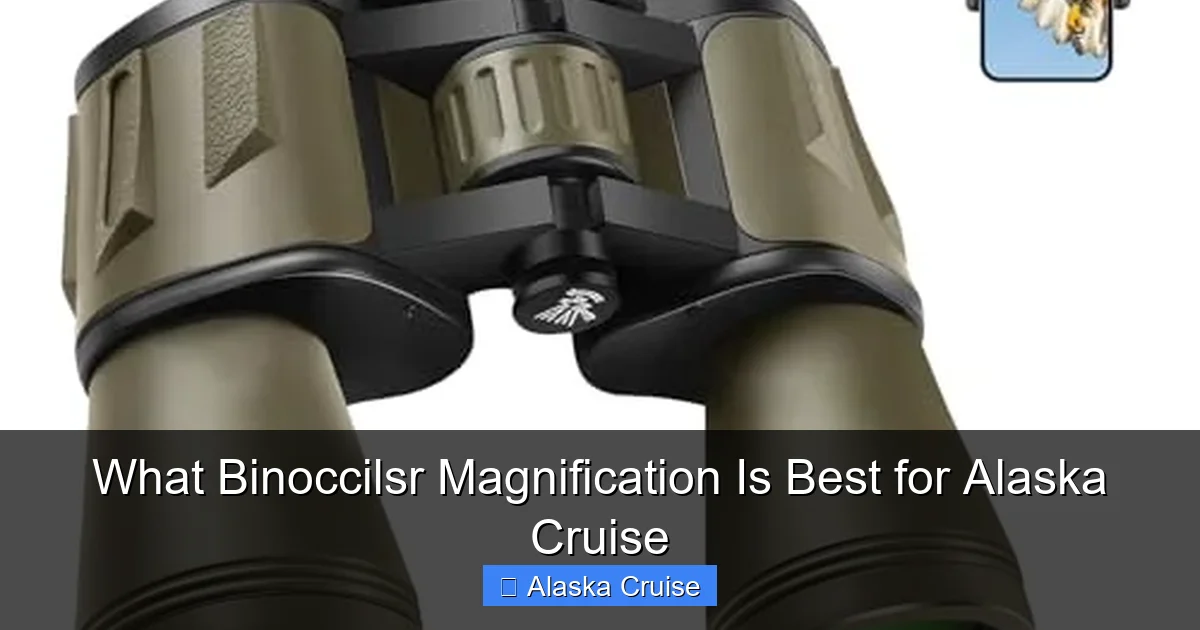
Visual guide about What Binoccilsr Magnification Is Best for Alaska Cruise
Image source: voyagerinfo.com
Before we get into what magnification works best in Alaska, let’s clarify what magnification actually means. Binoculars are labeled with two numbers, like 8×42 or 10×50. The first number is the magnification—how many times closer the subject appears than it does to the naked eye. So, 8x means the image looks eight times closer.
At first glance, higher magnification seems like a no-brainer. Why wouldn’t you want 12x or even 15x? After all, Alaska’s wildlife can be far offshore, and glaciers stretch for miles. But here’s the reality: magnification is just one piece of the puzzle.
Higher magnification comes with trade-offs. First, it narrows your field of view—the width of the area you can see through the lenses. That makes it harder to locate and track moving animals. Second, it amplifies hand shake. Even the steadiest hands will notice a wobble at 12x, especially on a ship that’s rocking in the waves. Third, higher magnification often requires larger lenses and heavier bodies, which can be tiring to hold for long periods.
In contrast, lower magnification (like 7x or 8x) offers a wider, more stable view. You’ll see more of the scene at once, making it easier to spot a whale spout or a bear on a distant shore. And because the image is steadier, you can use them comfortably without a tripod.
So while 15x might seem impressive on paper, in practice, it’s often overkill—and impractical—for cruise conditions. The sweet spot? Most experts agree that 7x to 10x magnification is ideal for Alaska cruises.
How Magnification Affects Stability and Usability
Stability is a huge factor when choosing binoculars for a cruise. Ships move—sometimes gently, sometimes not. Even in calm waters, there’s a constant sway that can make high-magnification viewing frustrating.
Let’s say you’re using 12x binoculars. Every tiny movement of your hands gets multiplied twelve times. That means a slight tremor turns into a bouncing image, making it hard to focus on a distant whale or bird. You end up scanning back and forth, trying to “catch” the subject, which can be exhausting.
Now imagine using 8x binoculars. The same hand movement only affects the image eight times. The view stays much steadier, and you can lock onto your target quickly. This is especially important when trying to follow a pod of orcas swimming alongside the ship or a bald eagle taking flight from a treetop.
Another stability factor is exit pupil—the diameter of the beam of light that exits the eyepiece and enters your eye. It’s calculated by dividing the objective lens size by the magnification (e.g., 42mm ÷ 8x = 5.25mm). A larger exit pupil (5mm or more) makes it easier to keep the image centered in your vision, even with slight hand movements. This is crucial on a moving ship.
So while high magnification might let you see finer details, it often sacrifices usability. For most cruise passengers, the comfort and clarity of 7x to 10x outweigh the benefits of extreme zoom.
Field of View: Why It Matters More Than You Think
Field of view (FOV) is the width of the scene you can see through your binoculars, usually measured in feet at 1,000 yards. A wider FOV makes it easier to locate and track moving subjects—like a whale breaching or a flock of seabirds diving for fish.
Here’s why this matters in Alaska: wildlife doesn’t stay still. A humpback whale might surface briefly, then disappear for minutes. A sea lion might haul out on a rock, then slip back into the water. If your binoculars have a narrow field of view, you’ll spend more time searching than observing.
For example, an 8×42 binocular might have a FOV of 360 feet at 1,000 yards, while a 10×50 might offer 330 feet. That 30-foot difference may not sound like much, but when you’re scanning a vast coastline or open water, it can mean the difference between spotting a bear on a distant beach and missing it entirely.
Lower magnification generally provides a wider field of view. So, 7x or 8x binoculars often give you a broader perspective, making them better for scanning large areas. This is especially useful when your ship passes through narrow fjords or near wildlife-rich islands like Admiralty Island or Glacier Bay.
In short, don’t sacrifice field of view for magnification. A wider view helps you see more of the action—and enjoy it longer.
Alaska’s Unique Viewing Conditions: What to Expect
Alaska’s environment presents unique challenges and opportunities for binocular use. Understanding these conditions will help you choose the right magnification and features.
First, consider the lighting. Alaska’s weather is famously unpredictable. Even in summer, overcast skies, fog, and rain are common—especially in coastal regions like Juneau, Ketchikan, and Sitka. These conditions reduce natural light, making it harder to see details at a distance.
That’s why low-light performance is critical. Binoculars with larger objective lenses (like 42mm or 50mm) gather more light, producing brighter, clearer images in dim conditions. Pair that with good lens coatings (look for terms like “fully multi-coated”), and you’ll see better in the early morning or late evening—prime times for wildlife activity.
Second, think about distance. Many of Alaska’s most iconic sights are far from shore. Glaciers like Hubbard or Mendenhall can be miles away. Whales often surface several hundred yards from the ship. Birds nest on cliffs high above the water. You’ll need enough magnification to bring these distant subjects into view—but not so much that the image becomes unstable.
Third, consider the motion of the ship. Even on calm days, cruise ships rock and roll. This movement makes high-magnification viewing difficult. You’ll want binoculars that are easy to hold steady and quick to focus.
Finally, remember that Alaska is vast. You’ll be scanning wide areas—coastlines, water, skies—looking for movement. A wide field of view helps you cover more ground and spot wildlife faster.
All these factors point to one conclusion: 7x to 10x magnification strikes the best balance for Alaska’s conditions. It provides enough zoom to see details without sacrificing stability, field of view, or low-light performance.
Wildlife Viewing: What You’ll See and How to Spot It
One of the biggest draws of an Alaska cruise is the chance to see wildlife up close—or at least, closer than you would from shore. But “up close” is relative. Many animals stay at a distance, especially marine mammals.
Whales, for example, often surface 200 to 500 yards from the ship. At that range, even a small whale can be hard to see without binoculars. With 8x magnification, a humpback whale that looks like a speck to the naked eye becomes a clear, identifiable shape. You can see the curve of its back, the splash of its tail, and even the barnacles on its skin.
Sea lions and seals haul out on rocks and beaches, but they’re often far from the ship’s path. With 10x magnification, you can count individuals, see pups nursing, and observe their behavior.
Birds are another highlight. Alaska is home to bald eagles, puffins, murres, and more. Many nest on cliffs or fly high above the water. A wider field of view helps you track their flight paths, while moderate magnification lets you see details like feather patterns and beak colors.
Land mammals like bears, moose, and mountain goats are sometimes visible from the ship, especially in areas like Tracy Arm or Glacier Bay. These sightings are rare and often distant, so having binoculars ready is key.
The bottom line: you’ll want binoculars that can handle a range of distances and lighting conditions. 7x to 10x magnification gives you the flexibility to zoom in on distant whales or scan wide areas for birds and bears.
Glaciers and Scenic Views: Seeing the Big Picture
Alaska’s glaciers are awe-inspiring, but they’re also massive and often far away. From the deck of a cruise ship, a glacier might look like a white wall on the horizon. With binoculars, you can see the deep blue crevasses, the chunks of ice breaking off, and the seals resting on floating icebergs.
But here’s the thing: glaciers don’t move quickly. You don’t need extreme magnification to appreciate their beauty. In fact, a wider field of view lets you take in the full scale of the ice field, which is often more impressive than zooming in on a single detail.
That said, moderate magnification (8x or 10x) helps you see the texture of the ice, the way light reflects off the surface, and the wildlife that calls the glacier home. It’s the perfect balance between detail and context.
The same goes for scenic views—mountain ranges, fjords, waterfalls. You want to see the grandeur of the landscape, not just a tiny portion of it. Lower magnification with a wide field of view lets you do just that.
Choosing the Right Binoculars: Key Features Beyond Magnification
While magnification is important, it’s not the only factor to consider. Here are other key features that will impact your Alaska cruise experience.
Objective Lens Size: Bigger Isn’t Always Better
The second number in binocular specs (like 8×42) is the objective lens diameter in millimeters. Larger lenses (42mm, 50mm) gather more light, which is great for low-light conditions. But they also make the binoculars heavier and bulkier.
For Alaska cruises, 42mm is a popular choice. It offers excellent light transmission without being too heavy. 50mm lenses are brighter but may be cumbersome for all-day use. Compact models with 32mm lenses are lightweight but struggle in dim light.
Waterproof and Fog-Proof: Non-Negotiable for Alaska
Sea spray, rain, and humidity are part of the Alaska experience. Your binoculars must be waterproof and fog-proof. Look for models filled with nitrogen or argon gas, which prevents internal fogging when temperatures change.
Lens Coatings: The Secret to Clear Images
Lens coatings reduce glare, improve contrast, and enhance color fidelity. Fully multi-coated lenses offer the best performance, especially in overcast conditions.
Eye Relief and Adjustability
If you wear glasses, look for long eye relief (15mm or more) so you can see the full field of view. Adjustable eyecups also help.
Weight and Portability
You’ll be carrying your binoculars for hours. Lightweight models (under 25 ounces) are easier to handle. Consider a neck strap or harness for comfort.
Image Stabilization: A Luxury That’s Worth It
High-end binoculars with image stabilization (like Canon or Fujinon models) reduce shake, making high-magnification viewing possible without a tripod. These are ideal for cruise ships but come at a higher price.
Top Binocular Recommendations for Alaska Cruises
Based on the criteria above, here are some top picks:
– **Nikon Monarch M5 8×42**: Lightweight, waterproof, excellent optics, great for low light.
– **Vortex Optics Diamondback HD 10×42**: Durable, wide field of view, lifetime warranty.
– **Celestron Nature DX 8×42**: Affordable, great for beginners, good image quality.
– **Canon 10×30 IS Image Stabilization**: Reduces shake, perfect for high-magnification use on a moving ship.
– **Swarovski EL 8.5×42**: Premium optics, exceptional clarity, but expensive.
Final Tips for Using Binoculars on Your Alaska Cruise
– Practice using your binoculars before the trip.
– Keep them in a protective case when not in use.
– Use a harness instead of a neck strap to reduce strain.
– Clean lenses with a microfiber cloth—never your shirt.
– Share the view with fellow passengers—it’s part of the fun!
Conclusion
So, what binocular magnification is best for an Alaska cruise? The answer is clear: 7x to 10x magnification offers the ideal balance of detail, stability, and field of view for Alaska’s unique conditions. While higher magnification might seem tempting, it often leads to shaky images and narrow views—especially on a moving ship.
Instead, focus on a combination of moderate magnification, a wide field of view, good low-light performance, and durable, waterproof construction. These features will help you spot whales, bears, birds, and glaciers with clarity and comfort.
Remember, the goal isn’t to zoom in as much as possible—it’s to see more of Alaska’s breathtaking beauty. With the right binoculars, you’ll capture moments you’ll treasure forever.
Frequently Asked Questions
What magnification is best for spotting whales on an Alaska cruise?
8x to 10x magnification is ideal for spotting whales. It provides enough zoom to see details like blowholes and tail flukes while maintaining a stable, wide field of view—perfect for tracking fast-moving marine mammals.
Can I use 12x binoculars on a cruise ship?
You can, but they’re harder to use due to hand shake and ship movement. Unless you have image stabilization or a tripod, 12x binoculars often produce shaky, frustrating images.
Do I need waterproof binoculars for an Alaska cruise?
Absolutely. Sea spray, rain, and humidity are common. Waterproof and fog-proof binoculars protect your investment and ensure clear viewing in all conditions.
Are compact binoculars good for Alaska cruises?
Compact models are lightweight and portable, but often have smaller lenses that struggle in low light. For Alaska’s overcast skies, 42mm objective lenses are a better choice.
Should I bring a tripod for my binoculars?
A tripod helps with high-magnification viewing, but it’s bulky and impractical on a cruise. Image-stabilized binoculars are a better alternative for steady high-power viewing.
What’s the difference between 8×42 and 10×42 binoculars?
Both have 42mm objective lenses, but 8x offers a wider field of view and steadier image, while 10x provides more magnification. For Alaska, 8x is often preferred for its balance of clarity and usability.