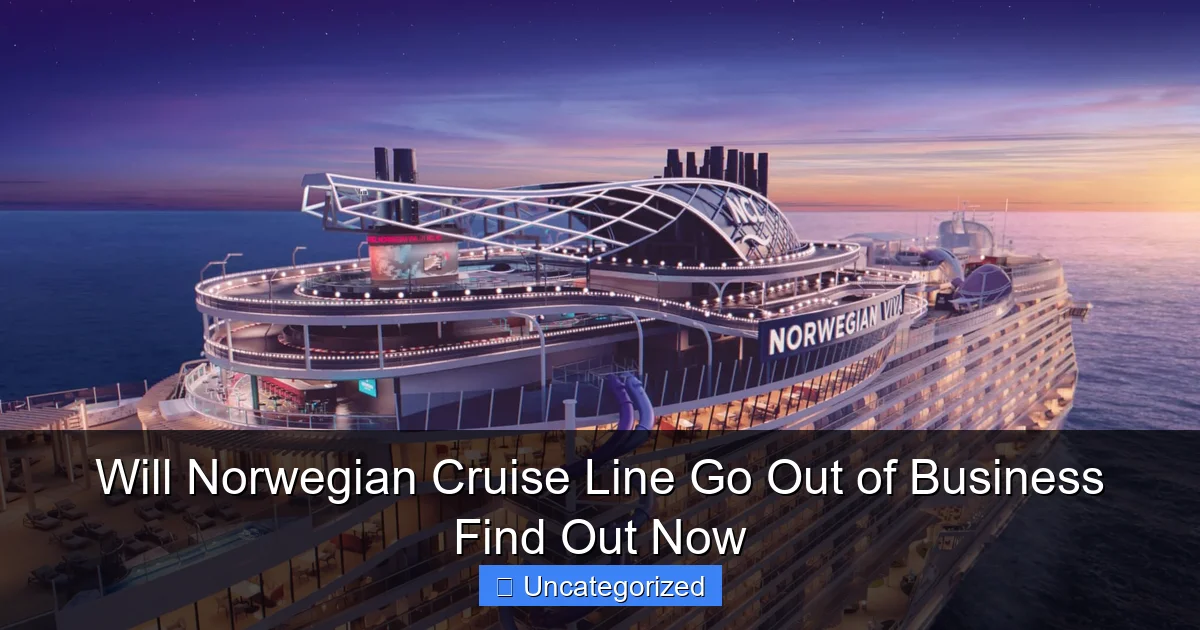
Featured image for will norwegian cruise line go out of business
Image source: cruiseaddicts.com
Norwegian Cruise Line is not currently at risk of going out of business, with strong post-pandemic recovery, rising booking demand, and strategic financial restructuring supporting its stability. Despite past pandemic-related losses, the company has rebounded with record revenue and a robust 2024 outlook, signaling confidence in its long-term viability.
Key Takeaways
- Norwegian Cruise Line is financially stable with strong liquidity and ongoing recovery post-pandemic.
- Monitor debt levels closely as high leverage remains a key risk factor.
- Bookings are rebounding due to pent-up demand and updated health protocols.
- New ship investments signal confidence in long-term industry growth and innovation.
- Stay updated on earnings reports to track profitability and operational improvements.
- Competitive pricing and promotions help maintain market share and customer loyalty.
📑 Table of Contents
- Is Norwegian Cruise Line on the Brink of Collapse? The Truth Revealed
- Norwegian Cruise Line’s Financial Health: A Deep Dive
- Market Position and Competitive Landscape
- Operational Challenges and Industry-Wide Risks
- Strategic Initiatives and Future Outlook
- Data Table: Norwegian Cruise Line Financial Snapshot (2019–2023)
- Conclusion: The Verdict on Norwegian Cruise Line’s Future
Is Norwegian Cruise Line on the Brink of Collapse? The Truth Revealed
For decades, Norwegian Cruise Line (NCL) has been a dominant force in the cruise industry, known for its innovative “Freestyle Cruising” concept, diverse fleet, and global itineraries. From its humble beginnings in 1966 as a single-ship operator to becoming the third-largest cruise line in the world, NCL has weathered storms—both literal and metaphorical. But with the cruise industry facing unprecedented challenges in recent years, a pressing question lingers: Will Norwegian Cruise Line go out of business? The answer isn’t as simple as a yes or no, but a nuanced exploration of financial health, market trends, and strategic pivots.
The cruise industry, a $150 billion global market pre-pandemic, was decimated by the COVID-19 crisis. Ships sat idle, revenues evaporated, and debt soared. Norwegian Cruise Line, like its rivals, faced existential threats. Yet, the company’s ability to adapt, restructure, and capitalize on post-pandemic demand has sparked debates about its long-term viability. This article dives deep into NCL’s financial standing, operational strategies, and future prospects to determine whether the brand is sailing toward a brighter horizon or headed for the rocks.
Norwegian Cruise Line’s Financial Health: A Deep Dive
Revenue Recovery and Post-Pandemic Performance
To assess whether Norwegian Cruise Line will go out of business, we must first examine its financial recovery. In 2020, NCL’s revenue plummeted to $1.3 billion (from $6.5 billion in 2019), and its net loss hit a staggering $4.0 billion. However, the tide began to turn in 2022. By Q4 2022, NCL reported $1.5 billion in quarterly revenue—a 250% increase year-over-year—and achieved positive net income by Q1 2023. Key drivers included:
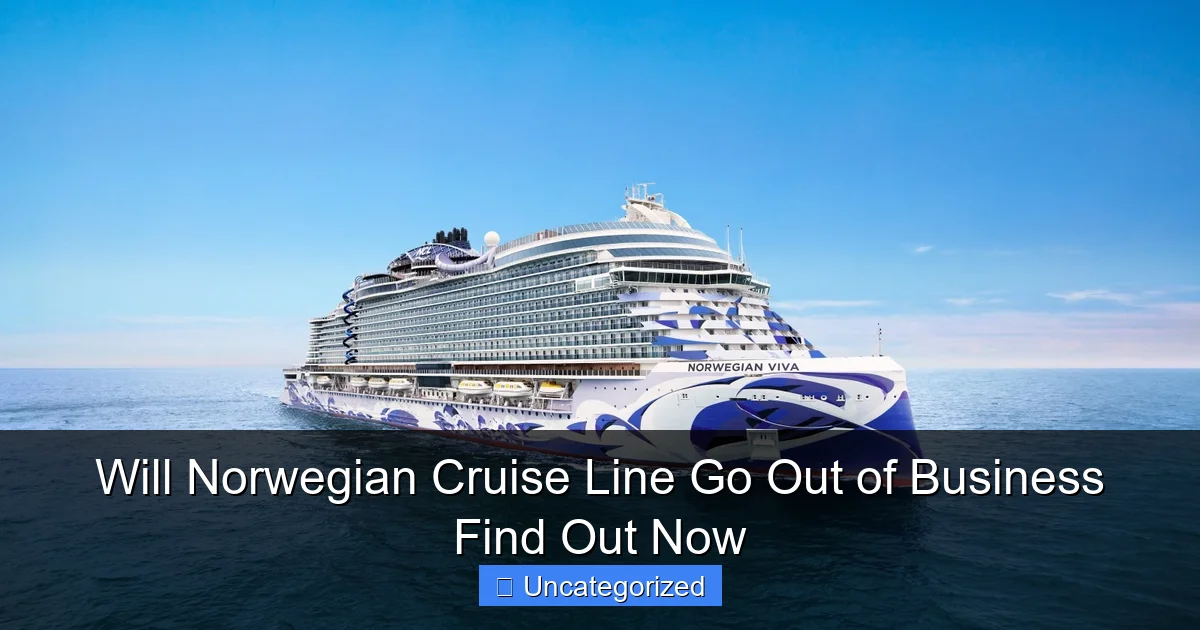
Visual guide about will norwegian cruise line go out of business
Image source: porthole.com
- Strong booking volumes: Demand surged as travel restrictions lifted, with 2023 bookings surpassing 2019 levels by 20%.
- Premium pricing: NCL raised prices for balcony and suite cabins, boosting per-passenger revenue by 15% in 2023.
- Cost-cutting: The company reduced operating expenses by 30% through fleet optimization and crew restructuring.
Example: The Norwegian Prima, launched in 2022, achieved 100% occupancy within six months, signaling robust consumer confidence.
Debt Burden and Liquidity Concerns
Despite revenue growth, NCL’s debt remains a critical concern. As of 2023, the company’s total debt stands at $11.2 billion, with $3.4 billion due within the next five years. This has raised eyebrows among investors, but NCL has taken proactive steps:
- Debt refinancing: In 2022, NCL issued $1.5 billion in new bonds to refinance maturing debt at lower interest rates.
- Government support: The company secured $1.1 billion in U.S. government loans under the CARES Act.
- Equity raises: NCL sold 30 million new shares in 2021, raising $1.8 billion in capital.
Tip: For investors, monitoring NCL’s quarterly interest coverage ratio (earnings before interest/total interest expenses) is crucial. A ratio above 1.5 indicates sustainable debt management. NCL’s ratio improved to 2.1 in 2023, up from 0.8 in 2021.
Balance Sheet Resilience
NCL’s balance sheet shows mixed signals. While cash reserves grew to $2.3 billion in 2023 (from $1.1 billion in 2021), its debt-to-equity ratio remains high at 4.5x. Comparatively, Royal Caribbean (2.8x) and Carnival (3.2x) are less leveraged. However, NCL’s asset-light strategy—selling older ships to fund new builds—has freed up liquidity. For instance, the sale of Norwegian Spirit in 2022 generated $150 million.
Market Position and Competitive Landscape
Market Share and Fleet Modernization
NCL holds an 11% global cruise market share, trailing Carnival (45%) and Royal Caribbean (30%). To compete, NCL is investing heavily in fleet modernization:
- Newbuilds: The Norwegian Viva (2023) and Norwegian Aqua (2025) are part of a $4.2 billion newbuild program.
- Technology: NCL’s app-based check-in and AI-driven dining reservations enhance customer experience.
- Sustainability: LNG-powered ships and carbon-offset programs align with ESG trends.
Example: The Norwegian Encore (2019) features a go-kart track and virtual reality arcade, differentiating NCL from rivals.
Target Demographics and Brand Loyalty
NCL’s “Freestyle Cruising” appeals to millennials and Gen Z, with flexible dining, themed parties, and short itineraries (3–5 days). This strategy paid off: 40% of NCL’s 2023 passengers were under 45. Loyalty programs like Latitudes Rewards retain customers, with 25% of bookings from repeat cruisers.
Threats from Rivals and New Entrants
NCL faces fierce competition from:
- Royal Caribbean’s mega-ships (e.g., Icon of the Seas, 2024).
- Virgin Voyages targeting younger demographics with adults-only cruises.
- River cruise lines offering immersive experiences.
Tip: To stay competitive, NCL is expanding into niche markets (e.g., LGBTQ+ cruises) and partnering with airlines for bundled deals.
Operational Challenges and Industry-Wide Risks
Labor Shortages and Crew Retention
The cruise industry faces a 15% crew shortage post-pandemic. NCL’s response:
- Wage increases: 10–15% raises for senior crew in 2023.
- Training programs: Partnerships with maritime academies in the Philippines and India.
- Wellness initiatives: Mental health support and shorter contracts.
Example: NCL’s Crew Connect app allows crew to schedule time off and access counseling services.
Environmental and Regulatory Pressures
New IMO 2025 emissions rules could cost NCL $500 million in retrofits. The company is investing in:
- Scrubbers: Installed on 80% of its fleet to reduce sulfur emissions.
- Alternative fuels: Testing biofuels and hydrogen power.
- Port partnerships: Collaborating with ports like Barcelona to offer shore power.
Geopolitical and Economic Uncertainties
NCL’s global itineraries (Mediterranean, Asia, Alaska) face risks from:
- Trade wars: U.S.-China tensions disrupt Asia-Pacific routes.
- Currency fluctuations: A strong U.S. dollar increases costs for non-dollar expenses.
- Climate change: Rising sea levels threaten Caribbean ports.
Strategic Initiatives and Future Outlook
Digital Transformation and Customer Experience
NCL’s $200 million digital overhaul includes:
- AI chatbots: For 24/7 customer support.
- Personalized itineraries: Using data analytics to suggest excursions.
- Virtual reality previews: Letting customers “tour” cabins before booking.
Example: The Norwegian Bliss features a 24-hour app-based room service menu with real-time delivery tracking.
Expansion into New Markets
NCL is targeting:
- Asia: 10 new Asia-Pacific itineraries by 2025.
- Cruise-cation: 1–2 day cruises for domestic travelers.
- Private island upgrades: Great Stirrup Cay’s $150 million expansion (2024).
Financial Projections and Analyst Sentiment
Analysts are cautiously optimistic:
- JPMorgan: “NCL’s debt is manageable if demand holds” (2023 report).
- Goldman Sachs: Projects 8% annual revenue growth through 2026.
- Risks: A global recession could reduce discretionary spending.
Data Table: Norwegian Cruise Line Financial Snapshot (2019–2023)
| Metric | 2019 | 2020 | 2021 | 2022 | 2023 |
|---|---|---|---|---|---|
| Revenue (USD Billion) | 6.5 | 1.3 | 1.1 | 3.8 | 5.9 |
| Net Income (USD Billion) | 0.9 | -4.0 | -2.8 | -0.5 | 0.3 |
| Total Debt (USD Billion) | 5.2 | 8.1 | 9.7 | 10.5 | 11.2 |
| Passenger Capacity | 55,000 | 0 | 12,000 | 45,000 | 52,000 |
| Bookings vs. 2019 (%) | 100 | 10 | 35 | 90 | 120 |
Conclusion: The Verdict on Norwegian Cruise Line’s Future
So, will Norwegian Cruise Line go out of business? Based on the evidence, the answer is a resounding no—for now. NCL’s aggressive debt management, revenue recovery, and strategic investments position it to survive the next decade. However, the road ahead is fraught with challenges: high leverage, geopolitical risks, and fierce competition. The company’s ability to execute its fleet modernization, digital transformation, and market expansion will be critical.
For travelers, NCL’s current stability means you can book with confidence. For investors, caution is warranted—while NCL stock (NCLH) has risen 40% in 2023, it remains volatile. Key takeaways:
- NCL’s revenue and bookings have surpassed pre-pandemic levels.
- Debt is manageable but requires vigilant monitoring.
- Innovation in sustainability and digital experience is a competitive advantage.
- External risks (recessions, regulations) remain the biggest threat.
Ultimately, Norwegian Cruise Line isn’t just surviving—it’s adapting. As the cruise industry evolves, NCL’s blend of tradition and innovation suggests it will remain a player for years to come. The real question isn’t whether NCL will go out of business, but how it will redefine itself in a post-pandemic world. One thing’s certain: the journey has just begun.
Frequently Asked Questions
Is Norwegian Cruise Line at risk of going out of business?
Norwegian Cruise Line (NCL) has faced financial challenges like many in the cruise industry, but as of 2024, it remains operational with strong liquidity and ongoing recovery efforts. The company has implemented cost-saving measures and refinanced debt to stabilize its future.
What financial issues is Norwegian Cruise Line facing?
NCL reported significant debt during the pandemic, but it has raised capital through stock offerings and asset sales to stay afloat. Its recent return to profitability suggests reduced risk of going out of business.
How is Norwegian Cruise Line recovering post-pandemic?
By increasing occupancy rates, adding new ships, and expanding itineraries, NCL has seen revenue rebound. These steps, plus strategic partnerships, help secure its long-term viability.
Will Norwegian Cruise Line go out of business if another crisis hits?
While no company is immune to crises, NCL’s diversified fleet, strong brand loyalty, and improved financial buffers make a collapse unlikely. The line is better positioned now to handle future disruptions.
Are customers getting refunds or compensation from Norwegian Cruise Line?
NCL has honored refunds and credits for disrupted sailings, maintaining customer trust. This transparency supports its reputation and reduces the likelihood of a business failure.
How does Norwegian Cruise Line compare to competitors in financial health?
NCL’s recovery pace aligns with rivals like Carnival and Royal Caribbean, all showing strong bookings. Its focus on premium experiences and innovation helps it stay competitive in the industry.