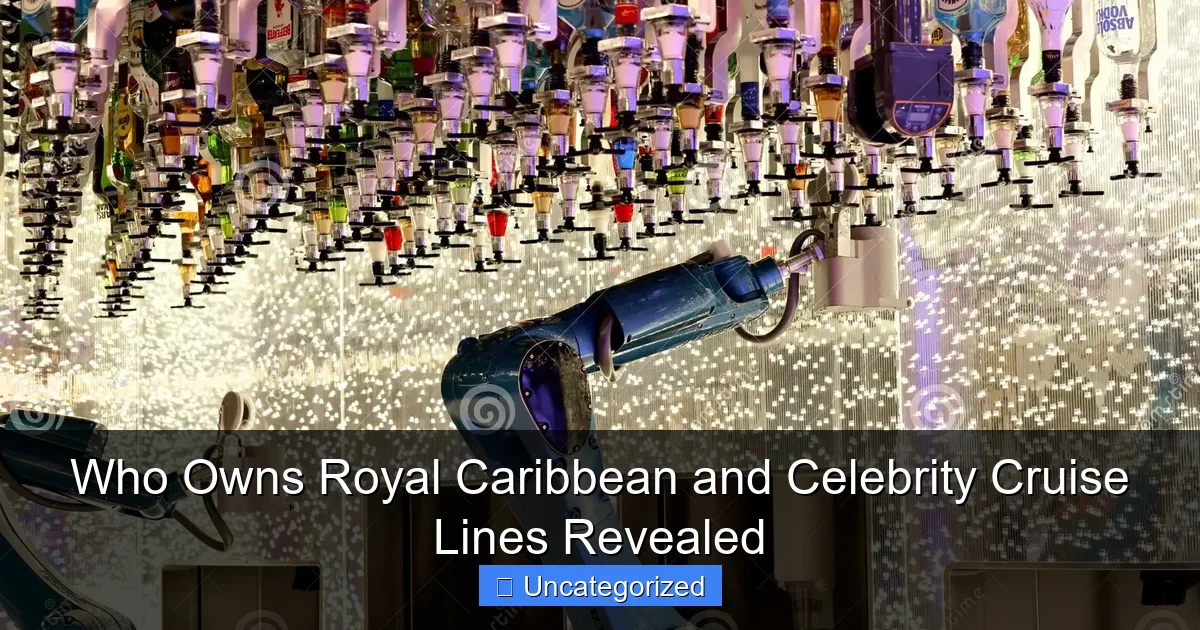
Featured image for who owns royal caribbean and celebrity cruise lines
Image source: thumbs.dreamstime.com
Royal Caribbean Group owns both Royal Caribbean International and Celebrity Cruises, two of the world’s most popular cruise lines. This global corporation, traded on the NYSE under RCL, operates a diverse fleet and maintains headquarters in Miami, Florida. The ownership structure reflects a strategic portfolio approach, combining mass-market appeal with premium experiences across its brands.
Key Takeaways
- Royal Caribbean Group owns both brands: Parent company operates Royal Caribbean and Celebrity Cruise Lines.
- Publicly traded stock: Shares trade under RCL on NYSE for investor transparency.
- Shared leadership: Same CEO and executive team guide both cruise line strategies.
- Independent operations: Each brand maintains distinct identities despite common ownership.
- Diverse portfolio: Also owns Silversea, TUI Cruises, and stakes in other maritime ventures.
📑 Table of Contents
- The Giants of the Seas: Unraveling the Ownership of Royal Caribbean and Celebrity Cruise Lines
- The Parent Company: Royal Caribbean Group – A Global Cruise Conglomerate
- Ownership Breakdown: How Royal Caribbean Group Controls Its Brands
- Other Brands Under the Royal Caribbean Group Umbrella
- Financial Performance and Public Ownership: Who Really Owns the Shares?
- Future Outlook: Innovation, Sustainability, and Expansion
- Data Table: Key Facts About Royal Caribbean Group’s Ownership and Brands
The Giants of the Seas: Unraveling the Ownership of Royal Caribbean and Celebrity Cruise Lines
When you think of luxury ocean voyages, world-class entertainment, and innovative cruise experiences, two names likely spring to mind: Royal Caribbean and Celebrity Cruises. These iconic cruise lines have redefined modern cruising with their cutting-edge ships, immersive destinations, and unforgettable onboard experiences. But who stands behind these maritime titans? Who owns Royal Caribbean and Celebrity Cruise lines? The answer isn’t as simple as a single name—it’s a story of corporate evolution, strategic mergers, global expansion, and a relentless pursuit of excellence on the high seas.
The cruise industry is a complex ecosystem where ownership structures, parent companies, and international operations intertwine. Royal Caribbean and Celebrity Cruises are not standalone entities but part of a larger corporate umbrella that has shaped the modern cruise landscape. Understanding who owns these brands involves exploring decades of business decisions, financial strategies, and visionary leadership. Whether you’re a frequent cruiser, an investor, or simply curious about the forces behind your favorite vacation getaway, this deep dive will reveal the intricate ownership structure, history, and future trajectory of these two cruise powerhouses. From their humble beginnings to their status as global leaders, we’ll uncover the truth behind the ownership of Royal Caribbean and Celebrity Cruise lines—revealed in full.
The Parent Company: Royal Caribbean Group – A Global Cruise Conglomerate
From Humble Beginnings to Global Dominance
At the heart of both Royal Caribbean and Celebrity Cruises is Royal Caribbean Group, the parent company that owns and operates these two major cruise lines. Formed in 1968, Royal Caribbean Group (originally named Royal Caribbean Cruise Line) began with a single ship, the Song of Norway, and a bold vision: to revolutionize the cruise experience. Over the decades, the company expanded rapidly through innovation, acquisitions, and strategic partnerships. Today, Royal Caribbean Group is one of the largest cruise companies in the world, publicly traded on the New York Stock Exchange under the ticker symbol RCL.

Visual guide about who owns royal caribbean and celebrity cruise lines
Image source: thumbs.dreamstime.com
The company’s growth has been fueled by a combination of organic expansion—launching new ships and itineraries—and strategic mergers and acquisitions. For example, the 2000 acquisition of Celebrity Cruises cemented Royal Caribbean Group’s position as a multi-brand operator. Unlike some cruise corporations that maintain a single brand identity, Royal Caribbean Group operates a portfolio of distinct cruise lines, each targeting different market segments. This diversified strategy allows the company to capture a broader audience while maintaining brand-specific identities.
Corporate Structure and Leadership
Royal Caribbean Group is headquartered in Miami, Florida, a hub for the global cruise industry. The company operates under a board of directors and a leadership team that includes top executives with decades of experience in hospitality, logistics, and finance. As of 2023, Jason Liberty serves as President and CEO, having taken the reins from Richard Fain, a long-time industry visionary who led the company for over 25 years. Under Liberty’s leadership, the group has focused on sustainability, digital innovation, and post-pandemic recovery.
The company’s ownership is publicly traded, meaning shares are available to individual and institutional investors. As a result, no single individual “owns” the entire company—instead, ownership is distributed among shareholders. Major institutional investors include Vanguard Group, BlackRock, and State Street Corporation, which collectively hold significant stakes. This public structure ensures transparency, accountability, and access to capital, enabling large-scale investments in new ships, technology, and environmental initiatives.
Global Footprint and Market Position
Royal Caribbean Group operates across six continents, with a fleet of over 60 ships under multiple brands. It controls approximately 20% of the global cruise market, making it the second-largest cruise operator after Carnival Corporation. The group’s success lies in its ability to balance scale with brand differentiation. For instance, Royal Caribbean International targets families and adventure-seekers with massive, tech-packed ships like Icon of the Seas, while Celebrity Cruises appeals to upscale travelers with refined dining, modern design, and immersive cultural experiences.
Tip: When researching cruise ownership, always look beyond the brand name. Many cruise lines are owned by larger parent companies. For example, Norwegian Cruise Line Holdings owns Norwegian, Oceania, and Regent Seven Seas, while Carnival Corporation owns Carnival, Princess, Holland America, and others. Royal Caribbean Group’s multi-brand strategy is a key differentiator in this competitive landscape.
Ownership Breakdown: How Royal Caribbean Group Controls Its Brands
100% Ownership of Royal Caribbean International
Royal Caribbean International, the flagship brand, is 100% owned by Royal Caribbean Group. This means the parent company has full control over branding, operations, itineraries, and shipbuilding decisions. The brand was the original foundation of the group and remains its most visible and expansive line. With ships like Symphony of the Seas and Wonder of the Seas—some of the largest cruise ships in the world—Royal Caribbean International is synonymous with innovation, entertainment, and family-friendly cruising.
The brand’s success has allowed Royal Caribbean Group to reinvest profits into new ventures, including the development of Perfect Day at CocoCay, a private island destination in the Bahamas. This vertical integration—owning both the cruise line and the destination—gives the group a competitive edge in guest experience and revenue generation. For example, guests pay extra for waterpark access, zip-lining, and cabanas, creating a lucrative ancillary revenue stream.
Full Acquisition of Celebrity Cruises (2000)
Celebrity Cruises was founded in 1987 by a Greek shipping conglomerate, Chandris Group. Initially, it operated independently, focusing on premium cruising with a European flair. However, in 2000, Royal Caribbean Group acquired 100% ownership of Celebrity Cruises in a landmark deal valued at approximately $1.3 billion. This acquisition was a strategic move to diversify the group’s offerings and tap into the growing luxury cruise market.
Under Royal Caribbean Group’s ownership, Celebrity Cruises underwent a transformation. The brand modernized its fleet with the Solstice Class ships, introduced Edge Class vessels like Celebrity Edge and Celebrity Apex, and rebranded with a focus on “modern luxury.” The acquisition also allowed for shared resources, such as back-office operations, marketing strategies, and environmental initiatives, reducing costs and increasing efficiency.
Shared Infrastructure and Cost Synergies
While Royal Caribbean and Celebrity Cruises maintain distinct branding and guest experiences, they benefit from shared infrastructure under Royal Caribbean Group. This includes:
- Fleet management and maintenance at shipyards in Europe and Asia
- Shared technology platforms for booking, customer service, and onboard apps
- Joint procurement for food, fuel, and supplies, reducing costs through bulk purchasing
- Unified sustainability programs, such as the Save the Waves initiative and LNG-powered ships
This synergy allows both brands to operate more efficiently while preserving their unique identities. For example, a guest on a Royal Caribbean ship might enjoy a high-energy Broadway show, while a Celebrity Cruises passenger might prefer a wine-tasting event or a stargazing deck. Yet both ships use the same fuel-efficient propulsion systems and waste-reduction technologies developed by the parent company.
Example: The Celebrity Beyond, launched in 2022, features a revolutionary “infinite veranda” stateroom design. This innovation was developed in-house by Royal Caribbean Group’s design team and is now being rolled out across the Celebrity fleet, showcasing how ownership enables cross-brand innovation.
Other Brands Under the Royal Caribbean Group Umbrella
Silversea Cruises: Luxury Redefined
In addition to Royal Caribbean and Celebrity, the group owns Silversea Cruises, a leader in ultra-luxury and expedition cruising. Acquired in 2018 for $1 billion, Silversea operates a fleet of small, all-suite ships that visit remote destinations like Antarctica, the Galapagos, and the Arctic. The acquisition marked Royal Caribbean Group’s entry into the high-end luxury market, complementing Celebrity’s premium positioning.
Silversea operates with a high crew-to-guest ratio, offering personalized butler service and all-inclusive pricing (including gratuities, alcohol, and excursions). Unlike Royal Caribbean’s mass-market appeal, Silversea targets affluent travelers seeking intimate, immersive experiences. The brand has expanded under Royal Caribbean Group ownership, launching new expedition ships and enhancing its sustainability efforts.
TUI Cruises and Hapag-Lloyd: Joint Ventures in Europe
Royal Caribbean Group also holds a 50% stake in TUI Cruises, a German-based cruise line that caters to the European market. The other 50% is owned by TUI Group, a major travel and tourism company. This joint venture allows Royal Caribbean Group to access the lucrative German-speaking market without full operational responsibility. TUI Cruises operates a fleet of mid-sized ships designed for European tastes, with a focus on regional itineraries and cultural enrichment.
Additionally, the group owns a 49% stake in Hapag-Lloyd Cruises, another German luxury line. Hapag-Lloyd specializes in expedition and luxury cruising, with ships like the Europa 2 and Hanseatic Spirit. The minority stake allows Royal Caribbean Group to influence strategy and share best practices while maintaining a hands-off approach to day-to-day operations.
Strategic Rationale for Multi-Brand Ownership
Why does Royal Caribbean Group own multiple brands? The answer lies in market segmentation and risk diversification. By operating distinct brands, the group can:
- Target different price points (budget, premium, luxury)
- Appeal to various demographics (families, couples, solo travelers)
- Reduce reliance on a single market or region
- Leverage shared resources to lower operational costs
- Experiment with new concepts without diluting the flagship brand
For instance, during the pandemic, Royal Caribbean International paused most operations, but Silversea and TUI Cruises continued sailing in Europe, providing a revenue buffer. This diversified ownership structure is a key reason why Royal Caribbean Group has remained resilient in the face of industry disruptions.
Financial Performance and Public Ownership: Who Really Owns the Shares?
Publicly Traded on the NYSE: RCL Stock
Royal Caribbean Group is a publicly traded company, meaning its ownership is distributed among shareholders. As of 2023, the company has approximately 250 million outstanding shares, traded on the New York Stock Exchange under the ticker RCL. The stock price fluctuates based on financial performance, industry trends, and global events (e.g., pandemics, fuel costs, geopolitical issues).
Investors can purchase RCL shares through brokerage accounts, mutual funds, or ETFs. The company pays quarterly dividends, making it attractive to income-focused investors. In 2023, Royal Caribbean Group reported annual revenue of $12.5 billion, a significant recovery from pandemic lows. Net income reached $1.2 billion, driven by strong demand, higher ticket prices, and ancillary spending.
Top Institutional Shareholders
The largest shareholders are institutional investors, which manage funds on behalf of millions of individual investors. The top five institutional holders (as of 2023) include:
- Vanguard Group – 12.3% ownership
- BlackRock – 9.8% ownership
- State Street Corporation – 6.1% ownership
- Capital Research & Management – 5.4% ownership
- Fidelity Management & Research – 4.7% ownership
These institutions hold long-term stakes, indicating confidence in the company’s future. They also influence corporate governance through voting rights on board elections, executive compensation, and environmental policies.
Insider Ownership and Executive Stakes
Company executives and board members also own shares, aligning their interests with shareholders. For example, CEO Jason Liberty owns over 200,000 shares, valued at approximately $25 million. This “skin in the game” ensures that leadership decisions prioritize long-term value creation over short-term gains.
Tip: For investors considering RCL stock, monitor key metrics like revenue per passenger cruise day (RPC), occupancy rates, and fuel costs. These indicators provide insight into the company’s operational health and profitability.
Future Outlook: Innovation, Sustainability, and Expansion
New Shipbuilding and Fleet Modernization
Royal Caribbean Group is investing heavily in new ships and technology. The group has ordered 11 new vessels across its brands, including:
- Icon of the Seas (Royal Caribbean) – World’s largest cruise ship, LNG-powered, debuting in 2024
- Star of the Seas (Royal Caribbean) – Second Icon-class ship, scheduled for 2025
- Celebrity Xcel (Celebrity) – Third Edge-class ship, expected in 2025
- Silver Ray (Silversea) – New ultra-luxury expedition ship
These ships feature advanced sustainability features, such as LNG propulsion, air lubrication systems, and waste-to-energy converters. The group aims to achieve net-zero emissions by 2050, in line with global climate goals.
Digital Innovation and Guest Experience
Ownership under Royal Caribbean Group enables rapid innovation. The company has developed a suite of digital tools, including:
- Wearable tech (e.g., Royal Caribbean’s WOW Band) for room access, payments, and itinerary tracking
- AI-powered concierge for personalized recommendations
- Virtual reality excursions for pre-cruise planning
- Mobile app integration for booking, check-in, and onboard activities
These innovations enhance guest satisfaction and operational efficiency, giving the group a competitive edge.
Expansion into New Markets
Royal Caribbean Group is expanding into emerging markets, including Asia, the Middle East, and South America. For example, Celebrity Cruises launched its first-ever Asia itineraries in 2023, targeting affluent Chinese and Japanese travelers. The group is also exploring space and polar tourism, with partnerships for suborbital flights and Arctic expeditions.
Data Table: Key Facts About Royal Caribbean Group’s Ownership and Brands
| Brand | Ownership | Founded | Fleet Size | Target Market | Notable Ships |
|---|---|---|---|---|---|
| Royal Caribbean International | 100% owned by RCG | 1968 | 27 ships | Families, adventure-seekers | Icon of the Seas, Symphony of the Seas |
| Celebrity Cruises | 100% owned by RCG | 1987 | 15 ships | Premium, upscale travelers | Celebrity Edge, Celebrity Beyond |
| Silversea Cruises | 100% owned by RCG | 1994 | 12 ships | Ultra-luxury, expedition | Silver Nova, Silver Ray |
| TUI Cruises | 50% owned by RCG | 2009 | 6 ships | German-speaking market | Mein Schiff 6, Mein Schiff 7 |
| Hapag-Lloyd Cruises | 49% owned by RCG | 1891 | 5 ships | European luxury | Europa 2, Hanseatic Spirit |
So, who owns Royal Caribbean and Celebrity Cruise lines? The answer is clear: Royal Caribbean Group—a publicly traded, globally diversified cruise conglomerate with a vision for the future. From its 100% ownership of Royal Caribbean International and Celebrity Cruises to its strategic stakes in luxury and European brands, the group has built a powerful, resilient portfolio. Ownership is not just about control; it’s about shared innovation, sustainability, and a commitment to delivering unforgettable experiences on the high seas. Whether you’re booking a family vacation on a megaship or a luxury retreat in Antarctica, you’re sailing under the umbrella of a company that continues to shape the future of cruising—one wave at a time.
Frequently Asked Questions
Who owns Royal Caribbean and Celebrity Cruise Lines?
Both Royal Caribbean International and Celebrity Cruises are owned by Royal Caribbean Group, a global cruise vacation company headquartered in Miami, Florida. The group operates multiple brands, with these two being its most prominent.
Is Celebrity Cruises a subsidiary of Royal Caribbean?
Yes, Celebrity Cruises is a wholly owned subsidiary of Royal Caribbean Group. The parent company acquired Celebrity in 1997, expanding its portfolio of premium cruise offerings.
What company owns Royal Caribbean Group?
Royal Caribbean Group is a publicly traded company (NYSE: RCL) with no single majority owner. Its largest shareholders include institutional investors like Vanguard and BlackRock.
Who owns Royal Caribbean and Celebrity Cruise Lines under its corporate structure?
Under Royal Caribbean Group’s corporate structure, both brands operate as separate entities but share resources like technology, sustainability initiatives, and loyalty programs. The group also owns Silversea and has stakes in other cruise lines.
Are Royal Caribbean and Celebrity Cruises owned by the same parent company?
Yes, both are owned by Royal Caribbean Group. While they maintain distinct brand identities, they benefit from shared ownership, including fleet management and global marketing strategies.
Does the same family still own Royal Caribbean?
No, Royal Caribbean is not family-owned. Founded in 1968 by three Norwegian shipping companies, it is now a publicly traded entity with ownership distributed among shareholders and investors.