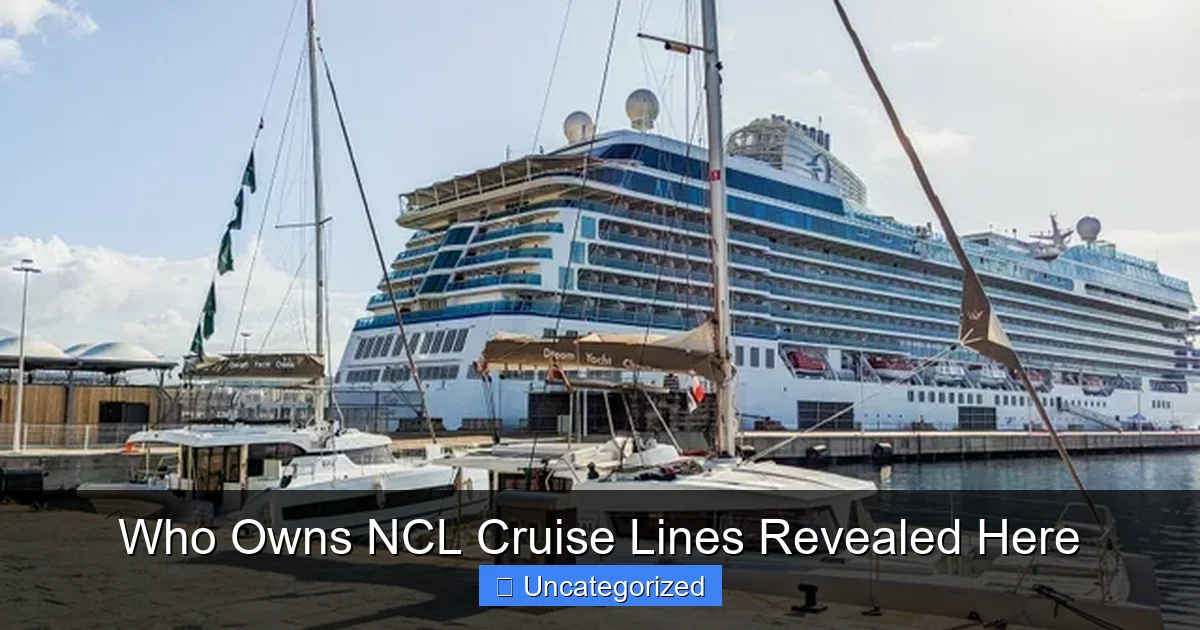
Featured image for who owns ncl cruise lines
Image source: voyagerinfo.com
NCL Cruise Lines is owned by Norwegian Cruise Line Holdings Ltd. (NCLH), a global leader in the cruise industry that also operates Oceania Cruises and Regent Seven Seas Cruises. Headquartered in Miami, Florida, NCLH trades on the NYSE under the ticker “NCLH” and continues to expand its fleet and market reach through innovation and premium vacation experiences.
Key Takeaways
- NCL is owned by Norwegian Cruise Line Holdings Ltd. A publicly traded company listed on the NYSE.
- Major institutional investors dominate ownership. Including Vanguard and BlackRock with significant stakes.
- Management team holds key leadership roles. Ensures strategic alignment with company goals.
- No single majority individual owner exists. Ownership is diversified among shareholders and executives.
- Public investors can buy NCL stock. Offers direct ownership through market investments.
- Ownership impacts sustainability and innovation efforts. Reflects in recent fleet upgrades and green initiatives.
📑 Table of Contents
- Introduction: The Mystery Behind NCL Cruise Lines Ownership
- 1. The Parent Company: Norwegian Cruise Line Holdings Ltd.
- 2. Major Shareholders: Who Holds the Power?
- 3. Historical Ownership: From Founders to Public Markets
- 4. The Role of Government and Regulatory Bodies
- 5. What Ownership Means for Travelers and the Industry
- Data Table: NCLH Ownership Snapshot (Q1 2024)
- Conclusion: The Full Picture of NCL Ownership
Introduction: The Mystery Behind NCL Cruise Lines Ownership
Norwegian Cruise Line (NCL) is a household name in the global cruising industry, known for its innovative ships, freestyle dining, and vibrant onboard experiences. Since its inception in 1966, the brand has grown from a single vessel plying the Caribbean to a fleet of 19 modern cruise ships, serving over 1.5 million passengers annually. But behind this successful cruise line lies a complex corporate structure, international ownership, and a fascinating history of mergers, acquisitions, and strategic partnerships. If you’ve ever wondered who owns NCL Cruise Lines, you’re not alone. The answer isn’t as simple as pointing to a single person or entity — it involves a publicly traded parent company, major institutional investors, and a legacy shaped by decades of evolution in the maritime and hospitality sectors.
Understanding the ownership of NCL is more than just a matter of curiosity — it’s key to grasping the brand’s business model, financial health, and future direction. From its early days as a private company to its current status as a publicly traded entity on the New York Stock Exchange, NCL’s ownership structure reflects broader trends in the cruise industry, including consolidation, globalization, and the growing influence of institutional investors. In this comprehensive guide, we’ll uncover the full story behind who owns NCL Cruise Lines, including the parent company, key shareholders, historical ownership shifts, and what this means for travelers, investors, and the cruise industry at large. Whether you’re a cruise enthusiast, a potential investor, or simply curious about corporate ownership in the travel sector, this article will provide the definitive answer.
1. The Parent Company: Norwegian Cruise Line Holdings Ltd.
At the top of the ownership chain sits Norwegian Cruise Line Holdings Ltd. (NCLH), a Bermuda-incorporated, U.S.-headquartered holding company that owns and operates three major cruise brands: Norwegian Cruise Line, Oceania Cruises, and Regent Seven Seas Cruises. While many people refer to “NCL” as the brand, the legal and financial entity behind it is Norwegian Cruise Line Holdings, which trades under the ticker symbol NCLH on the New York Stock Exchange (NYSE).
Visual guide about who owns ncl cruise lines
Image source: thepointsguy.global.ssl.fastly.net
Structure and Incorporation
NCLH was formed in 2011 through a merger of Apollo Management’s cruise assets, including Norwegian Cruise Line, Oceania Cruises, and Regent Seven Seas Cruises. This merger created a diversified cruise company with a tiered brand portfolio — from the mainstream, family-friendly Norwegian Cruise Line to the ultra-luxury Regent and the upper-premium Oceania. The company is incorporated in Bermuda for tax efficiency and regulatory flexibility but maintains its corporate headquarters in Miami, Florida, a strategic location given the city’s role as a major cruise departure point and hub for international maritime operations.
As a publicly traded company, NCLH is governed by a board of directors and subject to U.S. Securities and Exchange Commission (SEC) reporting requirements. This means its financial statements, ownership disclosures, and strategic plans are publicly available, offering transparency into its operations and ownership structure. The company’s annual reports (Form 10-K) and proxy statements (Form DEF 14A) filed with the SEC provide detailed information on major shareholders, executive compensation, and board composition.
Why a Holding Company?
The use of a holding company structure is common in the cruise industry for several reasons:
- Operational Flexibility: Each brand (Norwegian, Oceania, Regent) operates semi-independently, allowing for tailored marketing, pricing, and guest experiences.
- Risk Management: Financial and operational risks are compartmentalized across brands, reducing the impact of downturns in any one segment.
- Investor Appeal: A diversified portfolio attracts investors interested in different cruise market segments — from budget-conscious travelers to high-net-worth individuals.
- Tax Optimization: Bermuda’s favorable tax regime helps reduce corporate tax liabilities, especially on international earnings.
For example, during the pandemic, NCLH was able to leverage its diversified brand portfolio to pivot strategies — Norwegian focused on domestic U.S. sailings, while Regent and Oceania targeted loyal, affluent customers with extended itineraries and enhanced health protocols. This agility, enabled by the holding company structure, helped NCLH recover faster than some competitors.
2. Major Shareholders: Who Holds the Power?
While NCLH is a public company, its ownership is concentrated among a handful of large institutional investors and private equity firms. As of the most recent SEC filings (Q1 2024), the top shareholders wield significant influence over corporate decisions, including board appointments, mergers, and long-term strategy.
Top Institutional Investors
Institutional investors — including mutual funds, pension funds, and asset management firms — collectively own over 80% of NCLH’s outstanding shares. Here are the key players:
- Vanguard Group: The world’s largest mutual fund provider owns approximately 12.5% of NCLH. Vanguard’s ownership is typically passive, meaning it focuses on long-term value rather than active management.
- BlackRock, Inc.: The global asset management giant holds around 10.2% of shares. BlackRock is known for its ESG (Environmental, Social, and Governance) focus, which influences NCLH’s sustainability initiatives and reporting.
- State Street Corporation: With a 6.8% stake, State Street is another major institutional holder, primarily through its index funds and ETFs.
- FMR LLC (Fidelity Investments): Owns 5.1% and has been an active participant in shareholder meetings, advocating for improved labor practices and climate risk disclosures.
These institutions don’t “own” NCL in the traditional sense — they manage shares on behalf of millions of individual investors, including 401(k) plans, IRAs, and retail brokerage accounts. However, their collective voting power can sway major decisions, such as executive compensation or board nominations.
Private Equity and Insider Ownership
Private equity firms were instrumental in NCLH’s formation. Apollo Global Management, which led the 2011 merger, held a majority stake until its full exit in 2015. Today, Apollo no longer holds a significant position, but other private equity players remain active:
- TPG Capital: Owns a smaller stake (around 3.4%) through its TPG Growth fund, which invests in consumer and travel-related businesses.
- Insider Ownership: NCLH’s executives and board members collectively own about 1.2% of shares. This includes Frank J. Del Rio, the company’s former CEO (2015–2023), who owned over 1 million shares before stepping down. Current CEO Harry Sommer holds a significant stake, aligning his interests with shareholders.
Tip for Investors: Monitoring insider trading activity — such as stock purchases or sales by executives — can provide insights into confidence levels in the company’s future. For instance, when Del Rio sold shares in early 2023, it signaled a transition period, which was later confirmed by his retirement announcement.
Retail Investors and the Rise of “Meme Stock” Influence
While institutional investors dominate, retail investors — especially through platforms like Robinhood and Reddit communities — have gained influence. During the pandemic, NCLH briefly became a “meme stock” as retail traders rallied around travel stocks poised for recovery. This grassroots support helped stabilize the stock price during a volatile period and highlighted the growing power of decentralized ownership.
3. Historical Ownership: From Founders to Public Markets
The ownership of NCL has undergone dramatic shifts since its founding. Understanding this history provides context for today’s corporate structure and investor landscape.
Founding Era (1966–1987): The Knut Kloster Years
NCL was founded in 1966 by Norwegian entrepreneur Knut Kloster and his partner Arne Wilhelmsen, both shipping magnates with deep ties to Norway’s maritime industry. Their vision was to create a cruise line that offered affordable, accessible vacations to the Caribbean, targeting middle-class American travelers. The company’s first ship, the Sunward, began service from Miami in 1966, marking the start of a new era in mass-market cruising.
For over two decades, NCL operated as a privately held company, expanding its fleet and pioneering innovations like freestyle dining and onboard casinos. However, rising competition and financial pressures led to the first major ownership change.
First Acquisition (1987–2000): The Genting Era
In 1987, NCL was acquired by Genting Hong Kong, a subsidiary of the Malaysian conglomerate Genting Group, for $450 million. Genting, known for its resorts and casinos, saw NCL as a strategic fit for its hospitality ambitions. Under Genting, NCL expanded into Asia, launched new ships like the Norwegian Star and Norwegian Sun, and invested in onboard entertainment.
However, Genting’s focus on Asian markets sometimes conflicted with NCL’s North American operations. In 2000, Genting sold a 50% stake to Star Cruises (another Genting subsidiary), effectively consolidating control within the Genting family of companies.
Private Equity Takeover (2007–2013): The Apollo Era
The most transformative period came in 2007 when Apollo Management (now Apollo Global Management) led a $1 billion leveraged buyout, acquiring NCL for $2.1 billion. Apollo saw potential in modernizing the fleet, improving operational efficiency, and preparing for an IPO.
Apollo’s strategy included:
- Launching the Norwegian Epic (2010), a 4,100-passenger ship with bold design and entertainment.
- Acquiring Oceania Cruises and Regent Seven Seas Cruises in 2014 to create a multi-brand platform.
- Taking NCL public in 2013 with an IPO that raised $400 million.
By 2015, Apollo had fully exited its position, selling its remaining shares and marking the transition to a fully public company.
Post-IPO Consolidation (2014–Present)
Since the IPO, NCLH has focused on growth through new ship orders (e.g., the Norwegian Prima class), sustainability initiatives, and strategic partnerships. The company also navigated the 2020–2022 pandemic with government-backed loans and equity raises, which temporarily diluted ownership but preserved operations.
4. The Role of Government and Regulatory Bodies
While NCLH is a private, for-profit company, its operations are heavily regulated by national and international authorities, which indirectly influence ownership and governance.
Flag States and Maritime Regulations
All NCL ships are registered under foreign flags — primarily the Marshall Islands, Bahamas, and Norway — a common practice in the cruise industry known as “flagging out.” These countries provide maritime oversight, including:
- Ship safety and environmental compliance (e.g., MARPOL regulations).
- Crew labor standards and training.
- Tax exemptions and simplified registration processes.
For example, the Norwegian Joy is flagged in the Bahamas, meaning it adheres to Bahamian maritime laws. This doesn’t change ownership but affects operational costs and regulatory scrutiny.
U.S. and International Oversight
As a U.S.-listed company, NCLH must comply with:
- SEC regulations: Financial disclosures, insider trading rules, and shareholder communication.
- FMC (Federal Maritime Commission): Oversight of cruise pricing, consumer protections, and refund policies.
- CDC (Centers for Disease Control and Prevention): Health and safety protocols, especially critical during the pandemic.
During the pandemic, the CDC’s Conditional Sailing Order required NCL to implement strict health measures, which impacted operations and investor confidence. The company worked closely with regulators to resume sailings, demonstrating the interplay between public policy and corporate governance.
Environmental and Labor Regulations
Increasingly, environmental regulations (e.g., IMO 2020 sulfur cap) and labor standards (e.g., International Labor Organization conventions) are shaping ownership decisions. For instance, NCLH’s $1.3 billion investment in LNG-powered ships was driven in part by EU emissions regulations, which affect profitability and long-term viability.
5. What Ownership Means for Travelers and the Industry
Ownership isn’t just a corporate detail — it has real-world implications for cruise passengers, employees, and the broader industry.
For Travelers: Quality, Pricing, and Innovation
The concentration of ownership among institutional investors means NCLH prioritizes:
- Profitability: This can lead to cost-cutting measures (e.g., reduced gratuities, fewer included amenities) but also investments in new ships and technology.
- Customer Experience: Public companies are sensitive to reputation. NCL’s freestyle dining, entertainment options, and destination immersion are designed to attract and retain customers.
- Transparency: Public filings reveal details on safety, sustainability, and financial health, helping travelers make informed choices.
Example: After the 2022 “Norwegian Breakaway” norovirus outbreak, NCLH’s stock dropped 5%, prompting faster response protocols and public apologies — actions driven by shareholder accountability.
For Employees: Job Security and Labor Practices
Ownership structure affects labor relations. Institutional investors like BlackRock and Fidelity are increasingly vocal about fair wages and safe working conditions. In 2023, NCLH signed a new labor agreement with its crew union, improving pay and benefits after pressure from ESG-focused shareholders.
For the Industry: Consolidation and Competition
NCLH’s ownership model reflects a trend toward consolidation. With Carnival Corporation and Royal Caribbean Group as its main competitors, the cruise industry is dominated by three large players. This reduces price wars but increases reliance on global capital markets for growth.
Tip for Travelers: When choosing a cruise line, consider the parent company’s reputation. NCLH’s public status means it’s more accountable than private operators, but also more focused on quarterly earnings.
Data Table: NCLH Ownership Snapshot (Q1 2024)
| Shareholder Category | Top Holders | Ownership % | Notes |
|---|---|---|---|
| Institutional Investors | Vanguard, BlackRock, State Street | 78.5% | Passive and active funds; ESG-focused |
| Retail Investors | Individual shareholders (via brokerages) | 12.0% | Includes “meme stock” participants |
| Insider Ownership | Executives, Board Members | 1.2% | CEO Harry Sommer: ~0.3% |
| Private Equity | TPG Capital, others | 3.4% | Minority stakes; no controlling interest |
| Other | Hedge funds, mutual funds | 4.9% | Diverse small holdings |
Conclusion: The Full Picture of NCL Ownership
So, who owns NCL Cruise Lines? The answer is multifaceted: Norwegian Cruise Line Holdings Ltd. is the legal owner, but its shares are held by a diverse group of institutional investors, retail shareholders, executives, and private equity firms. This ownership structure — shaped by decades of mergers, acquisitions, and public market dynamics — reflects the complexity of the modern cruise industry.
For travelers, this means a brand that is financially transparent, innovation-driven, and responsive to global trends. For investors, it offers exposure to a resilient travel sector with a diversified brand portfolio. And for the industry, NCLH’s ownership model exemplifies how cruise lines balance profitability with regulatory compliance, sustainability, and customer satisfaction.
As NCLH continues to expand — with new ships like the Norwegian Aqua and a focus on LNG and carbon-neutral technologies — its ownership will remain a key factor in its success. Whether you’re booking a Caribbean getaway or analyzing stock performance, understanding who owns NCL Cruise Lines provides valuable insight into one of the world’s most dynamic vacation industries. The next time you board a Norwegian ship, remember: behind the smiles and margaritas, there’s a global network of shareholders, regulators, and executives shaping your cruise experience.
Frequently Asked Questions
Who owns NCL Cruise Lines?
NCL Cruise Lines, also known as Norwegian Cruise Line, is owned by Norwegian Cruise Line Holdings Ltd. (NCLH), a global cruise company headquartered in Miami, Florida. The company operates multiple brands, including Oceania Cruises and Regent Seven Seas Cruises.
Is Norwegian Cruise Line a publicly traded company?
Yes, Norwegian Cruise Line Holdings Ltd. is publicly traded on the New York Stock Exchange under the ticker symbol NCLH. This means its ownership is distributed among institutional and individual shareholders worldwide.
Who is the parent company of NCL Cruise Lines?
The parent company of NCL Cruise Lines is Norwegian Cruise Line Holdings Ltd., which oversees the operations of Norwegian Cruise Line, Oceania Cruises, and Regent Seven Seas Cruises. The holding company was established to streamline management across its luxury and premium brands.
Does anyone famous own shares in Norwegian Cruise Line?
While no single celebrity is publicly known to own a controlling stake, many high-profile investors and funds hold shares in Norwegian Cruise Line Holdings Ltd. (NCLH) due to its status as a publicly traded company. Ownership is diversified across large institutional investors like Vanguard and BlackRock.
How did Norwegian Cruise Line get its start?
Norwegian Cruise Line was founded in 1966 by Knut Kloster and Ted Arison, who pioneered the modern cruise industry with the first purpose-built cruise ship, the Sunward. Today, the company is owned by Norwegian Cruise Line Holdings Ltd., which acquired it in a 2008 merger.
Who are the major shareholders of NCL Cruise Lines?
The largest shareholders of Norwegian Cruise Line Holdings Ltd. (NCLH) include institutional investors like Vanguard Group, BlackRock, and Fidelity Management. These firms hold significant stakes, reflecting investor confidence in the cruise industry’s growth potential.