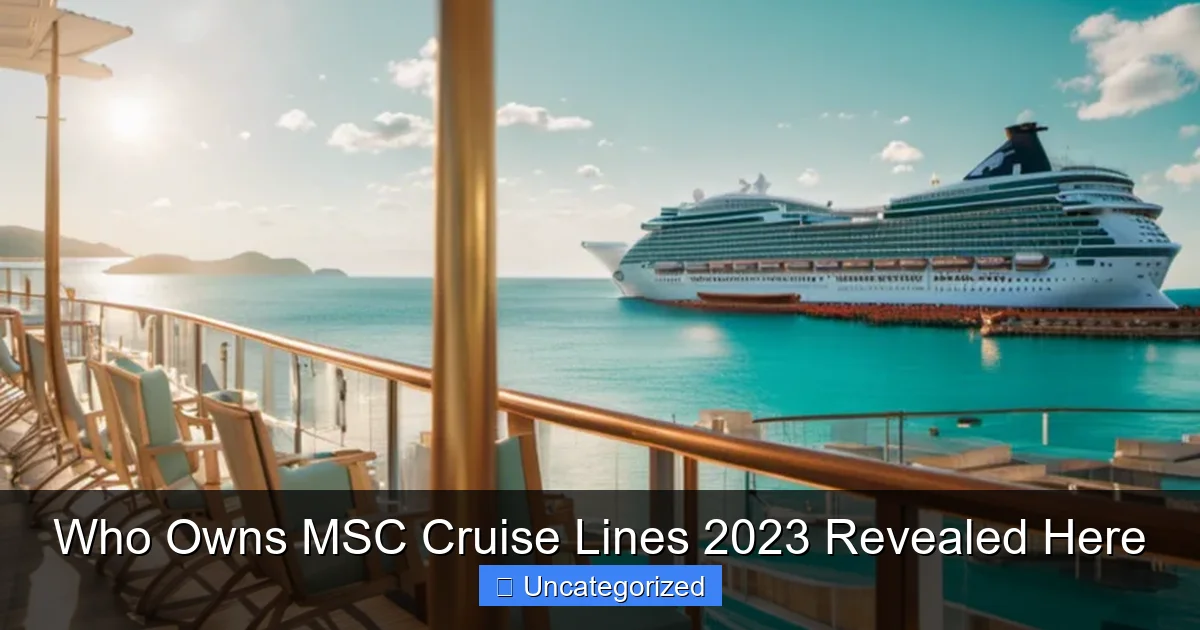
Featured image for who owns msc cruise lines 2023
Image source: voyagerinfo.com
MSC Cruise Lines 2023 is owned by the MSC Group, a global leader in maritime and logistics services, with the Aponte family maintaining full control through their holding company, Mediterranean Shipping Company. This privately held empire ensures MSC Cruises remains a powerhouse in the luxury and family-friendly cruise market, backed by decades of industry dominance and expansion.
Key Takeaways
- MSC Group owns MSC Cruise Lines: Full ownership under Mediterranean Shipping Company.
- Privately held structure: No public shareholders, ensuring centralized decision-making.
- Global expansion focus: Aggressive fleet growth targeting new markets in 2023.
- Loyalty to family legacy: Founded and led by the Aponte family since 1970.
- Diversified maritime empire: Cruise line is one arm of broader shipping operations.
- Strategic partnerships: Collaborations with shipyards and tech firms drive innovation.
📑 Table of Contents
- Who Owns MSC Cruise Lines 2023 Revealed Here
- The MSC Group: The Parent Company Behind the Cruise Line
- The Aponte Family: The Visionary Owners Behind MSC
- MSC Cruises’ Corporate Structure and Subsidiaries
- Sustainability and Ownership: How the Aponte Family Shapes MSC’s Green Future
- Future Outlook: Ownership and Expansion in 2023 and Beyond
- Conclusion: The Aponte Legacy and the Future of MSC Cruises
Who Owns MSC Cruise Lines 2023 Revealed Here
The glittering world of luxury ocean travel often leads curious travelers to wonder about the ownership of the vessels that carry them across turquoise seas. Among the most recognizable names in modern cruising is MSC Cruises, a company that has grown from a Mediterranean shipping operation into a global cruise powerhouse with over 20 ships and ambitions to dominate the industry by 2030. As of 2023, MSC Cruises remains one of the few major cruise lines not publicly traded, making its ownership structure a topic of intrigue for investors, industry analysts, and vacation planners alike. The question “Who owns MSC Cruise Lines 2023?” isn’t just about corporate lineage—it’s about legacy, family influence, strategic vision, and global expansion.
While competitors like Carnival Corporation and Royal Caribbean Group are publicly traded entities with shareholder-driven governance, MSC Cruises stands apart as a privately held subsidiary of a much larger, family-controlled conglomerate. This unique ownership model has allowed MSC to make bold, long-term decisions—such as investing over $10 billion in a new generation of LNG-powered cruise ships—without the pressure of quarterly earnings reports. In this comprehensive guide, we’ll peel back the layers of MSC’s corporate structure, reveal the key individuals behind the brand, explore the family’s global influence, and examine how this ownership model shapes the cruise line’s operations, sustainability goals, and future ambitions. Whether you’re a seasoned cruiser, a business enthusiast, or simply curious about the people steering one of the world’s fastest-growing cruise brands, this deep dive into MSC Cruises’ ownership in 2023 will provide clarity and context.
The MSC Group: The Parent Company Behind the Cruise Line
At the heart of the MSC Cruises brand is the MSC Group (Mediterranean Shipping Company Group), a privately owned multinational conglomerate founded in 1970 by Italian shipping magnate Gianluigi Aponte. While MSC Cruises is the public-facing arm of the company, it operates under the broader umbrella of the MSC Group, which spans shipping, logistics, terminal operations, and tourism. This vertical integration is a cornerstone of the group’s success, allowing it to control costs, streamline supply chains, and maintain a competitive edge in the global maritime industry.
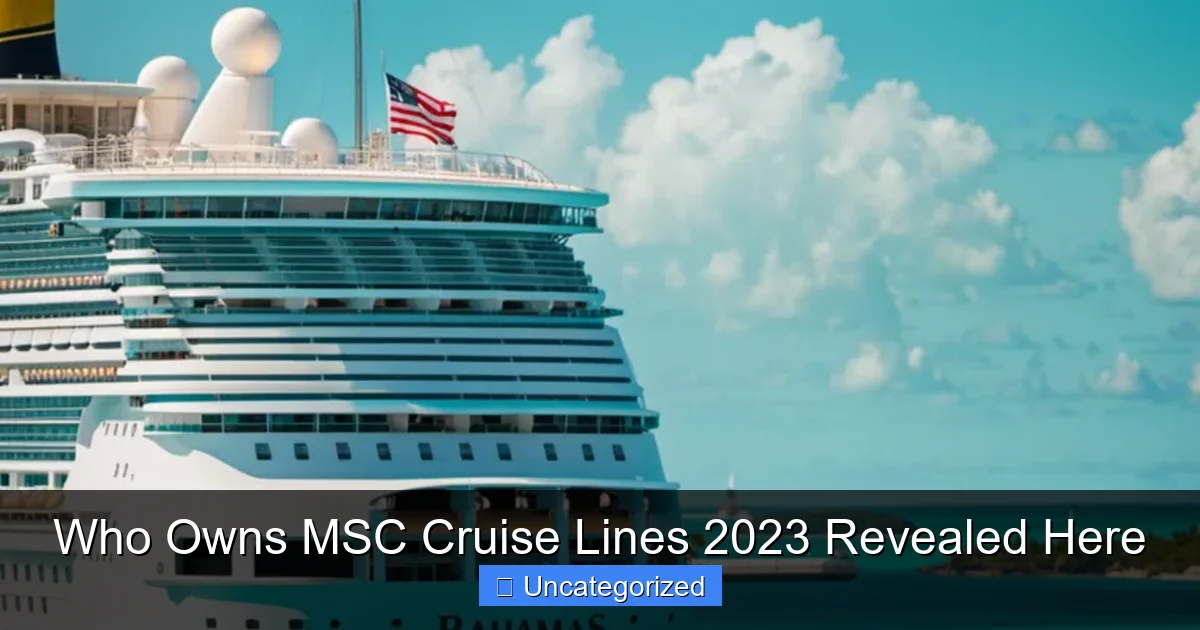
Visual guide about who owns msc cruise lines 2023
Image source: voyagerinfo.com
From Cargo Ships to Cruise Ships: A Strategic Diversification
MSC’s journey into the cruise industry began in the late 1990s, when the Aponte family recognized the potential of the leisure travel market. In 1995, MSC acquired its first cruise ship, the MSC Monterey, later rebranded as MSC Rhapsody. This marked the beginning of a strategic diversification from cargo shipping into passenger tourism. The move was not impulsive—it was calculated. The Aponte family leveraged their expertise in maritime logistics, shipbuilding, and global operations to build a cruise brand that could compete with established players like Carnival and Royal Caribbean.
A key advantage of being part of the MSC Group is access to the group’s massive shipping fleet. For example, when MSC Cruises needed to reposition a ship from Europe to the Caribbean, the parent company could coordinate port logistics, fuel supply, and crew transfers through its existing network of terminals and support vessels. This level of operational synergy is rare in the cruise industry, where most lines rely on third-party logistics providers.
Practical Tip: When booking an MSC cruise, especially on new or repositioning voyages, consider that the company’s integration with the parent group often translates to smoother embarkation, fewer delays, and enhanced onboard supply chains (e.g., fresh produce, specialty dining ingredients).
MSC Group’s Global Footprint
Today, the MSC Group is one of the world’s largest container shipping companies, operating over 600 vessels and handling more than 20 million TEUs (twenty-foot equivalent units) annually. Its cruise division, MSC Cruises, is the world’s third-largest cruise line by passenger capacity, behind only Carnival and Royal Caribbean. The group also owns Terminal Investment Limited (TIL), which manages 40+ container terminals worldwide, and MSC Air Cargo, launched in 2022 to capitalize on the post-pandemic air freight boom.
This diversification has insulated MSC Cruises from market volatility. For instance, during the 2020–2021 cruise shutdown, the parent company’s robust shipping operations provided financial stability, allowing MSC Cruises to continue investing in new ships and sustainability initiatives without layoffs or service reductions. In contrast, publicly traded cruise lines faced shareholder pressure to cut costs and delay new builds.
Example: In 2022, while Royal Caribbean postponed the delivery of Icon of the Seas due to supply chain issues, MSC Cruises successfully launched MSC World Europa—the world’s largest LNG-powered cruise ship—on schedule, thanks to the group’s direct access to shipyards and construction expertise.
The Aponte Family: The Visionary Owners Behind MSC
The ownership of MSC Cruise Lines in 2023 is unequivocally tied to the Aponte family, a modern-day dynasty in the maritime world. At the helm is Gianluigi Aponte, the 84-year-old founder and patriarch, who still plays an active role in strategic decisions. He is joined by his wife, Donatella Aponte, and their two sons, Pierfrancesco Vago and Diego Aponte, who lead key divisions of the MSC Group. This family-centric leadership model ensures continuity, long-term vision, and a deeply personal commitment to the brand’s values.
Gianluigi Aponte: The Shipping Magnate
Born in Sorrento, Italy, in 1939, Gianluigi Aponte began his career as a deckhand before founding Mediterranean Shipping Company in 1970 with a single cargo ship. His rise to prominence was fueled by a combination of aggressive expansion, technological innovation, and an uncanny ability to navigate geopolitical shifts—such as the opening of trade routes to China in the 1980s and the global shipping boom of the 2000s. In 2023, Forbes estimates his net worth at $30.8 billion, making him one of the wealthiest individuals in Europe.
Aponte’s influence on MSC Cruises is evident in the brand’s emphasis on European heritage, luxury dining (with menus curated by Italian chefs), and family-friendly itineraries. Unlike American-dominated cruise lines that prioritize mass-market appeal, MSC Cruises blends Mediterranean elegance with global accessibility—a direct reflection of Aponte’s vision.
Next-Gen Leadership: Pierfrancesco Vago and Diego Aponte
In recent years, the Aponte family has transitioned leadership roles to the next generation. Pierfrancesco Vago, Gianluigi’s son-in-law (married to daughter Alexa Aponte-Vago), serves as Executive Chairman of MSC Cruises. A former investment banker, Vago has spearheaded the cruise line’s digital transformation, sustainability initiatives, and partnerships with luxury brands like Bulgari and MSC Foundation. His leadership has been instrumental in repositioning MSC Cruises as a premium brand, with a focus on eco-friendly ships and immersive guest experiences.
Diego Aponte, Gianluigi’s younger son, is President and CEO of the broader MSC Group, overseeing shipping, logistics, and air cargo. His role ensures that the cruise division benefits from the group’s operational synergies, such as using container ships to transport supplies to remote ports or leveraging terminal infrastructure for crew logistics.
Practical Tip: When researching MSC Cruises’ corporate news, look for statements from Vago—he often reveals insights into the company’s future plans, such as the 2030 fleet expansion or new environmental targets.
Family Values and Corporate Culture
The Aponte family’s influence extends beyond titles. They maintain a hands-on approach, frequently visiting ships, meeting crew members, and engaging with guests. This culture of accessibility is rare in large corporations but aligns with the family’s belief that “the sea connects us all.” For example, during the pandemic, the Apontes personally oversaw the repatriation of crew members stranded at sea, using the group’s shipping fleet to transport them home—a move that boosted employee morale and brand loyalty.
MSC Cruises’ Corporate Structure and Subsidiaries
While MSC Cruises is a subsidiary of the MSC Group, its corporate structure in 2023 reflects a sophisticated network of specialized entities designed to optimize operations, branding, and global reach. Understanding this structure clarifies how the cruise line functions independently while leveraging the parent group’s resources.
MSC Cruises Holdings S.A.
The primary legal entity for the cruise division is MSC Cruises Holdings S.A., a holding company registered in Switzerland (Geneva). This entity oversees all cruise operations, including ship ownership, itinerary planning, marketing, and human resources. It is fully owned by the MSC Group, ensuring that profits and assets remain within the family-controlled conglomerate. The Swiss registration offers tax advantages and legal stability, common among European maritime firms.
Geographic Subsidiaries
To serve its global clientele, MSC Cruises operates regional subsidiaries, each tailored to local markets:
- MSC Cruises USA: Based in Miami, this subsidiary manages North American sales, partnerships (e.g., with travel agencies), and itineraries in the Caribbean and Alaska.
- MSC Cruises UK: Headquartered in London, it handles European and British operations, including the popular UK-to-Mediterranean routes.
- MSC Cruises Asia: Established in Singapore, it focuses on the growing Asian market, with ships like MSC Bellissima homeported in Shanghai and Hong Kong.
These subsidiaries operate under the strategic direction of MSC Cruises Holdings S.A., ensuring brand consistency while allowing regional customization (e.g., Mandarin-speaking crew in Asia, British afternoon tea service on UK cruises).
Specialized Divisions
MSC Cruises also includes niche divisions that support its core operations:
- MSC Grandiosa Experience: A subsidiary focused on luxury and themed cruises, including the “World Cruise” and “Musica” series with live orchestras.
- MSC Yacht Club: The cruise line’s “ship-within-a-ship” concept, offering private butler service, exclusive dining, and a dedicated lounge. This brand is managed by a dedicated team to maintain its premium positioning.
- MSC Foundation: A non-profit arm focused on ocean conservation, with initiatives like the “Save the Blue” program and partnerships with UNESCO.
Example: When MSC Cruises launched MSC Seaview in 2018, the Yacht Club division was expanded to include a new “Royal Suite” category, directly responding to feedback from high-net-worth guests—a flexibility enabled by the subsidiary’s autonomy.
Sustainability and Ownership: How the Aponte Family Shapes MSC’s Green Future
In 2023, sustainability is no longer optional for cruise lines—it’s a competitive necessity. The Aponte family’s ownership model has allowed MSC Cruises to take bold, long-term steps toward environmental responsibility, free from the short-term profit pressures faced by public companies. Their approach combines technological innovation, regulatory compliance, and a genuine commitment to ocean conservation.
LNG-Powered Ships: A $10 Billion Investment
MSC Cruises is investing over $10 billion to build a new generation of ships powered by liquefied natural gas (LNG), the cleanest fossil fuel currently available for large-scale maritime use. LNG reduces sulfur oxide (SOx) emissions by 99%, nitrogen oxide (NOx) by 85%, and particulate matter by 95% compared to traditional marine diesel. As of 2023, the line has launched five LNG-powered ships, including the record-breaking MSC World Europa (5,400 passengers) and MSC Euribia (the first cruise ship to operate on LNG in Northern Europe).
The Aponte family’s willingness to fund this transition reflects their long-term vision. While LNG infrastructure is still developing (limiting where these ships can refuel), MSC has partnered with ports like Barcelona and Rotterdam to expand LNG bunkering stations—a move that benefits the entire maritime industry.
Beyond LNG: Hydrogen and Carbon-Neutral Goals
Looking beyond LNG, MSC Cruises is piloting hydrogen fuel cells and battery storage systems to achieve carbon-neutral operations by 2050. For example, MSC World Europa features a 150-kilowatt hydrogen fuel cell that powers onboard systems, with plans to scale this technology in future builds. The company also uses shore power (connecting to land-based electricity) in ports like Civitavecchia (Rome) and Miami, reducing emissions during docking.
Practical Tip: When booking an MSC cruise, check if the ship is LNG-powered or equipped with shore power—these features significantly reduce environmental impact. Use MSC’s “Sustainable Cruising” filter on their website to identify eco-friendly itineraries.
The MSC Foundation and Ocean Conservation
Founded in 2013, the MSC Foundation (led by Pierfrancesco Vago) funds marine research, coral reef restoration, and plastic cleanup initiatives. In 2022, the foundation partnered with UNESCO to launch the “Ocean Literacy” program, training crew members and guests in sustainable practices. The Aponte family’s personal involvement—such as Gianluigi Aponte’s visits to research vessels—underscores their commitment beyond corporate social responsibility.
Future Outlook: Ownership and Expansion in 2023 and Beyond
The Aponte family’s ownership of MSC Cruises positions the brand for aggressive growth in the post-pandemic era. With a clear roadmap for fleet expansion, technological innovation, and market diversification, MSC is poised to challenge the dominance of Carnival and Royal Caribbean by 2030.
Fleet Expansion: 11 New Ships by 2028
MSC Cruises has 11 new ships on order, including:
- MSC World America (2025): A sister ship to World Europa, homeported in Miami for Caribbean cruises.
- MSC Lirica 2.0 (2026): A next-gen ship designed for the Chinese market, with Mandarin-speaking crew and Asian cuisine options.
- MSC Seashore-class (2023–2027): Three additional LNG-powered ships for the Mediterranean and North America.
These new builds will increase MSC’s passenger capacity by 40% by 2028, solidifying its third-place ranking globally.
Market Diversification: Targeting Asia and the Middle East
While MSC Cruises has a strong presence in Europe and North America, the Aponte family is prioritizing expansion in Asia and the Middle East. In 2023, the line launched its first Dubai-based itineraries, with MSC Virtuosa offering 7-night cruises to Abu Dhabi and Muscat. In Asia, partnerships with local travel agencies and cruise ports (e.g., Singapore’s Marina Bay Cruise Centre) are driving demand among Chinese, Indian, and Southeast Asian travelers.
Digital Transformation and Guest Experience
Under Pierfrancesco Vago’s leadership, MSC Cruises is investing in digital tools to enhance guest experience, including:
- MSC for Me: A mobile app for real-time itinerary updates, dining reservations, and onboard purchases.
- Smart Cabins: IoT-enabled staterooms with voice-controlled lighting, temperature, and service requests (available on World Europa).
- AI-Powered Customer Service: Chatbots and virtual concierges to reduce wait times and personalize interactions.
This tech-forward approach aligns with the Aponte family’s belief that “innovation is the compass of the future.”
Data Table: MSC Cruises Fleet and Ownership (2023)
| Ship Name | Year Built | Passenger Capacity | Power Source | Home Region | Owner (Subsidiary) |
|---|---|---|---|---|---|
| MSC World Europa | 2022 | 6,762 | LNG + Hydrogen | Europe/Caribbean | MSC Cruises Holdings S.A. |
| MSC Euribia | 2023 | 6,334 | LNG | Northern Europe | MSC Cruises Holdings S.A. |
| MSC Grandiosa | 2019 | 6,334 | Marine Diesel + Shore Power | Caribbean | MSC Cruises Holdings S.A. |
| MSC Bellissima | 2019 | 5,642 | Marine Diesel | Asia | MSC Cruises Asia Pte Ltd |
| MSC Virtuosa | 2021 | 6,327 | Marine Diesel | Middle East | MSC Cruises UK Ltd |
Note: All ships are owned by subsidiaries of MSC Cruises Holdings S.A., which is fully owned by the MSC Group (Aponte family).
Conclusion: The Aponte Legacy and the Future of MSC Cruises
The answer to “Who owns MSC Cruise Lines 2023?” is clear: the Aponte family, through their privately held MSC Group. This ownership structure is the foundation of MSC Cruises’ unique identity—a blend of family values, long-term vision, and operational excellence. Unlike publicly traded competitors, MSC Cruises is free to prioritize sustainability, innovation, and guest experience over short-term profits, as evidenced by its $10 billion LNG investment, hydrogen fuel cell pilots, and global fleet expansion.
For travelers, this ownership model translates to a cruise experience that feels more personal, more sustainable, and more aligned with global trends. Whether you’re sailing on an LNG-powered mega-ship, dining in a Yacht Club suite, or participating in a coral reef cleanup, you’re engaging with a brand shaped by a family’s passion for the sea. As MSC Cruises charts its course toward 2030—with new ships, new markets, and new technologies—the Aponte family’s influence will remain the compass guiding its journey. In an industry often driven by shareholder returns, MSC Cruises stands as a testament to what’s possible when ownership is rooted in legacy, vision, and a deep love for the ocean.
Frequently Asked Questions
Who owns MSC Cruise Lines in 2023?
MSC Cruise Lines is owned by the MSC Group, a global logistics and shipping conglomerate. The company was founded by the Aponte family, and it remains privately held by them as of 2023.
Is MSC Cruise Lines still family-owned in 2023?
Yes, MSC Cruise Lines is still family-owned and operated by the Aponte family through the MSC Group. Their hands-on leadership has helped the brand expand into one of the largest cruise operators worldwide.
Who is the CEO of MSC Cruise Lines in 2023?
Pierfrancesco Vago, a member of the Aponte family, serves as the Executive Chairman of MSC Group’s Cruise Division in 2023. The day-to-day operations are led by CEO Barbara Buczek, overseeing brand growth and innovation.
Which country owns MSC Cruise Lines?
MSC Cruise Lines is headquartered in Geneva, Switzerland, and is owned by the Swiss-based MSC Group. Despite its global operations, the company maintains strong ties to its Mediterranean roots.
How does MSC Group’s ownership impact MSC Cruise Lines?
The MSC Group’s diversified ownership—spanning shipping, logistics, and cruises—allows MSC Cruise Lines to leverage synergies in operations and sustainability. This vertical integration supports its rapid fleet expansion and competitive pricing.
Are there any investors in MSC Cruise Lines 2023 besides the Aponte family?
No, MSC Cruise Lines remains fully owned by the Aponte family through the privately held MSC Group. The company has not sought external investors, maintaining full control over its strategic direction.