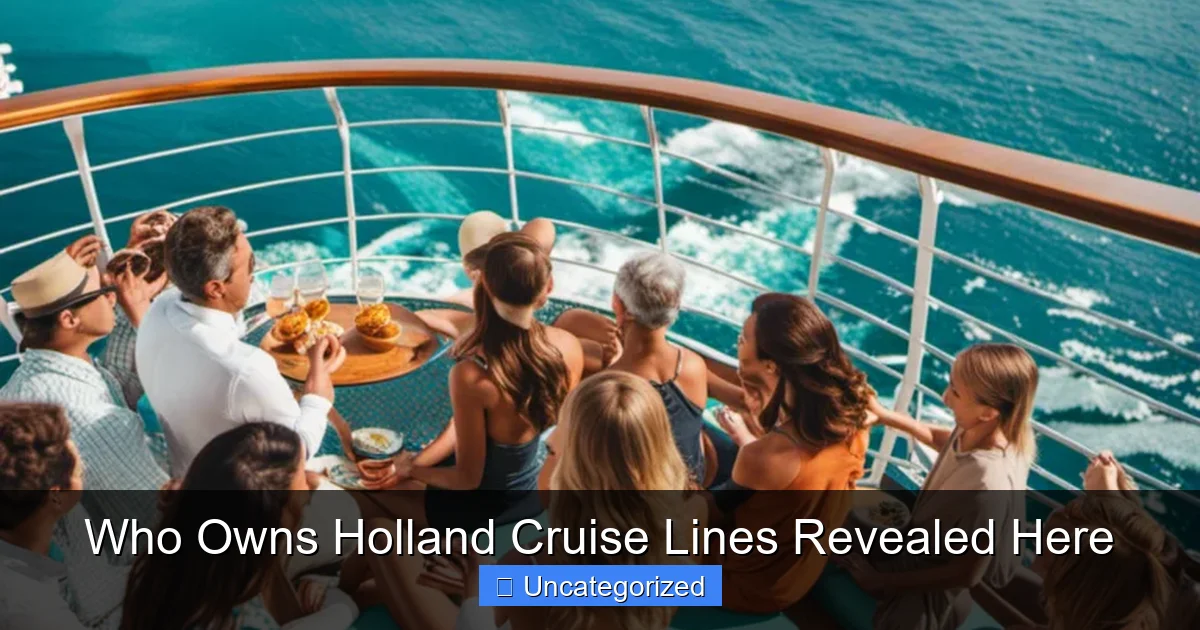
Featured image for who owns holland cruise lines
Image source: voyagerinfo.com
Holland America Line is owned by Carnival Corporation & plc, the world’s largest cruise company, operating as a premium brand under its portfolio. Acquired in 1989, Holland America maintains its Dutch heritage while benefiting from Carnival’s global scale and resources, ensuring a blend of tradition and modern luxury on its voyages.
Key Takeaways
- Holland America Line is owned by Carnival Corporation, a global cruise leader.
- Founded in 1873, it remains a premium brand under Carnival’s portfolio.
- Parent company Carnival Corp operates 9 other cruise lines worldwide.
- Known for luxury and tradition, HAL targets mature, upscale travelers.
- Fleet expansion continues with new ships and eco-friendly upgrades planned.
- Book confidently knowing HAL is backed by Carnival’s financial stability.
📑 Table of Contents
- Who Owns Holland Cruise Lines? A Deep Dive Into the Ownership and Legacy
- The Historical Roots: From Dutch Shipping to Global Cruising
- The Corporate Acquisition: How Carnival Corporation Took the Helm
- The Current Ownership Structure: Carnival Corporation & PLC
- Brand Identity and Cultural Continuity: Preserving the Dutch Legacy
- Future Outlook: Innovation, Sustainability, and Market Expansion
- Data Table: Holland America Line Fleet Overview (2024)
- Conclusion: A Legacy Owned, But Not Defined, by Its Parent Company
Who Owns Holland Cruise Lines? A Deep Dive Into the Ownership and Legacy
When you think of iconic cruise experiences, Holland Cruise Lines—more commonly known as Holland America Line—likely comes to mind. With a rich history spanning over 150 years, this premium cruise brand has become synonymous with elegant voyages, world-class service, and a commitment to cultural enrichment. From its early days as a transatlantic shipping company to its current status as a luxury cruise operator, Holland America Line has navigated through waves of change, ownership transitions, and industry evolution. But who exactly owns Holland Cruise Lines today? And how has its ownership shaped its identity, operations, and global reach?
This comprehensive guide will reveal the full story behind the ownership of Holland America Line. We’ll explore its origins, corporate structure, key players, and how its current ownership under a global tourism giant has influenced its modern-day operations. Whether you’re a seasoned cruiser, a maritime history enthusiast, or a business analyst interested in the travel and hospitality sector, this deep dive will provide valuable insights into one of the most respected names in cruising. By the end of this article, you’ll not only know who owns Holland Cruise Lines but also understand the strategic decisions, brand philosophies, and market dynamics that have kept this legacy brand afloat for generations.
The Historical Roots: From Dutch Shipping to Global Cruising
Origins in the Netherlands: The Nederlandsche-Amerikaansche Stoomvaart Maatschappij (N.A.S.M.)
The story of Holland America Line begins in 1873, when the Nederlandsche-Amerikaansche Stoomvaart Maatschappij (Dutch-American Steamship Company) was founded in Rotterdam, Netherlands. The company’s primary mission was to transport Dutch immigrants to the United States, particularly to New York and other East Coast destinations. The first ship, the Rotterdam, set sail in 1873, marking the beginning of a transatlantic legacy. The company adopted the name “Holland America Line” in 1885, emphasizing its Dutch heritage and American focus.
Visual guide about who owns holland cruise lines
Image source: oceanblissjourneys.com
During its early decades, Holland America Line operated primarily as a cargo and passenger shipping company. It wasn’t until the early 20th century that the line began shifting its focus toward leisure cruising. The introduction of the Statendam in 1929 marked a turning point, as the ship was designed with luxury accommodations and onboard entertainment, signaling a move toward the modern cruise experience.
Expansion and the Golden Age of Ocean Liners
The mid-20th century was the golden age of ocean liners, and Holland America Line was at the forefront. Ships like the Rotterdam V (launched in 1959) became floating palaces of elegance, complete with fine dining, ballrooms, and world-class service. These vessels were not just transportation—they were destinations in themselves.
During this era, Holland America Line remained a privately owned Dutch company, with strong ties to the Netherlands. It maintained its headquarters in Rotterdam and continued to emphasize Dutch traditions, including onboard Dutch cuisine, tulip time celebrations, and the use of the Dutch flag. This period solidified the brand’s reputation for quality, reliability, and cultural authenticity—a legacy that continues today.
Transition to Cruise-Centric Operations
By the 1960s and 1970s, the rise of commercial air travel drastically reduced demand for transatlantic passenger ships. In response, Holland America Line pivoted to a cruise-centric model, focusing on round-trip voyages from major U.S. ports like Miami, New York, and San Francisco. The company began offering themed cruises, exotic itineraries, and onboard enrichment programs, appealing to a growing market of leisure travelers.
This strategic shift laid the foundation for the modern cruise brand. However, as the industry grew more competitive, the need for capital investment, global marketing, and operational scale became evident—setting the stage for a major ownership change.
The Corporate Acquisition: How Carnival Corporation Took the Helm
The 1989 Acquisition: A Landmark Deal in Cruise History
The pivotal moment in Holland America Line’s ownership history came in 1989, when Carnival Corporation—then known as Carnival Cruise Lines—acquired the company for approximately $625 million. This acquisition was part of a broader strategy by Carnival to expand its portfolio of premium and luxury cruise brands.
At the time, Carnival was emerging as a dominant force in the cruise industry. Founded in 1972 by Ted Arison, Carnival had built its success on affordable, mass-market cruises. However, Arison and his leadership team recognized the value of diversifying into higher-end segments. Holland America Line, with its established reputation for quality and its loyal customer base, was a perfect fit.
Why Carnival Chose Holland America Line
There were several strategic reasons behind the acquisition:
- Brand Equity: Holland America Line had a century-long reputation for excellence, with a customer base that valued tradition, service, and cultural experiences.
- Fleet Quality: The line operated a modern fleet, including the recently launched Rotterdam VI (1988), which was one of the most advanced ships of its time.
- Global Reach: Holland America had strong itineraries in Alaska, the Caribbean, Europe, and the South Pacific—regions that complemented Carnival’s existing routes.
- Operational Synergy: Carnival could leverage its economies of scale in purchasing, marketing, and logistics to improve Holland America’s profitability.
After the acquisition, Holland America Line retained its brand identity, management team, and Dutch heritage. Carnival allowed it to operate as a semi-autonomous subsidiary, preserving its unique culture while benefiting from corporate resources.
Integration and Growth Under Carnival
Under Carnival’s ownership, Holland America Line underwent significant modernization. Carnival invested heavily in new ships, including the Statendam (1993), Maasdam (1993), and the Rotterdam VII (1997). These vessels introduced new amenities like specialty restaurants, expanded staterooms, and enhanced entertainment options, aligning with evolving customer expectations.
Additionally, Carnival helped Holland America expand its presence in key markets, including:
- Alaska: Holland America became a dominant player in Alaskan cruising, with dedicated ships like the Noordam and Zuiderdam.
- World Cruises: The line launched its iconic 110-day Grand World Voyage, attracting retirees and luxury travelers.
- Digital Transformation: Carnival’s investment in technology enabled online booking, mobile apps, and onboard connectivity.
This period marked the transition of Holland America Line from a regional Dutch operator to a global cruise brand, all while maintaining its core identity.
The Current Ownership Structure: Carnival Corporation & PLC
Dual Corporate Entity: Carnival Corporation and Carnival plc
Today, Holland America Line is owned by Carnival Corporation & plc, a dual-listed company formed in 2003 through the merger of Carnival Corporation (U.S.-based) and P&O Princess Cruises (UK-based). This unique structure allows the company to operate as a single economic entity while being listed on both the New York Stock Exchange (NYSE: CCL) and the London Stock Exchange (LSE: CCL).
Carnival Corporation & plc is the world’s largest cruise company, with a portfolio of 10 major brands, including:
- Carnival Cruise Line
- Princess Cruises
- Holland America Line
- Seabourn
- Costa Cruises
- AIDA Cruises
- P&O Cruises (UK)
- P&O Cruises (Australia)
- Cunard
- Oceania Cruises
Each brand operates semi-independently, with its own management, marketing, and customer experience strategy—ensuring that Holland America Line maintains its distinct identity.
Leadership and Executive Oversight
While Carnival Corporation & plc provides strategic direction and financial oversight, day-to-day operations of Holland America Line are managed by its own executive team. As of 2024, Stein Kruse serves as the President and CEO of Holland America Line, reporting to Josh Weinstein, the CEO of Carnival Corporation & plc.
Key departments—including marketing, itinerary planning, guest services, and ship operations—are based in Seattle, Washington, which has been the line’s U.S. headquarters since the 1970s. This localized management structure allows Holland America to respond quickly to market trends while benefiting from corporate support in areas like procurement, IT, and risk management.
Financial Performance and Strategic Priorities
Holland America Line contributes significantly to Carnival Corporation’s revenue. In 2023, the line reported over $2.1 billion in revenue, with a fleet of 11 ships carrying approximately 600,000 guests annually. The company has focused on several strategic initiatives under Carnival’s ownership:
- Fleet Modernization: Launch of the Koningsdam (2016), Nieuw Statendam (2018), and Rotterdam VIII (2021)—part of the Pinnacle-class, designed for luxury and sustainability.
- Environmental Stewardship: Investment in LNG-powered engines, advanced wastewater treatment, and shore power connectivity to reduce carbon emissions.
- Guest Experience Innovation: Introduction of the “On Location” enrichment program, partnerships with National Geographic, and expanded wellness offerings.
- Market Diversification: Expansion into new regions like Japan, the Mediterranean, and Antarctica, catering to niche markets.
Carnival’s ownership has enabled Holland America to remain financially stable, even during industry downturns such as the 2020 pandemic, when Carnival provided emergency funding and operational support.
Brand Identity and Cultural Continuity: Preserving the Dutch Legacy
Maintaining Dutch Traditions in a Global Brand
One of the most remarkable aspects of Holland America Line’s ownership under Carnival is its ability to preserve its Dutch heritage. Despite being part of an American corporate giant, the line continues to emphasize its roots through:
- Dutch Cuisine: Signature dishes like Hollandse Nieuwe (Dutch herring) and Stroopwafels are served onboard.
- Tulip Time Cruises: Annual spring voyages celebrating the Netherlands’ tulip season, often including visits to Dutch ports.
- Onboard Culture: Crew members often wear traditional Dutch uniforms, and Dutch is spoken in key areas.
Rotterdam Flagship: The Rotterdam VIII flies the Dutch flag and features Dutch-designed interiors.
These traditions are not just marketing gimmicks—they are deeply embedded in the brand’s DNA. Carnival has supported these efforts, recognizing that cultural authenticity is a key differentiator in a competitive market.
Guest Experience: The “Holland America Way”
Holland America Line has cultivated a distinct guest experience known as the “Holland America Way.” This philosophy emphasizes:
- Personalized Service: Low guest-to-crew ratios (often 2:1), attentive stewards, and concierge-level care.
- Cultural Enrichment: Partnerships with institutions like the Lincoln Center, the BBC, and the Royal Shakespeare Company.
- Comfort and Elegance Spacious staterooms, fine dining, and refined entertainment.
- Destination Focus: Longer port stays, expert-led shore excursions, and immersive local experiences.
For example, on an Alaskan cruise, guests might attend a lecture by a National Geographic expert, enjoy a salmon bake at a local lodge, and take a glacier helicopter tour—all curated by Holland America’s destination specialists.
Marketing and Brand Positioning
Holland America’s marketing strategy under Carnival emphasizes its premium positioning. Unlike Carnival Cruise Line (budget-friendly) or Princess Cruises (mainstream), Holland America targets mid-to-high-income travelers aged 50+ who value quality, comfort, and cultural depth.
Tips for travelers looking to maximize their Holland America experience:
- Book Early: Premium cabins and enrichment programs sell out quickly.
- Choose Themed Cruises: Look for music, culinary, or wellness-focused voyages.
- Use Onboard Credit Wisely: Carnival’s onboard spending system offers flexibility for dining, spa, and excursions.
- Join the Mariner Society: Holland America’s loyalty program offers discounts, priority boarding, and exclusive events.
Future Outlook: Innovation, Sustainability, and Market Expansion
Fleet Renewal and Next-Gen Ships
Holland America Line is investing in the future with a focus on sustainability and innovation. The Pinnacle-class ships (Koningsdam, Nieuw Statendam, Rotterdam VIII) feature:
- Hybrid Propulsion Systems: Reducing fuel consumption and emissions.
- Advanced Air Filtration: HEPA filters and UV-C disinfection for cleaner air.
- Smart Technology: Mobile check-in, keyless stateroom entry, and personalized guest apps.
- Expanded Wellness Facilities: Larger gyms, thermal suites, and mindfulness programs.
The next phase of fleet development includes potential LNG (liquefied natural gas) and methanol-powered vessels, aligning with Carnival’s goal of achieving net-zero emissions by 2050.
Sustainability Initiatives
Holland America Line has launched several environmental programs under Carnival’s “Sustainable from the Sea Up” initiative:
- Plastic Reduction: Elimination of single-use plastics across the fleet.
- Waste-to-Energy Systems: Converting food waste into biogas.
- Marine Conservation Partnerships: Collaborations with organizations like the World Wildlife Fund (WWF) and Ocean Conservancy.
- Shore Power Adoption: 70% of ports now offer shore power connections, reducing emissions while docked.
Market Expansion and New Itineraries
Looking ahead, Holland America plans to expand into emerging markets, including:
- Asia-Pacific: New cruises to Japan, Vietnam, and Indonesia.
- Antarctica: Expedition-style voyages with expert naturalists.
- Longer World Cruises: Extended itineraries (up to 180 days) for luxury travelers.
The line is also testing AI-driven personalization, offering customized itineraries based on guest preferences and past behavior.
Data Table: Holland America Line Fleet Overview (2024)
| Ship Name | Launched | Passenger Capacity | Class | Key Features |
|---|---|---|---|---|
| Koningsdam | 2016 | 2,650 | Pinnacle | Music Walk, World Stage Theater, Culinary Arts Center |
| Nieuw Statendam | 2018 | 2,666 | Pinnacle | BBC Earth Experiences, Lincoln Center Stage |
| Rotterdam VIII | 2021 | 2,668 | Pinnacle | LNG-ready, expanded spa, digital concierge |
| Eurodam | 2008 | 2,106 | Signature | Greenhouse Spa, Pinnacle Grill, Digital Workshop |
| Nieuw Amsterdam | 2010 | 2,106 | Signature | World Stage, Canaletto Restaurant, Fitness Center |
Conclusion: A Legacy Owned, But Not Defined, by Its Parent Company
So, who owns Holland Cruise Lines? The answer is clear: Carnival Corporation & plc, the world’s largest cruise operator. But ownership is more than just a corporate title—it’s about stewardship, vision, and legacy. Since the 1989 acquisition, Carnival has provided the financial strength, operational scale, and global reach that have allowed Holland America Line to thrive in a competitive industry.
Yet, what makes Holland America truly unique is its ability to maintain its Dutch heritage, premium brand identity, and guest-centric philosophy despite being part of a massive conglomerate. Carnival’s strategy of empowering semi-autonomous brands has been key to this success. Holland America isn’t just a subsidiary—it’s a cultural ambassador, a luxury travel provider, and a symbol of enduring elegance.
As the cruise industry evolves with new technologies, sustainability demands, and shifting consumer preferences, Holland America Line is well-positioned for the future. With Carnival’s backing, a modern fleet, and a commitment to excellence, the line will continue to sail forward—preserving its past while embracing the waves of tomorrow. Whether you’re a first-time cruiser or a lifelong fan, one thing is certain: the spirit of Holland America Line remains proudly, unmistakably, and authentically Dutch—no matter who owns the helm.
Frequently Asked Questions
Who owns Holland Cruise Lines?
Holland Cruise Lines is owned by Holland America Group, a subsidiary of Carnival Corporation & plc, one of the world’s largest cruise companies. The brand operates under Carnival’s portfolio while maintaining its distinct identity and heritage.
Is Holland Cruise Lines part of Carnival Corporation?
Yes, Holland Cruise Lines (Holland America Line) is fully owned by Carnival Corporation & plc, which acquired the company in 1989. It remains a standalone brand under Carnival’s “World’s Leading Cruise Lines” portfolio.
Who is the parent company of Holland Cruise Lines?
The parent company of Holland Cruise Lines is Carnival Corporation & plc, a global cruise giant that also owns brands like Princess Cruises and Costa Cruises. Holland America Group manages day-to-day operations.
Has Holland Cruise Lines always been owned by Carnival?
No, Holland Cruise Lines (Holland America Line) was founded in 1873 as an independent Dutch company. It was acquired by Carnival Corporation in 1989, marking its entry into the world’s largest cruise conglomerate.
What brands are under the Holland America Group?
The Holland America Group oversees Holland Cruise Lines (Holland America Line) and Seabourn Cruise Line. Both brands focus on premium and luxury cruising experiences under Carnival Corporation’s ownership.
Who manages Holland Cruise Lines’ operations day-to-day?
Day-to-day operations are managed by the Holland America Group, led by a dedicated executive team. Ultimate ownership and strategic decisions rest with Carnival Corporation’s corporate leadership.