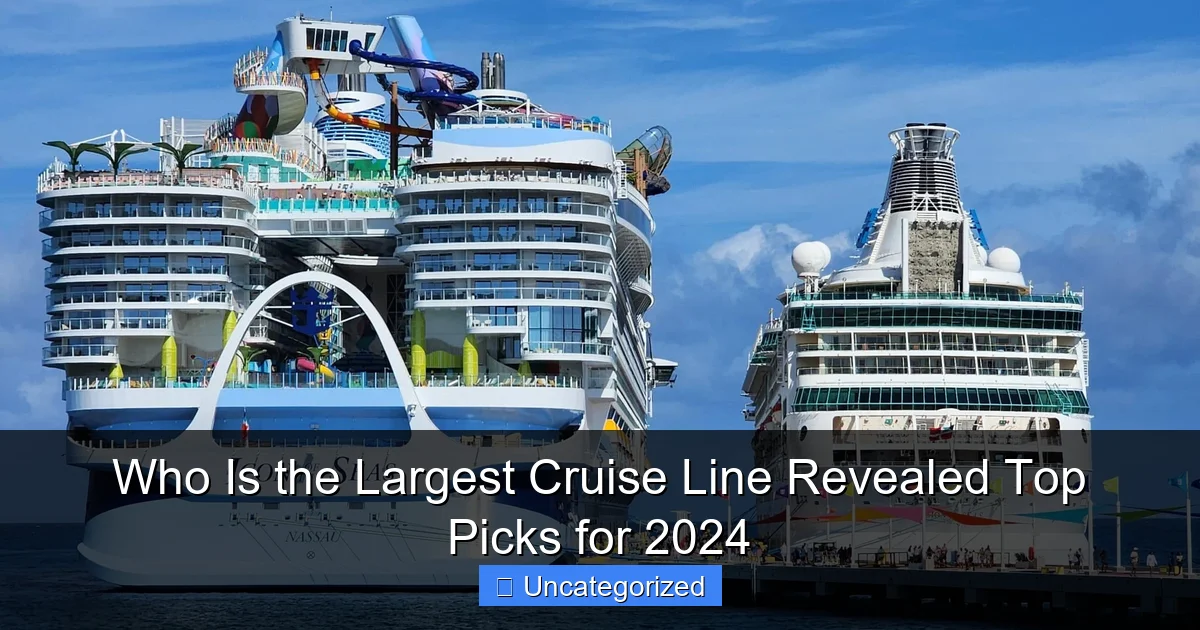
Featured image for who is the largest cruise line
Image source: cruisefever.net
Carnival Corporation & plc is the largest cruise line in the world by fleet size and passenger capacity, operating over 90 ships across 10 global brands including Carnival, Princess, and Holland America. With unmatched scale and 2024 expansions into new markets, it continues to lead the industry in both innovation and guest volume, solidifying its top position for travelers worldwide.
Key Takeaways
- Carnival Corporation leads globally with the largest fleet and passenger capacity in 2024.
- Royal Caribbean excels in innovation offering record-breaking ships and unique onboard experiences.
- Market share matters Carnival, Royal Caribbean, and Norwegian dominate 70% of the industry.
- Choose by experience family-friendly, luxury, or adventure—top lines cater to distinct traveler needs.
- 2024 trends favor sustainability largest lines now invest heavily in eco-friendly ship technology.
📑 Table of Contents
- Who Is the Largest Cruise Line Revealed: Top Picks for 2024
- Defining “Largest”: How We Measure Cruise Line Size
- The Global Leader: Carnival Corporation & Its Dominance
- Top Contenders: Royal Caribbean and Norwegian Cruise Line
- Emerging Giants and Niche Players with Big Impact
- Data Snapshot: Comparing the Top 5 Cruise Lines (2024)
- How to Choose the Right “Largest” Cruise Line for You
Who Is the Largest Cruise Line Revealed: Top Picks for 2024
The cruise industry has evolved into a global powerhouse, offering vacationers a unique blend of luxury, adventure, and convenience. From floating cities with water parks and Broadway shows to intimate boutique experiences, cruise lines cater to every type of traveler. But with over 50 major cruise lines operating worldwide, one question consistently rises to the top: Who is the largest cruise line? In 2024, this title isn’t just about passenger capacity or fleet size—it’s about global reach, brand dominance, innovation, and guest satisfaction.
As the post-pandemic travel boom continues, cruise lines have expanded their fleets, upgraded technology, and introduced groundbreaking itineraries. The competition for the top spot is fierce, with legacy brands and emerging players vying for market share. This comprehensive guide will reveal the largest cruise line in the world based on key metrics, explore the top contenders, and provide actionable insights to help you choose the perfect cruise for your next vacation. Whether you’re a first-time cruiser or a seasoned sea traveler, understanding the scale and scope of these giants will elevate your booking experience.
Defining “Largest”: How We Measure Cruise Line Size
When evaluating who holds the title of largest cruise line, it’s essential to define what “largest” means. Unlike a simple headcount, cruise line size is determined by multiple interrelated factors. These metrics help us understand not just raw capacity, but also market influence, operational scale, and long-term sustainability.
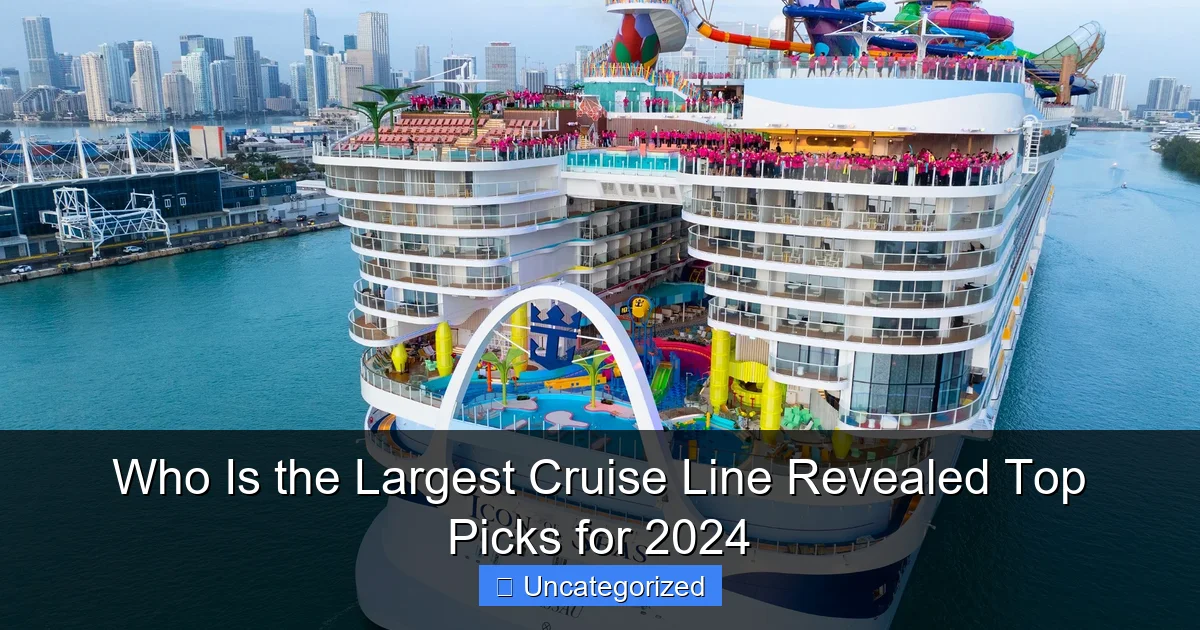
Visual guide about who is the largest cruise line
Image source: media.firstcoastnews.com
Key Metrics for Measuring Cruise Line Size
The following criteria are used by industry analysts, such as Cruise Market Watch and Seatrade Cruise, to rank cruise lines:
- Fleet Size: The total number of ships in operation. More ships mean broader global coverage and more itineraries.
- Passenger Capacity: The maximum number of guests a cruise line can carry annually, calculated by ship size and occupancy rates.
- Market Share: Percentage of the global cruise market controlled by the line, based on bookings and revenue.
- Revenue and Financial Performance: Annual earnings, including ticket sales, onboard spending, and ancillary services.
- Global Itinerary Coverage: Number of destinations, ports of call, and geographic regions served.
- Brand Portfolio: Parent company ownership of multiple brands (e.g., Carnival Corporation owns 9 major cruise lines).
For example, a cruise line with 100 ships but lower per-ship capacity may not surpass one with 60 larger, newer vessels. Similarly, a line with high revenue from luxury experiences may outperform a mass-market competitor in profitability, even with fewer passengers.
Why These Metrics Matter to You
Understanding these metrics helps you make smarter decisions. If you prefer variety, a large fleet with diverse ship classes (e.g., mega-ships, river cruises, expedition vessels) is ideal. If you value innovation, look for lines investing in sustainability and tech. And if you’re budget-conscious, lines with high market share often offer competitive pricing and loyalty programs.
Pro Tip: Use the passenger-to-space ratio (available on most cruise line websites) to gauge comfort. A lower ratio (e.g., 300 passengers per 1,000 gross tons) means more room per guest, even on large ships.
The Global Leader: Carnival Corporation & Its Dominance
In 2024, the undisputed largest cruise line operator is not a single brand, but a conglomerate: Carnival Corporation & plc. With a fleet of 91 ships across 9 major cruise brands, Carnival controls approximately 45% of the global cruise market—nearly half of all cruise passengers sail under its umbrella. Headquartered in Miami and London, it operates as a dual-listed company, giving it unmatched financial stability and global reach.
Carnival’s Brand Portfolio: A Fleet of Choices
Carnival Corporation doesn’t rely on one brand to dominate. Instead, it uses a multi-brand strategy to target different market segments:
- Carnival Cruise Line: The flagship brand, known for fun, affordable, family-friendly cruises. Operates 27 ships, including the massive Carnival Celebration (5,374 guests).
- Princess Cruises: Mid-to-upscale experience with a focus on destinations. Famous for The Love Boat legacy and the MedallionClass app for contactless service.
- Holland America Line: Premium line with classic elegance and longer itineraries. Popular among retirees and culture seekers.
- Costa Cruises: Italy-based, with vibrant onboard experiences tailored to European tastes.
- AIDA Cruises: Germany’s leading brand, known for modern ships and German-speaking cruises.
- Seabourn: Ultra-luxury, all-inclusive, with small ships and personalized service.
- P&O Cruises (UK and Australia): Tailored to British and Australian travelers, with regional themes.
- Cunard Line: Iconic transatlantic voyages and formal elegance (e.g., Queen Mary 2).
- Fathom: Socially responsible cruises (now integrated into Carnival’s voluntourism programs).
This portfolio allows Carnival to capture every niche—from budget-conscious families to high-net-worth individuals seeking all-inclusive luxury.
Scale and Innovation: What Sets Carnival Apart
Carnival’s dominance isn’t just about numbers—it’s about scale-driven innovation. The corporation invests over $1 billion annually in new ships, technology, and sustainability. Recent launches include:
- Carnival Jubilee (2023): First LNG-powered ship in North America, with a BOLT roller coaster and massive water park.
- Princess Cruises’ Sun Princess (2024): Features the Sphere Atrium and a two-deck family zone.
- Holland America’s Rotterdam (2021): Incorporates Pinnacle-class design with enhanced wellness spaces.
Additionally, Carnival leads in digital transformation with MedallionNet (Princess Cruises) and OceanMedallion (Carnival), offering personalized, contactless guest experiences—from room keys to dining reservations—via wearable tech.
Insider Tip: Book with Carnival brands during their “Early Saver” promotions for up to 30% off, especially for Caribbean and Mediterranean itineraries.
Top Contenders: Royal Caribbean and Norwegian Cruise Line
While Carnival Corporation holds the top spot, Royal Caribbean International and Norwegian Cruise Line Holdings (NCLH) are close competitors, each with unique strengths that challenge Carnival’s dominance.
Royal Caribbean: The Innovation Powerhouse
Royal Caribbean operates under Royal Caribbean Group (which also owns Celebrity Cruises and Silversea) and is renowned for pushing the boundaries of ship design. Its fleet of 27 ships includes the world’s largest cruise ships:
- Icon of the Seas (2024): A 250,800-gross-ton behemoth with 7 neighborhoods, 3 water parks, and a 1,500-person indoor arena.
- Wonder of the Seas: 236,857 gross tons, featuring a 10-deck dry slide and Central Park with real trees.
Royal Caribbean’s “Royal Advantage” strategy focuses on:
- Cutting-edge amenities (e.g., North Star capsule, FlowRider surf simulators).
- Longer, more adventurous itineraries (e.g., 12-night Alaska, 14-night Mediterranean).
- Strong partnerships with destinations (e.g., private islands like Perfect Day at CocoCay).
With annual revenue exceeding $12 billion (2023), Royal Caribbean is Carnival’s closest rival in North America and Europe.
Norwegian Cruise Line: Freedom and Flexibility
Norwegian Cruise Line Holdings (NCLH) operates three brands: Norwegian Cruise Line, Oceania Cruises, and Regent Seven Seas Cruises. NCLH’s fleet of 31 ships emphasizes “Freestyle Cruising”—no fixed dining times, no formal dress codes, and open seating.
Key strengths:
- Norwegian Encore (2019): Features a 1,000-foot racetrack and Broadway shows like Kinky Boots.
- Oceania’s Allura (2025): A 1,200-guest ship with a focus on culinary excellence and destination immersion.
- Regent’s Seven Seas Grandeur (2023): All-suite, all-balcony, with $2 million in art and free unlimited shore excursions.
NCLH’s “Free at Sea” promotion (free airfare, drinks, Wi-Fi, excursions) makes it highly competitive in the mid-to-luxury market. In 2023, NCLH reported $7.8 billion in revenue, with strong growth in Asia-Pacific markets.
Traveler Tip: Choose Norwegian if you want flexibility. Their open-dining model is perfect for spontaneous travelers who dislike rigid schedules.
Emerging Giants and Niche Players with Big Impact
Beyond the “Big Three,” several cruise lines are rapidly expanding, leveraging niche markets, sustainability, and cultural authenticity to carve out significant influence.
Mediterranean and Luxury: MSC Cruises
MSC Cruises, part of the privately owned MSC Group, is the fastest-growing cruise line in the world. With 23 ships and 10 under construction, MSC is investing $15 billion in new builds through 2030. Key facts:
- MSC World Europa (2022): 215,863 gross tons, LNG-powered, with a 104-meter-long promenade.
- Strong in Europe: 70% of itineraries are in the Mediterranean, Adriatic, and Northern Europe.
- Family Focus: Partnerships with LEGO, Chicco, and LEGO-themed kids’ clubs.
MSC’s “MSC for Me” digital platform offers AI-powered recommendations and real-time itinerary updates.
Sustainability Leaders: Hurtigruten and Lindblad Expeditions
While not the largest in size, Hurtigruten (Norway) and Lindblad Expeditions (USA) lead in eco-friendly cruising:
- Hurtigruten: Operates the world’s first hybrid-electric cruise ship (MS Roald Amundsen), with zero-emission zones in Norway.
- Lindblad Expeditions: Partners with National Geographic for educational cruises in Antarctica, Galapagos, and Alaska.
These lines appeal to environmentally conscious travelers willing to pay a premium for sustainable travel.
Cultural Authenticity: Viking Cruises
Viking Cruises (river and ocean) focuses on destination immersion, with longer stays in port, included shore excursions, and no casinos. With 9 ocean ships and 78 river vessels, Viking targets affluent travelers aged 50+. Their “Viking Way” includes:
- Free Wi-Fi and cultural enrichment (e.g., onboard lectures, cooking demos).
- All-inclusive pricing (except gratuities).
- Scandinavian design and minimalist elegance.
In 2023, Viking carried over 200,000 passengers, with a 98% satisfaction rate (J.D. Power).
Data Snapshot: Comparing the Top 5 Cruise Lines (2024)
To visualize the scale of these giants, here’s a comparative data table of the top 5 cruise lines based on 2024 metrics:
| Cruise Line (Parent) | Fleet Size | Max Ship Capacity | Annual Passengers | Market Share | Key Innovation |
|---|---|---|---|---|---|
| Carnival Corporation | 91 | 5,374 (Carnival Celebration) | 12.8 million | 45% | OceanMedallion wearable tech |
| Royal Caribbean Group | 63 | 7,600 (Icon of the Seas) | 8.2 million | 28% | North Star observation capsule |
| NCL Holdings | 31 | 4,248 (Norwegian Encore) | 5.1 million | 18% | Freestyle dining & Free at Sea |
| MSC Cruises | 23 | 6,762 (MSC World Europa) | 3.9 million | 12% | LNG-powered ships |
| Viking Cruises | 87 (incl. river) | 930 (Viking Saturn) | 0.2 million | 2% | All-inclusive cultural excursions |
Note: Market share and passenger numbers are estimates from Cruise Market Watch (2024). “Max Ship Capacity” refers to the largest ship in each line’s fleet.
This data shows that while Viking has fewer passengers, its high satisfaction rate and niche focus make it a leader in customer experience, not just size.
How to Choose the Right “Largest” Cruise Line for You
Now that we’ve revealed the largest cruise lines, how do you pick the right one? Size matters, but so do your travel style, budget, and goals. Here’s a step-by-step guide to matching your needs with the best line.
Step 1: Define Your Cruise Priorities
Ask yourself:
- Do I want non-stop entertainment? → Choose Carnival or Royal Caribbean.
- Do I prefer relaxed, flexible dining? → Opt for Norwegian or Oceania.
- Am I focused on destinations? → Consider Princess or Viking.
- Do I value sustainability? → Look at Hurtigruten or MSC.
- Am I traveling with kids? → Royal Caribbean and MSC have top-rated kids’ clubs.
Step 2: Match Budget to Brand
Here’s a quick pricing guide (per person, 7-night Caribbean cruise, 2024):
- Budget ($500–$800): Carnival, MSC
- Mid-range ($800–$1,500): Norwegian, Royal Caribbean (non-Icon ships)
- Luxury ($1,500–$3,000): Holland America, Celebrity, Oceania
- Ultra-luxury ($3,000+): Regent, Seabourn, Silversea
Step 3: Book Smart
Use these tips to save money and enhance your experience:
- Book early: Carnival and Royal Caribbean offer “Early Saver” discounts 6–12 months in advance.
- Use a travel agent: They access exclusive deals, onboard credits, and suite upgrades.
- Check for promotions: Norwegian’s “Free at Sea” and MSC’s “Kids Sail Free” can save $1,000+ per family.
- Consider repositioning cruises: One-way trips (e.g., Alaska to Seattle) are 30–50% cheaper.
Final Tip: Read recent reviews on Cruise Critic and TripAdvisor to gauge onboard experience, not just marketing claims.
The title of largest cruise line in 2024 goes to Carnival Corporation—but the best line for you depends on your travel style. Whether you crave the adrenaline of Icon of the Seas, the cultural depth of Viking, or the family fun of Carnival, the world’s cruise giants offer something for everyone. By understanding fleet size, market share, innovation, and niche strengths, you’re equipped to make an informed choice. In the end, the “largest” isn’t always the best—but with this guide, you’ll find the perfect fit for your next unforgettable voyage.
Frequently Asked Questions
Who is the largest cruise line in 2024?
As of 2024, Carnival Corporation & plc holds the title of the largest cruise line in the world by fleet size and passenger capacity, operating popular brands like Carnival Cruise Line, Princess Cruises, and Holland America. Its global reach and diverse offerings solidify its market dominance.
Which cruise line has the biggest ships?
The largest cruise line by ship size is Royal Caribbean International, home to record-breaking vessels like Icon of the Seas (2024), the world’s largest cruise ship. Their innovative mega-ships redefine onboard experiences with features like water parks, neighborhoods, and robotic bars.
What makes a cruise line the “largest”?
The “largest cruise line” can be measured by fleet size, passenger volume, revenue, or ship tonnage. Carnival Corporation leads in fleet size (90+ ships) and passenger capacity, while Royal Caribbean tops ship size records, highlighting different aspects of industry leadership.
How does Carnival Corporation maintain its position as the largest cruise line?
Carnival Corporation’s portfolio of 9 global brands, including Costa Cruises and P&O Cruises, spans diverse markets and price points. Strategic expansions, frequent new ship launches, and strong brand loyalty help sustain its top position in the cruise industry.
Are there competitors close to the largest cruise line?
Royal Caribbean Group (Royal Caribbean International, Celebrity Cruises) and Norwegian Cruise Line Holdings are key competitors, with aggressive shipbuilding programs and unique experiences. However, Carnival Corporation’s broader brand diversity and scale keep it ahead in overall market share.
Which largest cruise line offers the best value?
Carnival Cruise Line, part of the largest cruise line corporation, is often praised for affordable fares, frequent promotions, and fun-focused itineraries. For luxury value, Princess Cruises (under Carnival Corp) balances price with premium amenities like MedallionClass technology.