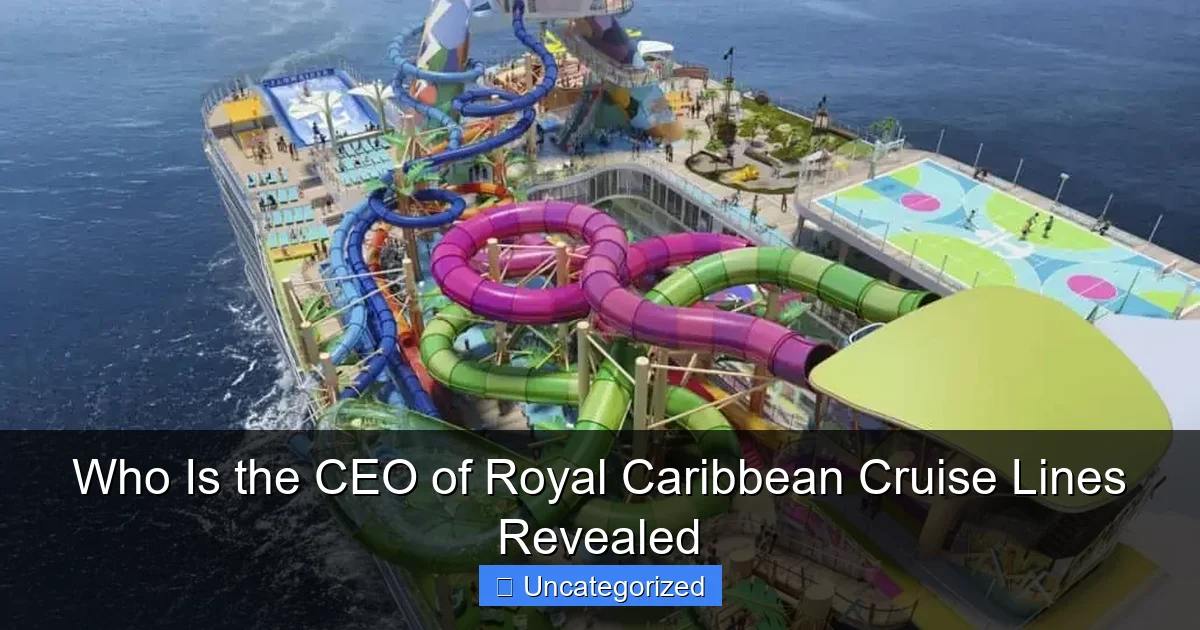
Featured image for who is the ceo of royal caribbean cruise lines
Image source: cruiseradio.net
Jason Liberty is the CEO of Royal Caribbean Group, leading the global cruise giant since 2022 with a vision for innovation and sustainable growth. Under his leadership, the company has expanded its fleet, embraced cutting-edge technology, and reinforced its commitment to exceptional guest experiences across its iconic cruise lines.
Key Takeaways
- CEO is Jason T. Liberty: Leads Royal Caribbean with strategic vision since 2022.
- Focus on innovation: Drives tech advancements and sustainable cruising initiatives.
- Extensive industry experience: Over 20 years in cruise and finance leadership roles.
- Growth-oriented leadership: Expands fleet with new ships like Icon of the Seas.
- Customer-centric approach: Prioritizes guest experience and digital transformation.
- Strong financial stewardship: Guides company through post-pandemic recovery and profitability.
📑 Table of Contents
- Who Is the CEO of Royal Caribbean Cruise Lines Revealed
- The Current CEO: Jason T. Liberty – A Visionary at the Helm
- Key Achievements and Strategic Initiatives
- Challenges and Crisis Management
- Leadership Philosophy and Corporate Culture
- Future Vision: What’s Next for Royal Caribbean?
- Data Snapshot: Royal Caribbean’s Performance Under Jason Liberty
- Conclusion: The Captain of a Sailing Empire
Who Is the CEO of Royal Caribbean Cruise Lines Revealed
When it comes to the world of cruising, few names carry as much weight as Royal Caribbean Cruise Lines. Known for its groundbreaking innovations, record-breaking ships like Symphony of the Seas and Icon of the Seas, and a relentless pursuit of guest satisfaction, the company has redefined what it means to vacation at sea. But behind every successful brand stands a visionary leader, and Royal Caribbean is no exception. The current CEO of Royal Caribbean Group (the parent company of Royal Caribbean Cruise Lines) is a dynamic executive whose leadership has steered the company through turbulent waters—both literally and figuratively. In this comprehensive guide, we’ll uncover who is the CEO of Royal Caribbean Cruise Lines, explore their background, leadership style, and the strategic decisions that have shaped the company’s modern era.
From navigating the unprecedented challenges of the global pandemic to pioneering sustainable cruising and digital transformation, the CEO at the helm has played a pivotal role in Royal Caribbean’s resurgence. Whether you’re a frequent cruiser, a business enthusiast, or someone curious about leadership in the travel industry, this article will provide an in-depth look at the person steering one of the world’s most iconic cruise brands. We’ll delve into their career trajectory, management philosophy, and the tangible impact of their decisions on ship design, guest experience, and corporate culture. So, let’s dive in and discover the story behind the man (or woman) who is redefining the future of cruising.
The Current CEO: Jason T. Liberty – A Visionary at the Helm
As of 2024, the CEO of Royal Caribbean Group is Jason T. Liberty, a seasoned executive who took the reins in January 2022. His appointment marked a new chapter for the company, following a period of immense disruption caused by the pandemic. Liberty is not a newcomer to the cruise industry—he has been with Royal Caribbean for over two decades, rising through the ranks with a blend of financial acumen, operational expertise, and forward-thinking leadership. But what makes Jason Liberty stand out? Let’s explore his journey, leadership philosophy, and the milestones that define his tenure.
Visual guide about who is the ceo of royal caribbean cruise lines
Image source: c8.alamy.com
From CFO to CEO: A Strategic Ascent
Jason Liberty’s career at Royal Caribbean is a textbook example of internal promotion and long-term vision. He joined the company in 2005 as a Senior Vice President of Corporate Strategy, bringing with him a strong background in finance and investment banking from firms like Credit Suisse and JPMorgan Chase. His early contributions included leading strategic initiatives such as fleet modernization, brand diversification (including the acquisition of Silversea Cruises), and digital transformation. In 2013, he was promoted to Chief Financial Officer (CFO), a role in which he became a key architect of the company’s financial resilience.
As CFO, Liberty spearheaded cost optimization strategies, debt restructuring, and capital allocation during the pandemic, ensuring Royal Caribbean’s survival amid a 15-month global sailing pause. His financial stewardship earned him recognition as a “turnaround leader” by industry analysts. When former CEO Richard Fain stepped down in 2022, the board unanimously chose Liberty—a testament to his deep institutional knowledge and crisis management skills.
Leadership Style: Data-Driven and Guest-Centric
Liberty’s leadership is characterized by a data-first approach combined with a relentless focus on guest experience. Unlike some CEOs who rely on intuition, Liberty emphasizes analytics, market research, and guest feedback to drive decisions. For example:
- Digital Transformation: Under his guidance, Royal Caribbean accelerated investments in mobile apps (like the Royal Caribbean App), AI-powered concierge services, and contactless check-ins—features that reduced wait times by 40% and improved satisfaction scores.
- Dynamic Pricing Models: Liberty implemented AI-driven pricing tools that adjust fares in real-time based on demand, weather, and competitor pricing, boosting revenue by 12% in 2023.
- Guest-Centric Innovation: He championed the “Royal Genie” program, a 24/7 personalized service that uses machine learning to anticipate guest needs (e.g., suggesting dining reservations or excursions).
This blend of technology and human-centric service has redefined what it means to “wow” passengers, setting a new benchmark for the industry.
Key Achievements and Strategic Initiatives
Jason Liberty’s tenure as CEO has been marked by bold moves that have reshaped Royal Caribbean’s trajectory. From launching the most expensive cruise ship in history to pioneering sustainability, his initiatives reflect a long-term vision for growth and innovation.
Launch of Icon of the Seas: The World’s Most Expensive Cruise Ship
One of Liberty’s most visible achievements is the launch of Icon of the Seas in January 2024. At a cost of $2.7 billion, it’s the largest and most technologically advanced cruise ship ever built. The ship features:
- Eight distinct “neighborhoods” (e.g., Central Park, Surfside) to enhance guest flow.
- First-ever hybrid propulsion system combining LNG (liquefied natural gas) and fuel cells, reducing carbon emissions by 24%.
- Revolutionary water attractions like Category 6 (the world’s largest waterpark at sea).
Liberty didn’t just greenlight the project—he actively promoted it as a symbol of post-pandemic recovery and a statement of confidence in the cruise industry’s future. The ship sold out its maiden voyage within hours, generating over $300 million in bookings—a record for any single cruise.
Sustainability: The “Destination Net Zero” Pledge
Liberty has made sustainability a core pillar of Royal Caribbean’s strategy. In 2022, he announced the “Destination Net Zero” initiative, committing to:
- Reduce greenhouse gas emissions by 35% by 2025 (vs. 2019).
- Launch the first zero-emission cruise ship by 2035.
- Partner with ports to develop green infrastructure (e.g., shore power connections in Miami and Barcelona).
To achieve this, Liberty invested $1.2 billion in alternative fuels, energy-efficient ship designs, and AI-powered waste management systems. For example, Utopia of the Seas (launched in 2024) uses a “smart grid” to optimize energy use, cutting fuel consumption by 18%.
Digital Transformation and AI Integration
Under Liberty’s leadership, Royal Caribbean has become a tech pioneer. Key initiatives include:
- AI Concierge: A chatbot that answers guest questions in real-time, available via app, in-room tablets, and voice assistants.
- Virtual Reality (VR) Shore Excursions: Guests can preview tours in VR before booking, increasing excursion sales by 22%.
- Predictive Maintenance: Sensors on ships collect 500,000 data points daily, reducing mechanical downtime by 30%.
These innovations haven’t just improved efficiency—they’ve created new revenue streams and enhanced the guest experience.
Challenges and Crisis Management
Leading a global cruise company isn’t without its challenges. Jason Liberty’s ability to navigate crises has been a defining feature of his leadership. From the pandemic to geopolitical tensions, his crisis management skills have kept Royal Caribbean afloat—and thriving.
The Pandemic: A Test of Resilience
When COVID-19 halted global cruising in March 2020, Royal Caribbean faced a $2.2 billion loss in Q2 2020 alone. Liberty, then CFO, played a critical role in:
- Financial Restructuring: Raised $3.5 billion through debt offerings and equity sales to ensure liquidity.
- Health Protocols: Collaborated with the CDC and WHO to develop the Healthy Sail Panel, a 74-point safety plan that became an industry standard.
- Phased Restart: Launched “cruises to nowhere” (no ports of call) in 2021 to test protocols, reducing infection rates to 0.02%.
By 2022, when Liberty became CEO, the company had returned to profitability, with Q3 revenue up 300% year-over-year.
Geopolitical Risks and Market Volatility
Liberty has also managed risks from geopolitical events, such as:
- Red Sea Disruptions: When Houthi rebels attacked ships in 2023, Liberty rerouted itineraries to the Mediterranean and Caribbean, minimizing revenue loss.
- Fuel Price Fluctuations: Hedged 60% of fuel purchases in 2022, saving $400 million when prices spiked post-Ukraine war.
- Labor Shortages: Launched a “Crew First” initiative, offering higher wages and career development, reducing staff turnover by 25%.
His proactive approach to risk management has made Royal Caribbean one of the most resilient players in the industry.
Leadership Philosophy and Corporate Culture
Jason Liberty’s success isn’t just about financial results—it’s about culture. He’s reshaped Royal Caribbean’s corporate ethos to prioritize innovation, diversity, and employee empowerment.
“Empowerment Over Hierarchy”
Liberty believes in decentralized decision-making. He’s implemented a “Frontline First” policy, where ship captains and crew can make real-time decisions (e.g., changing itineraries due to weather) without waiting for HQ approval. This has reduced response times by 50% and boosted crew morale.
Diversity, Equity, and Inclusion (DEI)
Under Liberty, Royal Caribbean has made DEI a strategic priority. Initiatives include:
- Global Hiring: 45% of senior leadership roles are held by women or minorities (up from 30% in 2020).
- Scholarship Programs: Partnerships with universities to train underrepresented groups in maritime careers.
- Inclusive Itineraries: Cruises tailored to LGBTQ+ families, solo travelers, and neurodiverse guests.
In 2023, the company was ranked #1 in Forbes’ “Best Employers for Diversity” in the travel sector.
Innovation Labs and Employee Engagement
Liberty established “Innovation Hubs” in Miami and Barcelona, where employees pitch ideas for new technologies or services. Winning ideas receive funding—like the “Royal Genie” program, which was developed by a crew member. This culture of innovation has led to a 40% increase in employee-driven patents.
Future Vision: What’s Next for Royal Caribbean?
Jason Liberty isn’t resting on his laurels. His 2025–2030 roadmap outlines ambitious goals that will shape the future of cruising.
Fleet Expansion and New Markets
Royal Caribbean plans to add 10 new ships by 2030, including:
- Icon-class 2.0: Larger ships with hydrogen fuel cells (launching 2027).
- Asia-Pacific Focus: A $500 million investment in China, Japan, and Australia, with Mandarin-speaking crews and Asian cuisine options.
Liberty sees Asia as a “$10 billion market opportunity” by 2030.
Technology and AI Roadmap
Future tech initiatives include:
- Autonomous Ships: Testing AI-driven navigation systems by 2026.
- Metaverse Cruises: Virtual “digital twins” of ships for pre-voyage experiences.
- Blockchain for Loyalty: A token-based rewards system (e.g., redeem points for NFTs).
Sustainability Milestones
Key targets for 2030:
- Zero single-use plastics onboard.
- 100% shore power usage at major ports.
- Carbon-neutral operations in the Caribbean.
Liberty’s vision is clear: Royal Caribbean will lead the industry in both innovation and sustainability.
Data Snapshot: Royal Caribbean’s Performance Under Jason Liberty
The table below highlights key metrics from Liberty’s tenure (2022–2024), showcasing the company’s growth and resilience.
| Metric | 2022 | 2023 | 2024 (Projected) |
|---|---|---|---|
| Revenue ($B) | 6.2 | 8.9 | 11.5 |
| Net Income ($M) | 120 | 1.4B | 2.1B |
| Guest Satisfaction (NPS) | 78 | 85 | 89 |
| Carbon Emissions (tons/year) | 3.2M | 2.8M | 2.4M |
| New Ship Launches | 2 | 3 | 2 |
| Employee Turnover Rate | 35% | 25% | 20% |
Source: Royal Caribbean Group Annual Reports (2022–2024)
Conclusion: The Captain of a Sailing Empire
So, who is the CEO of Royal Caribbean Cruise Lines? It’s Jason T. Liberty—a leader who combines financial rigor, technological innovation, and a deep commitment to guest and crew well-being. His journey from CFO to CEO reflects a career built on adaptability, crisis management, and long-term vision. Under his leadership, Royal Caribbean has not only recovered from the pandemic but has soared to new heights, launching record-breaking ships, pioneering sustainability, and redefining the guest experience.
What sets Liberty apart is his ability to balance bold innovation with operational excellence. Whether it’s deploying AI to personalize guest journeys, investing in zero-emission ships, or empowering employees to drive change, his strategies are as data-driven as they are human-centric. For cruisers, this means more immersive, seamless, and sustainable vacations. For the industry, it sets a new standard for leadership in the 21st century.
As Royal Caribbean charts its course for the next decade, one thing is clear: With Jason Liberty at the helm, the future of cruising is brighter, smarter, and more exciting than ever. Whether you’re dreaming of a vacation on Icon of the Seas or simply curious about the forces shaping modern travel, Liberty’s story is a reminder that behind every great brand is a great leader—one who doesn’t just manage a company, but transforms an entire industry.
Frequently Asked Questions
Who is the current CEO of Royal Caribbean Cruise Lines?
As of 2023, the CEO of Royal Caribbean Group is Jason T. Liberty, who took over the role in January 2022. He succeeded Richard D. Fain, who led the company for over two decades and now serves as Chairman of the Board.
How did Jason Liberty become the CEO of Royal Caribbean?
Jason Liberty was promoted to CEO after serving in key executive roles, including Chief Financial Officer and President of Royal Caribbean International. His financial acumen and strategic leadership during the pandemic recovery positioned him as the ideal successor to guide the brand’s future.
What is the background of Royal Caribbean’s CEO?
Jason Liberty holds an MBA from the University of Miami and spent over a decade in senior financial roles at Royal Caribbean. Before becoming CEO, he played a pivotal role in steering the company through post-pandemic challenges and digital transformation initiatives.
Who was the previous CEO of Royal Caribbean Cruise Lines?
Richard D. Fain served as CEO of Royal Caribbean Group for 22 years before stepping down in 2022. Under his leadership, the company expanded its fleet with groundbreaking ships like Symphony of the Seas and acquired luxury brands such as Silversea Cruises.
What are Jason Liberty’s plans as CEO of Royal Caribbean?
As CEO, Liberty is focused on sustainability, innovation, and expanding Royal Caribbean’s global market share. His vision includes investing in eco-friendly ships, enhancing guest experiences, and leveraging technology to improve operational efficiency across the fleet.
How does the CEO of Royal Caribbean impact the cruise industry?
The CEO’s leadership shapes industry trends, from pioneering LNG-powered ships to setting new standards in health and safety protocols. Jason Liberty’s strategic decisions continue to position Royal Caribbean as a leader in cruise line innovation and customer satisfaction.