Featured image for which cruise lines will survive
Image source: imperialcruisevacations.com
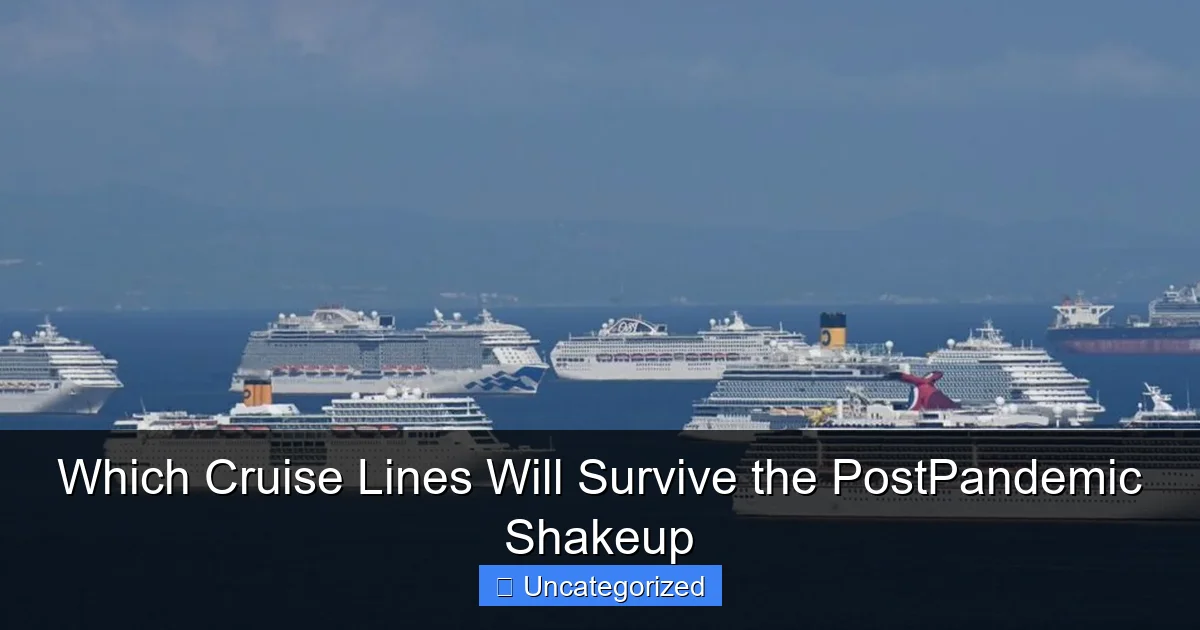
The cruise lines with strong financial backing, modern fleets, and adaptable health protocols are most likely to survive the post-pandemic shakeup. Industry leaders like Royal Caribbean, Carnival, and Norwegian are leveraging innovation and pent-up demand, while smaller or debt-heavy operators face an uphill battle. Survival hinges on agility, consumer trust, and strategic repositioning in a changed travel landscape.
Key Takeaways
- Carnival Corporation will leverage scale and brand diversity to dominate post-pandemic recovery.
- Royal Caribbean invests heavily in innovation, ensuring long-term resilience and market relevance.
- Norwegian Cruise Line focuses on premium pricing and cost cuts to stabilize finances.
- Smaller luxury lines like Regent and Seabourn thrive with high-end, flexible offerings.
- Health protocols remain critical; lines with robust plans gain traveler trust fastest.
- Debt-heavy operators risk collapse unless they secure refinancing or investor support.
📑 Table of Contents
- The Great Cruise Industry Shakeup: Who Will Survive?
- Financial Health: The Foundation of Survival
- Health and Safety: Rebuilding Trust
- Market Positioning and Niche Focus
- Fleet Modernization and Technology
- Geopolitical and Regulatory Challenges
- Data Table: Cruise Line Survival Scorecard
- Conclusion: The Future of Cruising
The Great Cruise Industry Shakeup: Who Will Survive?
The cruise industry, once a glittering symbol of carefree luxury and global exploration, was brought to its knees by the pandemic. In 2020, as COVID-19 spread across the world, cruise ships became floating hotspots for the virus, with headlines dominated by outbreaks on vessels like the Diamond Princess and Grand Princess. The industry faced an unprecedented crisis: ports closed, itineraries were canceled, and passenger confidence plummeted. The global cruise market, worth $45.6 billion in 2019, shrank by over 80% in just one year.
Yet, as vaccines rolled out and travel restrictions eased, the industry began a slow, uneven recovery. Some cruise lines adapted swiftly, investing in health protocols, digital innovation, and new market strategies. Others struggled to regain momentum, burdened by debt, outdated fleets, or inflexible business models. The post-pandemic era is not just about bouncing back—it’s about reinvention. In this article, we explore which cruise lines are best positioned to thrive in the new reality and which may not survive the ongoing shakeup. From financial resilience to operational agility, we’ll break down the key factors that will determine survival in this transformed landscape.
Financial Health: The Foundation of Survival
When the pandemic hit, the cruise industry’s reliance on high fixed costs and low margins became a liability. With ships idle and revenue streams cut off, only those with strong balance sheets or access to capital could weather the storm. Financial health is now the bedrock of survival.
Visual guide about which cruise lines will survive
Image source: imperialcruisevacations.com
Debt Levels and Liquidity
Pre-pandemic, many cruise lines operated with high leverage to finance new ships and expansions. Carnival Corporation, the world’s largest cruise operator, entered 2020 with $12 billion in debt. When revenue vanished, it had to raise over $25 billion through a mix of debt and equity offerings to stay afloat. Royal Caribbean Group took a similar path, issuing bonds and selling shares to raise $10+ billion. While these moves kept the companies solvent, they came at a cost: diluted ownership, higher interest expenses, and pressure to generate cash flow quickly.
Smaller players without access to capital markets faced dire straits. In 2020, Pullmantur Cruises, a Spanish-based line, filed for bankruptcy and ceased operations. Similarly, CMV (Cruise & Maritime Voyages)without liquidity, even beloved brands can’t survive a prolonged shutdown.
Government Support and Investor Backing
Lines with strong government ties or deep-pocketed investors fared better. For example, Norwegian Cruise Line Holdings (NCLH) received a $200 million investment from Apollo Global Management, a private equity firm, which provided crucial breathing room. Meanwhile, MSC Cruises, owned by the privately held MSC Group, leveraged its diversified business (container shipping, ports) to cross-subsidize its cruise operations. This financial cushion allowed MSC to continue building new ships and launching new itineraries even during the pandemic.
Tip: When evaluating a cruise line’s survival prospects, look beyond headline revenue numbers. Scrutinize their debt-to-equity ratio, cash reserves, and access to capital. Lines with diversified ownership (e.g., MSC, Genting Hong Kong’s Dream Cruises) or sovereign backing (e.g., China’s CSSC Carnival Cruise Shipping) have a structural advantage.
Cost-Cutting and Operational Efficiency
Survival also required ruthless cost-cutting. Major players like Royal Caribbean and Carnival sold older ships, reduced staff, and renegotiated contracts. Royal Caribbean even launched a “cost optimization program” that saved $1.5 billion in 2020–2021. However, excessive cost-cutting can backfire—passengers notice when service quality declines. The key is smart efficiency: automating bookings, optimizing itineraries, and leveraging data to reduce waste.
Example: Carnival’s “Carnival Horizon” uses AI to optimize fuel consumption, saving millions annually. Such innovations are now table stakes for survival.
Health and Safety: Rebuilding Trust
Passenger confidence is the currency of the cruise industry. After the pandemic, health and safety protocols became non-negotiable. Lines that failed to convince travelers they were safe risked irrelevance.
Science-Based Protocols and Certifications
Top performers invested heavily in medical infrastructure. Norwegian Cruise Line partnered with the University of Nebraska Medical Center to design its “SailSAFE” health protocols, which include mandatory vaccination, rapid testing, and hospital-grade air filtration. Royal Caribbean’s “Healthy Sail Panel”, co-chaired by former FDA commissioner Scott Gottlieb, became a gold standard for the industry, with 74 science-backed recommendations.
Smaller lines struggled to match this scale. For instance, Hurtigruten, a Norway-based expedition line, faced criticism for inconsistent mask policies and onboard testing, damaging its reputation for safety. The lesson? Transparency and scientific rigor are essential.
Flexible Booking Policies
To ease fears, cruise lines adopted flexible cancellation policies. Carnival, Royal Caribbean, and NCLH offered full refunds or future cruise credits for cancellations due to COVID-19. MSC Cruises took it further, introducing a “Book with Confidence” program that allowed free changes up to 48 hours before sailing. This flexibility boosted bookings—MSC reported a 20% increase in 2022 bookings compared to 2019.
Tip: Look for lines that offer no-penalty cancellation policies and onboard medical centers with telemedicine capabilities. These features signal a commitment to passenger well-being.
Onboard Experience and Ventilation
Beyond protocols, the physical environment matters. Cruise lines retrofitted ships with HEPA filters, UV-C disinfection, and touchless technology. Virgin Voyages, launching its first ship post-pandemic, designed its vessels with hospital-grade HVAC systems from day one. Meanwhile, older ships (e.g., Carnival’s Ecstasy, built in 1991) faced higher retrofitting costs, putting them at a disadvantage.
Example: Royal Caribbean’s Odyssey of the Seas uses AI-driven ventilation to monitor air quality in real time—a feature now demanded by health-conscious travelers.
Market Positioning and Niche Focus
The pandemic accelerated shifts in consumer preferences. Lines that aligned with emerging trends—sustainability, adventure, and experiential travel—gained an edge.
Expedition and Luxury Niches
While mass-market lines struggled, luxury and expedition segments thrived. Hapag-Lloyd Cruises (owned by Germany’s TUI Group) reported record bookings for its Antarctic voyages in 2023, driven by demand for remote, low-density experiences. Similarly, Silversea Cruises (owned by Royal Caribbean) saw a 30% increase in sales of its “Silver Moon” ship, which offers butler service and all-suite accommodations.
Why? High-net-worth travelers prioritize safety, exclusivity, and personalized service—all areas where luxury lines excel. Meanwhile, expedition lines like Lindblad Expeditions (partnered with National Geographic) capitalized on the “workation” trend, offering remote work packages on ships.
Family-Friendly and Budget Segments
Mass-market lines like Carnival and Royal Caribbean pivoted to attract families and budget travelers. Carnival launched “Carnival Play”, a digital platform with virtual tours and games for kids, while Royal Caribbean’s Freedom-class ships now feature waterparks and surf simulators. However, this segment faces challenges: rising fuel costs and labor shortages threaten to erode already-thin margins.
Tip: If you’re a budget traveler, consider lines like MSC Cruises, which offers affordable fares but invests in new ships (e.g., MSC World Europa) with modern amenities. Avoid older, “budget” lines with outdated fleets—they may cut corners on safety and comfort.
Sustainability as a Differentiator
Environmental concerns are reshaping the industry. Norwegian Cruise Line plans to eliminate single-use plastics by 2023 and has invested in LNG-powered ships. Disney Cruise Line, known for family appeal, now uses shore power in ports to reduce emissions. In contrast, lines slow to adopt green practices—like some of Carnival’s older vessels—face backlash from eco-conscious travelers.
Example: Hurtigruten’s Fridtjof Nansen is the first hybrid-electric expedition ship, cutting emissions by 20%. This innovation helped Hurtigruten rebound after its 2020 struggles.
Fleet Modernization and Technology
The pandemic exposed the risks of relying on aging fleets. Modern ships are safer, more efficient, and better equipped for post-pandemic demands.
New Ship Orders and Retrofitting
Lines with aggressive newbuild programs gained an advantage. MSC Cruises has 13 ships on order, including the MSC World Europa, which runs on LNG and features AI-driven energy management. Royal Caribbean’s Icon of the Seas (launching 2024) will be the first LNG-powered ship in North America, with a “neighborhood” design to reduce crowding.
Conversely, lines that delayed modernization—like Costa Cruises (part of Carnival)—face higher operating costs and lower passenger satisfaction. Costa’s average fleet age is 18 years, compared to 7 years for MSC.
Digital Innovation
Technology is reshaping the passenger experience. Royal Caribbean’s “Royal Genie” app uses AI to personalize dining, excursions, and entertainment. Virgin Voyages’ “Sailor App” lets passengers order drinks, book spa treatments, and chat with crew—all from their phones. These innovations reduce physical contact and enhance convenience.
Tip: When choosing a cruise, research the line’s digital tools. Lines with robust apps (e.g., Carnival’s HUB, NCLH’s Freestyle Daily) offer a smoother, safer experience.
Port Infrastructure and Partnerships
Modern ships require modern ports. Lines like Princess Cruises partnered with ports to develop dedicated terminals (e.g., Port Everglades) with enhanced sanitation and contactless check-in. This collaboration ensures smoother operations and reduces turnaround time.
Geopolitical and Regulatory Challenges
The post-pandemic era brings new risks: geopolitical tensions, labor shortages, and evolving regulations.
Geopolitical Risks
Lines with diversified itineraries fare better. For example, Holland America Line shifted focus from Asia (impacted by China’s zero-COVID policy) to Alaska and Europe, stabilizing revenue. In contrast, lines like Dream Cruises (focused on Asia) collapsed when the region’s recovery lagged.
Labor Shortages
The industry faces a 15% crew shortage post-pandemic. Lines with strong training programs (e.g., Royal Caribbean’s “Crew Training Center” in the Philippines) can recruit and retain staff. Others, like Norwegian Cruise Line, have raised wages and improved living conditions to attract workers.
Regulatory Compliance
New regulations (e.g., EU’s Emissions Trading System) require lines to cut carbon emissions. MSC Cruises invested in carbon capture technology, while Carnival faces fines for non-compliance. Proactive adaptation is key.
Data Table: Cruise Line Survival Scorecard
| Cruise Line | Debt-to-Equity Ratio (2023) | New Ships Ordered (2023–2027) | Health Protocol Rating (1–10) | Niche Focus | Survival Outlook |
|---|---|---|---|---|---|
| MSC Cruises | 0.8 | 13 | 9 | Mass-market, luxury | High |
| Royal Caribbean | 1.2 | 8 | 8 | Family, adventure | High |
| Norwegian Cruise Line | 1.5 | 5 | 8 | Luxury, freestyle | Medium |
| Carnival | 1.8 | 4 | 6 | Mass-market | Medium |
| Silversea | 0.6 | 3 | 9 | Luxury, expedition | High |
| Hurtigruten | 2.0 | 2 | 7 | Expedition | Low |
Conclusion: The Future of Cruising
The post-pandemic cruise industry is a tale of two halves: the adaptable and the obsolete. Lines with strong finances, modern fleets, and agile strategies—like MSC, Royal Caribbean, and Silversea—are not just surviving; they’re thriving. They’ve turned challenges into opportunities, investing in health, technology, and sustainability to win back trust. Meanwhile, those burdened by debt, outdated ships, or inflexible models—like Hurtigruten and Costa—face an existential threat.
For travelers, the shakeup offers a silver lining: better safety standards, more personalized experiences, and greener options. But it also demands vigilance. As you plan your next voyage, look beyond the glossy brochures. Ask: Does this line have the resources to weather another crisis? Is it innovating or clinging to the past? The survivors will be those that embrace change—not just to endure, but to redefine what cruising means in a post-pandemic world.
The cruise industry’s future isn’t about returning to 2019. It’s about building something better. And the winners will be the ones who sail forward, not backward.
Frequently Asked Questions
Which cruise lines are most likely to survive the post-pandemic industry shakeup?
Cruise lines with strong financial backing, modern fleets, and diversified itineraries—like Royal Caribbean, Carnival, and Norwegian—are best positioned to survive. Smaller luxury lines (e.g., Regent Seven Seas) may also endure due to their affluent customer base and lower capacity risks.
How has the pandemic changed the financial stability of major cruise lines?
The pandemic forced many cruise lines to take on heavy debt to stay afloat, but government aid and pent-up demand have helped stabilize top players. Lines that cut costs quickly and resumed operations strategically, like MSC Cruises, show stronger recovery signs.
Which cruise lines will survive if demand drops again in the future?
Cruise lines with flexible cancellation policies, robust health protocols, and loyal repeat customers (e.g., Disney Cruise Line, Viking) are more resilient to demand fluctuations. Smaller, niche lines may struggle unless they adapt to evolving traveler expectations.
Are smaller cruise lines at greater risk of shutting down post-pandemic?
Yes, smaller or financially weaker lines (e.g., Pullmantur, Cruise & Maritime Voyages) face higher risks due to limited resources. However, expedition and luxury-focused lines with dedicated followings may survive by catering to experiential travelers.
How are cruise lines adapting to ensure long-term survival?
Top cruise lines are investing in eco-friendly ships, enhanced sanitation, and digital tech (e.g., Carnival’s MedallionClass) to rebuild trust. Partnerships with local destinations and flexible booking options also help secure post-pandemic viability.
What role does brand loyalty play in which cruise lines will survive?
Strong brand loyalty, like that of Princess Cruises or Celebrity, creates steady revenue streams and repeat bookings during recovery. Lines leveraging loyalty programs and personalized experiences are better equipped to weather ongoing industry challenges.