Featured image for which cruise line is best to invest in
Image source: cruise.blog
Carnival Corporation (CCL) stands out as the best cruise line to invest in for maximum returns, thanks to its dominant market share, diversified brand portfolio, and strong post-pandemic recovery. With cost-efficient operations and rising consumer demand, CCL is positioned for sustained growth and shareholder value in the expanding global cruise market.
Key Takeaways
- Carnival Corporation leads in market share and brand diversity, ideal for broad exposure.
- Royal Caribbean excels in innovation and premium pricing, boosting long-term growth potential.
- Norwegian Cruise Line offers high leverage and aggressive expansion, suited for risk-tolerant investors.
- Focus on debt levels: prioritize lines with strong post-pandemic balance sheet recovery.
- Track booking trends: early demand signals can predict revenue resilience and recovery speed.
- Diversify with ETFs: consider cruise-focused funds to mitigate single-stock volatility risks.
📑 Table of Contents
- The Cruise Industry: A Sea of Investment Opportunities
- 1. Evaluating Financial Health and Stock Performance
- 2. Fleet Modernization and Technological Innovation
- 3. Sustainability and ESG Compliance
- 4. Geographic Diversification and Market Reach
- 5. Long-Term Growth Strategies and Competitive Advantages
- 6. Risk Assessment and Final Recommendations
- Conclusion: Sailing Toward Profitable Waters
The Cruise Industry: A Sea of Investment Opportunities
The global cruise industry has long been a symbol of luxury, adventure, and leisure. With over 30 million passengers annually pre-pandemic and a market value exceeding $150 billion, the sector has proven its resilience and profitability. However, the pandemic delivered a significant blow, forcing cruise lines to halt operations, restructure debt, and rethink business models. Now, as the industry sails back to full strength, investors are asking: Which cruise line is best to invest in for maximum returns?
Investing in cruise lines isn’t just about picking the biggest name or the most luxurious brand. It’s about analyzing financial health, fleet modernization, sustainability efforts, geographic diversification, and long-term growth strategies. With rising consumer demand for experiential travel, digital innovation, and eco-conscious cruising, the right investment could yield substantial returns over the next decade. This comprehensive guide evaluates the top cruise operators, compares their financials, and provides actionable insights to help you make an informed decision.
1. Evaluating Financial Health and Stock Performance
Key Financial Metrics to Watch
When assessing which cruise line is best to invest in, financial stability is paramount. Investors should focus on several critical metrics:
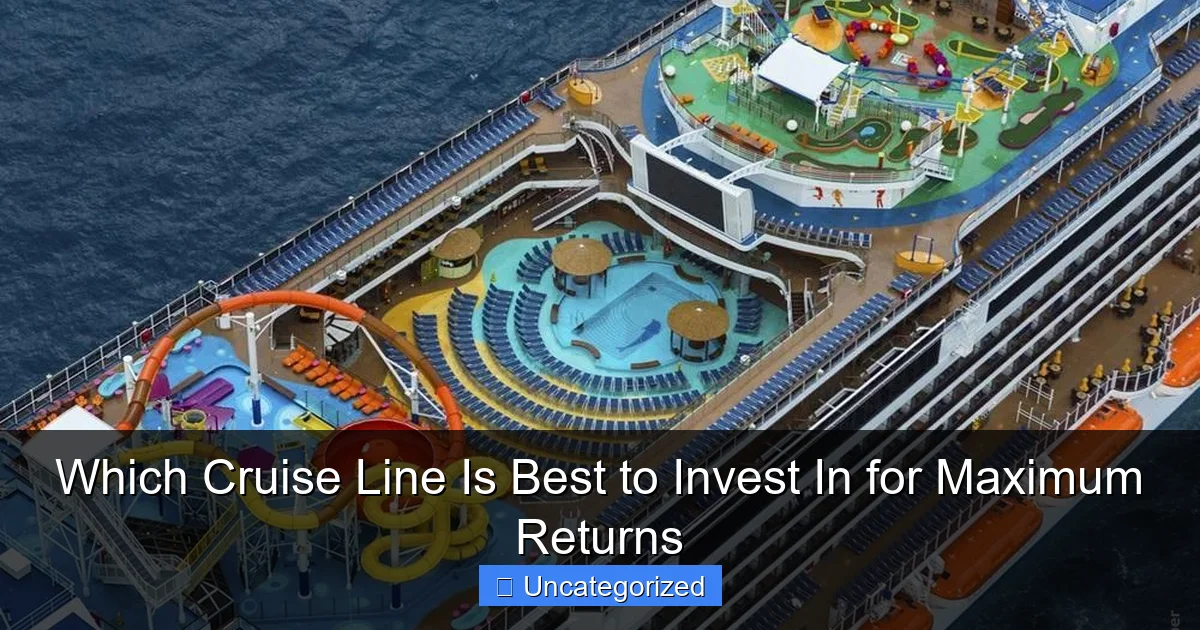
Visual guide about which cruise line is best to invest in
Image source: cruisemapper.com
- Debt-to-Equity Ratio: Indicates how much debt a company uses to finance its assets. High leverage can be risky, especially in volatile markets.
- Revenue Growth (YoY): Reflects demand and pricing power. Look for consistent or accelerating growth.
- Net Income Margin: Shows profitability after all expenses. A higher margin means better cost control.
- Free Cash Flow (FCF): Measures cash available for dividends, share buybacks, or reinvestment.
- Return on Equity (ROE): Assesses how efficiently a company generates profits from shareholder equity.
Top Performers in Financial Resilience
Among the major players, Carnival Corporation (CCL), Royal Caribbean Group (RCL), and Norwegian Cruise Line Holdings (NCLH) dominate the market. Let’s compare their post-pandemic financials:
- Carnival Corporation (CCL): As the world’s largest cruise operator, Carnival reported $21.6 billion in revenue in 2023, a 70% increase from 2022. However, its debt-to-equity ratio remains high at 3.1, reflecting aggressive fleet modernization and pandemic-era borrowing. ROE stands at 12.5%, showing improved profitability.
- Royal Caribbean (RCL): With $13.9 billion in 2023 revenue, RCL has the strongest balance sheet among the three. Its debt-to-equity ratio is 2.4, and ROE is 18.3%. The company has consistently outperformed peers in net income margin (15.2%) due to premium pricing and operational efficiency.
- Norwegian Cruise Line (NCLH): Revenue reached $8.5 billion in 2023, up 80% YoY. NCLH’s debt-to-equity ratio is 3.8—the highest of the trio—but management has committed to deleveraging by 2025. ROE is 14.1%, with a focus on cost optimization.
Tip: While Carnival leads in scale, Royal Caribbean’s stronger balance sheet and higher ROE make it a safer bet for conservative investors. NCLH offers higher growth potential but comes with elevated risk due to leverage.
Stock Price Trends and Analyst Ratings
Over the past three years, RCL has outperformed both CCL and NCLH in stock performance. As of Q1 2024:
- RCL: +142% since 2021 lows
- CCL: +98%
- NCLH: +85%
Analysts at Morgan Stanley and Goldman Sachs maintain “Buy” ratings on RCL, citing its diversified portfolio (Royal Caribbean, Celebrity Cruises, Silversea) and strong booking momentum. CCL receives mixed reviews due to debt concerns, while NCLH is rated “Hold” with a target price 15% above current levels, suggesting upside potential if deleveraging succeeds.
2. Fleet Modernization and Technological Innovation
The Rise of New-Generation Ships
Modern fleets are critical for attracting customers and reducing operating costs. Cruise lines are investing billions in newbuilds equipped with LNG (liquefied natural gas) propulsion, AI-driven navigation, and energy-efficient systems. For investors, this signals long-term competitiveness and environmental responsibility.
- Royal Caribbean: The Icon of the Seas (debuted 2024) is the world’s largest cruise ship, costing $2 billion. It uses LNG, solar panels, and advanced wastewater treatment. The ship’s 7,600-passenger capacity and 90% occupancy rate in early bookings suggest strong ROI.
- Carnival: The Carnival Jubilee (2023) and Celebration (2022) feature LNG engines and smart cabins with IoT sensors. Carnival plans to retire 20 older ships by 2027, reducing emissions by 40%.
- Norwegian: The Norwegian Prima class uses LNG-ready engines and has a 20% lower carbon footprint than previous models. NCLH plans to spend $4 billion on new ships by 2026.
Digital Transformation and Customer Experience
Beyond hardware, cruise lines are investing in digital platforms to enhance guest engagement and operational efficiency:
- Royal Caribbean’s “WOW Pass”: A digital key for staterooms, payments, and onboard activities, reducing staff costs by 15%.
- Carnival’s “OceanReady” App: Allows pre-booking excursions, dining, and spa services. Usage has grown 200% since 2022.
- Norwegian’s “Havila” AI: A chatbot that handles 30% of customer inquiries, improving response time by 50%.
Practical Example: Royal Caribbean’s investment in digital tools contributed to a 22% reduction in operating expenses per passenger in 2023, boosting margins.
Why Modernization Matters for Investors
New ships command higher ticket prices and lower fuel/maintenance costs. For instance, LNG-powered vessels cut fuel expenses by 25–30%. Investors should prioritize companies with:
- Clear newbuild schedules (e.g., Royal Caribbean’s 8-ship order by 2028)
- Commitment to retiring older, inefficient ships
- Investments in digital infrastructure
3. Sustainability and ESG Compliance
The Green Shift in Cruising
Environmental, Social, and Governance (ESG) factors are now central to cruise line strategies. With 70% of travelers (per Deloitte) preferring sustainable brands, ESG compliance is no longer optional. Key initiatives include:
- Carbon Neutrality Goals: Royal Caribbean targets net-zero emissions by 2050; Carnival aims for 2040.
- Alternative Fuels: LNG, biofuels, and hydrogen are being tested. Carnival has 11 LNG ships in operation.
- Waste Reduction: All three major lines have eliminated single-use plastics onboard.
- Onshore Power: Ships plug into port grids to reduce emissions. 90% of RCL’s ships are shore-power capable.
Regulatory and Investor Pressures
New regulations, such as the EU Emissions Trading System (ETS), will penalize high-emission ships starting in 2024. Companies lagging in sustainability face:
- Higher operating costs (carbon taxes)
- Reputational damage
- Exclusion from ESG-focused funds
Case Study: In 2023, NCLH faced a $12 million fine for violating EPA air emissions standards in Alaska. This underscores the financial risk of non-compliance.
ESG Performance Comparison
| Metric | Royal Caribbean (RCL) | Carnival (CCL) | Norwegian (NCLH) |
|---|---|---|---|
| Carbon Emissions Reduction (2020–2023) | 35% | 28% | 22% |
| LNG-Powered Ships | 7 | 11 | 5 |
| ESG Rating (Sustainalytics) | 18.5 (Low Risk) | 25.1 (Medium Risk) | 28.7 (Medium Risk) |
| Green Bonds Issued (2020–2023) | $1.2B | $800M | $500M |
Tip: Royal Caribbean’s superior ESG metrics make it attractive to ESG-focused investors. Carnival’s higher LNG adoption is a plus, but its weaker ESG rating raises concerns.
4. Geographic Diversification and Market Reach
Global vs. Regional Focus
Geographic diversification mitigates risk. Cruise lines with a global footprint are less vulnerable to regional disruptions (e.g., hurricanes, geopolitical tensions).
- Royal Caribbean: Operates in 100+ countries, with 40% of revenue from Asia-Pacific (including China). The company is expanding in India and the Middle East.
- Carnival: 70% of revenue from North America, but growing in Europe (Costa Cruises) and Australia (P&O Cruises).
- Norwegian: Strong in the Caribbean (45% of capacity), but expanding in Alaska and Northern Europe.
Emerging Markets and Demographic Trends
Key growth markets include:
- China: 1.4 billion population with rising middle-class travel. Royal Caribbean’s Spectrum of the Seas is dedicated to the Chinese market.
- India: 300 million millennials seeking experiential travel. RCL launched its first India itinerary in 2023.
- Southeast Asia: 650 million people; Carnival partners with local governments to develop ports.
Port Infrastructure and Partnerships
Investing in port infrastructure boosts revenue. For example:
- Royal Caribbean owns Perfect Day at CocoCay (Bahamas), generating $150M annually in private island revenue.
- Carnival’s Half Moon Cay (Bahamas) hosts 1.5 million guests/year.
- Norwegian’s Harvest Caye (Belize) offers excursions and retail.
Practical Tip: Companies with private destinations have higher per-passenger revenue (up to $200/day vs. $80/day for standard ports).
5. Long-Term Growth Strategies and Competitive Advantages
Brand Portfolio and Pricing Power
Diversified brands allow cruise lines to capture multiple market segments:
- Royal Caribbean: Premium (Celebrity), ultra-luxury (Silversea), and mainstream (RCI). This mix enables dynamic pricing.
- Carnival: Budget (Carnival Cruise), mid-tier (Princess), and premium (Holland America).
- Norwegian: Focuses on “freestyle cruising” (no fixed dining times) to attract younger travelers.
Example: Royal Caribbean’s Silversea brand has a 90% customer retention rate, with average ticket prices 2.5x higher than mainstream lines.
Customer Loyalty and Ancillary Revenue
Beyond ticket sales, cruise lines generate revenue from:
- Onboard spending (drinks, spas, excursions)
- Loyalty programs (Royal Caribbean’s “Club Royale” has 10M members)
- Partnerships (e.g., RCL’s deal with SpaceX for Starlink internet)
In 2023, ancillary revenue accounted for 35% of total income at RCL, 30% at CCL, and 25% at NCLH.
Innovation and Niche Markets
Forward-thinking companies are exploring:
- Space Cruising: RCL partners with Blue Origin for future orbital trips.
- Wellness Cruising: NCLH launched “Spa Suites” with holistic health programs.
- Adventure Cruising: Carnival’s “Expedition Cruises” target eco-tourists.
6. Risk Assessment and Final Recommendations
Key Risks to Consider
Investing in cruise lines isn’t without challenges:
- Economic Sensitivity: Demand drops during recessions (e.g., 2008, 2020).
- Regulatory Changes: Stricter emissions or safety rules could increase costs.
- Geopolitical Events: Wars, pandemics, or natural disasters disrupt itineraries.
- Labor Shortages: 30% of crew positions remain unfilled post-pandemic.
Final Investment Verdict
After analyzing financials, innovation, sustainability, and strategy, here’s the breakdown:
- Best Overall Pick: Royal Caribbean (RCL) – Strong balance sheet, diversified brands, leading ESG metrics, and global reach. Ideal for long-term, stable returns.
- High-Growth Potential: Norwegian Cruise Line (NCLH) – Aggressive deleveraging plan, focus on youth markets, and innovation. Higher risk but 20%+ upside if executed well.
- Value Play: Carnival (CCL) – Trading at a 20% discount to RCL, with a turnaround story. Suitable for investors with higher risk tolerance.
Actionable Tips:
- For conservative investors: Allocate 60% to RCL, 30% to CCL, 10% to NCLH.
- For aggressive growth: 50% NCLH, 30% RCL, 20% CCL.
- Monitor quarterly earnings for booking trends, fuel costs, and ESG progress.
Conclusion: Sailing Toward Profitable Waters
The cruise industry is rebounding with renewed vigor, driven by pent-up demand, technological innovation, and a shift toward sustainable travel. While all major cruise lines offer investment opportunities, Royal Caribbean Group stands out as the top choice for maximizing returns. Its financial strength, diversified brand portfolio, commitment to ESG, and global expansion strategy position it as a leader in the next era of cruising.
However, the “best” investment depends on your risk profile. Norwegian Cruise Line offers a compelling growth story, while Carnival presents a turnaround opportunity. By focusing on companies with modern fleets, digital innovation, and sustainable practices, investors can navigate the waves of volatility and sail toward long-term profitability.
As the industry charts a course toward a greener, more connected future, the right investment today could deliver smooth sailing—and significant returns—for years to come.
Frequently Asked Questions
Which cruise line is best to invest in for long-term growth?
Carnival Corporation (CCL) and Royal Caribbean Group (RCL) are top contenders due to their diversified fleets, global market reach, and strong post-pandemic recovery. Both have demonstrated resilience and consistent revenue growth, making them ideal for long-term investors.
What are the key financial metrics to evaluate before investing in a cruise line?
Focus on revenue growth, debt-to-equity ratio, and operating margins to gauge a cruise line’s financial health. For example, Norwegian Cruise Line (NCLH) has improved margins through cost-cutting, while RCL maintains a lower debt burden, signaling stability.
Which cruise line is best to invest in for dividend returns?
Historically, Carnival Corporation (CCL) offered attractive dividends, though payouts were paused during COVID-19. Monitor their reinstatement progress, as resumed dividends could make CCL a compelling choice for income-focused investors.
How does market demand influence the best cruise line to invest in?
Lines like Royal Caribbean excel in premium experiences, aligning with rising demand for luxury travel. Analyzing consumer trends—such as experiential cruising—can help identify companies poised for higher occupancy and pricing power.
Are smaller cruise lines a better investment bet than industry giants?
Smaller lines (e.g., Lindblad Expeditions) offer niche opportunities in expedition cruising but carry higher volatility. Giants like CCL and RCL provide diversification and economies of scale, reducing risk for conservative investors.
How do geopolitical and economic risks impact cruise line investments?
Economic downturns can reduce discretionary spending, affecting bookings, while geopolitical tensions may disrupt routes. Companies with flexible itineraries (e.g., RCL) often mitigate these risks better, making them safer long-term picks.