The best time to cruise Alaska is from late May to early September, when weather is mild, wildlife is active, and daylight hours are long. Peak season (June–August) offers the warmest temps and full access to ports, while shoulder months like May and September provide fewer crowds and lower prices.
Key Takeaways
- Peak Season (June–August): Ideal for warm weather, long days, and full access to excursions and ports—but expect higher prices and more crowds.
- Shoulder Seasons (May & September): Great for budget travelers and those seeking quieter experiences, with cooler temps and fewer tourists.
- Wildlife Viewing: Summer months offer the best chances to see bears, whales, and migratory birds, especially in July and August.
- Glacier Views: Calving glaciers are most active in July and August due to warmer temperatures and increased meltwater.
- Daylight Hours: Enjoy up to 18–20 hours of daylight in June, perfect for sightseeing and photography.
- Weather Variability: Pack layers—Alaska’s coastal climate can shift quickly, even in summer.
- Booking Tips: Book early for peak season; consider last-minute deals in May or September for savings.
📑 Table of Contents
- Introduction: Why Timing Matters for Your Alaska Cruise
- Understanding Alaska’s Cruise Season: A Month-by-Month Breakdown
- Weather and Climate: What to Expect on an Alaska Cruise
- Wildlife and Nature: When to See the Best of Alaska’s Wildlife
- Glaciers and Scenery: When to See the Most Dramatic Ice
- Crowds, Pricing, and Booking Tips
- Conclusion: Picking the Perfect Time for Your Alaska Adventure
Introduction: Why Timing Matters for Your Alaska Cruise
So, you’ve decided to take an Alaska cruise—congratulations! You’re about to experience one of the most breathtaking natural wonders on Earth: towering glaciers, rugged coastlines, and wildlife that seems straight out of a nature documentary. But before you start packing your parka and binoculars, there’s one crucial decision that can make or break your trip: when to go.
Alaska isn’t like cruising the Caribbean or the Mediterranean. The weather, wildlife, daylight, and even glacier activity all shift dramatically depending on the month. A cruise in late May feels very different from one in August. And while every season has its charm, choosing the right time ensures you get the most out of your adventure—whether that means spotting a humpback whale breaching near your ship, hiking through wildflower-filled meadows, or watching a glacier calve thunderously into the sea.
In this guide, we’ll walk you through everything you need to know about the best time to cruise Alaska. From weather patterns and wildlife sightings to crowd levels and pricing, we’ll help you pick the perfect window for your dream voyage. Whether you’re a first-time cruiser or a seasoned traveler, timing your trip right can turn a great Alaska experience into an unforgettable one.
Understanding Alaska’s Cruise Season: A Month-by-Month Breakdown

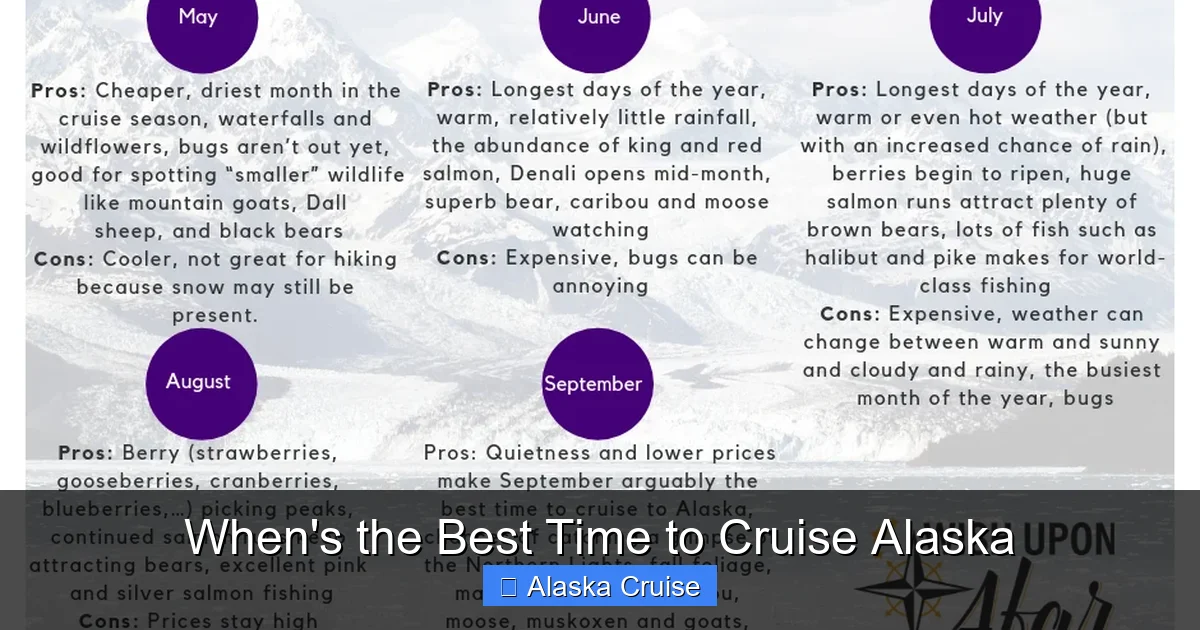
Visual guide about When’s the Best Time to Cruise Alaska
Image source: cruisebooking.com
Alaska’s official cruise season runs from early May to late September, but not all months are created equal. Each brings its own mix of weather, scenery, and experiences. Let’s break it down month by month so you can decide what matters most to you.
May: The Quiet Start to the Season
May marks the beginning of Alaska’s cruise season, and it’s a time of transition. The snow is melting, rivers are swelling, and the landscape is bursting back to life. While it’s still cool—average highs hover around 50°F (10°C)—the days are getting noticeably longer, and the scenery is lush and green.
One of the biggest perks of cruising in May is the lack of crowds. Ships are fewer, ports are quieter, and you’ll have more space to enjoy the views without jostling for the best spot on deck. Wildlife is also starting to become more active. You might spot bald eagles, sea otters, and even early-season whales migrating north.
However, keep in mind that some excursions—especially those involving hiking or glacier walks—may still be limited due to lingering snow or trail conditions. Also, not all ports may be fully operational yet, so your itinerary might be slightly shorter.
If you’re looking for a peaceful, budget-friendly start to the season and don’t mind cooler temps, May is a solid choice. Just pack warm layers and be ready for variable weather.
June: Peak Daylight and Blooming Beauty
June is when Alaska truly comes alive. With up to 18–20 hours of daylight in some areas, you’ll feel like you’re on a never-ending adventure. The sun barely sets, giving you plenty of time to explore, take photos, and soak in the views.
Temperatures are mild, averaging 55–65°F (13–18°C), making it comfortable for outdoor activities. Wildflowers are in full bloom, and the forests are a vibrant green. This is also when wildlife activity ramps up. Humpback whales, orcas, and sea lions are commonly spotted, and bears begin to emerge from hibernation, especially along the coastlines and riverbanks.
Ports like Juneau, Skagway, and Ketchikan are fully operational, and most excursions—from whale watching to dog sledding on glaciers—are available. June is also a popular time for families, so expect more children on board and slightly higher prices than May.
If long days, blooming landscapes, and active wildlife are your priorities, June is an excellent time to cruise. Just be sure to book early, as this is when demand starts to climb.
July: The Heart of Summer and Peak Season
July is the most popular month to cruise Alaska—and for good reason. It’s warm, sunny, and packed with activity. Average temperatures range from 60–70°F (15–21°C), making it ideal for hiking, kayaking, and exploring.
This is also the peak of wildlife season. Bears are frequently seen fishing for salmon in rivers, whales are abundant, and birdlife is at its most diverse. Glacier calving is also at its most dramatic in July, thanks to warmer temperatures and increased meltwater, which causes ice to break off more frequently.
With schools on summer break, July sees the highest number of families and tourists. Ships are full, ports are bustling, and popular excursions can sell out quickly. Prices are at their highest, and you’ll need to book well in advance to secure your preferred cabin and activities.
If you want the full Alaska experience—warm weather, active wildlife, and all excursions available—July is the time to go. Just be prepared for crowds and higher costs.
August: Warm Weather and Final Wildlife Flourishes
August is still part of the peak season, but it offers a slightly different vibe. The weather remains warm, with temperatures similar to July, but the crowds begin to thin out toward the end of the month as families return home.
Wildlife is still abundant. Bears are busy feeding before winter, and whales continue their migration. You might even spot moose or mountain goats in certain areas. The scenery is stunning, with golden grasses starting to appear and the first hints of fall color in the higher elevations.
Excursions are fully available, and ports are still lively. However, some cruise lines begin to reduce their schedules in late August, so your options may be slightly more limited than in July.
August is a great balance between summer warmth and fewer crowds. It’s ideal for travelers who want the best of both worlds—great weather and a more relaxed atmosphere.
September: The Quiet Beauty of Fall
September marks the end of the cruise season, and it’s a magical time to visit. The weather is cooler—average highs around 50–60°F (10–15°C)—but the crisp air and changing foliage create a stunning backdrop.
One of the biggest draws of a September cruise is the lack of crowds. Ships are smaller, ports are quieter, and you’ll have more space to enjoy the scenery. Wildlife is still active, especially bears preparing for hibernation and whales making their final migration south.
Glacier views remain impressive, though calving may be less frequent than in July. Some excursions, particularly those involving hiking or glacier walks, may be limited due to earlier snowfall or trail conditions. However, many popular activities—like whale watching and scenic train rides—are still available.
Prices drop significantly in September, making it a budget-friendly option. It’s also a great time for photographers, thanks to the golden light and autumn colors.
If you prefer a quieter, more intimate experience and don’t mind cooler weather, September is a fantastic choice. Just pack warm layers and be flexible with your plans.
Weather and Climate: What to Expect on an Alaska Cruise
Alaska’s weather is famously unpredictable, and that’s part of its charm. Even in summer, you can experience sunshine one moment and a light drizzle the next. Understanding the climate will help you pack smart and set realistic expectations.
Temperature Ranges by Month
Temperatures on an Alaska cruise vary depending on the region and time of year. Coastal areas like Juneau and Ketchikan tend to be milder, while inland ports like Skagway can be a bit cooler.
– May: 40–55°F (4–13°C)
– June: 50–65°F (10–18°C)
– July: 55–70°F (13–21°C)
– August: 50–68°F (10–20°C)
– September: 45–60°F (7–15°C)
Keep in mind that temperatures can drop significantly at night or at higher elevations, especially during glacier visits.
Precipitation and Rainfall
Rain is common in Alaska, even in summer. The southern coastal regions, particularly Ketchikan, are among the rainiest places in the U.S. However, rainfall is usually light and intermittent—more of a drizzle than a downpour.
On average, you can expect 5–10 rainy days per month during the cruise season. July and August tend to be the driest, while May and September see slightly more precipitation.
Pack a waterproof jacket, quick-dry clothing, and waterproof footwear. A compact umbrella can also come in handy, though many cruisers find that a good raincoat is more practical on deck.
Daylight Hours and the Midnight Sun
One of the most unique aspects of an Alaska cruise is the extended daylight. In June, especially in northern ports like Skagway, the sun may not set until after 10 p.m.—and it never gets completely dark. This phenomenon, known as the “midnight sun,” allows for endless sightseeing and photography opportunities.
Even in May and September, daylight lasts 14–16 hours, giving you plenty of time to explore. Just be sure to bring an eye mask if you’re sensitive to light when sleeping.
Wildlife and Nature: When to See the Best of Alaska’s Wildlife
One of the biggest draws of an Alaska cruise is the chance to see incredible wildlife in their natural habitat. But timing matters—different animals are active at different times of the year.
Whales: Humpbacks, Orcas, and More
Whale watching is a highlight for many cruisers. Humpback whales are most commonly seen from May through September, with peak sightings in July and August. They migrate north to feed in Alaska’s nutrient-rich waters, often putting on spectacular displays like breaching and tail slapping.
Orcas (killer whales) are also frequently spotted, especially in the Inside Passage. Gray whales pass through in spring and fall, while minke and fin whales may be seen in smaller numbers.
For the best whale-watching experience, consider a cruise that includes stops in areas known for marine life, such as Icy Strait Point or Glacier Bay.
Bears: Coastal and River Sightings
Alaska is home to both black bears and brown bears (including grizzlies), and spotting one in the wild is a thrilling experience. Bears are most active from late spring through early fall.
In July and August, bears gather along rivers to feed on salmon during spawning season. Popular bear-viewing locations include Pack Creek on Admiralty Island and the rivers near Ketchikan and Juneau.
If seeing bears is a top priority, consider booking a shore excursion focused on wildlife viewing. These guided tours increase your chances of a safe and memorable encounter.
Birds, Sea Otters, and Other Wildlife
Alaska is a birdwatcher’s paradise. From bald eagles and puffins to sandhill cranes and Arctic terns, the variety is staggering. Seabird colonies are especially active in summer, with thousands of birds nesting on coastal cliffs.
Sea otters are commonly seen floating on their backs in kelp beds, while sea lions and harbor seals bask on rocks near the shore. Moose, mountain goats, and even the occasional wolf may be spotted in certain areas, particularly during early morning or evening excursions.
Glaciers and Scenery: When to See the Most Dramatic Ice
No Alaska cruise is complete without seeing a glacier. These massive rivers of ice are not only awe-inspiring—they’re also dynamic, constantly moving and calving into the sea.
Glacier Calving: Nature’s Thunder
Glacier calving—the process of ice breaking off into the water—is one of the most dramatic sights in Alaska. It’s most common in July and August, when warmer temperatures and meltwater increase the rate of ice loss.
Popular glacier destinations include:
– Mendenhall Glacier (Juneau): Easily accessible and surrounded by a lush forest.
– Hubbard Glacier: One of the largest tidewater glaciers in North America, often visited on cruise itineraries.
– Glacier Bay National Park: A UNESCO World Heritage Site with multiple active glaciers.
Calving events can be loud and powerful, sending icebergs crashing into the water. While not guaranteed, your chances are highest in mid-summer.
Scenic Views and Photography Tips
Alaska’s scenery is a photographer’s dream. From snow-capped mountains and turquoise waters to dense forests and wildlife, there’s no shortage of stunning shots.
For the best lighting, aim for early morning or late afternoon, when the sun is low and the colors are rich. In June, the extended daylight gives you plenty of golden hour opportunities.
Bring a zoom lens for wildlife and a wide-angle lens for landscapes. And don’t forget extra batteries—cold weather drains them quickly.
Crowds, Pricing, and Booking Tips
Timing your cruise also affects how much you’ll pay and how crowded your experience will be.
Peak vs. Shoulder Season Pricing
Prices vary significantly depending on the month:
– Peak Season (June–August): Highest prices, especially for balcony cabins and popular excursions.
– Shoulder Seasons (May & September): Lower prices, with discounts of 20–40% compared to peak months.
If budget is a concern, consider booking in May or September. You’ll save money and enjoy a more relaxed atmosphere.
Booking Early vs. Last-Minute Deals
For peak season, book 9–12 months in advance to secure your preferred cabin and excursions. Many popular tours—like dog sledding on a glacier or a flightseeing tour—sell out quickly.
In shoulder seasons, last-minute deals are more common. Cruise lines often offer discounts to fill remaining cabins, especially in September.
Choosing the Right Itinerary
Most Alaska cruises follow one of two routes:
– Roundtrip from Seattle or Vancouver: Typically 7 days, visiting ports like Juneau, Skagway, and Ketchikan.
– One-way between Seattle/Vancouver and Seward/Whittier: Often 7–10 days, with more time in Glacier Bay and the Kenai Fjords.
One-way cruises offer more scenic variety and often include a land tour extension, such as a visit to Denali National Park.
Conclusion: Picking the Perfect Time for Your Alaska Adventure
So, when’s the best time to cruise Alaska? The answer depends on what you value most.
If you want warm weather, long days, and the full range of activities, July and August are ideal. You’ll see the most wildlife, enjoy the best glacier views, and have access to all excursions—but you’ll pay a premium and share the experience with more people.
If you prefer a quieter, more budget-friendly trip, May and September offer great value and fewer crowds. You’ll still see plenty of wildlife and stunning scenery, just with a bit more peace and flexibility.
And if you’re somewhere in between, June strikes a nice balance—great weather, active wildlife, and slightly fewer crowds than peak summer.
No matter when you go, an Alaska cruise is a journey you’ll never forget. With its dramatic landscapes, abundant wildlife, and endless daylight, Alaska offers an adventure unlike any other. Just remember to pack layers, bring your camera, and keep an eye on the horizon—you never know what magic you might see.
Frequently Asked Questions
What is the best month to cruise Alaska for wildlife?
The best months for wildlife viewing are July and August, when bears, whales, and migratory birds are most active. Humpback whales are commonly seen, and bears gather along rivers to feed on salmon.
Is it cold on an Alaska cruise in summer?
Summer temperatures on an Alaska cruise typically range from 50–70°F (10–21°C). It’s mild but can feel cool on the water or at higher elevations, so layers are essential.
Can you see glaciers in May or September?
Yes, glaciers are visible year-round, but calving is most dramatic in July and August. In May and September, views are still stunning, though some glacier excursions may be limited.
Are there mosquitoes on an Alaska cruise?
Mosquitoes are more common in inland areas and during early summer. Coastal ports and ships have fewer, but it’s wise to bring insect repellent for shore excursions.
Do I need a passport for an Alaska cruise?
It depends on the itinerary. Closed-loop cruises (departing and returning to the same U.S. port) don’t require a passport, but one is recommended in case of emergencies or itinerary changes.
What should I pack for an Alaska cruise?
Pack layers, including a waterproof jacket, warm fleece, quick-dry clothing, sturdy walking shoes, sunglasses, sunscreen, and a hat. Don’t forget a camera, binoculars, and an eye mask for the long daylight hours.