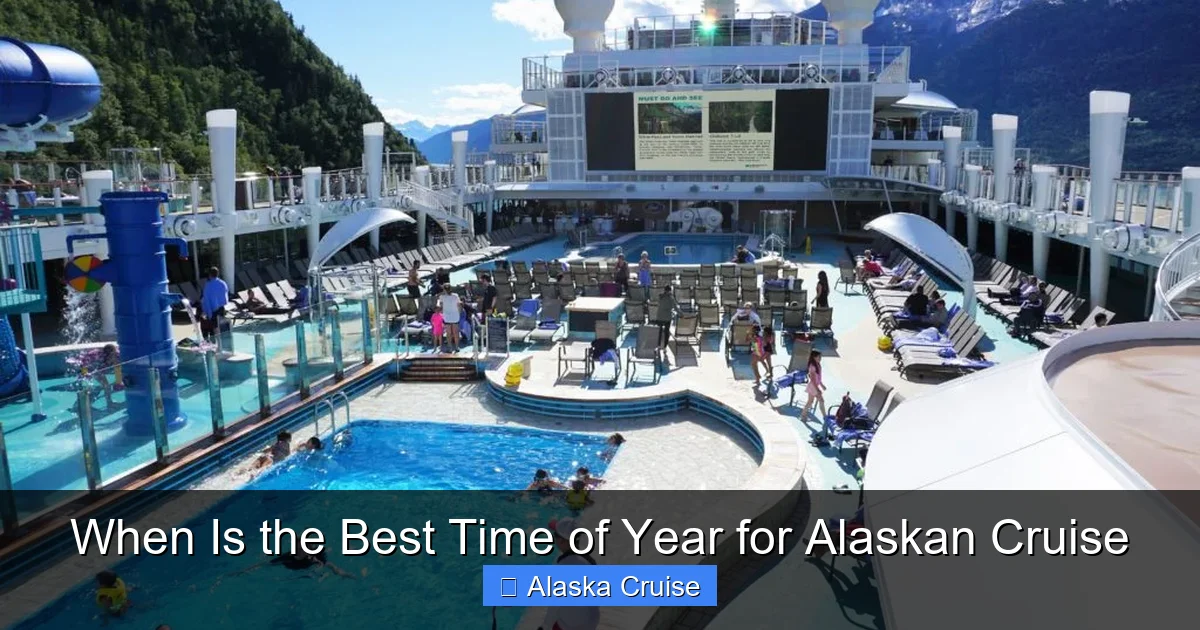
The best time of year for Alaskan cruise is typically between late May and early September, with peak season in June through August. During these months, you’ll enjoy mild weather, long daylight hours, abundant wildlife, and full access to ports and excursions.
Key Takeaways
- Peak season runs from June to August: This is when weather is warmest, daylight lasts up to 18–20 hours, and wildlife viewing is at its best.
- Late May and early September offer fewer crowds and lower prices: Shoulder months provide a quieter experience with still-good weather and active wildlife.
- Wildlife sightings vary by season: Bears are most visible in July and August, while whales peak in June and July.
- Weather is unpredictable year-round: Even in summer, pack layers, rain gear, and warm clothing for comfort.
- Shore excursions are fully operational in summer: Glacier hikes, dog sledding, and cultural tours are best accessed from June to August.
- Northern Lights are not visible on summer cruises: Aurora sightings are only possible in late fall or winter, outside the cruise season.
- Book early for best cabin selection and deals: Popular sail dates fill up fast, especially for July and August departures.
📑 Table of Contents
- Introduction: Why Timing Matters for Your Alaskan Cruise
- The Alaskan Cruise Season: A Brief Overview
- Weather and Climate: What to Expect
- Wildlife Viewing: When to See What
- Shore Excursions and Activities by Season
- Pricing and Crowds: Finding the Sweet Spot
- Conclusion: Choosing Your Perfect Alaskan Cruise Date
Introduction: Why Timing Matters for Your Alaskan Cruise
Planning an Alaskan cruise is an exciting adventure—but choosing the right time to go can make or break your experience. Alaska is a land of extremes, where weather, daylight, wildlife, and accessibility shift dramatically throughout the year. Unlike tropical destinations, Alaska doesn’t offer year-round cruising. Instead, the cruise season is tightly packed into a few short months, each with its own unique charm and challenges.
So, when is the best time of year for Alaskan cruise? The answer isn’t one-size-fits-all. It depends on what you’re hoping to see and do. Are you dreaming of spotting humpback whales breaching near glaciers? Do you want to hike on a snow-free trail with endless daylight? Or are you looking for a quieter, more budget-friendly trip with fewer tourists? Understanding the seasonal rhythms of Alaska will help you pick the perfect window for your voyage.
The Alaskan Cruise Season: A Brief Overview

Visual guide about When Is the Best Time of Year for Alaskan Cruise
Image source: i.pinimg.com
Alaska’s cruise season typically runs from mid-May to mid-September, with most major cruise lines offering sailings during this period. Outside of these months, the weather becomes too harsh, daylight too limited, and many ports and attractions shut down for the winter. The season is divided into three main phases: early season (May to early June), peak season (mid-June to August), and late season (September).
Each phase offers a different flavor of Alaska. Early season brings melting snow, rushing rivers, and fewer crowds. Peak season delivers the warmest weather, longest days, and the most active wildlife. Late season offers crisp air, fall colors, and a sense of solitude as the tourist rush winds down. Let’s break down what you can expect during each part of the season.
Early Season: May to Early June
If you’re looking to beat the crowds and enjoy lower prices, early season is a great option. Cruises begin in mid-May, right as Alaska is waking up from winter. Snow is still melting in many areas, and waterfalls are at their most powerful due to runoff from the thawing mountains. This is also a time of renewal—plants are budding, birds are returning, and animals are emerging from hibernation.
One of the biggest perks of early season travel is the price. Cruise fares are generally lower, and you’ll find better availability for cabins and excursions. You’ll also have more space on board and in ports, making for a more relaxed experience. However, keep in mind that not all attractions are fully operational yet. Some hiking trails may still be muddy or snow-covered, and a few cultural centers or museums might not be open.
Weather in May and early June can be cool and unpredictable. Daytime temperatures range from 40°F to 60°F (4°C to 15°C), and rain is common. But the upside? You’ll enjoy nearly 16 to 18 hours of daylight, giving you plenty of time to explore. Wildlife is active, especially bears foraging for early greens and salmon beginning to run in some rivers.
Peak Season: Mid-June to August
This is when Alaska truly comes alive—and when most travelers choose to cruise. From mid-June through August, the state experiences its warmest weather, longest days, and most vibrant wildlife activity. It’s no surprise that this is considered the best time of year for Alaskan cruise by many travelers.
During these months, daylight can last up to 18–20 hours in southern Alaska and even longer in the northern regions. This means you’ll have ample time to enjoy shore excursions, scenic cruising, and onboard activities without feeling rushed. The extended daylight also enhances wildlife viewing—animals are active throughout the day, and photographers love the soft, golden light of the “magic hour” that stretches for hours.
Weather is at its most pleasant, with average temperatures ranging from 50°F to 70°F (10°C to 21°C). While rain is still possible, sunny days are more common, and the risk of snow is virtually nonexistent. This is also when all ports, attractions, and excursions are fully operational. Whether you want to kayak near a glacier, visit a Native cultural center, or take a helicopter tour over the Juneau Icefield, you’ll have your pick of options.
Wildlife sightings are at their peak. Humpback whales, orcas, and sea lions are commonly seen in coastal waters. Brown bears are frequently spotted along riverbanks in places like Katmai National Park or Admiralty Island, especially during salmon runs in July and August. Bald eagles soar overhead, and puffins nest on coastal cliffs. It’s a nature lover’s paradise.
Of course, peak season comes with trade-offs. Crowds are larger, both on ships and in popular ports like Juneau, Ketchikan, and Skagway. Popular excursions—like whale watching tours or glacier hikes—can sell out weeks in advance. And prices are at their highest, with cruise fares and airfare often doubling compared to shoulder months.
Late Season: September
As summer fades into fall, Alaska transforms once again. September is a magical time to cruise—quieter, more affordable, and rich with seasonal beauty. While the weather begins to cool, the days are still long enough for full exploration, and the landscape bursts into brilliant fall colors.
Temperatures in September range from 40°F to 60°F (4°C to 15°C), with crisp mornings and mild afternoons. Rain becomes more frequent, but snow is rare except in higher elevations. One of the biggest draws of late season travel is the reduced number of tourists. Ships are less crowded, ports are quieter, and you’ll have a more intimate experience overall.
Wildlife is still active, though patterns begin to shift. Bears are busy fattening up for winter, and you may spot them near rivers as salmon runs continue into early September. Whales are still present, though sightings may be less frequent than in July. On land, moose, mountain goats, and Sitka black-tailed deer are often seen, especially in forested areas.
Another advantage of September cruises is the scenery. The mountains begin to dust with snow, creating a stunning contrast against golden larch trees and deep blue skies. Waterfalls, fed by summer melt, are still powerful, and glaciers remain accessible for viewing and excursions. Some cruise lines even offer special “fall foliage” itineraries that highlight the changing landscape.
However, keep in mind that some attractions begin to close in September. Smaller museums, guided tours, and seasonal restaurants may reduce hours or shut down entirely after Labor Day. Shore excursions are still widely available, but options may be more limited than in peak season. Still, for travelers seeking a balance of good weather, natural beauty, and fewer crowds, September is an excellent choice.
Weather and Climate: What to Expect
Alaska’s weather is famously unpredictable, even in summer. While the cruise season offers the most favorable conditions, it’s important to pack and prepare for a range of possibilities. The state’s coastal climate is influenced by the Pacific Ocean, which keeps temperatures moderate but brings frequent rain and fog.
Temperature Ranges by Month
– May: 40°F–55°F (4°C–13°C)
– June: 45°F–65°F (7°C–18°C)
– July: 50°F–70°F (10°C–21°C)
– August: 48°F–68°F (9°C–20°C)
– September: 40°F–60°F (4°C–15°C)
These are averages—actual conditions can vary widely depending on location and weather patterns. For example, Ketchikan on the southern coast tends to be cooler and wetter than Skagway in the north, which is drier and sunnier.
Precipitation and Rainfall
Rain is common throughout the cruise season, especially in May and September. The southeastern region, known as the Tongass National Forest, is one of the wettest places in the U.S. Even in July and August, afternoon showers are frequent. However, rain rarely lasts all day, and many excursions are designed to accommodate wet weather.
Packing a high-quality rain jacket, waterproof shoes, and quick-dry clothing is essential. Layering is key—mornings and evenings can be chilly, even in summer, while afternoons may feel warm in the sun.
Daylight Hours
One of the most unique aspects of an Alaskan cruise is the abundance of daylight. In June and July, the sun sets as late as 10:30 PM in southern Alaska and doesn’t set at all in the far north during the summer solstice. This “midnight sun” allows for extended sightseeing and scenic cruising, especially in Glacier Bay and Tracy Arm Fjord.
Even in May and September, daylight lasts 14–16 hours, giving you plenty of time to enjoy the views. Just remember to bring an eye mask if you’re sensitive to light when trying to sleep.
Wildlife Viewing: When to See What
One of the biggest draws of an Alaskan cruise is the chance to see incredible wildlife in their natural habitat. The best time to see specific animals depends on the season, migration patterns, and food availability.
Whales
Humpback whales are the stars of the show, and they’re most commonly seen from mid-June to August. These majestic creatures feed in Alaskan waters during the summer, often breaching, tail-slapping, and singing. Orcas (killer whales) are also frequently spotted, especially in the waters near Juneau and Ketchikan.
Gray whales migrate through in spring and fall, but sightings are less common on standard cruise itineraries. If whale watching is a priority, consider booking a specialized wildlife cruise or adding a whale-watching excursion in Icy Strait Point or Glacier Bay.
Bears
Brown bears (including grizzlies) are most visible in July and August, when salmon runs are at their peak. Popular bear-viewing spots include Pack Creek on Admiralty Island, Brooks Falls in Katmai, and the rivers near Ketchikan and Haines. Early morning and late evening are the best times for sightings.
In May and June, bears are still emerging from hibernation and may be harder to spot. By September, they’re focused on feeding before winter, so sightings can still be good—but trails and viewing areas may be less accessible.
Birds and Marine Life
Bald eagles are present year-round, but nesting activity peaks in spring. Puffins return to coastal cliffs in May and stay through August. Sea otters, sea lions, and harbor seals are commonly seen along the coast, especially near glacier-fed waters where fish are abundant.
Moose and mountain goats are often spotted on land, particularly in forested areas and near hiking trails. In September, the fall rut (mating season) makes moose more active and visible.
Shore Excursions and Activities by Season
The availability and quality of shore excursions vary significantly by time of year. Here’s what you can expect:
Peak Season (June–August)
All major excursions are operational, including:
– Glacier hikes and ice climbing
– Dog sledding on glaciers (via helicopter)
– Whale watching and wildlife tours
– Cultural experiences with Native Alaskan communities
– Scenic train rides (like the White Pass & Yukon Route)
– Kayaking and paddleboarding in fjords
This is the best time for active adventures and full access to national parks and attractions.
Shoulder Seasons (May and September)
Some excursions may have reduced hours or limited availability. Glacier hikes and helicopter tours are usually still offered, but snow conditions may affect access. Cultural centers and museums may operate on a seasonal schedule. However, you’ll often find discounted rates and smaller groups, making for a more personal experience.
Tips for Booking Excursions
– Book popular tours (like whale watching or glacier flights) as early as possible—they sell out fast in peak season.
– Consider booking through your cruise line for convenience, or research local operators for potentially lower prices.
– Always check cancellation policies, especially in shoulder months when weather can impact tours.
Pricing and Crowds: Finding the Sweet Spot
Cost and crowd levels are major factors in deciding when to cruise. Here’s how the seasons compare:
– May and September: Lower prices, fewer crowds, but fewer operational attractions.
– June to August: Highest prices, largest crowds, but full access to everything.
If budget is a concern, consider sailing in late May or early September. You’ll save significantly on cruise fares and airfare, and still enjoy great weather and wildlife. Just be prepared for some limitations.
For families with school-age children, July and August are the most practical—though you’ll pay a premium. Retirees and flexible travelers may prefer the shoulder months for a more relaxed pace.
Conclusion: Choosing Your Perfect Alaskan Cruise Date
So, when is the best time of year for Alaskan cruise? The answer depends on your priorities. If you want the warmest weather, longest days, and the best chance to see wildlife and enjoy all excursions, mid-June through August is ideal. It’s the peak season for a reason—Alaska is at its most vibrant and accessible.
But if you prefer fewer crowds, lower prices, and a more intimate experience, consider late May or September. You’ll still enjoy stunning scenery, active wildlife, and comfortable weather, with the added bonus of a quieter journey.
No matter when you go, an Alaskan cruise is a once-in-a-lifetime adventure. Pack your layers, bring your camera, and get ready to be amazed by glaciers, wildlife, and the raw beauty of the Last Frontier.
Frequently Asked Questions
What is the best month for an Alaskan cruise?
The best month for an Alaskan cruise is typically July. It offers the warmest weather, longest daylight hours, peak wildlife activity, and full access to all ports and excursions.
Can you see the Northern Lights on an Alaskan cruise?
No, the Northern Lights are not visible during the summer cruise season due to nearly 24-hour daylight. Aurora sightings are only possible in late fall or winter, outside the typical cruise window.
Is it cold on an Alaskan cruise in summer?
Summer temperatures range from 50°F to 70°F (10°C to 21°C), but it can feel cooler on the water or in shaded areas. Layered clothing and a waterproof jacket are essential.
Are there mosquitoes on Alaskan cruises?
Mosquitoes are present in some areas, especially in early summer and near wetlands. However, they are rarely a problem on ships or in major ports. Insect repellent is recommended for shore excursions.
Do I need a passport for an Alaskan cruise?
If your cruise begins and ends in the same U.S. port (a closed-loop cruise), a passport is not required—though it’s highly recommended. If your itinerary includes Canada, a passport is mandatory.
Can you see glaciers on an Alaskan cruise?
Yes, most Alaskan cruise itineraries include scenic cruising in Glacier Bay or visits to glaciers like Margerie or Hubbard. Glacier viewing is possible from May through September, with peak clarity in summer.