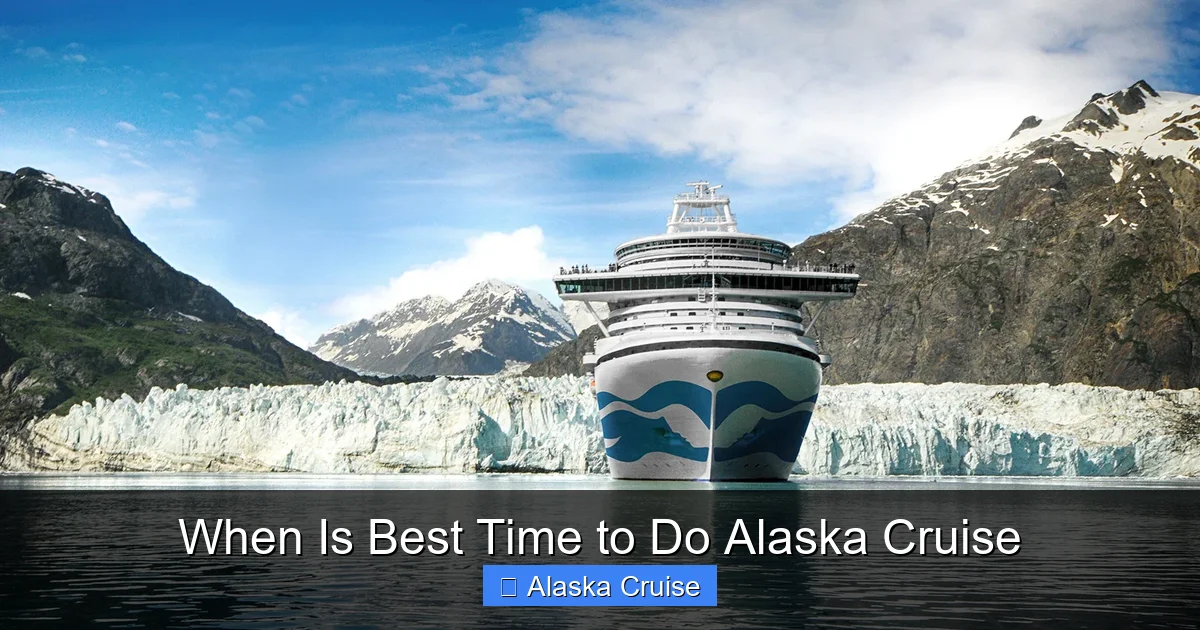
The best time to do Alaska cruise is from late May to early September, when weather is mild, wildlife is active, and daylight is abundant. While July and August offer the warmest temperatures and full access to ports, shoulder months like June and September provide fewer crowds and lower prices.
Planning an Alaska cruise is an exciting adventure—but timing is everything. With its rugged coastlines, towering glaciers, and abundant wildlife, Alaska offers a once-in-a-lifetime experience that’s deeply influenced by the season. Unlike tropical destinations where you can cruise year-round, Alaska’s cruise season is short and highly seasonal, running roughly from May to September. So, when is the best time to do Alaska cruise? The answer depends on what you value most: warm weather, fewer crowds, lower prices, or prime wildlife sightings.
If you’re dreaming of spotting humpback whales breaching near icy fjords, hiking through lush temperate rainforests, or watching glaciers calve into the sea, you’ll want to time your trip carefully. Each month in the Alaska cruise season brings its own unique charm and trade-offs. July and August are the most popular—and for good reason. The weather is at its warmest, the days are long, and all ports and excursions are fully operational. But that popularity comes with higher prices and more fellow travelers. On the flip side, cruising in May or September means thinner crowds, better deals, and a more intimate experience—though you might face cooler temps and shorter days.
Ultimately, the best time to do Alaska cruise isn’t one-size-fits-all. It’s about matching your travel style and priorities with the rhythms of Alaska’s natural world. Whether you’re a wildlife enthusiast, a budget-conscious traveler, or someone who simply wants to soak in the raw beauty of the Last Frontier, understanding the seasonal nuances will help you choose the perfect window for your journey.
Key Takeaways
- Peak season (July–August): Warmest weather, longest daylight, and full access to attractions—but also the most crowded and expensive.
- Shoulder seasons (May–June and September): Fewer crowds, lower prices, and still great weather—ideal for travelers seeking value and tranquility.
- Wildlife viewing peaks in summer: Whales, bears, and puffins are most active from June through August.
- Glacier viewing is best in July and August: Calving glaciers are most dramatic during warmer months when ice breaks off more frequently.
- Daylight varies dramatically: Expect up to 19 hours of daylight in June, but only about 12 hours by late September.
- Weather is unpredictable: Pack layers regardless of when you go—rain, wind, and cool temperatures can occur any time.
- Booking early saves money: Cruises fill quickly in peak season, so reserve 6–12 months in advance for the best cabins and deals.
📑 Table of Contents
Understanding Alaska’s Cruise Season
Alaska’s cruise season is tightly bound to its climate and geography. Unlike Caribbean or Mediterranean cruises that operate year-round, Alaska cruises are only available from mid-May to early October. This narrow window is dictated by weather, daylight, and the operational schedules of ports and tour providers. Most major cruise lines—such as Holland America, Princess, Norwegian, and Royal Caribbean—begin their Alaska itineraries in late May and wrap up by mid-September, with a few extending into early October.
The season typically kicks off in late May, when snow begins to melt, rivers thaw, and wildlife becomes more active. By June, the landscape transforms into a vibrant green, and daylight stretches well into the evening. July and August represent the heart of the season, with peak temperatures, full access to national parks, and the highest number of cruise departures. As September arrives, the crowds thin, the air cools, and the first hints of autumn color appear in the foliage. By early October, most cruise ships have departed, and many ports begin closing for the winter.
One of the biggest factors influencing the cruise season is daylight. In June, especially around the summer solstice, Alaska experiences nearly 20 hours of daylight in southern regions like Juneau and Ketchikan. This “midnight sun” effect allows for extended sightseeing and more flexible schedules. However, by late September, daylight drops to around 12 hours, and by October, it’s closer to 10. While this doesn’t ruin the experience, it does affect how much you can see and do each day.
Weather is another critical consideration. Alaska’s coastal regions—where most cruises operate—have a maritime climate, meaning temperatures are moderated by the ocean. Average highs range from 50°F to 65°F (10°C to 18°C) during the cruise season, but it can feel cooler with wind and rain. Snow is rare in port cities during summer, but higher elevations and inland areas may still have snowpack well into June. Rain is common, especially in the southeast (the “Inside Passage”), so waterproof gear is essential no matter when you go.
Why the Season Matters
The timing of your Alaska cruise affects nearly every aspect of your trip—from what you’ll see to how much you’ll pay. For example, wildlife activity peaks in summer. Bears are most visible in July and August when they’re fishing for salmon in rivers like those near Ketchikan and Haines. Whales, including humpbacks, orcas, and gray whales, are frequently spotted from June through September, with peak sightings often in July. Puffins, bald eagles, and sea otters are also more active and easier to spot during these months.
Glacier viewing is another season-dependent experience. The most dramatic calving—when massive chunks of ice break off into the water—happens more frequently in warmer months when glacial ice is under stress from melting. Places like Glacier Bay National Park and Hubbard Glacier are most impressive in July and August. However, some travelers prefer visiting glaciers earlier in the season when they’re more stable and less prone to sudden collapses, which can be both awe-inspiring and a bit unsettling.
Port accessibility also varies. Some remote communities and smaller ports may not open until June or may close by early September. For instance, Skagway and Haines are usually fully operational by mid-June, while smaller stops like Hoonah or Icy Strait Point may have limited services in May and September. If you’re hoping to take a specific shore excursion—like a dog sledding tour on a glacier or a flightseeing trip over Denali—you’ll want to ensure it’s available during your travel dates.
Peak Season: July and August

Visual guide about When Is Best Time to Do Alaska Cruise
Image source: thepointsguy.global.ssl.fastly.net
July and August are widely considered the best time to do Alaska cruise for first-time visitors and families. These months offer the most reliable weather, the longest days, and the fullest range of activities. Temperatures are at their warmest, averaging between 55°F and 65°F (13°C to 18°C), and rainfall, while still possible, is less frequent than in spring or fall. This makes outdoor excursions—like hiking, kayaking, and wildlife tours—more comfortable and enjoyable.
One of the biggest draws of peak season is the abundance of daylight. In Juneau, for example, the sun rises around 4:00 AM and sets after 10:00 PM in July. This gives you plenty of time to explore ports, take multiple excursions, and still enjoy dinner and evening entertainment on the ship. Many travelers appreciate the flexibility this provides, especially when shore days are packed with activities.
Wildlife viewing is also at its peak. July is prime time for bear watching, particularly in areas like Admiralty Island near Juneau, where brown bears gather to feast on salmon. Whale watching tours report the highest success rates in July and August, with humpback whales frequently seen breaching, tail-slapping, and bubble-net feeding. Sea lions, otters, and bald eagles are also commonly spotted along the coastline.
Glacier experiences are equally impressive. Hubbard Glacier, one of the largest tidewater glaciers in North America, is most active in summer. Ships often get within a few hundred yards of the glacier face, allowing passengers to witness calving events up close. Similarly, Glacier Bay National Park—a UNESCO World Heritage Site—sees the most cruise traffic in July and August, with ranger-led programs and optimal viewing conditions.
Downsides of Peak Season
Despite its many advantages, peak season isn’t without drawbacks. The biggest is crowds. Popular ports like Juneau, Ketchikan, and Skagway can feel congested, with multiple ships docking on the same day. This can lead to long lines at attractions, crowded shuttle buses, and limited availability for popular excursions. If you prefer a more peaceful, intimate experience, July and August may feel overwhelming.
Prices are also at their highest during peak season. Cruise fares, airfare to Seattle or Vancouver (common departure cities), and shore excursions can cost significantly more than in shoulder months. Cabins with balconies or ocean views book up months in advance, and last-minute deals are rare. Families with school-aged children often have no choice but to travel in summer, which further drives up demand.
Another consideration is the “tourist season” atmosphere. While Alaska retains its wild, untamed beauty, some areas can feel commercialized during peak months. Gift shops, guided tours, and photo ops may dominate the experience in certain ports. That said, many travelers find the energy and excitement of peak season adds to the adventure.
Shoulder Seasons: May–June and September
For travelers seeking a balance between good weather and fewer crowds, the shoulder seasons—late May to early June and September—are excellent alternatives. These periods offer many of the same benefits as peak season but with added perks like lower prices, quieter ports, and a more relaxed pace.
Late May to Early June: The Quiet Start
Cruising in late May or early June means you’re among the first to experience Alaska’s summer transformation. The landscape is lush and green, rivers are swollen with snowmelt, and wildlife is emerging from winter hibernation. While temperatures are cooler than in July—averaging 45°F to 55°F (7°C to 13°C)—the weather is generally stable, and rainfall is manageable with proper gear.
One of the biggest advantages of traveling in May is the lack of crowds. Most families haven’t started summer vacation yet, and cruise ships are less than half full. This means more space on deck, shorter lines at dining venues, and easier access to shore excursions. You’ll also have a better chance of securing last-minute bookings or upgrades.
Wildlife is active, though not yet at peak levels. Bears are beginning to forage, and whales are migrating north. While sightings may be less frequent than in July, the experience can feel more authentic and less rushed. Glaciers are still impressive, though calving may be less dramatic than in warmer months.
Ports are opening up, but some services may be limited. For example, certain museums, shops, or tour operators might not be fully operational until mid-June. However, major attractions like Mendenhall Glacier near Juneau and the Totem Bight State Historical Park in Ketchikan are usually open.
September: The Golden Month
September is often considered the hidden gem of the Alaska cruise season. The summer crowds have dispersed, the weather is still pleasant, and the landscape begins to shift into autumn colors. Temperatures range from 45°F to 60°F (7°C to 15°C), and while rain is more likely than in July, it’s rarely enough to ruin a trip.
One of the biggest draws of September is the scenery. In places like Haines and Skagway, the hillsides turn golden and crimson, creating a stunning contrast with the deep blue waters and snow-capped peaks. This seasonal beauty adds a unique dimension to your cruise photos and memories.
Wildlife is still active. Bears are preparing for hibernation and can be seen gorging on late-season salmon. Whales are still present, especially in protected bays and fjords. Birdwatchers will appreciate the migration of shorebirds and waterfowl heading south.
Prices drop significantly in September. Cruise lines often offer discounts to fill remaining cabins, and airfare tends to be cheaper as summer travel winds down. Shore excursions may also be discounted, and you’ll have more flexibility to book on the spot.
The main trade-off is daylight. By late September, the sun sets around 7:30 PM, and mornings are darker. This reduces the amount of time available for sightseeing, especially on shorter port days. However, many travelers find the trade-off worthwhile for the quieter, more reflective experience.
Wildlife and Glacier Viewing by Month
One of the main reasons people choose an Alaska cruise is to witness its incredible natural wonders up close. Timing your trip to align with peak wildlife and glacier activity can greatly enhance your experience.
Wildlife Viewing Calendar
– May: Bears emerge from hibernation and begin foraging. Whales start migrating north. Eagles and seabirds return to nesting sites.
– June: Salmon begin running in rivers, attracting bears and eagles. Humpback whales are commonly seen. Puffins return to coastal cliffs.
– July: Peak bear activity, especially in salmon-rich areas. Whale sightings are frequent and dramatic. Sea otters and sea lions are active.
– August: Bears continue fishing, and whale watching remains excellent. Migratory birds begin to gather.
– September: Bears are fattening up for winter. Whales are still present, and bird migration peaks.
Glacier Viewing Calendar
– May–June: Glaciers are stable and less prone to calving. Ideal for photography and quiet observation.
– July–August: Peak calving season. Dramatic ice collapses are common, especially at Hubbard Glacier and Glacier Bay.
– September: Calming down, but still impressive. Fewer ships mean more intimate viewing experiences.
Packing Tips for Any Season
No matter when you go, packing for an Alaska cruise requires preparation. The weather can change quickly, and conditions vary greatly between ports. Here are some essential tips:
– Layer up: Bring moisture-wicking base layers, insulating mid-layers (like fleece), and a waterproof outer shell.
– Waterproof gear: A good rain jacket, rain pants, and waterproof shoes are must-haves.
– Warm accessories: Pack a hat, gloves, and a scarf—even in summer, it can get chilly on deck.
– Binoculars: Essential for spotting wildlife and glaciers from a distance.
– Sunscreen and sunglasses: The sun can be strong, especially on reflective ice and water.
– Camera with zoom lens: You’ll want to capture those once-in-a-lifetime moments.
Conclusion
So, when is the best time to do Alaska cruise? The answer depends on your priorities. If you want the warmest weather, longest days, and fullest range of activities, July and August are ideal. But if you prefer fewer crowds, lower prices, and a more peaceful experience, consider late May to early June or September. Each month offers a unique slice of Alaska’s magic—whether it’s the roar of a calving glacier, the sight of a bear catching salmon, or the quiet beauty of a misty fjord at dawn.
Ultimately, there’s no wrong time to visit Alaska. With proper planning and realistic expectations, any cruise during the season can be unforgettable. Just remember to book early, pack smart, and stay flexible. Alaska doesn’t follow a schedule—it follows the rhythm of nature. And that’s exactly what makes it so special.
Frequently Asked Questions
What is the best month for an Alaska cruise?
The best month for an Alaska cruise depends on your preferences. July and August offer the warmest weather and most wildlife activity, while September provides fewer crowds and beautiful fall colors. Many travelers consider July the ideal balance of conditions.
Can you see glaciers in May?
Yes, you can see glaciers in May, but calving is less frequent than in summer. Glaciers like Mendenhall and Hubbard are still impressive, and the quieter ports make for a more peaceful experience.
Is Alaska cold in June?
Alaska in June is cool but not cold, with average temperatures between 50°F and 60°F (10°C to 15°C). It can feel chilly on the water or in shaded areas, so layers are essential.
Are there bears in Alaska in September?
Yes, bears are very active in September as they prepare for hibernation. Salmon runs are still happening in some rivers, making it a great time for bear watching, especially in areas like Admiralty Island.
Do cruise ships run in October?
Most major cruise lines end their Alaska season by mid-September, but a few offer early October departures. These are less common and may have limited port access and cooler weather.
Is it worth cruising Alaska in May?
Yes, cruising in May offers fewer crowds, lower prices, and the chance to see Alaska awakening from winter. While weather is cooler and some services may be limited, it’s a great option for budget-conscious and nature-loving travelers.