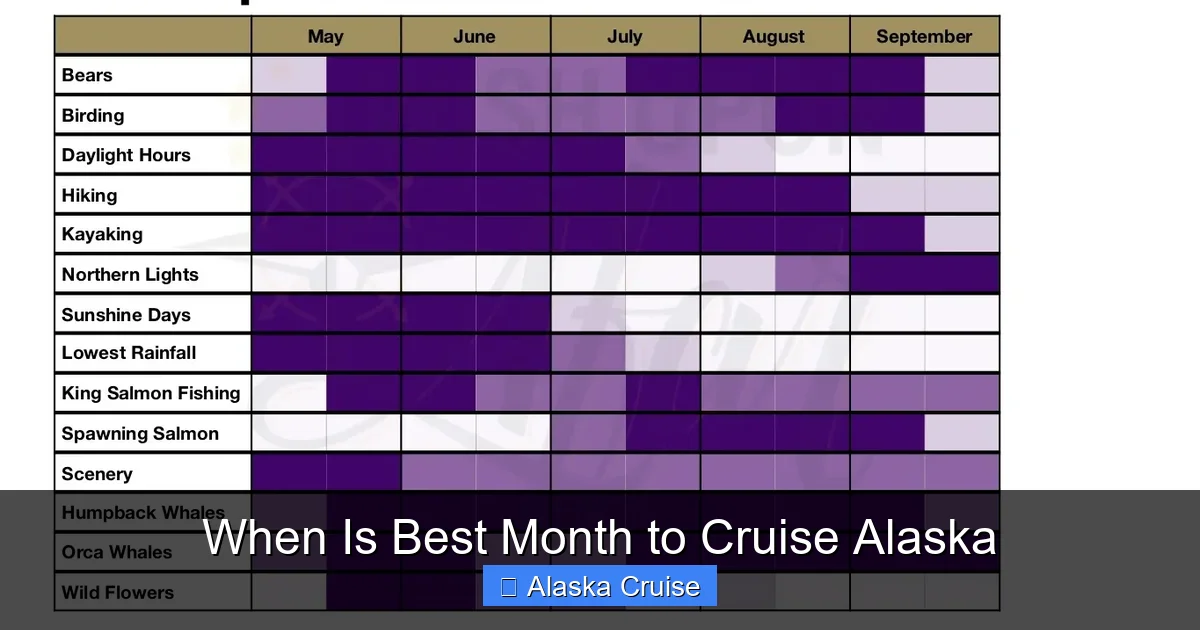
Planning an Alaska cruise? The best month to cruise Alaska is typically July, offering warm weather, long daylight hours, and peak wildlife activity. However, June and August also offer unique advantages, from lower prices to stunning fall colors. Choosing the right time depends on your priorities—whether it’s calmer seas, fewer tourists, or the chance to see bears and whales.
Key Takeaways
- July is the most popular month to cruise Alaska due to warm temperatures, long days, and abundant wildlife viewing opportunities.
- June offers longer daylight and fewer crowds than July, making it ideal for travelers seeking a balance of good weather and value.
- August brings fall colors and active wildlife, especially bears fishing for salmon, but weather can be more unpredictable.
- May and September are shoulder months with lower prices and fewer tourists, but shorter days and cooler temperatures.
- Wildlife sightings vary by month—whales are common in June and July, while bears are more active in August and September.
- Weather plays a big role—July and August are warmest, but rain is possible any time; pack layers regardless of when you go.
- Shore excursions fill up fast in peak season, so book early if traveling in June, July, or August.
📑 Table of Contents
- When Is Best Month to Cruise Alaska? A Complete Guide
- Understanding Alaska’s Cruise Season
- May: The Quiet Start to the Season
- June: Long Days and Lush Landscapes
- July: Peak Season with Peak Experiences
- August: Fall Colors and Bear Season
- September: The Quiet Farewell
- How to Choose the Best Month for Your Cruise
- Final Thoughts: Making the Most of Your Alaska Cruise
When Is Best Month to Cruise Alaska? A Complete Guide
So, you’re dreaming of glaciers calving into icy waters, bald eagles soaring above dense forests, and the crisp mountain air filling your lungs. An Alaska cruise promises all that and more—but timing is everything. With only a short summer season, knowing the best month to cruise Alaska can make or break your experience.
Alaska’s cruise season runs from May through September, a narrow window when the weather is mild enough and the days long enough to explore this vast, wild frontier. But within those five months, conditions vary dramatically. Some travelers want warm weather and bustling ports, while others prefer solitude and lower prices. The truth is, there’s no single “perfect” month—only the best month for *your* ideal trip.
In this guide, we’ll break down each month of the Alaska cruise season, from the early thaw of May to the golden hues of September. You’ll learn about weather patterns, wildlife activity, crowd levels, pricing, and what to expect on shore excursions. Whether you’re a first-time cruiser or a seasoned traveler, this guide will help you pick the ideal time for your Alaskan adventure.
Understanding Alaska’s Cruise Season

Visual guide about When Is Best Month to Cruise Alaska
Image source: d23n7ahjfnjotp.cloudfront.net
Alaska’s cruise season is short—just five months long—but it’s packed with natural wonders and unforgettable experiences. Most major cruise lines, including Holland America, Princess, Norwegian, and Royal Caribbean, operate voyages between late May and early September. This timeframe aligns with the region’s brief summer, when temperatures are mild, daylight is abundant, and wildlife is most active.
The season kicks off in May, when snow is still melting in some areas and daylight hours are rapidly increasing. By June, the landscape is lush and green, and the cruise ships begin arriving in full force. July and August are peak months, with the warmest weather and the most tourists. September marks the tail end of the season, with fewer crowds and the first hints of fall color.
One of the biggest draws of an Alaska cruise is the extended daylight. During the summer months, especially in June and July, you’ll experience nearly 18 to 20 hours of daylight in places like Juneau and Ketchikan. This means more time to explore, take excursions, and soak in the scenery—even if you’re not an early riser.
But with great daylight comes great responsibility—packing the right gear. Even in summer, Alaska’s weather can be unpredictable. Rain is common, and temperatures can swing from chilly in the morning to pleasantly warm in the afternoon. Layering is key, and waterproof outerwear is a must.
Why Timing Matters for Your Alaska Cruise
Choosing the right month isn’t just about weather—it’s about matching your travel style to the season. Are you looking for a family-friendly trip with lots of activities? July might be your best bet. Want to avoid crowds and save money? Consider May or September. Love wildlife photography? August offers prime bear-watching opportunities.
Timing also affects what you’ll see on your cruise. Glaciers are most impressive in early summer, before meltwater has carved deep crevasses. Whale sightings peak in June and July, while salmon runs—and the bears that follow them—are strongest in August and September. Even the colors of the landscape change: June is lush and green, while September brings golden aspens and red fireweed.
Ultimately, the best month to cruise Alaska depends on what you value most: comfort, cost, solitude, or spectacle. Let’s dive into each month to help you decide.
May: The Quiet Start to the Season
May is the unofficial kickoff to Alaska’s cruise season, and it’s a time of transition. Snow is still melting in some inland areas, and the landscape is slowly waking up from winter. While it’s not the most popular time to visit, May offers a unique charm for travelers who don’t mind cooler weather and shorter days.
Temperatures in May typically range from the mid-40s to low 60s°F (7–16°C), depending on your location. Coastal towns like Ketchikan and Juneau are milder, while interior regions like Skagway can still feel brisk. Rain is common, so waterproof jackets and sturdy shoes are essential.
One of the biggest advantages of cruising in May is the lack of crowds. Most tourists haven’t arrived yet, so you’ll have more space on the ship, shorter lines at ports, and a more relaxed pace. Shore excursions are easier to book, and you might even get a discount on last-minute deals.
Wildlife sightings are hit-or-miss in May. Some migratory birds have returned, and you might spot early-season whales, but many animals are still adjusting to the changing season. However, the glaciers are often at their most dramatic—less meltwater means cleaner ice and more striking blue hues.
Pros and Cons of Cruising in May
Cruising in May has its perks, but it’s not for everyone. Here’s what to consider:
- Pros: Lower prices, fewer crowds, dramatic glacier views, and a sense of being among the first to explore the season.
- Cons: Cooler temperatures, unpredictable weather, shorter daylight hours (around 16–17 hours), and limited wildlife activity.
If you’re a budget-conscious traveler or someone who values peace and quiet over perfect weather, May could be a great choice. Just be prepared for variable conditions and pack accordingly.
June: Long Days and Lush Landscapes
June is when Alaska truly comes alive. The snow has melted, wildflowers are blooming, and the days are long—up to 18 hours of daylight in some areas. This month strikes a sweet balance between good weather, fewer crowds than July, and vibrant natural beauty.
Temperatures in June average between 50°F and 65°F (10–18°C), making it comfortable for outdoor activities like hiking, kayaking, and whale watching. Rain is still possible, but showers are usually brief and followed by sunshine.
One of the biggest draws of June is the wildlife. Humpback whales, orcas, and sea lions are commonly spotted in coastal waters. On land, bears are active, and you might see them foraging in meadows or along riverbanks. Birdwatchers will delight in the return of puffins, eagles, and a variety of seabirds.
Ports like Juneau, Ketchikan, and Skagway are bustling but not overcrowded. You’ll have your pick of shore excursions, from glacier hikes to dog sledding on ice fields. Many cruise lines also offer special June itineraries that include stops in lesser-known towns like Haines or Wrangell.
Why June Might Be the Best Month to Cruise Alaska
For many travelers, June offers the ideal mix of comfort, value, and natural beauty. You get the long days and active wildlife of peak season without the July crowds. Plus, prices are often lower than in July and August, making it a smart choice for families and budget travelers.
If you’re looking for a well-rounded Alaska experience—great weather, plenty to do, and a chance to see wildlife—June is hard to beat. Just remember to book excursions early, as popular tours like whale watching and glacier trekking can fill up quickly.
July: Peak Season with Peak Experiences
July is the most popular month to cruise Alaska—and for good reason. It’s warm, sunny, and full of life. With average temperatures ranging from 55°F to 70°F (13–21°C), July offers the most comfortable weather of the season. Daylight stretches to nearly 19 hours in some areas, giving you plenty of time to explore.
This is also the height of the tourist season. Ports are busy, excursions are in high demand, and cruise ships are often at full capacity. If you’re looking for a lively, action-packed trip with lots of fellow travelers, July is perfect.
Wildlife is abundant in July. Whales are frequently seen breaching near the ship, and bears are active in national parks like Glacier Bay and Tongass. Salmon are beginning to run, attracting birds and marine life to rivers and streams.
Glaciers are also impressive in July, though some melting may have occurred. Still, the sight of a massive iceberg calving into the ocean is unforgettable—and July offers some of the best views.
Tips for Cruising in July
With so many people traveling in July, planning ahead is crucial. Book your cruise and shore excursions as early as possible—ideally 6–12 months in advance. Popular tours like flightseeing over Denali or visiting the Mendenhall Glacier can sell out months ahead.
Pack for warm weather, but don’t forget layers. Evenings can be cool, especially on deck or during excursions. And while July is the driest month, rain is still possible, so a waterproof jacket is a must.
If you’re flexible with dates, consider traveling in early July rather than mid-month. You’ll avoid some of the peak crowds and may find better pricing.
August: Fall Colors and Bear Season
August is a transitional month in Alaska. The summer crowds begin to thin, but the weather remains pleasant, with temperatures ranging from 50°F to 68°F (10–20°C). The biggest draw? Wildlife—especially bears.
As salmon return to rivers to spawn, brown bears and black bears gather along streams to feed. This is one of the best times of year to see bears in action, particularly in places like Katmai National Park or along the Brooks River. Many cruise lines offer bear-viewing excursions, and August is prime time for these trips.
The landscape also begins to change. While most of Alaska stays green through August, you’ll start to see hints of fall color—golden aspens, red fireweed, and yellow willow. By late August, the scenery is especially stunning, with vibrant hues contrasting against the deep blue of glaciers and water.
Whale sightings are still common in August, though slightly less frequent than in June and July. However, orcas and humpbacks can still be spotted, especially in areas like Icy Strait Point and Frederick Sound.
What to Expect in August
August offers a unique blend of summer comfort and early fall beauty. It’s a great time for photographers, wildlife enthusiasts, and travelers who want a quieter experience than July.
However, weather can be more unpredictable in August. Rain is more likely, and temperatures can drop, especially in the evenings. Some high-elevation excursions, like helicopter tours, may be canceled due to fog or wind.
Still, for many, the chance to see bears and enjoy the changing seasons makes August a top choice. Just be sure to pack warm layers and rain gear.
September: The Quiet Farewell
September marks the end of the cruise season, and it’s a time of quiet beauty. The crowds have disappeared, prices are lower, and the landscape is painted in autumn colors. While daylight hours are shorter—around 12–14 hours—the scenery is breathtaking.
Temperatures in September range from 40°F to 60°F (4–15°C), so it’s noticeably cooler than summer months. Rain is common, and snow is possible at higher elevations. But for travelers who don’t mind bundling up, September offers a peaceful and scenic experience.
Wildlife is still active. Bears are feasting on late-season salmon, and you might spot moose, mountain goats, and migratory birds. Whale sightings are less common, but not impossible—especially in early September.
One of the biggest advantages of cruising in September is the value. Cruise fares are often discounted, and you’ll have more space on the ship and in ports. Shore excursions are easier to book, and you might even get last-minute upgrades.
Is September Worth It?
September is ideal for travelers who prioritize solitude, savings, and scenic beauty over warm weather. It’s also a great time for photographers and nature lovers who want to capture Alaska’s fall colors.
However, some attractions may begin to close in late September, and weather-related delays are more likely. If you’re set on specific excursions, confirm availability in advance.
For a peaceful, budget-friendly Alaska cruise with stunning scenery, September is a hidden gem.
How to Choose the Best Month for Your Cruise
So, which month is truly the best? It depends on your priorities.
If you want the warmest weather, longest days, and most wildlife activity, July is your best bet. It’s the most popular month for a reason.
If you prefer fewer crowds and lower prices but still want great weather and wildlife, June offers an excellent balance.
For bear lovers and photographers, August is ideal, with active wildlife and early fall colors.
Budget travelers and those seeking solitude should consider May or September, when prices are lower and the pace is slower.
No matter when you go, pack layers, bring rain gear, and book excursions early—especially if traveling in peak season.
Final Thoughts: Making the Most of Your Alaska Cruise
An Alaska cruise is a once-in-a-lifetime experience, and choosing the right month can enhance every moment. Whether you’re marveling at glaciers, spotting whales, or hiking through ancient forests, the timing of your trip shapes what you’ll see and do.
While July may be the best month to cruise Alaska for many, the “best” time is ultimately the one that fits your travel style, budget, and interests. With careful planning and realistic expectations, any month from May to September can deliver an unforgettable adventure.
So start dreaming, start planning, and get ready to explore the Last Frontier—on your terms, at your perfect time.
Frequently Asked Questions
What is the best month to cruise Alaska for wildlife?
The best months for wildlife are June, July, and August. June and July are ideal for whale watching, while August offers the best bear-viewing opportunities as salmon return to rivers. Each month has unique animal activity, so choose based on what you want to see most.
Is it cold on an Alaska cruise in July?
No, July is one of the warmest months, with temperatures typically between 55°F and 70°F (13–21°C). However, it can still feel chilly on the water or in the evenings, so pack layers and a light jacket.
Can you see the Northern Lights on an Alaska cruise?
It’s very unlikely. The Northern Lights are best seen in winter months with long, dark nights. Alaska’s cruise season runs in summer, when there’s nearly 20 hours of daylight, making aurora sightings nearly impossible.
Are Alaska cruises expensive in August?
August prices are generally lower than July but higher than May or September. You may find deals, especially in late August, as the season winds down. Booking early can help secure better rates.
Do I need to book shore excursions in advance?
Yes, especially if traveling in June, July, or August. Popular tours like whale watching, glacier hikes, and bear viewing sell out quickly. Booking 6–12 months ahead ensures you get your top choices.
What should I pack for an Alaska cruise?
Pack layers, including a waterproof jacket, warm fleece, quick-dry pants, and sturdy walking shoes. Don’t forget sunglasses, sunscreen, a hat, and binoculars for wildlife viewing. Even in summer, weather can change quickly.