Choosing the right binoculars for an Alaska cruise can make or break your wildlife experience. With vast landscapes, distant marine life, and unpredictable weather, you need optics that deliver clarity, durability, and comfort—without weighing you down.
Planning an Alaska cruise is like preparing for an adventure into one of Earth’s last true wildernesses. From towering glaciers calving into icy fjords to pods of humpback whales breaching near your ship, the sights are nothing short of spectacular. But here’s the catch: much of this magic happens far from shore—or just beyond the naked eye. That’s why bringing the right pair of binoculars isn’t just a nice-to-have—it’s a game-changer.
Imagine standing on the deck at dawn, wrapped in a cozy jacket, scanning the misty coastline for a grizzly bear foraging along the shore. Or catching the flash of a sea otter’s flipper as it dives beneath kelp forests. Without quality optics, these moments might blur into distant smudges. But with the right binoculars, you’ll see every ripple in the water, every feather on a bald eagle’s wing, and every crack in a glacier’s face. The difference between ordinary and unforgettable often comes down to what’s in your hands.
So how do you choose? Not all binoculars are created equal—especially when you’re dealing with Alaska’s unique environment. You need gear that handles cold temps, salty air, sudden rain, and constant motion on a moving vessel. Plus, you want something comfortable enough to use for hours without straining your neck or hands. In this guide, we’ll walk you through exactly what to look for, which models deliver real-world performance, and why certain features matter more than others when you’re cruising through the Last Frontier.
Key Takeaways
- 8×42 binoculars are ideal for Alaska cruises: They offer a balance of magnification, light gathering, and field of view perfect for spotting whales, eagles, and glaciers.
- Waterproof and fog-proof construction is essential: Alaska’s damp, cold climate demands optics sealed with O-rings and filled with nitrogen or argon to prevent internal fogging.
- Compact and lightweight models enhance comfort: You’ll be carrying them for hours, so prioritize portability without sacrificing image quality.
- Look for multi-coated or fully multi-coated lenses: These improve brightness and color accuracy in low-light conditions common in northern latitudes.
- Stabilization features help on moving ships: Image-stabilized binoculars reduce shake from boat motion, making it easier to track fast-moving wildlife.
- Wide field of view aids in scanning large areas: Essential for spotting breaching whales or bears along rugged coastlines.
- Try before you buy when possible: Comfort, grip, and ease of focus adjustment matter just as much as specs.
📑 Table of Contents
Why Binoculars Matter on an Alaska Cruise
Alaska’s coastline stretches over 6,600 miles—more than all other U.S. states combined. Much of it is remote, rugged, and teeming with wildlife that rarely comes close to shore. On a cruise, your ship may glide within a few hundred yards of a glacier wall or a sea lion colony, but many of the most thrilling sightings happen farther out. Whales migrate along migration corridors miles offshore. Eagles nest high in Sitka spruce trees. And bears roam tidal flats that are only visible from a distance.
Without binoculars, you’re essentially watching a nature documentary on a tiny screen. With them? You’re front-row center at a live, 3D IMAX experience. Good binoculars don’t just magnify—they reveal texture, color, and behavior. You’ll notice the way a puffin dives headfirst into the water, the social dynamics of a sea otter raft, or the subtle shift in a glacier’s blue hue as sunlight hits it at different angles.
Moreover, Alaska cruises often include guided shore excursions—kayaking among icebergs, hiking through temperate rainforests, or zodiac tours into narrow inlets. In these settings, binoculars let you observe wildlife without disturbing it. Getting too close can stress animals or even be dangerous (think: mother bears with cubs). Binoculars give you that intimate view while maintaining a respectful distance.
And let’s not forget the weather. Alaska is famously moody. One minute it’s sunny and calm; the next, fog rolls in or rain sheets down. Your binoculars need to keep up. Foggy lenses or waterlogged internals ruin the experience faster than a dropped ice cream on a hot day. That’s why durability and weather resistance aren’t luxuries—they’re necessities.
Key Features to Look for in Alaska Cruise Binoculars

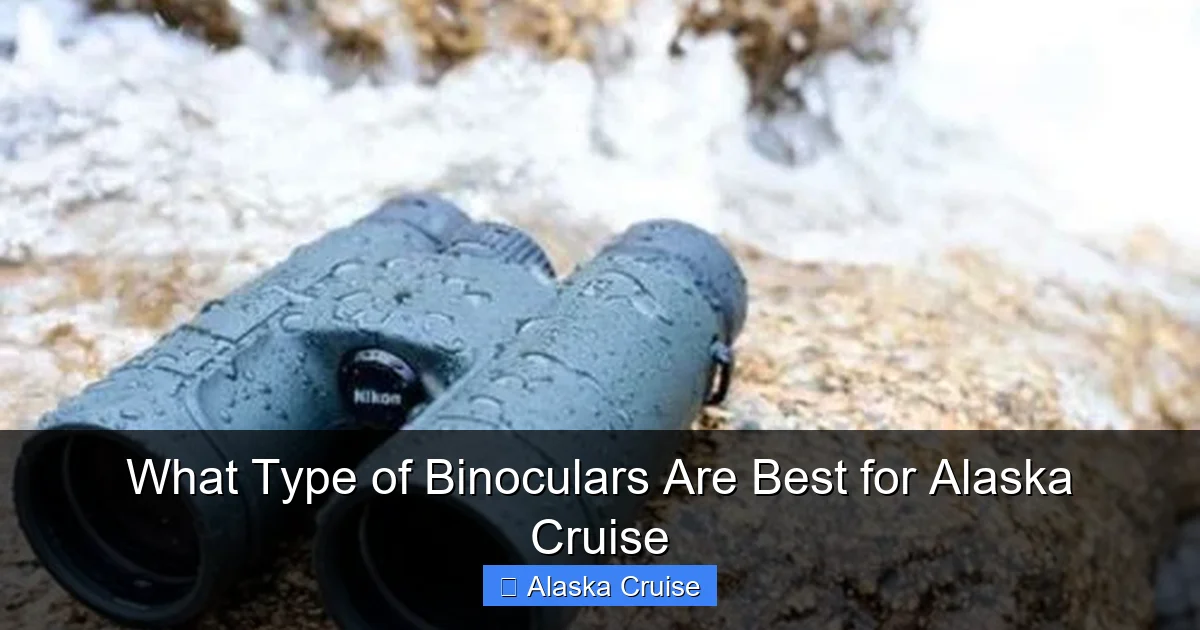
Visual guide about What Type of Binoculars Are Best for Alaska Cruise
Image source: cruisediscover.com
When shopping for binoculars for your Alaska adventure, it’s easy to get overwhelmed by numbers, acronyms, and marketing claims. But focus on these five core features, and you’ll be miles ahead.
Magnification and Objective Lens Size
Binoculars are typically labeled with two numbers, like 8×42 or 10×50. The first number is magnification (how many times closer the object appears), and the second is the diameter of the objective lens in millimeters (which determines how much light enters).
For Alaska cruises, **8×42 is the sweet spot**. Here’s why:
– **8x magnification** gives you enough zoom to see details on distant whales or birds without making the image too shaky. Higher magnifications (like 10x or 12x) amplify hand movement, which is especially problematic on a moving ship.
– **42mm objective lenses** gather plenty of light for early morning or overcast conditions—common in Alaska—while keeping the binoculars reasonably compact.
That said, if you prioritize ultra-bright images in low light (say, during a misty dawn in Glacier Bay), consider 10×42 or even 10×50. But be prepared for slightly heavier weight and a narrower field of view.
Avoid anything below 8x unless you’re using them primarily for close-range viewing from a stable dock. And steer clear of super-high magnifications (15x+) unless you plan to mount them on a tripod—which isn’t practical on a cruise ship.
Optical Coatings
Lens coatings might sound like tech jargon, but they directly impact image quality. Look for **fully multi-coated lenses**, which means all air-to-glass surfaces have multiple layers of anti-reflective coating. This maximizes light transmission, reduces glare, and delivers brighter, sharper, more color-accurate images.
In Alaska’s often dim or diffuse lighting—especially under cloud cover or near water—this makes a huge difference. You’ll see richer blues in glacier ice, clearer contrast in forest shadows, and more natural tones in animal fur.
Cheaper binoculars may have “coated” or “multi-coated” lenses, but these usually mean only some surfaces are treated. Fully multi-coated is the gold standard for serious wildlife viewing.
Waterproof and Fog-Proof Design
Alaska doesn’t mess around with moisture. Salt spray, rain, snow, and high humidity are daily realities. Your binoculars must be **fully waterproof** (look for IPX7 rating or similar) and **fog-proof**.
Fog-proofing is achieved by sealing the barrels with O-rings and filling the interior with inert gas like nitrogen or argon. This prevents internal condensation when temperatures change rapidly—like moving from a warm cabin to a chilly deck.
Non-fog-proof binoculars can become useless in minutes during a sudden weather shift. Don’t risk it.
Field of View and Eye Relief
**Field of view (FOV)** refers to how wide an area you can see through the binoculars at a set distance (usually expressed as feet at 1,000 yards). A wider FOV helps you scan large areas quickly—critical when tracking a whale pod or searching for bears along a shoreline.
For Alaska, aim for at least 330 feet at 1,000 yards. Compact roof-prism binoculars often have narrower FOVs, so check specs carefully.
**Eye relief** is the distance your eye can be from the eyepiece while still seeing the full image. If you wear glasses, look for at least 15mm of eye relief. Many quality models offer twist-up eyecups that accommodate both glassed and non-glassed users comfortably.
Build Quality and Ergonomics
You’ll likely carry your binoculars for hours each day. They should feel balanced in your hands, with rubber armor for grip and shock absorption. Avoid flimsy plastic bodies—opt for magnesium or polycarbonate chassis for durability without excessive weight.
Also, test the focus wheel. It should turn smoothly but not too loosely. Some models include a diopter adjustment (usually on the right eyepiece) to compensate for differences between your eyes—a small but valuable feature for extended use.
Top Binocular Recommendations for Alaska Cruises
With so many options on the market, we’ve narrowed it down to three standout categories based on real-world performance and traveler feedback.
Best Overall: 8×42 Roof Prism Binoculars
Models like the **Vortex Optics Diamondback HD 8×42** or **Nikon Monarch M7 8×42** excel in this category. They offer excellent optics, rugged build, and user-friendly design—all at a reasonable price (typically $200–$350).
These binoculars are lightweight (around 24 oz), easy to hold steady, and deliver bright, sharp images even in overcast conditions. Their wide field of view (over 420 ft at 1,000 yds for the Vortex) makes scanning coastlines effortless. Both are fully waterproof, fog-proof, and come with lens caps and a comfortable neck strap.
Perfect for first-time buyers or seasoned travelers who want reliability without breaking the bank.
Best for Low Light: 10×42 or 10×50 Binoculars
If your cruise includes early-morning wildlife tours or you’re cruising in late summer/early fall when daylight fades earlier, consider stepping up to 10x magnification.
The **Zeiss Terra ED 10×42** or **Leica Trinovid HD 10×42** offer superb low-light performance thanks to high-quality glass and advanced coatings. The larger exit pupil (4.2mm vs. 5.25mm on 10×50) helps your eyes adjust quickly in changing light.
The **Swarovski EL 10×50** is the luxury pick—exceptional clarity, but at a premium price (over $2,500). Only worth it if you’re a serious birder or photographer.
Note: 10x binoculars require a steadier hand. If you’re prone to shaky hands or will be on a very active ship, stick with 8x.
Best for Stability: Image-Stabilized Binoculars
On choppy seas or when tracking fast-moving wildlife, image stabilization can be a lifesaver. The **Fujinon Techno-Stabi TS-X 14×40** or **Canon 10×30 IS** use gyroscopic sensors to counteract hand shake and boat motion.
These are heavier (around 30–35 oz) and require batteries, but the rock-steady view is unmatched. Ideal for whale watching or photographing from a moving zodiac.
Downsides: higher cost ($600–$1,200), shorter battery life, and added weight. But if stability is your top concern, they’re worth the investment.
Best Budget Option: 8×42 Under $150
Don’t have room in your budget? The **Celestron Nature DX 8×42** delivers surprising performance for under $150. It’s waterproof, fog-proof, and has fully multi-coated lenses. Image quality isn’t quite on par with premium models, but it’s more than adequate for casual wildlife spotting.
Great for families or travelers who want decent optics without overspending.
Practical Tips for Using Binoculars on Your Cruise
Owning great binoculars is only half the battle—you also need to use them effectively.
Pack Smart
Store your binoculars in a padded case or pouch. Bring a microfiber cloth for cleaning lenses (never use clothing—it scratches coatings). Consider a rain cover or neoprene harness instead of a neck strap to reduce strain and prevent drops overboard.
Practice Before You Go
Spend time familiarizing yourself with the focus wheel, diopter, and eyecups at home. Practice scanning open spaces (like a park or lake) to build muscle memory. On the ship, you won’t have time to figure out basics while a whale breaches nearby.
Use the Ship’s Rail for Support
Lean against the railing or rest your elbows on it to steady your view. Even small supports dramatically reduce shake, especially with higher magnifications.
Share the View
Binoculars spark connection. Offer to let fellow passengers take a look—it’s a great way to meet people and share excitement. Just remember to clean the eyepieces afterward!
Respect Wildlife Distances
Even with powerful optics, avoid encouraging ships or guides to get too close to animals. Binoculars let you enjoy wildlife ethically—use them to observe, not intrude.
What to Avoid When Choosing Binoculars
Not all binoculars are suitable for Alaska. Steer clear of:
– **Cheap toy binoculars**: Often labeled “20×50” or “30×60,” these have terrible optics, no coatings, and break easily.
– **Non-waterproof models**: A single splash can ruin them.
– **Heavy, bulky designs**: You won’t want to carry them for long.
– **Narrow field of view**: Makes spotting moving animals frustrating.
– **Plastic hinges and bodies**: Prone to cracking in cold temps.
Also, avoid buying binoculars onboard the ship. Prices are inflated, selection is limited, and you can’t test them properly.
Final Thoughts: Make Every Moment Count
An Alaska cruise is a once-in-a-lifetime journey through raw, untamed beauty. The right binoculars transform fleeting glimpses into vivid, lasting memories. They let you connect deeply with the landscape and its inhabitants—without leaving a trace.
Invest in a quality pair that matches your needs, practice using them beforehand, and treat them with care. When you’re standing on the deck, binoculars in hand, watching a glacier calve with thunderous cracks or a pod of orcas slicing through emerald waters, you’ll be glad you did.
Because in Alaska, the difference between seeing and truly witnessing lies in the lenses you choose.
Frequently Asked Questions
What magnification is best for Alaska cruise binoculars?
The ideal magnification for Alaska cruises is 8x. It provides enough zoom to see distant wildlife clearly while minimizing hand shake—especially important on a moving ship. Higher magnifications like 10x can work but require steadier hands or stabilization.
Do I need waterproof binoculars for an Alaska cruise?
Absolutely. Alaska’s weather is unpredictable, with frequent rain, fog, and salt spray. Waterproof binoculars prevent internal damage and ensure reliable performance in wet conditions. Always choose models rated IPX7 or higher.
Can I use binoculars with glasses on a cruise?
Yes, as long as the binoculars have long eye relief (at least 15mm) and adjustable eyecups. Twist-up or fold-down eyecups allow glassed users to see the full field of view comfortably without removing their glasses.
Are image-stabilized binoculars worth it on a cruise ship?
They can be, especially if you’re prone to shaky hands or plan to do a lot of whale watching from a moving zodiac. Stabilized models reduce blur from boat motion, but they’re heavier and require batteries. For most travelers, high-quality 8x42s are sufficient.
What’s the difference between 8×42 and 10×50 binoculars?
8×42 offers better stability and wider field of view, ideal for scanning large areas. 10×50 provides higher magnification and brighter images in low light but is heavier and more prone to shake. Choose based on your priority: comfort and ease of use (8×42) or maximum detail in dim conditions (10×50).
Should I buy binoculars before my Alaska cruise?
Yes. Buying beforehand lets you compare models, test comfort and optics, and ensure you get the right features. Shipboard shops often have limited selection and higher prices, and you won’t have time to learn your binoculars during peak wildlife moments.