
The best time for an Alaskan cruise is typically between late May and early September, when weather is mild, wildlife is active, and daylight lasts nearly all day. This window offers the ideal balance of comfort, accessibility, and natural beauty, making it the prime season for unforgettable experiences like glacier viewing and whale watching.
Dreaming of towering glaciers, breaching whales, and snow-capped mountains under endless daylight? An Alaskan cruise delivers all that and more—but timing is everything. With dramatic seasonal shifts and a narrow window of ideal conditions, choosing the right time to sail can make or break your adventure. Whether you’re a first-time cruiser or a seasoned traveler, understanding the rhythms of Alaska’s climate, wildlife, and tourism season is key to crafting the perfect voyage.
Alaska’s cruise season is short but spectacular, stretching roughly from May to September. Outside this window, most ports close, weather turns harsh, and wildlife retreats. But within those five months, each period offers a unique flavor of the Last Frontier. From the quiet beauty of early spring to the bustling energy of peak summer, your experience will vary greatly depending on when you go. The best time for an Alaskan cruise isn’t just about comfort—it’s about matching your travel style, budget, and interests to the season’s offerings.
So, when should you book your Alaskan escape? The answer depends on what you want to see and do. Are you chasing the Northern Lights? That’s a winter pursuit, not a cruise season highlight. But if you’re after glacier views, wildlife encounters, and smooth sailing, summer is your sweet spot. Let’s dive into the details of each month, so you can decide which Alaskan adventure suits you best.
Key Takeaways
- Peak season runs from June to August: This is when weather is warmest, ports are fully operational, and wildlife sightings are most frequent.
- May and September offer quieter, budget-friendly alternatives: Fewer crowds, lower prices, and unique seasonal changes make these shoulder months appealing.
- Wildlife viewing peaks in July and August: Humpback whales, orcas, bears, and bald eagles are most active during summer months.
- Glacier calving is best seen in July: Warmer temperatures increase glacial activity, offering dramatic ice-breaking moments.
- Daylight lasts up to 18–20 hours in summer: Extended daylight allows for more sightseeing and onboard activities.
- Weather varies by region and month: Coastal areas are milder, while inland excursions may be cooler—pack layers regardless of when you go.
- Book early for peak season, consider last-minute deals for shoulder months: Planning ahead secures better cabins and itineraries, while late bookings can yield discounts.
📑 Table of Contents
Understanding Alaska’s Cruise Season
Alaska’s cruise season is tightly bound to its extreme climate. The state experiences long, dark winters and short, intense summers. Cruise lines operate from mid-May to early October, with the majority of sailings concentrated between June and August. This narrow window ensures passengers enjoy mild weather, open ports, and accessible excursions.
The season typically kicks off in May, when the first ships arrive in ports like Juneau, Ketchikan, and Skagway. By June, the full fleet is sailing, and by July and August, it’s peak season—crowded but vibrant. September sees a gradual wind-down, with fewer ships and cooler temperatures, but still plenty of beauty. October is generally too cold and dark for most cruise operations, though some land tours may still run.
One of the biggest factors influencing the season is daylight. During summer, Alaska enjoys nearly 24-hour daylight in the northern regions—known as the “land of the midnight sun.” In Juneau, for example, sunset can be as late as 10:30 PM in June, and it never truly gets dark. This extended daylight allows for longer shore excursions, more time on deck, and unforgettable evening views of glaciers and fjords.
Another key consideration is weather. While Alaska is often associated with cold and snow, summer temperatures in coastal cruise ports are surprisingly mild. Average highs range from 55°F to 65°F (13°C to 18°C), with occasional warmer days. However, rain is common—especially in the southeast, like Ketchikan, which is one of the rainiest cities in the U.S. Packing waterproof gear and layers is essential, no matter when you go.
Why the Season Is So Short
Alaska’s short cruise season is a direct result of its geography and climate. The state’s coastal regions are accessible by ship only when waters are ice-free and ports are operational. In winter, many towns shut down, roads become impassable, and wildlife migrates or hibernates. Cruise lines rely on infrastructure—like docks, tour operators, and supply chains—that simply aren’t available year-round.
Additionally, the Alaskan Inside Passage, the most popular cruise route, winds through narrow channels and fjords that can be treacherous in rough weather. Summer offers calmer seas and better visibility, making navigation safer and more enjoyable. By September, storms become more frequent, and by October, most ships have departed for warmer climates.
Regional Differences Matter
Not all parts of Alaska experience the same conditions at the same time. The Inside Passage (including Ketchikan, Juneau, and Skagway) has a maritime climate—mild, wet, and relatively stable. In contrast, interior regions like Denali or Fairbanks can be much colder, even in summer. If your cruise includes land extensions, you’ll want to consider these differences when packing and planning.
For example, a cruise that ends in Anchorage might offer a train ride to Denali National Park. While the coast is warm and green, Denali could be 10–15°F cooler, with the possibility of snow at higher elevations. Always check the weather forecasts for both your cruise ports and any inland destinations.
Best Time for Wildlife Viewing
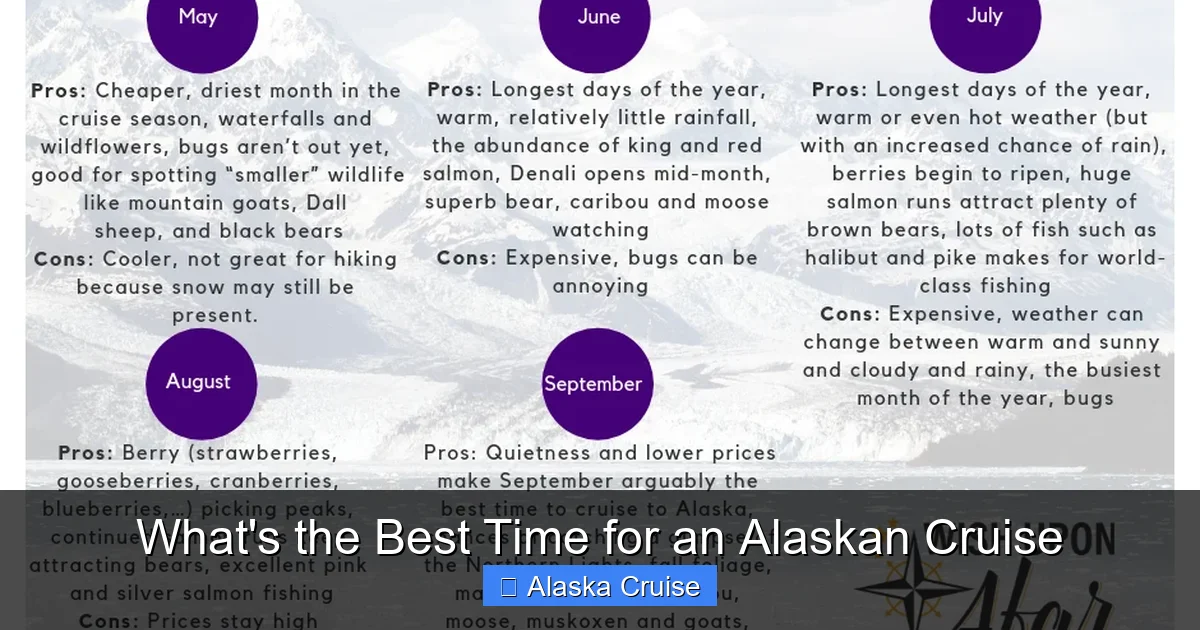
Visual guide about What’s the Best Time for an Alaskan Cruise
Image source: i.pinimg.com
One of the biggest draws of an Alaskan cruise is the chance to see wildlife in its natural habitat. From humpback whales to grizzly bears, Alaska is a wildlife lover’s paradise. But when is the best time to see these animals? The answer depends on the species and their seasonal behaviors.
Whales: July and August Are Prime
If whale watching is on your bucket list, aim for July or August. These months are peak feeding season for humpback whales, orcas, and gray whales, which migrate north to Alaskan waters to feast on krill and small fish. In places like Icy Strait Point or Glacier Bay, you can often see whales breaching, tail slapping, or even bubble-net feeding—a coordinated hunting technique used by humpbacks.
Many cruise lines offer whale-watching excursions, and some even have naturalists on board to point out marine life. For the best chances, choose a ship that sails through protected areas like Glacier Bay National Park, where whale activity is high and regulations limit ship traffic.
Bears: July Through September
For bear sightings, July through September is ideal. Coastal brown bears and black bears are most active during salmon runs, which peak in late summer. In places like Ketchikan or Haines, you can take guided tours to bear viewing platforms near rivers where salmon are spawning.
One of the most famous spots is Pack Creek on Admiralty Island, known as the “Fortress of the Bears.” Here, dozens of brown bears gather to fish. While access is limited and requires a permit, many cruise lines partner with local operators to offer bear-watching excursions. September is especially good, as bears are fattening up before hibernation and are more visible along riverbanks.
Birds and Other Wildlife
Alaska is also a birdwatcher’s dream. Puffins, bald eagles, and seabird colonies thrive along the coast. Puffins nest on rocky islands from May to August, with peak activity in June and July. Bald eagles are present year-round but are easiest to spot in summer when they’re feeding on salmon.
Other wildlife includes sea otters, sea lions, moose, and mountain goats. Sea otters are commonly seen floating on their backs in kelp beds, while mountain goats cling to steep cliffs in places like Tracy Arm Fjord. Moose are more common inland, so you’re more likely to see them on land tours than from the ship.
Glacier Viewing: When to See the Ice
No Alaskan cruise is complete without seeing a glacier. These massive rivers of ice carve through mountains and calve into the sea with thunderous crashes. But glacier activity varies by season, and timing can affect what you see.
Peak Calving Season: July
July is widely considered the best month for glacier viewing. Warmer temperatures increase meltwater, which lubricates the glaciers and causes more frequent calving events. In places like Hubbard Glacier or Tracy Arm, you might witness massive chunks of ice breaking off and crashing into the water—a sight that’s both beautiful and humbling.
Hubbard Glacier, one of the largest in North America, is a popular stop on many itineraries. It’s actively advancing, which means it frequently calves, creating icebergs that float down the bay. Ships often get within a few hundred yards, giving passengers an up-close view of the blue ice and towering walls.
Glacier Bay National Park
Glacier Bay is a UNESCO World Heritage Site and a highlight for many cruisers. The park is home to over a dozen active glaciers, including Margerie and Grand Pacific. The best time to visit is July, when the bay is ice-free and wildlife is abundant.
Cruise ships enter the park early in the morning to take advantage of calm waters and soft light. Naturalists on board provide commentary, explaining the geology and ecology of the area. You might see seals lounging on ice floes, puffins diving for fish, and even the occasional bear on the shoreline.
Tips for Glacier Viewing
– Book a cabin with a balcony: Glacier viewing is often done from the ship, and a private balcony gives you uninterrupted views and photo opportunities.
– Bring binoculars: Even from a distance, binoculars help you spot details like crevasses, wildlife, and calving events.
– Dress warmly: Even in summer, it can be chilly near glaciers. Bring a windproof jacket and gloves.
– Be patient: Calving is unpredictable. Sometimes you’ll see a big event right away; other times, you might wait hours. Enjoy the scenery and trust the experience.
Weather and Climate by Month
Weather plays a huge role in your Alaskan cruise experience. While summer is generally mild, conditions can vary widely depending on the month and region. Here’s a month-by-month breakdown to help you decide when to go.
May: The Quiet Start
May marks the beginning of the cruise season. Temperatures are cool, averaging 45°F to 55°F (7°C to 13°C), and rain is possible. However, the landscape is lush and green, and crowds are minimal. Wildlife is beginning to emerge, and some bears can be seen near rivers.
Pros: Lower prices, fewer tourists, beautiful spring scenery.
Cons: Some excursions may be limited, cooler weather, shorter daylight than summer.
June: The Sweet Spot
June is one of the best months for an Alaskan cruise. Weather is mild, daylight is long (up to 18 hours in some areas), and wildlife is active. Glaciers are accessible, and most ports and tours are fully operational.
Pros: Great weather, peak daylight, good wildlife viewing, fewer crowds than July.
Cons: Prices start to rise, popular cabins may sell out.
July: Peak Season
July is the busiest and most popular month. Temperatures are warmest, averaging 60°F to 70°F (15°C to 21°C), and rainfall is moderate. This is prime time for whale watching, glacier calving, and bear viewing.
Pros: Best weather, full range of excursions, vibrant atmosphere.
Cons: Highest prices, largest crowds, limited cabin availability.
August: Still Summer, But Changing
August remains a great time to cruise, with warm weather and active wildlife. However, the days are getting shorter, and some animals begin to prepare for migration. Fall colors start to appear in late August, especially in interior regions.
Pros: Good weather, still excellent wildlife, fewer crowds than July.
Cons: Prices remain high, some tours may start to wind down.
September: The Shoulder Season
September offers a quieter, more intimate experience. Temperatures cool to 50°F to 60°F (10°C to 15°C), and rain increases. However, the fall foliage is stunning, and wildlife is still visible—especially bears feeding on late salmon runs.
Pros: Lower prices, fewer crowds, beautiful autumn scenery.
Cons: Cooler weather, some excursions may be limited, shorter daylight.
Crowds, Prices, and Availability
Timing your cruise isn’t just about weather and wildlife—it’s also about logistics. Crowds, prices, and cabin availability vary significantly throughout the season.
Peak Season: June to August
These months are the busiest, with ships sailing at full capacity. Popular itineraries—like the classic 7-day Inside Passage route—sell out months in advance. Prices are at their highest, especially for balcony and suite cabins.
If you’re flexible with dates and cabin type, you might find last-minute deals, but don’t count on it. Booking 6–12 months ahead is recommended for peak season.
Shoulder Months: May and September
May and September offer significant savings. Cruise lines often discount fares to fill ships, and you’ll find better availability for premium cabins. These months are ideal for travelers seeking a more relaxed pace and lower costs.
However, be aware that some shore excursions may have reduced schedules or be unavailable. Always check with your cruise line about tour availability before booking.
Booking Tips
– Book early for peak season: Secure your preferred itinerary and cabin type.
– Consider a repositioning cruise: These one-way sailings (e.g., from Seattle to Vancouver) often have lower prices and unique routes.
– Look for package deals: Some lines offer airfare, hotels, and excursions bundled together.
– Sign up for alerts: Cruise deal websites and newsletters can notify you of sales and discounts.
Packing Tips for Any Time of Year
No matter when you go, packing smart is essential for an Alaskan cruise. The weather can change quickly, and layers are your best friend.
Essential Items
– Waterproof jacket and pants: Rain is common, especially in the southeast.
– Layered clothing: Thermal base layers, fleece, and a warm mid-layer.
– Comfortable walking shoes: For shore excursions and deck walks.
– Binoculars: For wildlife and glacier viewing.
– Sunglasses and sunscreen: The sun can be strong, even on cloudy days.
– Camera with extra batteries: Cold weather drains batteries fast.
Season-Specific Additions
– May and September: Add a warm hat, gloves, and a heavier coat.
– July and August: Bring lightweight clothing for warmer days, but keep layers handy.
Don’t Forget
– Motion sickness remedies (ginger chews, patches)
– Reusable water bottle
– Power adapter (if traveling internationally)
– Small backpack for excursions
Conclusion
So, what’s the best time for an Alaskan cruise? For most travelers, the answer lies between late May and early September, with June through August offering the ideal mix of weather, wildlife, and accessibility. July stands out as the peak month for glacier calving, whale watching, and bear sightings, while May and September provide quieter, more affordable alternatives with their own unique charms.
Ultimately, the best time depends on your priorities. Are you chasing the thrill of a calving glacier? July is your month. Prefer fewer crowds and lower prices? Consider May or September. No matter when you go, an Alaskan cruise promises breathtaking scenery, unforgettable wildlife encounters, and memories that will last a lifetime.
With proper planning, the right gear, and a sense of adventure, your Alaskan voyage will be nothing short of extraordinary. So pack your bags, grab your camera, and get ready to sail into one of the most beautiful places on Earth.
Frequently Asked Questions
What is the best month for an Alaskan cruise?
July is widely considered the best month for an Alaskan cruise due to warm weather, peak wildlife activity, and frequent glacier calving. However, June and August are also excellent choices with similar conditions.
Can you see the Northern Lights on an Alaskan cruise?
The Northern Lights are not typically visible during the cruise season (May–September) due to nearly 24-hour daylight. For aurora viewing, you’d need to visit in winter, which is outside the standard cruise window.
Is it cold on an Alaskan cruise in summer?
No, summer temperatures in coastal ports range from 55°F to 70°F (13°C to 21°C). However, it can feel cooler near glaciers or on deck, so layers and a waterproof jacket are recommended.
Are there mosquitoes on an Alaskan cruise?
Mosquitoes are more common in inland areas and during early summer (May–June). Coastal cruise ports have fewer mosquitoes, but it’s wise to bring insect repellent for land excursions.
Do I need a passport for an Alaskan cruise?
If your cruise departs and returns to the same U.S. port (e.g., Seattle or Vancouver), a passport is not always required—but it’s highly recommended. For international ports or air travel, a passport is mandatory.
Can you see glaciers from the ship?
Yes, many Alaskan cruises sail close to glaciers like Hubbard, Mendenhall, and those in Glacier Bay. Ships often slow down or stop for viewing, and some even offer guided commentary from naturalists.