Choosing the best Alaska cruise route depends on your travel style, time, and interests. Whether you prefer roundtrip voyages from Seattle or one-way journeys through the Inside Passage, each route offers unique access to glaciers, wildlife, and charming coastal towns.
Planning an Alaska cruise can feel overwhelming with so many routes, ports, and cruise lines to choose from. But don’t worry—you’re not alone. Every year, hundreds of thousands of travelers set sail to experience the raw beauty of America’s last frontier. From towering glaciers that calve into icy waters to pods of humpback whales breaching in the distance, Alaska delivers a once-in-a-lifetime adventure. The key to unlocking the best experience? Picking the right cruise route.
So, what’s the best Alaska cruise route? The answer isn’t one-size-fits-all. It depends on what you want to see, how much time you have, and how you like to travel. Some travelers crave the convenience of a roundtrip cruise that starts and ends in the same city. Others prefer a one-way journey that lets them explore Alaska’s interior by land after sailing the coast. Whether you’re a wildlife enthusiast, a history buff, or simply someone who loves stunning scenery, there’s a route tailored just for you.
In this guide, we’ll break down the top Alaska cruise routes, highlight must-see destinations, and share insider tips to help you choose the perfect voyage. We’ll cover everything from the classic Inside Passage to the dramatic Gulf of Alaska, plus expedition-style cruises that get you closer to nature than ever before. By the end, you’ll know exactly which route matches your travel dreams.
Key Takeaways
- Inside Passage routes are ideal for first-time cruisers, offering calm waters, lush rainforests, and frequent wildlife sightings.
- Gulf of Alaska itineraries provide access to iconic destinations like Glacier Bay and Hubbard Glacier, perfect for glacier lovers.
- Roundtrip cruises from Seattle or Vancouver offer convenience and often include ports like Juneau, Skagway, and Ketchikan.
- One-way cruises between Seattle and Seward (or Whittier) allow for deeper exploration and often include land tours in Denali National Park.
- Smaller ships and expedition cruises offer more intimate experiences, better access to remote areas, and expert naturalist guides.
- Best time to cruise Alaska is from late May to early September, with peak wildlife and weather in July and August.
- Consider your pace—shorter 7-day cruises cover highlights, while 10-14 day itineraries allow for more in-depth exploration.
📑 Table of Contents
- Understanding Alaska Cruise Routes: An Overview
- The Classic Inside Passage Route
- The Gulf of Alaska Route: Glaciers and Grandeur
- Expedition Cruises: Getting Closer to Nature
- Combining Cruise and Land: The Ultimate Alaska Experience
- Choosing the Right Cruise Line and Ship
- Best Time to Cruise Alaska
- Conclusion: Finding Your Perfect Alaska Cruise Route
Understanding Alaska Cruise Routes: An Overview
Alaska cruises generally fall into two main categories: Inside Passage routes and Gulf of Alaska routes. Each offers a distinct experience, shaped by geography, climate, and the types of ports you’ll visit. Understanding these differences is the first step in choosing the best Alaska cruise route for your trip.
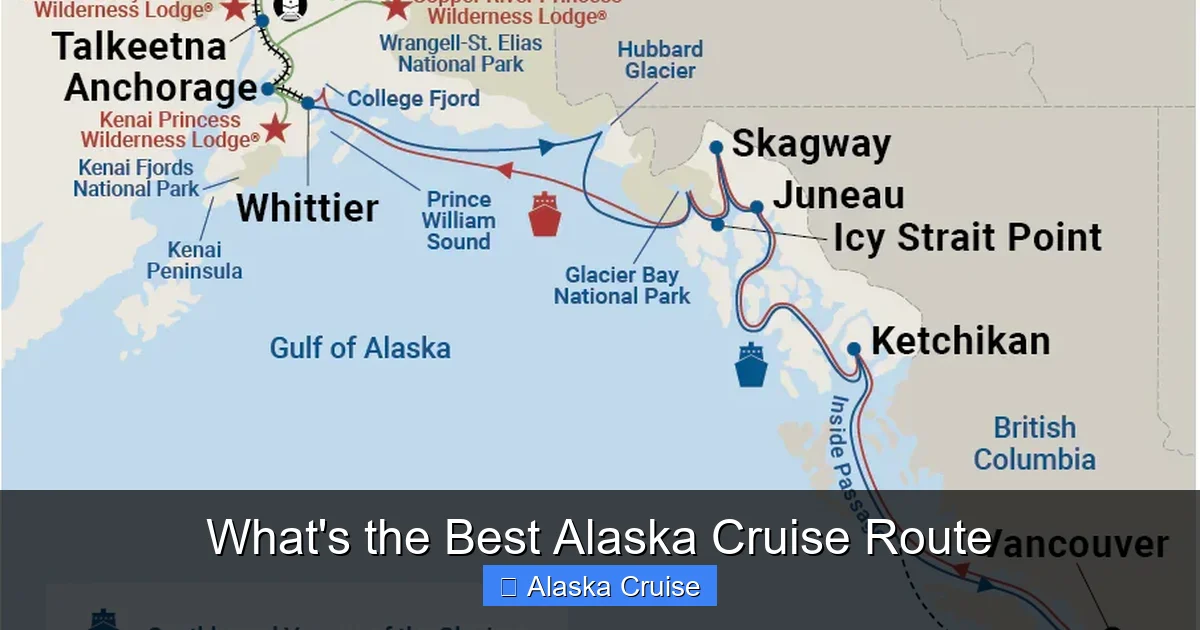
The Inside Passage is a narrow, winding waterway that hugs the Pacific coastline of British Columbia and southeastern Alaska. It’s known for its calm waters, dense temperate rainforests, and abundant wildlife. Most first-time cruisers opt for this route because it’s scenic, accessible, and packed with popular ports like Ketchikan, Juneau, and Skagway. These cruises often depart from Seattle or Vancouver and return to the same city after seven days.
In contrast, Gulf of Alaska itineraries venture further north and west, crossing the open waters of the Gulf of Alaska. These routes typically include glacier-heavy destinations like Glacier Bay National Park, Hubbard Glacier, and College Fjord. One-way cruises that start in Seattle or Vancouver and end in Seward or Whittier (near Anchorage) often follow this path. These trips are ideal for travelers who want to combine their cruise with a land tour of Denali National Park or other interior attractions.
Another option is the roundtrip Gulf cruise, which departs from and returns to ports like San Francisco or Los Angeles. These longer voyages (10–14 days) cover more ground and often include stops in British Columbia and the Pacific Northwest before reaching Alaska. While less common, they offer a broader coastal experience.
The Classic Inside Passage Route
Visual guide about What’s the Best Alaska Cruise Route
Image source: princess.com
If you’re new to Alaska cruising, the Inside Passage is likely your best bet. This route is the most popular for good reason—it’s scenic, family-friendly, and packed with iconic Alaskan experiences. Most Inside Passage cruises last seven days and follow a similar loop: departing from Seattle or Vancouver, visiting three to four ports in Alaska, and returning to the starting city.
One of the biggest advantages of the Inside Passage is the calm, protected waters. Unlike open-ocean routes, the passage is shielded by islands and mountains, making for smooth sailing—even for those prone to seasickness. This also means you’ll spend more time enjoying the views and less time feeling queasy.
Top Ports on the Inside Passage
Ketchikan is often the first stop and is known as the “Salmon Capital of the World.” Here, you can explore totem pole parks, visit historic Creek Street, or take a flightseeing tour over the Misty Fjords National Monument. Don’t miss the opportunity to watch bears fishing for salmon at nearby streams—many tours include this unforgettable experience.
Juneau, Alaska’s capital, is accessible only by boat or plane, which adds to its charm. It’s a gateway to the Mendenhall Glacier, a stunning 13-mile-long river of ice just 12 miles from downtown. You can hike to the glacier, take a helicopter tour, or even go dog sledding on a glacier—yes, really! Juneau also offers excellent whale-watching tours, with humpbacks frequently spotted in the surrounding waters.
Skagway is a step back in time. This Gold Rush-era town retains its historic wooden boardwalks and false-front buildings. It’s the starting point for the famous White Pass & Yukon Route Railway, a narrow-gauge train that climbs steeply into the mountains. Many travelers combine this scenic ride with a visit to the Klondike Gold Rush National Historical Park.
Why Choose the Inside Passage?
The Inside Passage is perfect for travelers who want a balanced mix of nature, culture, and convenience. It’s ideal for families, first-timers, and those with limited time. You’ll see glaciers, forests, and wildlife—all without venturing too far from civilization. Plus, roundtrip departures mean no need to arrange complex travel logistics.
One tip: Book early. Inside Passage cruises, especially those departing from Seattle, fill up quickly during peak season (June–August). Also, consider upgrading to a balcony cabin—many of the best views happen while you’re sailing between ports, not just when you’re docked.
The Gulf of Alaska Route: Glaciers and Grandeur
For travelers seeking a more dramatic and immersive Alaskan experience, the Gulf of Alaska route is hard to beat. These cruises venture beyond the sheltered waters of the Inside Passage and into the vast, open expanse of the Gulf of Alaska. The scenery is bigger, the glaciers are closer, and the sense of adventure is palpable.
Most Gulf of Alaska cruises are one-way, meaning you’ll start in one city and end in another. Common routes include Seattle to Seward (near Anchorage), Vancouver to Whittier, or even roundtrip voyages from San Francisco. These itineraries typically last 7 to 14 days and include more time at sea, allowing for deeper exploration of Alaska’s wild coast.
Must-See Destinations on the Gulf Route
Glacier Bay National Park is a UNESCO World Heritage Site and one of the crown jewels of the Alaskan cruise experience. This 3.3-million-acre park is home to over a dozen tidewater glaciers, including the massive Margerie and Grand Pacific Glaciers. Park rangers come aboard to share insights, and the silence of the fjords—broken only by the crack of calving ice—is truly awe-inspiring.
Hubbard Glacier is North America’s largest tidewater glacier and a highlight of many Gulf itineraries. Stretching over 7 miles wide and rising up to 300 feet above the water, it’s a sight that commands respect. On calm days, you might witness a “glacier calving”—a massive chunk of ice breaking off and crashing into the sea with a thunderous roar.
College Fjord, near Whittier, is another glacier-rich destination. Named after the colleges whose alumni funded the expedition that discovered it, this fjord is lined with over 20 glaciers, many of which descend directly from the Chugach Mountains. It’s a photographer’s dream and a favorite stop for expedition cruises.
Why Choose the Gulf of Alaska?
The Gulf route is ideal for travelers who want to see Alaska’s most dramatic landscapes. If glaciers are high on your list, this is the way to go. The one-way nature of these cruises also allows you to extend your trip with a land tour. Many travelers fly into Seattle, cruise to Seward, then take a train or bus to Denali National Park for a few days before flying home from Anchorage.
One thing to keep in mind: Gulf cruises often involve more time at sea, which means rougher waters and less frequent port stops. If you’re prone to motion sickness, consider medication or a cabin in the middle of the ship, where movement is minimized. Also, pack layers—weather in the Gulf can be unpredictable, even in summer.
Expedition Cruises: Getting Closer to Nature
If you’re looking for a more intimate and immersive Alaska experience, consider an expedition cruise. These smaller vessels—often carrying fewer than 200 passengers—are designed for adventure and exploration. They can navigate narrow fjords, anchor in remote bays, and offer guided excursions like kayaking, hiking, and Zodiac boat tours.
Expedition cruises are typically operated by companies like Lindblad Expeditions, UnCruise Adventures, and Hurtigruten. They focus on education and sustainability, with onboard naturalists, marine biologists, and historians leading lectures and guiding shore excursions.
What Makes Expedition Cruises Different?
Unlike large cruise ships, expedition vessels prioritize access over luxury. You won’t find Broadway-style shows or multiple swimming pools, but you will get closer to wildlife and untouched landscapes. Many expedition cruises include landings in places larger ships can’t reach, such as the remote islands of the Alexander Archipelago or the pristine shores of Tracy Arm Fjord.
For example, a typical expedition itinerary might include a Zodiac ride through the icy waters of Endicott Arm to see the Dawes Glacier up close. Or a guided hike through old-growth forest to spot black bears and bald eagles. Some even offer snorkeling with sea lions or paddleboarding in glacier-fed lakes.
Who Should Choose an Expedition Cruise?
Expedition cruises are perfect for active travelers, nature lovers, and those who prefer a slower, more thoughtful pace. They’re also great for photographers and anyone who wants to learn from experts. Keep in mind that these cruises are often more expensive and may not include all the amenities of a mainstream cruise line.
One tip: Book well in advance and be flexible with dates. Expedition cruises have limited capacity and often sell out a year or more ahead of time. Also, pack sturdy footwear and waterproof gear—many excursions involve walking on uneven terrain or getting wet.
Combining Cruise and Land: The Ultimate Alaska Experience
For many travelers, the best Alaska cruise route isn’t just about the sea—it’s about combining the cruise with a land tour. This hybrid approach lets you experience both the coastal wonders and the interior’s rugged beauty, including Denali National Park, the Kenai Fjords, and the Alaska Railroad.
Most cruise lines offer “cruise + land” packages, where you cruise one way and then spend several days exploring Alaska by train, bus, or small aircraft. For example, you might cruise from Seattle to Seward, then take the scenic Alaska Railroad to Denali for a two-night stay, followed by a flight back to Seattle.
Popular Land Tour Options
Denali National Park is a must for wildlife enthusiasts. Home to grizzly bears, moose, caribou, and the towering Denali (formerly Mount McKinley), North America’s highest peak, the park offers guided bus tours, hiking, and flightseeing. Many tours include a stop at the Denali Visitor Center and a chance to spot wildlife along the park road.
Kenai Fjords National Park, near Seward, is another highlight. Here, you can take a boat tour to see tidewater glaciers, sea otters, puffins, and even whales. Some tours include a visit to the Exit Glacier, which you can hike to on foot.
The Alaska Railroad is one of the most scenic train rides in the world. The route from Seward to Denali passes through mountains, forests, and rivers, with large windows and open-air viewing cars. It’s a relaxing way to travel and offers stunning photo opportunities.
Why Combine Cruise and Land?
A cruise-land combo gives you the best of both worlds: the convenience and scenery of a cruise, plus the depth and adventure of a land tour. It’s ideal for travelers who want a comprehensive Alaska experience without the hassle of planning multiple trips.
One tip: Allow at least 10–14 days for a cruise-land package. This gives you time to enjoy the cruise, explore the interior, and travel between destinations without feeling rushed. Also, book your package through your cruise line—they often include seamless transfers and guided tours.
Choosing the Right Cruise Line and Ship
Once you’ve decided on a route, the next step is choosing the right cruise line and ship. Alaska is served by all the major cruise lines, from luxury brands like Regent Seven Seas and Seabourn to family favorites like Royal Caribbean and Norwegian Cruise Line. Each offers a different experience, so it’s important to match your preferences.
Family-Friendly Options
If you’re traveling with kids, look for ships with onboard activities, kids’ clubs, and family-friendly excursions. Royal Caribbean and Carnival offer water slides, rock climbing walls, and supervised programs. Norwegian Cruise Line is known for its “freestyle cruising,” which means flexible dining and entertainment.
Luxury and All-Inclusive
For a more refined experience, consider luxury lines like Silversea, Crystal Cruises, or Seabourn. These ships offer spacious suites, gourmet dining, and personalized service. Many include extras like shore excursions, premium beverages, and gratuities.
Expedition and Small Ship
As mentioned earlier, expedition lines like Lindblad and UnCruise offer a more adventurous, educational experience. These are best for travelers who prioritize nature and exploration over nightlife and shopping.
Practical Tips for Choosing
– Read reviews on sites like Cruise Critic or TripAdvisor.
– Compare what’s included (e.g., drinks, Wi-Fi, excursions).
– Check the ship’s size and itinerary—smaller ships can access more remote areas.
– Consider the departure city and how you’ll get there.
Best Time to Cruise Alaska
Timing is everything when it comes to Alaska cruises. The official cruise season runs from mid-May to mid-September, but each month offers a different experience.
May and early June: Fewer crowds, lower prices, and the start of wildlife activity. You might see bears emerging from hibernation and migratory birds arriving. However, some attractions and tours may not be fully operational.
July and August: Peak season. Warmest weather, longest days, and the best chance to see whales, bears, and glaciers. But also the most crowded and expensive.
September: Cooler temperatures, fewer tourists, and stunning fall colors. Wildlife is still active, and you might see the northern lights in the northern regions. Some cruise lines offer last-minute deals.
One tip: Book early for peak season, but consider shoulder months (May or September) for better value and fewer crowds.
Conclusion: Finding Your Perfect Alaska Cruise Route
So, what’s the best Alaska cruise route? The truth is, there’s no single answer. The best route is the one that matches your interests, schedule, and travel style. Whether you choose the classic Inside Passage, the dramatic Gulf of Alaska, or an intimate expedition cruise, you’re in for an unforgettable journey.
Start by asking yourself: Do I want convenience or adventure? Glaciers or wildlife? A quick getaway or a deep dive into Alaska’s wonders? Once you know what matters most, the right route will become clear.
No matter which path you take, one thing is certain: Alaska will leave you in awe. From the silence of a glacier fjord to the roar of a breaching whale, the Last Frontier offers moments that stay with you long after the cruise ends. So pack your bags, bring your camera, and get ready to sail into one of the most beautiful places on Earth.
Frequently Asked Questions
What is the best month to take an Alaska cruise?
The best time to cruise Alaska is from late June to early August, when weather is warmest and wildlife is most active. July offers the peak experience, but May and September provide fewer crowds and lower prices.
Can you see glaciers on an Inside Passage cruise?
Yes, many Inside Passage cruises include glacier viewing, such as at Tracy Arm or Endicott Arm. However, Gulf of Alaska routes offer closer access to major glaciers like Hubbard and Glacier Bay.
Do I need a passport for an Alaska cruise?
If your cruise departs and returns to the same U.S. port (like Seattle), a passport is not required—but it’s highly recommended in case of emergencies. For cruises visiting Canada, a passport is mandatory.
Are Alaska cruels rough at sea?
Inside Passage cruises are generally calm due to protected waters. Gulf of Alaska routes can be rougher, especially in open water, so consider motion sickness remedies if needed.
Can you see the northern lights on an Alaska cruise?
The northern lights are rarely visible during the summer cruise season due to nearly 24-hour daylight. For aurora viewing, consider a fall or winter land tour in northern Alaska.
What should I pack for an Alaska cruise?
Pack layers, including a waterproof jacket, warm fleece, and sturdy shoes. Don’t forget binoculars, sunscreen, and a camera. Even in summer, temperatures can vary widely.