Choosing the best passage for an Alaskan cruise depends on your travel goals, but the Inside Passage offers the most scenic, wildlife-rich, and accessible route for first-time visitors. Whether you’re drawn to glaciers, coastal towns, or marine life, this iconic waterway delivers unforgettable experiences from Seattle or Vancouver to Juneau, Ketchikan, and Skagway.
Planning an Alaskan cruise is like preparing for a journey into one of the last true wildernesses on Earth. The rugged coastline, icy fjords, and vast expanses of untouched nature make Alaska a dream destination for travelers seeking adventure, beauty, and a deep connection with the natural world. But with so many routes, ports, and itineraries to choose from, one question stands out: What is the best passage for an Alaskan cruise?
The answer isn’t one-size-fits-all. It depends on your interests, travel style, budget, and how much time you have. Some travelers want to see towering glaciers up close, while others are drawn to charming coastal towns or the chance to spot humpback whales breaching in the distance. Some prefer the comfort of a large cruise ship with Broadway-style shows and multiple dining options, while others seek the intimacy and flexibility of a small expedition vessel that can navigate narrow inlets and remote bays.
But if you’re looking for the most iconic, accessible, and consistently rewarding experience, the Inside Passage is widely considered the best passage for an Alaskan cruise. Stretching from Washington State up through British Columbia and into southeastern Alaska, this protected waterway winds through a labyrinth of islands, fjords, and coastal rainforests. It’s a route that has captivated explorers, traders, and tourists for centuries—and for good reason.
In this guide, we’ll explore why the Inside Passage stands out, compare it with other popular routes like the Gulf of Alaska and Glacier Bay, and help you decide which passage aligns best with your travel dreams. Whether you’re a first-time cruiser or a seasoned adventurer, understanding the nuances of each route will help you make the most of your Alaskan journey.
Key Takeaways
- The Inside Passage is the most popular and scenic route for Alaskan cruises, offering lush rainforests, towering mountains, and abundant wildlife like whales, bears, and eagles.
- Glacier Bay National Park is a must-see highlight, where massive tidewater glaciers calve into the sea, creating a dramatic and awe-inspiring natural spectacle.
- Northern routes to Seward and Whittier provide access to Kenai Fjords, ideal for travelers seeking glacier views and outdoor adventures like kayaking and hiking.
- Round-trip cruises from Seattle or Vancouver offer convenience and value, while one-way itineraries allow for extended land tours in Alaska or Canada.
- Timing matters—peak season (June to August) offers the best weather and wildlife sightings, but shoulder months (May and September) provide fewer crowds and lower prices.
- Shore excursions enhance the experience, with options like dog sledding on glaciers, salmon fishing, and cultural tours in Indigenous communities.
- Smaller ships and expedition cruises offer more intimate access to remote areas, while larger vessels provide more amenities and entertainment.
📑 Table of Contents
- Why the Inside Passage Is the Best Choice for Most Travelers
- Exploring Glacier Bay: A Highlight of the Alaskan Cruise Experience
- Northern Routes: Seward, Whittier, and the Gulf of Alaska
- Choosing the Right Itinerary: Round-Trip vs. One-Way Cruises
- Timing Your Cruise: When to Go for the Best Experience
- Conclusion: Finding Your Perfect Alaskan Cruise Passage
Why the Inside Passage Is the Best Choice for Most Travelers
The Inside Passage is more than just a route—it’s an experience. This 1,000-mile stretch of protected waterways runs along the Pacific coast from Puget Sound in Washington State, through the Canadian province of British Columbia, and into the southeastern panhandle of Alaska. It’s the most popular passage for Alaskan cruises, and for good reason.
One of the biggest advantages of the Inside Passage is its accessibility. Most cruises begin in Seattle or Vancouver, two major cities with international airports and plenty of pre- and post-cruise options. This makes it easy for travelers from across North America and beyond to join a cruise without extensive travel logistics. Plus, round-trip itineraries from these ports are common, meaning you can fly in and out of the same city, simplifying your travel plans.
But convenience is only part of the appeal. The real magic of the Inside Passage lies in its scenery. As your ship glides through narrow channels flanked by snow-capped mountains, dense temperate rainforests, and cascading waterfalls, you’ll feel like you’ve stepped into a postcard. The water is often calm, thanks to the protective barrier of islands and peninsulas, making for smooth sailing even in choppy weather.
Wildlife is another major draw. The nutrient-rich waters of the Inside Passage support a thriving ecosystem. Keep your binoculars handy for sightings of humpback whales, orcas, sea lions, and porpoises. Onshore, black bears forage along the beaches, bald eagles soar overhead, and Sitka deer graze in the forest clearings. Many cruises include naturalist guides who provide commentary and help spot animals, enhancing the educational value of your journey.
The ports of call along the Inside Passage are equally enchanting. Ketchikan, known as the “Salmon Capital of the World,” offers cultural experiences with the Tlingit, Haida, and Tsimshian peoples, as well as opportunities for fishing and rainforest hikes. Juneau, Alaska’s capital, is accessible only by boat or plane and serves as a gateway to Mendenhall Glacier and whale-watching tours. Skagway, with its gold rush history, takes you back in time with historic buildings and the scenic White Pass & Yukon Route railway.
For many travelers, the Inside Passage offers the perfect balance of natural beauty, cultural richness, and logistical ease. It’s no wonder that this route is often recommended as the best passage for an Alaskan cruise—especially for first-timers.
Exploring Glacier Bay: A Highlight of the Alaskan Cruise Experience
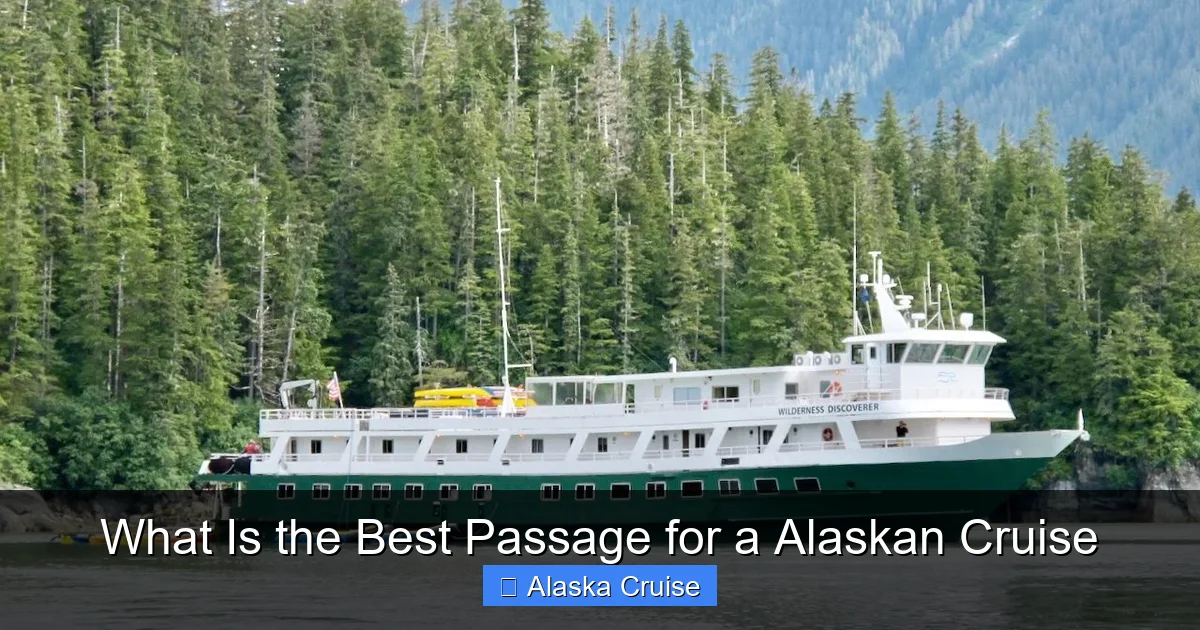
Visual guide about What Is the Best Passage for a Alaskan Cruise
Image source: velvetescape.com
While the Inside Passage is the backbone of most Alaskan cruises, one destination within it stands out as a true natural wonder: Glacier Bay National Park and Preserve. Located about 50 miles northwest of Juneau, this UNESCO World Heritage Site is a must-see for anyone cruising through southeastern Alaska.
Glacier Bay is a living laboratory of glacial activity. Over the past 200 years, a massive glacier has retreated more than 60 miles, revealing a dramatic landscape of fjords, mountains, and iceberg-strewn waters. Today, the park is home to over a dozen active tidewater glaciers, including the famous Margerie and Lamplugh Glaciers. These glaciers are constantly moving, and when chunks of ice break off—a process known as “calving”—the resulting splash can be heard miles away.
Cruise ships typically spend a full day navigating Glacier Bay, often with a National Park Service ranger on board to provide expert commentary. The experience is both educational and awe-inspiring. As your ship moves slowly through the bay, you’ll have front-row seats to nature’s power and beauty. The silence is profound, broken only by the crack of ice and the occasional call of a seabird.
One of the most memorable moments for many passengers is witnessing a glacier calve. Imagine standing on the deck, wrapped in a warm jacket, as a wall of ice taller than a skyscraper suddenly fractures and crashes into the water below. The sound is thunderous, and the waves ripple outward, creating a spectacle that’s both beautiful and humbling.
Glacier Bay is also a hotspot for wildlife. Harbor seals rest on floating icebergs, while humpback whales feed in the nutrient-rich waters. Onshore, brown bears roam the riverbanks in search of salmon, and mountain goats cling to steep cliffs. The park’s diverse ecosystems—from alpine tundra to coastal rainforest—make it a haven for nature lovers.
Because of its ecological significance, access to Glacier Bay is carefully managed. Only a limited number of ships are allowed to enter each day, and strict speed and distance regulations are in place to minimize disturbance to wildlife. This ensures that the park remains pristine for future generations—and that your visit is as respectful and sustainable as possible.
For many cruisers, Glacier Bay is the emotional high point of their Alaskan journey. It’s a place where you can truly feel the scale and power of nature, and where the passage of time is written in ice and stone. If you’re wondering what makes the best passage for an Alaskan cruise so special, Glacier Bay is a big part of the answer.
Northern Routes: Seward, Whittier, and the Gulf of Alaska
While the Inside Passage and Glacier Bay are the stars of southeastern Alaska, some travelers prefer to venture further north, where the landscape becomes even more dramatic and remote. Cruises that include ports like Seward and Whittier offer a different kind of Alaskan experience—one centered on glaciers, fjords, and outdoor adventure.
These northern routes typically depart from Seattle or Vancouver and travel up the coast, crossing the Gulf of Alaska to reach the Kenai Peninsula. Unlike the protected waters of the Inside Passage, the Gulf can be rougher, with larger waves and more variable weather. But for those willing to brave the elements, the rewards are immense.
Seward, located at the head of Resurrection Bay, is a gateway to Kenai Fjords National Park. This park is famous for its network of glaciers that flow from the Harding Icefield into the sea. One of the most popular excursions from Seward is a boat tour into the fjords, where you can see glaciers like Aialik and Holgate up close. These tours often include sightings of sea otters, puffins, and even whales.
Whittier, just a short drive from Anchorage, is another key port for northern cruises. It’s accessible via the Anton Anderson Memorial Tunnel—the longest highway tunnel in North America, which also accommodates rail traffic. From Whittier, ships enter Prince William Sound, a vast body of water dotted with glaciers, islands, and wildlife. The sound is less visited than Glacier Bay, offering a more secluded and rugged experience.
One of the biggest advantages of northern routes is the opportunity to combine your cruise with land-based adventures. Many travelers choose to book a cruise tour—a package that includes both a cruise and a land tour—allowing them to explore Denali National Park, take a scenic train ride on the Alaska Railroad, or go dog sledding on a glacier. These extended itineraries provide a more comprehensive look at Alaska’s diverse landscapes and cultures.
However, northern routes are typically longer and more expensive than Inside Passage cruises. They also tend to have fewer port calls, with more time spent at sea. If your priority is seeing a variety of towns and cultural sites, the Inside Passage may be a better fit. But if you’re drawn to raw wilderness, glacier views, and outdoor activities, the northern passage offers an unforgettable alternative.
Choosing the Right Itinerary: Round-Trip vs. One-Way Cruises
Another important factor in determining the best passage for an Alaskan cruise is the type of itinerary you choose. Cruise lines offer two main options: round-trip cruises and one-way (or open-jaw) cruises. Each has its own advantages, depending on your travel style and plans.
Round-trip cruises depart and return to the same port—usually Seattle or Vancouver. These itineraries are popular because they’re convenient and often more affordable. You can fly into the departure city, enjoy a week or more at sea, and fly home from the same airport. Round-trip cruises typically follow the Inside Passage, making stops in Ketchikan, Juneau, Skagway, and possibly Glacier Bay.
One-way cruises, on the other hand, start in one city and end in another. For example, you might sail from Seattle to Seward, or from Vancouver to Whittier. These itineraries are ideal if you want to combine your cruise with a land tour. After disembarking in Alaska, you can explore Denali, Fairbanks, or Anchorage before flying home from a different airport.
One-way cruises often include more time in northern ports and may venture into the Gulf of Alaska. They’re a great choice if you’re looking for a longer, more immersive experience. However, they can be more expensive due to the logistics of open-jaw travel and the need to book additional flights.
When deciding between round-trip and one-way, consider your budget, time constraints, and travel goals. If you’re short on time and want a classic Alaskan cruise experience, a round-trip itinerary along the Inside Passage is hard to beat. But if you’re ready for a deeper adventure and want to see more of Alaska’s interior, a one-way cruise with a land tour might be the best passage for your journey.
Timing Your Cruise: When to Go for the Best Experience
Timing is everything when it comes to an Alaskan cruise. The cruising season runs from May to September, but each month offers a different experience in terms of weather, wildlife, and crowds.
Peak season is June through August, when temperatures are mildest and daylight lasts up to 18 hours. This is the best time for wildlife viewing, as bears are active, whales are feeding, and migratory birds fill the skies. However, it’s also the busiest time, with higher prices and more crowded ports.
May and September are shoulder months, offering a quieter, more intimate experience. In May, the landscape is lush and green, and you may see newborn animals. September brings stunning fall colors and the chance to see the northern lights in some areas. While weather can be cooler and more unpredictable, these months often provide better value and fewer crowds.
Ultimately, the best time to go depends on your priorities. If you want the best chance of sunny skies and warm weather, aim for July. If you prefer solitude and lower prices, consider May or September. No matter when you go, an Alaskan cruise is a journey you’ll never forget.
Conclusion: Finding Your Perfect Alaskan Cruise Passage
So, what is the best passage for an Alaskan cruise? For most travelers, the answer is the Inside Passage—a route that combines stunning scenery, rich wildlife, charming ports, and convenient access. It’s the ideal introduction to Alaska’s coastal wonders, especially for first-time visitors.
But Alaska is a big state with diverse experiences to offer. Whether you’re drawn to the icy grandeur of Glacier Bay, the rugged beauty of the Gulf of Alaska, or the adventure of a land-and-sea tour, there’s a passage that’s right for you.
The key is to think about what you want from your trip. Are you seeking relaxation or adventure? Culture or nature? Convenience or exploration? Once you know your priorities, you can choose the itinerary that aligns with your vision.
No matter which passage you choose, an Alaskan cruise is more than just a vacation—it’s a journey into one of the world’s last great frontiers. So pack your camera, bring your sense of wonder, and get ready to discover the magic of the Last Frontier.
Frequently Asked Questions
What is the best passage for an Alaskan cruise for first-time visitors?
The Inside Passage is widely considered the best passage for first-time Alaskan cruise travelers. It offers a mix of stunning scenery, accessible ports, and abundant wildlife, all within a convenient round-trip itinerary from Seattle or Vancouver.
Can you see glaciers on an Inside Passage cruise?
Yes, many Inside Passage cruises include a visit to Glacier Bay National Park, where you can see active tidewater glaciers like Margerie and Lamplugh. Some itineraries also stop near Tracy Arm or Endicott Fjord for additional glacier views.
Is the Gulf of Alaska rougher than the Inside Passage?
Yes, the Gulf of Alaska is more exposed to open ocean conditions and can have larger waves and rougher seas. The Inside Passage is more sheltered, making for smoother sailing and a more comfortable experience for most passengers.
What’s the difference between a cruise and a cruise tour?
A cruise is a voyage by ship with port stops, while a cruise tour combines a cruise with a land-based tour, often including stays in hotels, train rides, and visits to inland destinations like Denali National Park.
When is the best time to see whales on an Alaskan cruise?
Whale sightings are most common from May to September, with peak activity in July and August. Humpback whales are frequently spotted in the Inside Passage and around Glacier Bay during these months.
Do I need to book shore excursions in advance?
It’s highly recommended to book popular shore excursions—like whale watching, dog sledding, or helicopter tours—in advance, especially during peak season. Many sell out quickly, and pre-booking ensures you don’t miss out.