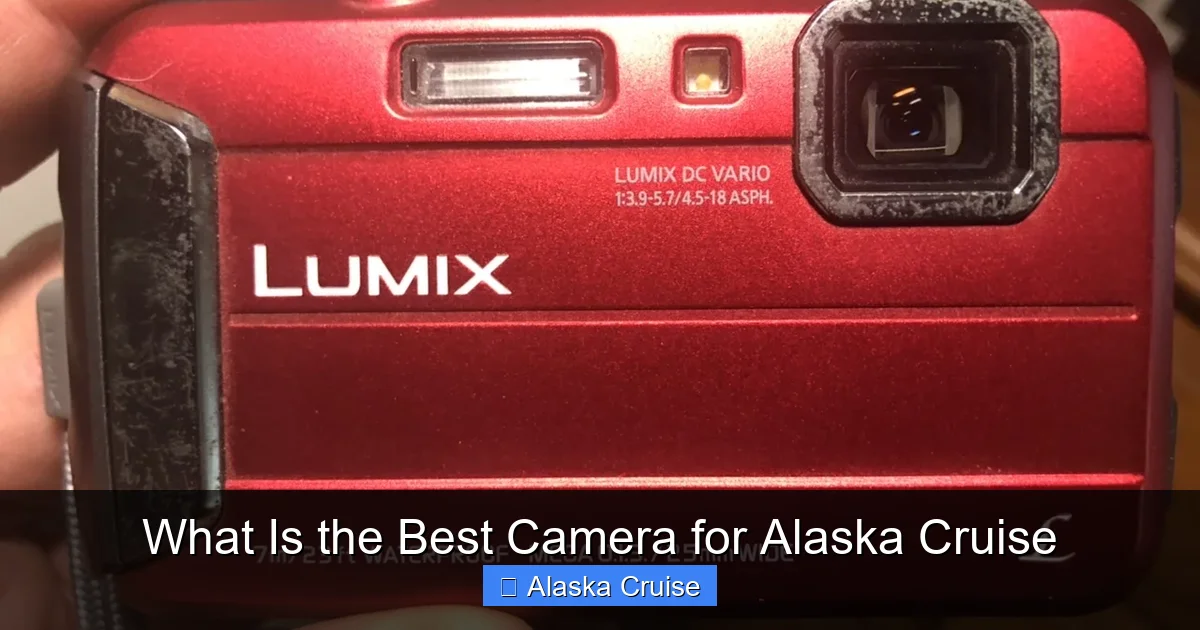
Choosing the best camera for Alaska cruise trips means balancing durability, zoom power, and image quality in unpredictable weather. Whether you’re photographing breaching whales or towering glaciers, the right gear ensures your memories last a lifetime.
Key Takeaways
- Weather sealing is essential: Alaska’s damp, cold, and windy conditions demand a camera that can handle moisture and temperature swings without failing.
- Long zoom capabilities matter: Wildlife like bears, eagles, and whales are often far away—opt for a camera with at least 30x optical zoom or a telephoto lens.
- Image stabilization is a must: On a moving ship, shaky hands and deck vibrations can ruin shots—look for in-body or lens-based stabilization.
- Compact and lightweight wins: You’ll be carrying your camera all day—choose something portable that doesn’t weigh you down.
- Fast autofocus and burst mode help: Capture quick-moving animals and fleeting moments with a camera that locks focus fast and shoots multiple frames per second.
- Consider battery life and spare options: Cold weather drains batteries quickly—always carry extras or use models with long-lasting power.
- Video features enhance the experience: 4K video and good audio input let you record immersive clips of glaciers calving and wildlife in action.
📑 Table of Contents
- Why Choosing the Right Camera for Your Alaska Cruise Matters
- What to Look for in a Camera for Alaska Cruises
- Top Camera Recommendations for Alaska Cruises
- Essential Accessories for Alaska Cruise Photography
- Tips for Capturing Stunning Alaska Cruise Photos
- Conclusion: Finding Your Perfect Alaska Cruise Camera
Why Choosing the Right Camera for Your Alaska Cruise Matters
An Alaska cruise is more than a vacation—it’s a once-in-a-lifetime adventure filled with jaw-dropping landscapes, rare wildlife, and dramatic weather. From the towering glaciers of Glacier Bay to the playful humpback whales near Juneau, every moment feels like a postcard come to life. But if you’re not prepared with the right camera, you might miss capturing those fleeting, magical scenes.
Unlike a city tour or beach getaway, an Alaska cruise presents unique photography challenges. You’re on a moving ship, often in cold, damp conditions, with wildlife that’s unpredictable and distant. The light changes quickly—bright sun one minute, fog rolling in the next. And let’s be honest: you don’t want to be fumbling with settings while a bear crosses your path or a glacier crashes into the sea.
That’s why selecting the best camera for Alaska cruise travel isn’t just about megapixels or brand names. It’s about finding a tool that’s reliable, versatile, and built for adventure. Whether you’re a casual snapper or a serious photographer, the right camera will help you preserve memories that feel as vivid as the real experience.
What to Look for in a Camera for Alaska Cruises
Visual guide about What Is the Best Camera for Alaska Cruise
Image source: lapassionvoutee.com
When shopping for a camera to take on your Alaska cruise, it’s easy to get overwhelmed by specs and marketing claims. But focus on these five key features, and you’ll be well on your way to making a smart choice.
Weather Sealing and Durability
Alaska is famously wet and cold. Rain, sea spray, and sudden snow flurries are common, even in summer. A camera with weather sealing—especially protection against moisture and dust—is non-negotiable. Look for models rated with IPX or similar certifications, or at least those known for rugged builds.
For example, the Olympus OM-D E-M10 Mark IV or the Panasonic Lumix G9 II offer excellent weather resistance in a compact body. If you’re considering a DSLR, the Canon EOS R6 Mark II or Nikon Z6 III are solid choices with full weather sealing.
Zoom Range and Telephoto Power
Wildlife in Alaska doesn’t usually come close to the ship. You might see a brown bear fishing for salmon from half a mile away or a pod of orcas gliding through icy waters. A camera with a strong optical zoom—or one that supports telephoto lenses—is essential.
Superzoom cameras like the Sony RX10 IV (with a 24–600mm equivalent lens) or the Nikon Coolpix P1000 (3000mm equivalent) are popular among cruise travelers. They let you zoom in tight without losing image quality, which is crucial when you can’t get closer.
If you prefer interchangeable lenses, consider a mirrorless camera with a 100–400mm or 150–600mm telephoto lens. The Sony A7 IV paired with a 200–600mm G lens, for instance, delivers stunning wildlife shots from a distance.
Image Stabilization
Even the steadiest hands can’t fully compensate for the motion of a ship on water. Add in wind, cold fingers, and the challenge of shooting from a moving deck, and you’ve got a recipe for blurry photos.
In-body image stabilization (IBIS) or lens-based stabilization helps smooth out shakes and jitters. Cameras like the Fujifilm X-T5 or the Sony A7R V offer 5–8 stops of stabilization, making handheld shooting far more reliable. This feature is especially helpful when using long telephoto lenses, where even tiny movements can ruin a shot.
Size, Weight, and Portability
You’ll be carrying your camera for hours—on shore excursions, during scenic cruising, and while exploring ports like Ketchikan or Skagway. A heavy DSLR with multiple lenses might seem professional, but it can quickly become a burden.
Mirrorless cameras are generally lighter and more compact, making them ideal for travel. The Canon EOS R8 or the Sony ZV-E10 are excellent lightweight options that don’t sacrifice performance. If you want something even smaller, high-end compact cameras like the Sony RX100 VII offer pro-level features in a pocket-sized body.
Battery Life and Cold Weather Performance
Cold temperatures drain camera batteries faster than usual. A camera that lasts all day in warm weather might die after a few hours in Alaska’s chill. Look for models with long battery life—or plan to carry spares.
The Nikon Z8, for example, uses a high-capacity battery that performs well in low temperatures. Alternatively, consider cameras that support USB charging, so you can top up from a power bank during the day. Just remember: lithium-ion batteries lose efficiency in the cold, so keep spares warm in an inside pocket.
Top Camera Recommendations for Alaska Cruises
Now that you know what to look for, here are some of the best cameras for Alaska cruise photography, broken down by category.
Best All-Around Mirrorless Camera: Sony A7 IV
The Sony A7 IV is a favorite among travel photographers for good reason. It combines a 33MP full-frame sensor, excellent low-light performance, and fast autofocus with real-time tracking. Its weather-sealed body holds up well in damp conditions, and it supports a wide range of high-quality lenses.
Pair it with a 70–300mm telephoto lens, and you’ll be ready for everything from mountain vistas to distant wildlife. The in-body stabilization helps keep shots sharp, even on a rocking deck. Plus, it shoots 4K video at 60fps, perfect for capturing glaciers calving or eagles in flight.
Best Superzoom Camera: Nikon Coolpix P1000
If you want maximum zoom without switching lenses, the Nikon P1000 is hard to beat. With a 3000mm equivalent lens, it can bring distant whales or bears into sharp focus. It’s not the most compact camera, but for wildlife enthusiasts, the zoom power is worth the trade-off.
It features built-in image stabilization, 4K video, and a flip-out screen for easy framing. While image quality isn’t quite on par with full-frame cameras, it’s more than sufficient for stunning travel photos. Just be sure to use a tripod or monopod—this lens is heavy!
Best Compact Camera: Sony RX100 VII
For travelers who want high quality in a tiny package, the Sony RX100 VII is a standout. It fits in your pocket but delivers DSLR-like performance with a 1-inch sensor, 24–200mm zoom, and lightning-fast autofocus.
It’s not weather-sealed, so use a protective case in wet conditions. But for portability and image quality, it’s one of the best compact cameras available. Great for casual shooters who still want professional results.
Best Budget Option: Canon EOS R50
If you’re looking for a capable camera without breaking the bank, the Canon EOS R50 is a fantastic choice. This mirrorless camera offers 24.2MP resolution, 4K video, and excellent autofocus with eye detection. It’s lightweight, easy to use, and compatible with Canon’s growing RF lens lineup.
Pair it with the RF 50mm f/1.8 for portraits or the RF 100–400mm for wildlife, and you’ve got a versatile setup. While it lacks full weather sealing, a rain cover or dry bag can protect it during shore excursions.
Best for Video: Panasonic Lumix GH6
If you plan to record a lot of video—think time-lapses of glaciers, drone-like shots from the deck, or interviews with fellow travelers—the Panasonic GH6 is a top pick. It shoots 5.7K video, has excellent stabilization, and supports high frame rates for slow-motion footage.
Its Micro Four Thirds sensor is smaller than full-frame, but the video quality is cinematic. Plus, it’s weather-sealed and compact, making it ideal for travel. Add a compact gimbal, and you’ve got a powerful mobile video studio.
Essential Accessories for Alaska Cruise Photography
Even the best camera won’t perform well without the right accessories. Here’s what to pack to get the most out of your Alaska adventure.
Protective Gear
A rain cover or dry bag is essential. Look for a clear, flexible cover that lets you access buttons while keeping moisture out. Brands like ThinkTank and OP/TECH offer affordable, reliable options.
A microfiber cloth and lens cleaning pen will help keep your lens free of salt spray and fingerprints. And don’t forget a small towel—drying off your camera after rain or spray is crucial.
Extra Batteries and Memory Cards
Cold weather and constant shooting drain batteries fast. Carry at least two extra batteries and keep them warm in an inside pocket. Use high-capacity memory cards (64GB or 128GB) to avoid running out of space during long excursions.
Tripod or Monopod
A lightweight travel tripod or monopod helps stabilize long telephoto shots and allows for time-lapses or group photos. The Peak Design Travel Tripod or a compact monopod like the Manfrotto Compact Action are great choices.
Lens Filters
A circular polarizing filter reduces glare from water and enhances sky contrast—perfect for capturing glaciers and fjords. A UV or clear protection filter also helps shield your lens from scratches and salt.
Portable Power Bank
If your camera supports USB charging, a power bank can be a lifesaver. Look for one with at least 10,000mAh capacity and a fast-charging output. Keep it in your daypack for quick top-ups.
Tips for Capturing Stunning Alaska Cruise Photos
Having the right gear is half the battle. These practical tips will help you take your photography to the next level.
Shoot in RAW
RAW files capture more detail and allow for greater flexibility in editing. While they take up more space, the improved dynamic range and color depth are worth it—especially in Alaska’s high-contrast lighting.
Use Burst Mode for Wildlife
Animals move quickly. Use burst mode (continuous shooting) to capture sequences of a whale breaching or a bird taking flight. Most modern cameras offer 10+ frames per second—perfect for action shots.
Golden Hour Is Your Friend
The soft, warm light during sunrise and sunset enhances landscapes and reduces harsh shadows. Plan your excursions around these times for the most flattering light.
Frame with the Rule of Thirds
Avoid centering every shot. Use the rule of thirds to place horizons, wildlife, or glaciers off-center for more dynamic compositions. Most cameras have a grid overlay to help.
Don’t Forget the Details
While grand landscapes are stunning, close-ups of frost on a railing, a seagull’s feather, or a local artisan’s craft add depth to your story. Mix wide shots with intimate details.
Respect Wildlife and Guidelines
Always follow park rules and maintain a safe distance from animals. Use your zoom instead of approaching. Not only is it safer, but it also results in more natural, undisturbed behavior in your photos.
Conclusion: Finding Your Perfect Alaska Cruise Camera
Choosing the best camera for Alaska cruise travel isn’t about picking the most expensive or high-tech model. It’s about finding a balance between performance, durability, and ease of use that fits your style and needs.
Whether you go with a superzoom for maximum reach, a compact mirrorless for portability, or a full-frame powerhouse for professional results, the key is preparation. Invest in weather protection, carry spare batteries, and practice using your gear before you sail.
Remember, the goal isn’t to capture every moment perfectly—it’s to enjoy the journey and preserve the memories that matter most. With the right camera in hand, you’ll return home with photos that do justice to Alaska’s wild, breathtaking beauty.
So pack your gear, charge your batteries, and get ready to capture the adventure of a lifetime. The glaciers are waiting.
Frequently Asked Questions
What type of camera is best for wildlife on an Alaska cruise?
A camera with a long optical zoom or telephoto lens is ideal for wildlife. Superzoom cameras like the Nikon P1000 or mirrorless models with 100–400mm lenses allow you to photograph distant animals without disturbing them.
Do I need a weather-sealed camera for Alaska?
Yes. Alaska’s damp, cold, and windy conditions can damage electronics. A weather-sealed camera protects against moisture and dust, ensuring reliable performance during shore excursions and scenic cruising.
Can I use my smartphone instead of a camera?
Smartphones are convenient, but they lack the zoom power and low-light performance needed for Alaska’s wildlife and landscapes. For serious photography, a dedicated camera is recommended.
How do I protect my camera from sea spray?
Use a rain cover or dry bag, and wipe down your camera regularly with a microfiber cloth. Avoid changing lenses in wet conditions, and store your gear in a sealed bag when not in use.
What’s the best time of day to take photos on an Alaska cruise?
Golden hour—shortly after sunrise and before sunset—offers the most flattering light. The soft, warm tones enhance landscapes and reduce harsh shadows, especially on water and ice.
Should I bring a tripod on my Alaska cruise?
A lightweight travel tripod or monopod is helpful for stabilizing long telephoto shots and capturing time-lapses. It’s especially useful during low-light conditions or when shooting from a moving ship.