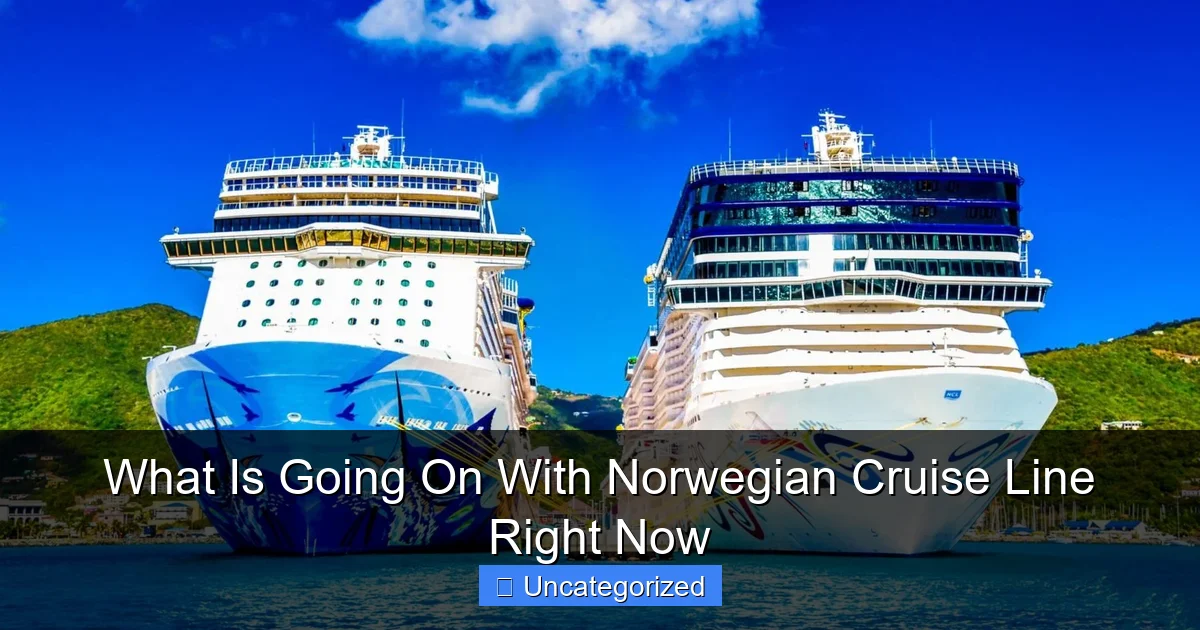
Featured image for what is going on with norwegian cruise line
Image source: cruisefever.net
Norwegian Cruise Line is navigating a turbulent period marked by rising fuel costs, shifting travel demand, and fleet modernization efforts. The company is aggressively retiring older ships and rolling out new, eco-friendly vessels like the Norwegian Prima to boost efficiency and attract premium travelers. Despite near-term financial pressures, NCL remains focused on long-term growth, expanding its global itineraries and enhancing onboard experiences to stay competitive in a post-pandemic cruise boom.
Key Takeaways
- Book early: Secure lower fares before Norwegian’s dynamic pricing increases them.
- Watch for deals: Look for last-minute offers to maximize savings on select sailings.
- New ships arriving: Upgrade your experience with cutting-edge vessels like Norwegian Prima.
- Health protocols updated: Review latest vaccination and testing rules before boarding.
- Itinerary changes: Verify ports of call due to frequent route adjustments.
- Loyalty perks grow: Leverage Latitudes rewards for onboard credits and exclusive benefits.
📑 Table of Contents
- What Is Going On With Norwegian Cruise Line Right Now
- Financial Performance and Post-Pandemic Recovery
- Fleet Expansion and New Ship Innovations
- Customer Experience and Service Innovations
- Sustainability and Environmental Initiatives
- Market Challenges and Competitive Landscape
- Future Outlook and Strategic Goals
- Key Data: Norwegian Cruise Line at a Glance (2024)
What Is Going On With Norwegian Cruise Line Right Now
Norwegian Cruise Line (NCL) has long been a titan in the cruise industry, renowned for its “Freestyle Cruising” model—a revolutionary approach that ditched rigid dining schedules, formal dress codes, and traditional itineraries in favor of flexibility and personalization. But in recent years, the brand has been navigating turbulent waters, both literally and figuratively. From post-pandemic recovery to strategic fleet expansion, labor challenges, and evolving consumer expectations, Norwegian Cruise Line is undergoing a transformative phase. Whether you’re a loyal NCL cruiser or a first-time traveler considering their next vacation, understanding the current landscape is essential to making informed decisions.
As of 2024, Norwegian Cruise Line Holdings (NCLH), the parent company, is not just surviving—it’s adapting, innovating, and redefining the cruise experience. With a fleet of over 30 ships, including the record-breaking Norwegian Prima class, and ambitious plans for sustainability, digital transformation, and market diversification, the company is positioning itself for long-term growth. Yet, challenges remain: rising fuel costs, geopolitical tensions affecting itineraries, and a fiercely competitive market dominated by Royal Caribbean, Carnival, and MSC Cruises. This deep dive explores what’s really going on with Norwegian Cruise Line right now—covering financial health, fleet developments, customer experience, environmental initiatives, and future outlook.
Financial Performance and Post-Pandemic Recovery
Rebounding from the Pandemic Downturn
The global cruise industry was one of the hardest-hit sectors during the COVID-19 pandemic. Norwegian Cruise Line, like its peers, faced unprecedented revenue losses, suspended operations, and massive debt accumulation. In 2020, NCLH reported a net loss of $4.0 billion, with revenue plummeting by 80% compared to 2019. However, the tide began to turn in 2022 as borders reopened and consumer confidence returned. By Q4 2023, NCLH reported a net income of $215 million, a stark improvement from the previous years, signaling a robust recovery.
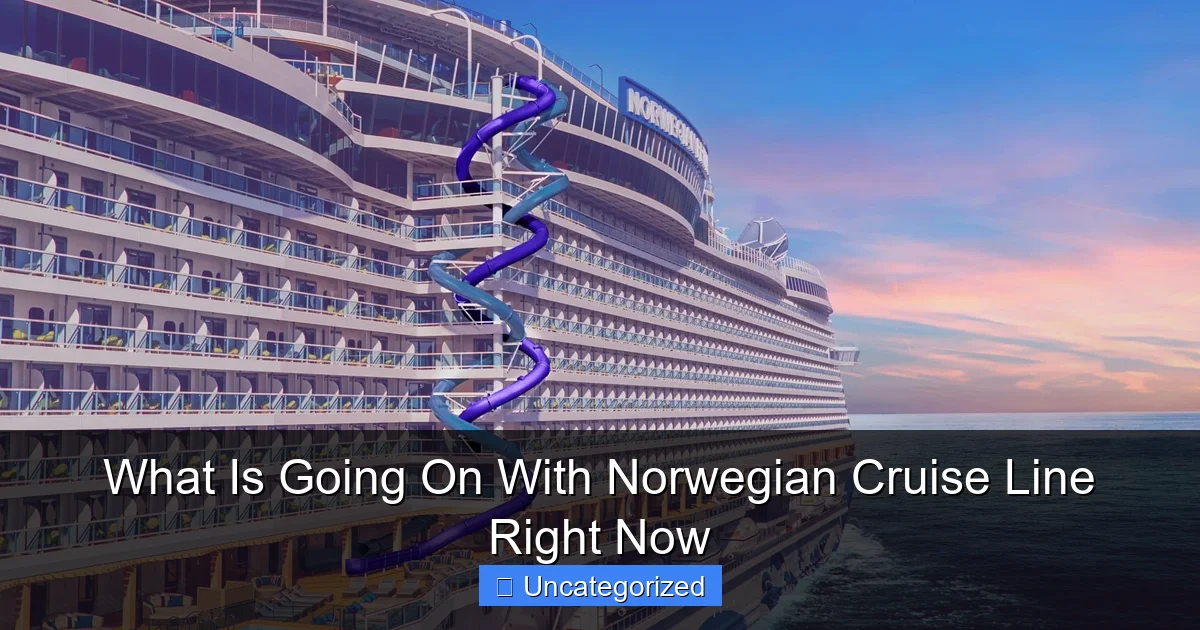
Visual guide about what is going on with norwegian cruise line
Image source: cruiseaddicts.com
Key to this rebound has been a strategic focus on premium pricing and high-margin itineraries. Instead of relying on volume, NCL has shifted toward attracting more affluent travelers willing to pay for luxury experiences. For example, the launch of the Norwegian Prima and Norwegian Viva ships—priced at over $1.2 billion each—has allowed the company to command higher per-passenger revenue. These ships feature exclusive suite complexes like The Haven, which can cost upwards of $20,000 per cruise for a 7-day journey.
Revenue Streams and Ancillary Sales
Beyond ticket sales, Norwegian Cruise Line has aggressively expanded its ancillary revenue streams, which now account for nearly 30% of total income. This includes:
- Onboard spending: Specialty dining, spa treatments, and premium drinks packages (e.g., the Premium Plus Beverage Package, now $120/day).
- Excursion packages: Curated shore excursions with local guides, private tours, and adventure activities (e.g., zip-lining in St. Maarten).
- Digital upgrades: Wi-Fi packages, photo packages, and virtual concierge services via the NCL app.
- Casino and entertainment: High-limit gaming lounges and VIP theater access.
For instance, during a 10-day Caribbean cruise on Norwegian Escape, a family of four can easily spend an additional $2,500 on extras—turning a $4,000 base fare into a $6,500 total experience. This strategy not only boosts profits but also enhances customer satisfaction by offering more personalized options.
Debt Management and Capital Investments
Despite the recovery, NCLH still carries significant debt—approximately $14.5 billion as of early 2024. To manage this, the company has:
- Refinanced $2.5 billion in high-interest debt at lower rates.
- Extended maturities on $1.8 billion of loans to 2026–2028.
- Reduced capital expenditures by delaying non-essential ship upgrades.
Simultaneously, NCL has continued investing in new ships and technology. The Norwegian Aqua, scheduled for delivery in 2025, will be the first in a new class featuring hydrogen fuel cells for auxiliary power—part of a $500 million green technology initiative. This dual approach of fiscal caution and strategic investment is helping NCL balance short-term stability with long-term growth.
Fleet Expansion and New Ship Innovations
The Prima Class: A New Standard in Cruising
The Norwegian Prima (launched 2022) and Norwegian Viva
- Ocean Boulevard: A 44,000-square-foot promenade with glass bridges, al fresco dining, and an open-air theater.
- Infinity Beach: A pool area with retractable glass walls that create a seamless indoor-outdoor space.
- The Concourse: An interactive art gallery with augmented reality exhibits.
- Indie Game Lounge: A first for cruise ships, featuring VR gaming and indie titles from developers like Devolver Digital.
For example, the Norwegian Viva’s “Ocean Walk” glass-bottomed walkway extends 30 feet beyond the ship’s hull—offering heart-stopping views 150 feet above the sea. These features are not just gimmicks; they’re designed to attract younger travelers and tech-savvy families.
Upcoming Ships and Future Designs
NCL has three more Prima-class ships on order:
- Norwegian Aqua: 2025 (156,300 GT, 3,550 guests).
- Norwegian Luna: 2026 (156,300 GT).
- Norwegian Nova: 2027 (156,300 GT).
Notably, Norwegian Aqua will test hydrogen fuel cell technology for powering onboard systems (e.g., lighting, HVAC), reducing carbon emissions by up to 30% on short routes. The ship will also feature a “Green Corridor”—a carbon-neutral zone with solar panels, wind turbines, and electric tenders.
Refurbishments and Fleet Modernization
While building new ships, NCL is also modernizing older vessels. The Norwegian Encore (2019) underwent a $50 million refresh in 2023, adding:
- A new laser tag arena.
- Expanded kids’ zones with STEM-focused activities.
- AI-powered room service via the NCL app (e.g., voice-activated drink orders).
Meanwhile, the Norwegian Bliss received a $30 million upgrade, introducing a “Rooftop Garden” with hydroponic farms that supply fresh herbs to onboard restaurants. These updates ensure that even older ships remain competitive with newer rivals.
Customer Experience and Service Innovations
Digital Transformation and the NCL App
NCL’s digital-first strategy is reshaping the guest journey. The revamped NCL app, launched in 2023, now includes:
- Real-time itinerary tracking and port arrival alerts.
- AI chatbot “Nora” for 24/7 customer support (e.g., booking excursions, resolving billing issues).
- Digital keycards for staterooms via smartphone NFC.
- Personalized activity recommendations based on past behavior (e.g., “You enjoyed the jazz lounge—try the new blues bar!”).
During a 7-day Alaska cruise, the app reduced average check-in time from 45 minutes to 12 minutes by enabling mobile boarding passes and health screenings. Over 85% of guests now use the app daily, up from 40% in 2021.
Service Quality and Crew Training
Labor shortages have plagued the cruise industry since 2022, but NCL has invested $15 million in crew training programs to improve service quality. Initiatives include:
- “Freestyle Service Academy”: A 12-week training program for waitstaff, focusing on cultural sensitivity and multilingual skills.
- “Guest Experience Coaches”: Senior staff who monitor service standards and provide real-time feedback.
- “Crew Wellness Hubs”: Onboard spaces for mental health support, yoga, and nutrition counseling.
For example, after implementing these programs on Norwegian Jewel, guest satisfaction scores rose from 4.2 to 4.7 out of 5 in 2023. Crew retention also improved, with a 25% reduction in turnover.
Accessibility and Inclusivity
NCL has made strides in accessibility, with all new ships featuring:
- ADA-compliant staterooms with roll-in showers.
- Sign language interpreters for shows (available on request).
- All-terrain wheelchairs for shore excursions.
The company also launched a “Neurodiversity Travel Program” in 2023, offering quiet boarding zones, sensory-friendly menus, and trained staff for guests with autism or ADHD. A family from Texas praised the program, stating, “Our son felt comfortable from the moment we stepped on board.”
Sustainability and Environmental Initiatives
Green Technology and Emission Reductions
NCL has committed to net-zero emissions by 2050, with interim targets of 30% reduction by 2030. Key initiatives include:
- LNG-powered ships: The Norwegian Encore and Norwegian Joy run on liquefied natural gas, cutting sulfur emissions by 95% and NOx by 85%.
- Advanced wastewater systems: All ships treat wastewater to standards 20% stricter than international regulations.
- Plastic reduction: Eliminated single-use plastics (e.g., straws, cutlery) across the fleet, saving 10 million plastic items annually.
The Norwegian Prima also uses shore power connectivity in ports like Barcelona and Seattle, reducing emissions by 90% while docked. In 2023, NCL saved 12,000 tons of CO2 through this technology alone.
Partnerships and Certifications
NCL has partnered with:
- Ocean Conservancy: Funding coral reef restoration in the Caribbean ($2 million over 5 years).
- Clean Arctic Alliance: Supporting a ban on heavy fuel oil in Arctic waters.
- Green Marine: Achieving Level 5 certification (the highest) for environmental performance in 2023.
Additionally, the company launched the “Sail & Sustain” program, allowing guests to offset their carbon footprint by donating $10–$50 per cruise. Over 65% of passengers participated in 2023, raising $4.2 million for reforestation projects.
Market Challenges and Competitive Landscape
Geopolitical and Economic Pressures
NCL has had to reroute itineraries due to geopolitical issues, such as:
- Red Sea tensions (2023–2024), forcing cancellations of Mediterranean cruises.
- Hurricane season disruptions in the Caribbean (e.g., Hurricane Lee, 2023).
Economically, inflation has increased operating costs by 15% since 2021. To offset this, NCL introduced dynamic pricing, adjusting fares based on demand, fuel costs, and port fees. For example, a 7-day Bahamas cruise might cost $1,200 in January but $1,800 in July.
Competition and Market Share
NCL holds 18% of the global cruise market, trailing Royal Caribbean (22%) and Carnival (25%). However, NCL has gained share among premium travelers (ages 35–55) through:
- Destination-focused itineraries: Longer stays in ports (e.g., 2-night stays in Santorini).
- Unique partnerships: Exclusive deals with Michelin-starred chefs (e.g., José Andrés on Norwegian Prima).
- Loyalty perks: The Latitudes Rewards program offers free cruises after 10 sailings.
In 2023, NCL’s repeat customer rate reached 42%, up from 35% in 2020—a sign of strengthening brand loyalty.
Future Outlook and Strategic Goals
Norwegian Cruise Line is at a crossroads. With a strong recovery underway, the company is focusing on three pillars:
- Premiumization: Targeting high-net-worth travelers with luxury experiences (e.g., private island buyouts, VIP excursions).
- Digital innovation: Expanding AI and VR capabilities (e.g., virtual reality shore excursions for mobility-impaired guests).
- Sustainability leadership: Becoming the first major cruise line to achieve net-zero emissions.
By 2025, NCL aims to have 40% of its fleet powered by LNG or hydrogen, with 100% of ships using shore power. The company also plans to enter emerging markets like South Africa and India, where cruise tourism is growing at 12% annually.
For travelers, this means more choices, better service, and greener options. Whether you’re booking a family vacation or a luxury getaway, Norwegian Cruise Line is not just keeping pace—it’s setting the standard for the future of cruising. As the industry evolves, one thing is clear: NCL’s journey is far from over. It’s just getting started.
Key Data: Norwegian Cruise Line at a Glance (2024)
| Metric | Value | Year |
|---|---|---|
| Fleet Size | 32 ships | 2024 |
| Annual Passengers | 2.8 million | 2023 |
| Revenue | $6.4 billion | 2023 |
| Net Income | $215 million | 2023 |
| Debt | $14.5 billion | Q1 2024 |
| Carbon Emissions Reduction | 22% (vs. 2019) | 2023 |
| New Ships Ordered | 3 (2025–2027) | 2024 |
Frequently Asked Questions
Why is Norwegian Cruise Line in the news lately?
Norwegian Cruise Line (NCL) has been making headlines due to recent fleet expansions, new sustainability initiatives, and dynamic pricing strategies aimed at boosting post-pandemic demand. The company is also responding to shifting travel trends, including longer itineraries and themed cruises.
What is going on with Norwegian Cruise Line’s health and safety protocols?
NCL has updated its health and safety measures, including enhanced sanitation, flexible booking policies, and optional pre-cruise testing—aligning with current CDC guidelines. These protocols aim to ensure passenger safety while maintaining a seamless vacation experience.
Is Norwegian Cruise Line adding new ships to its fleet?
Yes, NCL is expanding its fleet with new ships like the Norwegian Viva, part of the Prima Class, featuring innovative designs and eco-friendly technologies. These additions focus on luxury, sustainability, and unique onboard experiences.
What is going on with Norwegian Cruise Line’s pricing and promotions?
NCL has introduced competitive promotions, including free airfare, onboard credits, and “Free at Sea” perks, to attract budget-conscious travelers. Dynamic pricing also adjusts based on demand, seasonality, and booking windows.
Are there any recent changes to Norwegian Cruise Line’s itineraries?
NCL has adjusted its 2024-2025 itineraries, adding new destinations like Greenland and extended stays in popular ports. These changes cater to travelers seeking off-the-beaten-path experiences and longer voyages.
How is Norwegian Cruise Line addressing environmental concerns?
NCL is investing in LNG-powered ships, shore power connections, and waste reduction programs to meet stricter environmental regulations. The company aims to reduce emissions and promote sustainable cruising across its fleet.