Featured image for what is a cruise liner
Image source: orbitshub.com
A cruise liner is a massive, floating resort designed for leisure travel, combining luxurious accommodations, world-class dining, and endless entertainment on the open sea. These vessels range from family-friendly megaships to intimate luxury yachts, offering itineraries that explore exotic destinations while providing an all-inclusive vacation experience. More than just transportation, a cruise liner is a destination in itself—where adventure, relaxation, and discovery meet.
Key Takeaways
- Cruise liners are floating resorts with endless amenities and entertainment.
- Choose cabins wisely—balcony views enhance your sea adventure.
- All-inclusive packages save money on dining, drinks, and activities.
- Explore destinations via guided tours or independent shore excursions.
- Pack smart for formal nights, casual outings, and weather changes.
- Onboard safety drills are mandatory—participate for a stress-free trip.
📑 Table of Contents
- What Is a Cruise Liner? Discover the Ultimate Sea Adventure
- The Evolution of Cruise Liners: From Ocean Liners to Floating Resorts
- Anatomy of a Cruise Liner: Decks, Cabins, and Amenities
- Types of Cruise Liners: Finding Your Perfect Match
- How Cruise Liners Work: Behind the Scenes of a Floating City
- Planning Your Cruise: Tips and Must-Knows
- Conclusion: Why a Cruise Liner Is Your Next Adventure
What Is a Cruise Liner? Discover the Ultimate Sea Adventure
Imagine waking up each morning to a new horizon, the salty breeze gently brushing your face as your floating resort sails toward sun-kissed islands, bustling ports, or serene fjords. This is the magic of a cruise liner—a massive, self-contained vessel that blends the thrill of travel with the comforts of a luxury hotel. More than just transportation, cruise liners are destinations in themselves, offering everything from gourmet dining to Broadway-style entertainment, all while gliding across the ocean waves.
But what exactly is a cruise liner, and why has it become one of the most popular ways to explore the world? From their humble beginnings as mail and passenger ships to today’s high-tech floating cities, cruise liners have evolved into marvels of engineering and hospitality. Whether you’re a first-time traveler or a seasoned cruiser, understanding the nuances of these incredible vessels can transform your next vacation into an unforgettable journey. Let’s dive into the world of cruise liners and uncover what makes them the ultimate sea adventure.
The Evolution of Cruise Liners: From Ocean Liners to Floating Resorts
From Necessity to Luxury
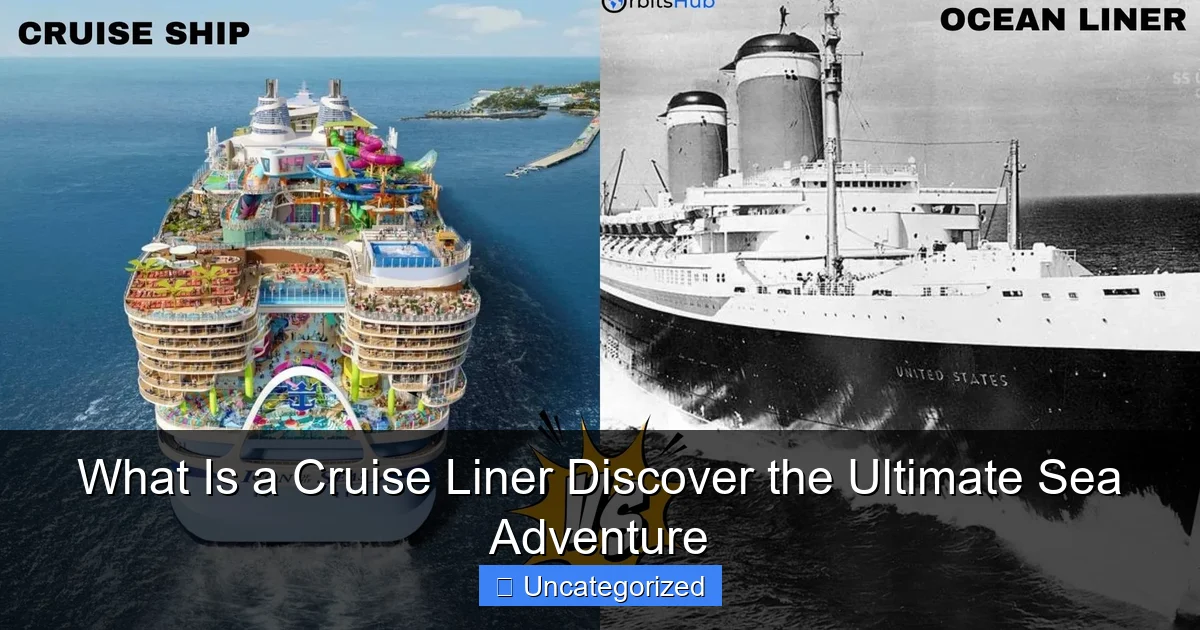
The story of cruise liners begins in the 19th century, when ocean liners were designed for practicality—transporting mail, cargo, and passengers across continents. These vessels, like the RMS Queen Mary and Queen Elizabeth, prioritized speed and reliability over comfort, with first-class cabins reserved for the elite and steerage quarters for emigrants. Their purpose was clear: to get from point A to point B as efficiently as possible.
Visual guide about what is a cruise liner
Image source: thumbs.dreamstime.com
By the mid-20th century, the advent of commercial air travel rendered ocean liners obsolete for transatlantic crossings. However, visionary companies like Norwegian Cruise Line and Carnival saw an opportunity: repurpose these ships for leisure voyages. The first true “cruise” began in 1966 with the SS Oceanic, which offered 12-day Caribbean trips focused on relaxation and entertainment. This marked the birth of the modern cruise liner—a vessel where the journey is the destination.
Technological Advancements
Today’s cruise liners are engineering marvels, combining cutting-edge technology with opulent design. Key innovations include:
- Stabilizers: Gyroscopic fins reduce rolling, making seasickness rare even in rough waters.
- Azipods: Electric propulsion systems improve maneuverability, allowing precise docking in tight ports.
- LNG engines: Newer ships, like Carnival Mardi Gras, run on liquefied natural gas, cutting emissions by 20%.
- Smart cabins: Voice-controlled lighting, AI concierge services, and app-based controls enhance convenience.
For example, Royal Caribbean’s Wonder of the Seas (2022) features a “Central Park” with 12,000 live plants, robotic bartenders, and a 10-deck-high dry slide—proof that cruise liners now rival land-based resorts.
The Rise of Themed Cruises
Modern cruise liners cater to niche interests, from wellness retreats (Celebrity Cruises’ “Mindfulness” programs) to fan conventions (Star Trek-themed voyages with Paramount). This customization transforms generic vacations into experiential journeys, appealing to diverse demographics. A 2023 Cruise Lines International Association (CLIA) report found that 68% of millennials prefer cruises offering unique themes over traditional itineraries.
Anatomy of a Cruise Liner: Decks, Cabins, and Amenities
Understanding the Layout
A cruise liner is organized into decks (floors), each serving a specific function. While layouts vary by ship, most follow this structure:
- Lower Decks (1–4): Engine rooms, crew quarters, and storage.
- Middle Decks (5–10): Cabins, restaurants, and main entertainment venues (theaters, casinos).
- Upper Decks (11–16+): Outdoor pools, sports facilities, and observation lounges.
For instance, Disney Fantasy’s “Deck 14” houses a water coaster, while Norwegian Encore’s “Deck 18” features a virtual reality racetrack.
Cabin Types and Features
Cruise cabins range from budget-friendly to ultra-luxurious. Here’s a breakdown:
- Inside Cabins: Windowless but often the most affordable. Ideal for solo travelers or those prioritizing activities.
- Oceanview Cabins: Feature a fixed window or porthole. Found on mid-level decks (e.g., Carnival Horizon’s Deck 6).
- Balcony Cabins: Private outdoor space with chairs and a sliding door. Popular for romantic getaways.
- Suites: Spacious layouts with living areas, butler service, and priority boarding (e.g., Regent Seven Seas’ “Master Suite”).
Pro Tip: Book a cabin on a lower, mid-ship deck to minimize motion and noise. Avoid cabins near elevators or nightclubs if you’re a light sleeper.
Onboard Amenities: More Than Just a Ship
Cruise liners are floating mini-cities with amenities rivaling top resorts:
- Dining: Multiple restaurants, from buffets to specialty venues (e.g., Princess Cruises’ “Chef’s Table” for gourmet experiences).
- Entertainment: Broadway shows, comedy clubs, and live music (Royal Caribbean’s Symphony of the Seas has a full-sized ice rink).
- Wellness: Spas, fitness centers, and thermal suites (Norwegian Bliss offers a “Snow Room” with sub-zero temperatures).
- Family-Friendly Features: Kids’ clubs, water parks, and teen lounges (Carnival’s “Dr. Seuss AquaPark”).
For example, MSC World Europa (2022) boasts a 112-meter-long outdoor promenade with 1,000+ LED lights—perfect for evening strolls.
Types of Cruise Liners: Finding Your Perfect Match
Ocean Cruise Liners
The most common type, ocean liners operate on fixed itineraries across major routes like the Caribbean, Mediterranean, and Alaska. They range from mid-sized ships (50,000–100,000 GT) to mega-ships (200,000+ GT). Examples:
- Celebrity Edge: 140,000 GT, 2,918 passengers. Features a “Magic Carpet” platform for tender boarding.
- Norwegian Prima: 143,000 GT, 3,215 passengers. Offers the first three-level race track at sea.
Best for: First-time cruisers, families, and those seeking a classic vacation experience.
River Cruise Liners
Smaller vessels (150–200 passengers) designed for inland waterways like the Rhine, Danube, and Mekong. Key features:
- Lower decks for easy access to ports.
- All-inclusive pricing (meals, excursions, drinks).
- Focus on cultural immersion (e.g., Viking River Cruises’ “Local Life” tours).
Best for: Couples, retirees, and travelers interested in history and cuisine.
Expedition Cruise Liners
Specialized ships (100–300 passengers) for polar regions, Galápagos, and remote islands. Built with ice-class hulls and zodiac boats for landings. Examples:
- National Geographic Endurance: 20,000 GT, 126 passengers. Features a “Science Lab” for onboard research.
- Quark Expeditions’ Ultramarine: 13,500 GT, 199 passengers. Offers a twin-engine helicopter for aerial tours.
Best for: Adventure seekers, wildlife enthusiasts, and photographers.
Small-Ship and Yacht-Style Liners
Ultra-luxury vessels (50–200 passengers) with personalized service and exclusive ports. Think:
- Seabourn Venture: 23,000 GT, 264 passengers. Includes a submarine for underwater exploration.
- Silversea Silver Nova: 54,700 GT, 728 passengers. Offers a “Relaxation Deck” with heated loungers.
Best for: High-end travelers, luxury seekers, and those valuing privacy.
How Cruise Liners Work: Behind the Scenes of a Floating City
Navigation and Safety
Cruise liners use a combination of GPS, radar, and satellite communication to navigate. Captains work with a bridge team of 5–10 officers, monitoring weather, traffic, and route adjustments. Safety protocols include:
- Lifeboat drills: Mandatory muster drills within 24 hours of departure.
- Advanced medical facilities: Onboard infirmaries with 24/7 doctors (e.g., Carnival’s “Medi-Spa” for minor procedures).
- AI surveillance: Facial recognition for passenger tracking in emergencies.
For example, Royal Caribbean’s Quantum of the Seas has a “SeaPlex” with a robotic bartender that serves 1,000+ drinks per day.
Sustainability Efforts
The cruise industry is investing heavily in eco-friendly practices:
- Shore power: Ships plug into port electricity, reducing emissions while docked (used by 60% of Carnival’s fleet).
- Waste recycling: Advanced systems convert food waste to biofuel (Norwegian’s “Green Machine” recycles 90% of waste).
- Marine conservation: Partnerships with organizations like the World Wildlife Fund (WWF).
CLIA reports that 75% of new ships will have LNG engines by 2030, cutting carbon emissions by 25%.
Crew and Operations
A 2,000-passenger ship employs ~800 crew members, from chefs to engineers. Roles include:
- Hotel Staff: Housekeeping, dining, and entertainment.
- Marine Staff: Navigation, engineering, and safety.
- Support Staff: Medical, IT, and HR.
Crew members typically work 6–10 months at sea, with 2–3 months of paid leave. Many ships offer crew-only lounges and internet access to maintain morale.
Planning Your Cruise: Tips and Must-Knows
Choosing the Right Itinerary
Match your cruise to your interests:
- Caribbean: Relaxation, snorkeling, and beaches (7-day Eastern/Western itineraries).
- Mediterranean: History, culture, and cuisine (10–14 days).
- Alaska: Wildlife, glaciers, and outdoor adventures (7–14 days).
- Antarctica: Polar exploration (10–20 days, seasonal).
Pro Tip: Research port times—some ships dock for 8 hours, while others offer overnight stays for deeper exploration.
Budgeting and Booking
Costs vary widely based on:
- Cabin type: Inside vs. suite (balcony cabins average $150–$300 per night).
- Season: Summer and holidays are 20–30% more expensive.
- Extras: Gratuities ($15–$20 per person/day), excursions ($50–$200), and drinks packages ($60–$100/day).
Use tools like Cruise Critic’s “Price Drop Alert” or book with travel agents for perks (free upgrades, onboard credits).
Packing and Preparation
Must-pack items:
- Swimwear (2–3 sets for back-to-back days).
- Comfortable shoes (for port exploration).
- Formal attire (for “cruise elegant” nights).
- Medications (ships carry basics, but not all prescriptions).
Pro Tip: Download the cruise line’s app for digital boarding passes, daily schedules, and dining reservations.
Data Table: Cruise Liner Comparison (2024)
| Ship Name | Passenger Capacity | Gross Tonnage | Unique Feature | Best For |
|---|---|---|---|---|
| Royal Caribbean Wonder of the Seas | 6,988 | 236,857 | Central Park with 12,000 plants | Families, thrill-seekers |
| Norwegian Prima | 3,215 | 143,000 | Three-level race track | Adventure lovers |
| Viking Octantis | 378 | 30,150 | Submersible for underwater exploration | Expedition travelers |
| MSC World Europa | 6,762 | 215,863 | 112-meter LED promenade | Nightlife enthusiasts |
Conclusion: Why a Cruise Liner Is Your Next Adventure
A cruise liner isn’t just a mode of transportation—it’s a microcosm of the world, where cultures collide, cuisines dazzle, and horizons expand. Whether you’re sipping champagne on a balcony as the sun sets over the Mediterranean, diving into a coral reef in the Caribbean, or spotting polar bears in Antarctica, these floating resorts offer unparalleled access to the planet’s most breathtaking destinations.
From the engineering marvels of modern ships to the personalized experiences tailored to every traveler, cruise liners blend convenience with adventure. They’re ideal for solo explorers, couples seeking romance, families making memories, and retirees chasing bucket-list dreams. As the industry embraces sustainability and innovation, the future of cruising looks brighter than ever. So, pack your bags, embrace the sea breeze, and let a cruise liner carry you to the adventure of a lifetime. The ocean awaits—and your next great escape is just a boarding pass away.
Frequently Asked Questions
What is a cruise liner and how does it differ from a cruise ship?
A cruise liner is a large passenger vessel designed for luxurious, long-distance voyages, often operating on fixed routes and schedules. While the terms are often used interchangeably, “cruise liner” traditionally refers to grand ocean-going ships with classic elegance, whereas modern “cruise ships” may emphasize onboard amenities and shorter itineraries.
What is a cruise liner’s typical itinerary and destinations?
Cruise liners sail to a wide range of destinations, including tropical islands, coastal cities, and transoceanic routes like the Mediterranean or Caribbean. Itineraries often span 7–14 days but can extend to months-long world cruises, offering immersive experiences at multiple ports.
What amenities can I expect on a cruise liner?
Modern cruise liners feature world-class amenities such as fine dining restaurants, spas, theaters, pools, fitness centers, and even onboard casinos or ice-skating rinks. Many also offer family-friendly zones, kids’ clubs, and entertainment options for all ages.
Is there a dress code on a cruise liner?
Most cruise liners have flexible dress codes: casual attire during the day, smart-casual for dinner, and formal nights (typically 1–2 per week) where elegant wear is encouraged. Specific requirements vary by cruise line and destination.
What is a cruise liner’s environmental impact and how are lines addressing it?
Cruise liners are adopting eco-friendly technologies like LNG fuel, advanced wastewater treatment, and shore power to reduce emissions and waste. Many brands now prioritize sustainability through recycling programs and partnerships with environmental organizations.
Can I travel solo on a cruise liner?
Absolutely! Cruise liners cater to solo travelers with dedicated single cabins, social meetups, and activities to help you connect with others. Some lines even waive single supplements, making it easier to enjoy a private stateroom without extra fees.