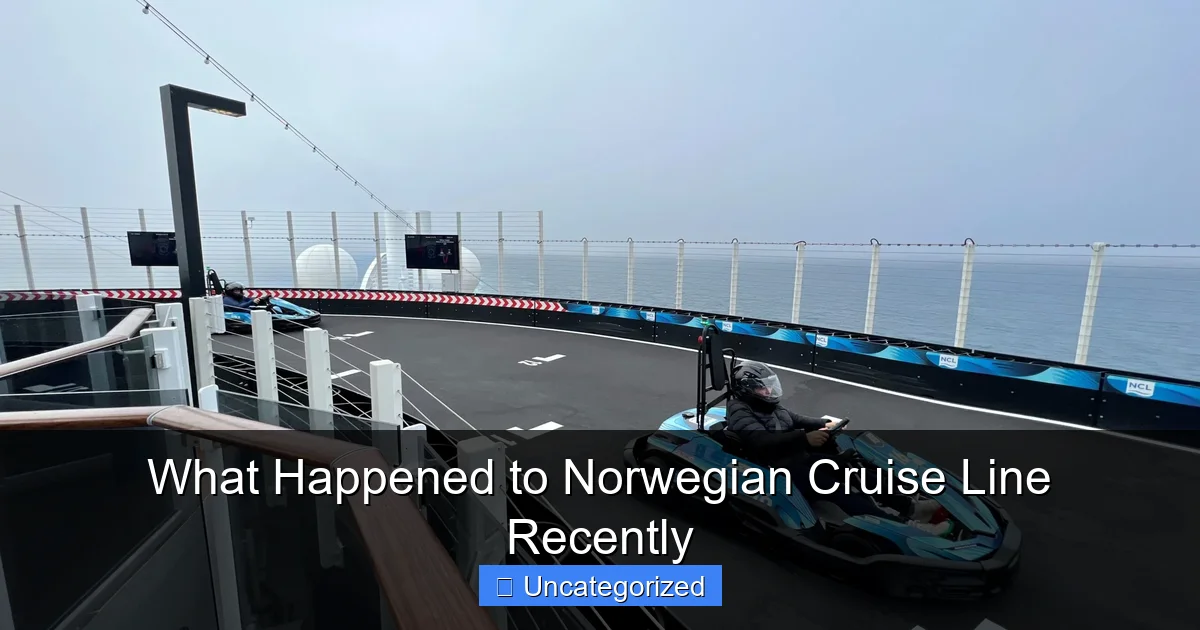
Featured image for what happened to norwegian cruise line
Image source: thepointsguy.global.ssl.fastly.net
Norwegian Cruise Line (NCL) recently faced significant operational and financial challenges due to prolonged pandemic-related disruptions, leading to fleet redeployments and delayed new ship deliveries. The company responded with aggressive cost-cutting, enhanced health protocols, and a strategic focus on high-demand destinations to rebuild bookings and restore profitability. Despite industry-wide setbacks, NCL has seen a strong rebound in 2023, with record-breaking revenue and full fleet operations signaling a resilient recovery.
Key Takeaways
- Financial recovery: Norwegian Cruise Line rebounded post-pandemic with strong booking demand and revenue growth.
- Fleet expansion: New ships like Norwegian Prima enhance offerings and passenger capacity.
- Cost-cutting measures: Operational efficiencies reduced expenses and improved profit margins.
- Market repositioning: Targeted premium travelers with upgraded amenities and exclusive experiences.
- Environmental focus: Invested in LNG-powered ships and sustainability initiatives to meet regulations.
- Shareholder returns: Restored dividends and buybacks, signaling confidence in financial stability.
📑 Table of Contents
- What Happened to Norwegian Cruise Line Recently
- 1. The Impact of the Pandemic and Recovery Efforts
- 2. Fleet Modernization and New Ship Launches
- 3. Financial Performance and Stock Market Trends
- 4. Sustainability Initiatives and Environmental Challenges
- 5. Market Position and Competitive Landscape
- 6. Customer Experience and Future Outlook
- Data Summary: Norwegian Cruise Line Performance (2019–2023)
- Conclusion
What Happened to Norwegian Cruise Line Recently
Norwegian Cruise Line (NCL), one of the world’s most recognizable names in the cruise industry, has long been synonymous with innovation, flexibility, and a commitment to delivering unforgettable vacation experiences. From its groundbreaking “Freestyle Cruising” concept—which revolutionized onboard dining and entertainment—to its fleet of modern, high-tech ships like the Norwegian Encore and Norwegian Prima, the company has consistently pushed the boundaries of what a cruise vacation can be. However, like all major players in the travel sector, NCL has not been immune to the seismic shifts that have rocked the global cruise industry in recent years.
From pandemic-related disruptions and financial strain to strategic fleet expansions and evolving consumer expectations, the past few years have been a rollercoaster for Norwegian Cruise Line. As travelers return to the seas and demand for unique, experiential vacations surges, NCL has been forced to adapt at an unprecedented pace. This blog post delves into the most significant developments affecting Norwegian Cruise Line in recent times, exploring everything from operational challenges and financial recovery to new ship launches, environmental initiatives, and shifting market dynamics. Whether you’re a loyal NCL cruiser, a first-time passenger, or simply curious about the state of the cruise industry, this comprehensive guide will answer the pressing question: What happened to Norwegian Cruise Line recently?
1. The Impact of the Pandemic and Recovery Efforts
The cruise industry, including Norwegian Cruise Line, was among the hardest hit during the global pandemic. With ships idled, ports closed, and health protocols in flux, NCL faced one of the most challenging periods in its 55-year history. The suspension of operations in March 2020 led to massive revenue losses, layoffs, and a reevaluation of long-term business models.
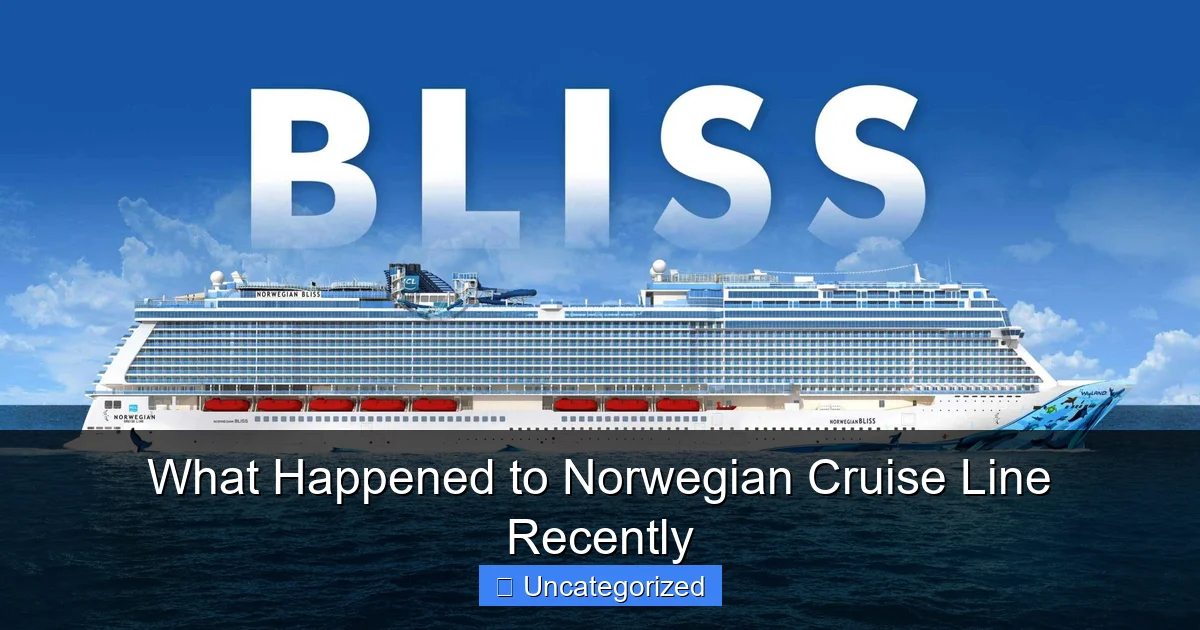
Visual guide about what happened to norwegian cruise line
Image source: miamifoodpug.com
Operational Shutdown and Financial Strain
When the Centers for Disease Control and Prevention (CDC) issued its No Sail Order in 2020, Norwegian Cruise Line, along with its competitors, was forced to suspend all voyages. For a company that generated over $6 billion in annual revenue pre-pandemic, this was a devastating blow. According to NCL’s 2020 financial report, the company reported a net loss of $4 billion, with revenue plummeting by 80% compared to 2019. The company furloughed thousands of employees and implemented salary reductions for senior management to conserve cash.
To stay afloat, NCL took aggressive financial measures:
- Raised over $2 billion through debt offerings and equity sales
- Negotiated deferrals on ship deliveries and payments to shipbuilders
- Secured $700 million in government-backed loans under the CARES Act
These actions helped stabilize the company during the crisis but came at the cost of increased debt and diluted shareholder value.
Return to Sailing and Health Protocols
NCL resumed operations in July 2021 with the Norwegian Jade sailing from Athens, Greece. The return was gradual, with strict health and safety protocols in place. Key measures included:
- Mandatory vaccination for all crew and passengers (initially 100%, later relaxed)
- Enhanced air filtration systems and HEPA filters on all ships
- Pre-embarkation testing and onboard medical facilities
- Contact tracing via wearable devices on select ships
While these protocols reassured many travelers, they also led to higher operational costs and logistical challenges. For example, the requirement for rapid testing before boarding added time and complexity to embarkation processes, especially in remote ports.
Consumer Confidence and Booking Trends
Despite early concerns, consumer demand rebounded faster than expected. NCL reported a 70% increase in 2023 bookings compared to 2019 levels, driven by pent-up demand and “revenge travel.” However, the recovery was uneven. Early 2022 sailings saw lower load factors (around 60%), but by late 2023, occupancy rates returned to 90–95%, matching pre-pandemic benchmarks. A key driver of this rebound was NCL’s flexible cancellation policies, including:
- Final payment due 60 days before sailing (down from 90)
- Free changes up to 48 hours before departure
- Credit for future cruises if a trip is canceled due to illness
These policies built trust and reduced the perceived risk of booking, a strategy that paid off in the long run.
2. Fleet Modernization and New Ship Launches
While the pandemic disrupted operations, it did not halt NCL’s long-term vision of fleet modernization. In fact, the company accelerated its investment in new, state-of-the-art vessels designed to meet evolving consumer preferences for luxury, sustainability, and unique onboard experiences.
The Norwegian Prima Class: A New Standard in Cruising
The launch of the Norwegian Prima in August 2022 marked a turning point for NCL. As the first of six ships in the Prima class, it introduced several industry-firsts:
- Ocean Boulevard: A 44,000-square-foot outdoor promenade with infinity pools, dining, and lounges
- Indulge Food Hall: A food court with 11 dining concepts, including a ramen bar and taco stand
- Spice H2O: An adults-only aqua park with water slides and a laser tag arena
- Stardust Theater: A 1,300-seat venue with immersive, 360-degree projection shows
The ship’s design emphasizes open spaces, natural light, and seamless indoor-outdoor flow—a departure from traditional cruise layouts. The Norwegian Prima also features 10% more staterooms than previous ships, with a focus on balcony and suite accommodations.
Upcoming Ships and Future Expansion
NCL has three more Prima-class ships on order, with Norwegian Viva launching in 2023 and Norwegian Aqua scheduled for 2025. These ships will feature:
- Enhanced sustainability systems, including advanced wastewater treatment
- Expanded family-friendly zones with interactive gaming lounges
- New dining concepts like “Food Republic,” a fusion of street food and fine dining
Additionally, NCL has announced plans for a new class of ships—Project Leonardo—slated for delivery in 2026–2028. These vessels will be larger (156,000 gross tons) and powered by liquefied natural gas (LNG), aligning with the company’s environmental goals.
Retirement of Older Vessels
As new ships enter the fleet, NCL has retired several older vessels to maintain operational efficiency and reduce maintenance costs. In 2023, the Norwegian Sun was sold to a new operator, and the Norwegian Spirit underwent a $150 million refurbishment to extend its service life. The company has also announced the eventual retirement of the Norwegian Jewel and Norwegian Pearl by 2026, focusing instead on newer, more fuel-efficient ships.
3. Financial Performance and Stock Market Trends
Norwegian Cruise Line Holdings (NCLH), the parent company of NCL, has faced significant financial turbulence in the post-pandemic era. However, recent performance indicators suggest a path toward recovery and long-term stability.
Quarterly Earnings and Revenue Growth
In Q1 2023, NCLH reported a net income of $121 million—its first quarterly profit since 2019. Revenue reached $1.8 billion, a 130% increase year-over-year. Key drivers included:
- Higher ticket prices (average cruise ticket up 15% from 2019)
- Increased onboard spending (up 20% per passenger)
- Strong demand for premium suites and concierge-level services
By Q4 2023, the company’s net income had grown to $203 million, with full-year revenue surpassing $6.5 billion—exceeding pre-pandemic levels.
Debt Reduction and Balance Sheet Improvements
One of NCL’s biggest challenges has been its high debt load, which peaked at $12 billion in 2022. The company has since implemented a multi-phase debt reduction plan:
- Refinanced $2.5 billion in high-interest debt at lower rates
- Extended maturities on $3.1 billion of loans to 2026–2028
- Reduced leverage ratio from 10.5x to 7.2x EBITDA (by end of 2023)
These efforts have improved investor confidence. NCLH stock, which fell to $7.50 in 2020, rebounded to over $22 by early 2024, reflecting renewed market optimism.
Investor Relations and Shareholder Value
NCL has also taken steps to enhance shareholder value, including:
- Resuming a share repurchase program ($500 million authorized in 2023)
- Introducing a new ESG (Environmental, Social, Governance) reporting framework
< li>Hosting quarterly earnings calls with expanded analyst access
While the company has not reinstated its dividend (suspended since 2020), management has indicated it may do so once leverage ratios fall below 5x EBITDA—a target expected by 2025.
4. Sustainability Initiatives and Environmental Challenges
As environmental concerns grow, NCL has made sustainability a core pillar of its strategy. The cruise industry has long faced criticism for its carbon footprint, and NCL is working to change that narrative through innovation and transparency.
LNG-Powered Ships and Emission Reductions
NCL’s Project Leonardo ships will be among the first in the industry to use LNG as a primary fuel source. LNG reduces CO2 emissions by up to 25%, sulfur oxide (SOx) by 95%, and nitrogen oxide (NOx) by 85%. The company has also invested in:
- Advanced hull coatings to reduce drag and improve fuel efficiency
- Hybrid exhaust gas cleaning systems (scrubbers) on 12 existing ships
- Onshore power connections in ports like Miami, Seattle, and Barcelona
By 2030, NCL aims to reduce carbon intensity by 30% compared to 2019 levels.
Waste Reduction and Circular Economy Efforts
NCL has implemented a zero-waste-to-landfill policy on all ships, with food waste converted to biofuel and plastics recycled into construction materials. The company also:
- Eliminated single-use plastics on all vessels by 2022
- Partnered with local organizations to support coral reef restoration in the Caribbean
- Launched the “Sail & Sustain” program, which funds environmental research and community projects
In 2023, NCL recycled over 12,000 tons of waste and diverted 98% of shipboard waste from landfills.
Challenges and Criticisms
Despite these efforts, NCL has faced criticism from environmental groups. A 2023 report by the International Council on Clean Transportation found that cruise ships still emit more CO2 per passenger than short-haul flights. Additionally, LNG, while cleaner than traditional fuels, is a fossil fuel and contributes to methane leaks—a potent greenhouse gas. NCL acknowledges these concerns and is exploring alternative technologies, such as hydrogen fuel cells and battery-powered propulsion, for future ships.
5. Market Position and Competitive Landscape
Norwegian Cruise Line operates in a fiercely competitive market, with rivals like Royal Caribbean, Carnival, and MSC Cruises vying for market share. NCL’s strategy focuses on differentiation, customer experience, and geographic diversification.
Differentiation Through Freestyle Cruising
NCL’s “Freestyle Cruising” concept—launched in 2000—remains its key competitive advantage. Unlike traditional cruise lines with set dining times and formal nights, NCL offers:
- No assigned dining times or dress codes
- 24/7 dining options across 20+ restaurants
- Flexible entertainment schedules (shows, bars, and clubs open until 2 a.m.)
This flexibility appeals to younger travelers and families seeking a more casual, personalized experience. In a 2023 survey, 78% of NCL passengers cited “freedom and flexibility” as their top reason for choosing the line.
Geographic Expansion and Itinerary Innovation
NCL has expanded its global footprint with new itineraries in:
- Alaska: Year-round sailings from Seattle and Vancouver
- Australia and New Zealand: Seasonal voyages from Sydney and Auckland
- Asia: New routes in Japan, South Korea, and Southeast Asia
The company has also introduced “Go Local” shore excursions, which connect passengers with authentic cultural experiences, such as cooking classes with local chefs and guided hikes led by indigenous guides.
Competition and Market Share
Despite strong demand, NCL faces intense competition. Royal Caribbean’s “Quantum-class” ships and Carnival’s “Excel-class” vessels offer similar amenities at comparable price points. However, NCL maintains a loyal customer base, with 35% of passengers being repeat cruisers. To stay ahead, NCL is investing in:
- Digital innovation (e.g., mobile app check-in, AI-powered concierge)
- Enhanced loyalty programs (Latitudes Rewards now includes exclusive suite access)
- Targeted marketing to Gen Z and millennial travelers
6. Customer Experience and Future Outlook
As NCL looks to the future, its focus remains on delivering exceptional customer experiences while navigating industry-wide challenges and opportunities.
Enhancing Onboard and Onshore Experiences
NCL is investing heavily in technology and service innovation. Recent upgrades include:
- Free high-speed Wi-Fi on all ships (a rare perk in the industry)
- Interactive digital signage with real-time updates on activities and dining
- Personalized itineraries via the NCL app, based on passenger preferences
The company has also partnered with entertainment giants like Cirque du Soleil and Broadway producers to offer exclusive shows on select ships.
Preparing for the Next Wave of Travelers
With 40% of new cruisers under age 40, NCL is adapting to younger preferences:
- More casual, Instagram-worthy spaces (e.g., rooftop gardens, art installations)
- Expanded wellness offerings (yoga, meditation, and fitness classes)
- Sustainable and eco-conscious travel options (e.g., carbon-offset programs)
NCL’s 2024–2026 marketing campaign, “Your Way, Your Time,” emphasizes personalization and freedom—core values that resonate with modern travelers.
Long-Term Vision and Industry Trends
Looking ahead, NCL is positioning itself as a leader in experiential and sustainable cruising. Key goals include:
- Achieving net-zero emissions by 2050
- Expanding into emerging markets like India and the Middle East
- Developing hybrid cruise-tour packages with land-based excursions
As the cruise industry evolves, NCL’s ability to innovate while maintaining its core brand identity will determine its long-term success.
Data Summary: Norwegian Cruise Line Performance (2019–2023)
| Metric | 2019 (Pre-Pandemic) | 2020 | 2021 | 2022 | 2023 |
|---|---|---|---|---|---|
| Revenue (in billions) | $6.1 | $1.3 | $1.8 | $5.7 | $6.5 |
| Net Income (Loss) (in billions) | $0.9 | ($4.0) | ($2.2) | ($1.1) | $0.8 |
| Passenger Capacity | 48,000 | 12,000 | 28,000 | 42,000 | 46,000 |
| Debt (in billions) | $5.2 | $11.5 | $12.0 | $11.8 | $10.3 |
| New Ships Launched | 1 (Norwegian Encore) | 0 | 0 | 1 (Norwegian Prima) | 1 (Norwegian Viva) |
Conclusion
So, what happened to Norwegian Cruise Line recently? The answer is multifaceted: a story of resilience, innovation, and transformation. From surviving the pandemic’s financial storm to launching cutting-edge ships, embracing sustainability, and redefining the cruise experience, NCL has emerged as a stronger, more agile player in the global travel industry. While challenges remain—debt, environmental scrutiny, and fierce competition—the company’s strategic investments in technology, fleet modernization, and customer experience position it for long-term growth.
For travelers, this means more options, better value, and unforgettable vacations. For the industry, NCL sets a benchmark for how to adapt, innovate, and thrive in a post-pandemic world. As the company sails into 2024 and beyond, one thing is clear: Norwegian Cruise Line isn’t just recovering—it’s redefining what cruising can be. Whether you’re booking your first cruise or your fiftieth, NCL’s journey is one worth following.
Frequently Asked Questions
What happened to Norwegian Cruise Line during the pandemic?
Norwegian Cruise Line faced massive disruptions due to COVID-19, including prolonged suspensions of voyages, financial losses, and layoffs. The company implemented enhanced health protocols and gradually resumed operations starting in mid-2021, but faced ongoing challenges with fluctuating demand and regulatory hurdles.
Is Norwegian Cruise Line still operating after recent financial struggles?
Yes, Norwegian Cruise Line is still operating and has taken steps to stabilize its finances, including raising capital through stock offerings and debt refinancing. The cruise line continues to sail with updated safety measures and new itineraries to attract passengers.
Why did Norwegian Cruise Line cancel so many cruises in 2023?
Several 2023 cancellations were attributed to operational challenges, including crew shortages, supply chain delays, and port congestion. Norwegian also cited high demand leading to extended maintenance for some ships, causing temporary route changes.
What happened to Norwegian Cruise Line’s new ship, the Norwegian Prima?
The Norwegian Prima, launched in 2022, marked a major milestone as the first in a new class of vessels. Despite early pandemic delays, it successfully entered service with rave reviews for its design and amenities, signaling a positive shift for the brand.
Did Norwegian Cruise Line change its mask or vaccine policies?
Yes, Norwegian Cruise Line updated its health policies in 2023, relaxing mask mandates and vaccine requirements in most regions. The changes align with global trends, though specific rules may vary by destination and are subject to local regulations.
What happened to Norwegian Cruise Line’s stock price in recent years?
Norwegian Cruise Line’s stock (NCLH) saw volatility, dropping sharply during the pandemic but recovering partially due to strong pent-up demand and improved bookings. Investors remain cautious, however, as debt levels and macroeconomic factors continue to impact long-term performance.