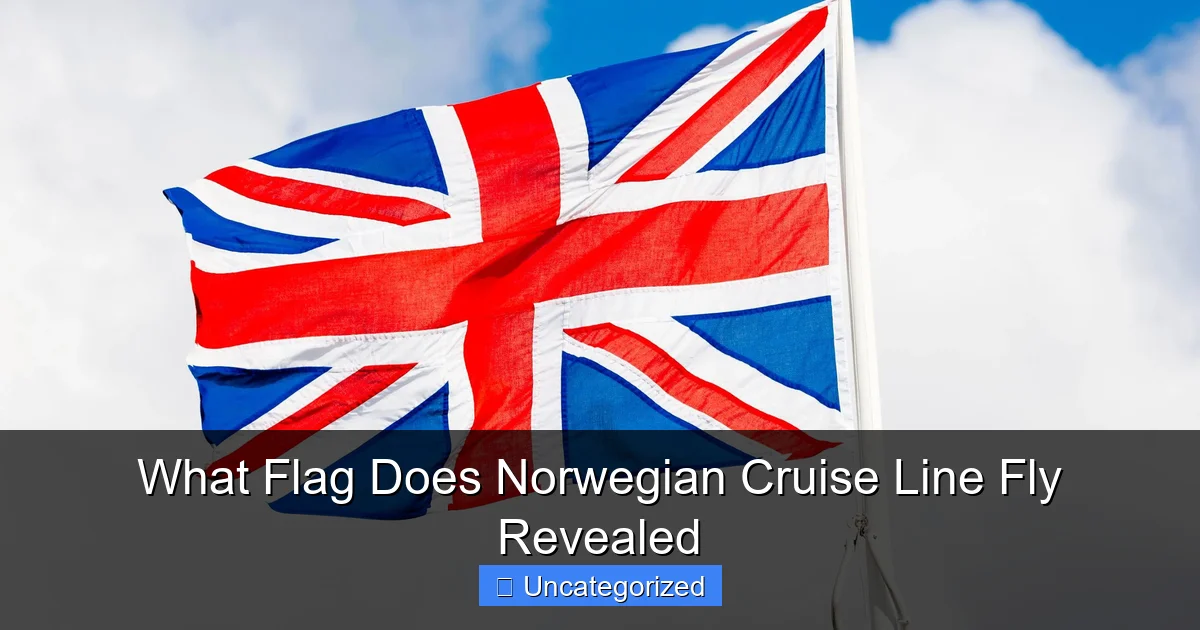
Featured image for what flag does norwegian cruise line fly
Image source: img-s-msn-com.akamaized.net
Norwegian Cruise Line flies the Bahamian flag on the majority of its ships, a strategic choice that reflects international maritime regulations and operational flexibility. This flag state affiliation allows the cruise line to maintain high safety and environmental standards while benefiting from the Bahamas’ reputable maritime administration. Discover why this matters for passengers and global shipping practices.
Key Takeaways
- NCL uses multiple flags: Ships fly flags of convenience like Bahamas and Norway for legal flexibility.
- Flags reduce costs: Lower taxes and labor regulations make operations more affordable.
- Norwegian heritage matters: Some ships retain Norwegian flags for brand identity.
- Registry impacts safety: Flags influence inspections but NCL exceeds global standards.
- Passenger perks: Flag choice doesn’t affect onboard experience or service quality.
- Legal simplicity: Flags simplify international voyages under maritime laws.
📑 Table of Contents
- The Mystery Behind Norwegian Cruise Line’s Flag: More Than Just a Symbol
- Understanding Maritime Flags: The Basics of Flag State Jurisdiction
- Why Norwegian Cruise Line Flies Foreign Flags: The Business and Legal Rationale
- Which Flags Does Norwegian Cruise Line Actually Fly?
- The Safety and Regulatory Implications of Flag Choice
- How to Identify the Flag on a Norwegian Cruise Line Ship: A Practical Guide
- Conclusion: The Flag Is Just the Beginning
The Mystery Behind Norwegian Cruise Line’s Flag: More Than Just a Symbol
When you picture a cruise ship gliding across the turquoise waters of the Caribbean or navigating the majestic fjords of Norway, one of the first things you might notice is the flag fluttering proudly atop the stern. For many travelers, this small but significant detail is often overlooked—yet it holds a wealth of legal, historical, and operational implications. One of the most frequently asked questions by cruise enthusiasts and maritime professionals alike is: What flag does Norwegian Cruise Line fly? The answer might surprise you. Despite its name, Norwegian Cruise Line (NCL) does not fly the Norwegian flag on most of its vessels. Instead, it operates under a practice known as flagging out—a strategic choice that reflects the complexities of modern global shipping regulations, labor laws, and corporate logistics.
This blog post dives deep into the world of maritime flags, exploring why Norwegian Cruise Line, a brand deeply rooted in Norway’s seafaring heritage, chooses to sail under foreign flags. We’ll examine the legal framework behind flag states, the benefits and drawbacks of flagging out, and how this decision impacts everything from crew employment to safety standards. Whether you’re a seasoned cruiser, a maritime student, or simply curious about the flags you see on the high seas, this comprehensive guide will reveal the truth behind NCL’s flagging strategy—and what it means for the cruise industry as a whole.
Understanding Maritime Flags: The Basics of Flag State Jurisdiction
Before we can unravel the mystery of Norwegian Cruise Line’s flag choices, it’s essential to understand what a flag state actually means in maritime law. Every ship at sea is legally required to be registered in a country—this country is known as the flag state. The flag state exercises jurisdiction over the vessel, regardless of where the ship is sailing. This includes enforcing laws related to safety, labor, environmental protection, and even criminal matters that occur onboard.
Visual guide about what flag does norwegian cruise line fly
Image source: goanewshub.com
What Is a Flag State?
A flag state is the country in which a ship is registered. This registration, often referred to as flagging, grants the vessel the right to fly that country’s flag. The flag state is responsible for:
- Ensuring the ship meets international safety and environmental standards (e.g., SOLAS, MARPOL)
- Overseeing crew certification and labor conditions
- Conducting inspections and audits
- Handling legal disputes and incidents occurring onboard
For example, if a cruise ship registered in the Bahamas is involved in an accident in U.S. waters, the Bahamian maritime authorities—not the U.S. Coast Guard—lead the investigation, although cooperation is common.
The Role of the International Maritime Organization (IMO)
The International Maritime Organization (IMO) sets global standards for ship safety, security, and environmental performance. While the IMO doesn’t register ships, it provides the legal framework that flag states must follow. Countries that are IMO members commit to enforcing these rules on their registered vessels. However, the level of enforcement varies significantly between countries—this is where the concept of open registries comes into play.
Open vs. Closed Registries
There are two main types of ship registries:
- Closed registries: Only citizens or entities of that country can register ships. Norway, the U.S., and Germany maintain closed registries, which often come with strict labor, taxation, and safety requirements.
- Open registries (also called flags of convenience): Any shipowner, regardless of nationality, can register a vessel. Countries like the Bahamas, Panama, and Malta operate open registries, attracting international shipowners with lower taxes, flexible labor laws, and streamlined registration processes.
Norwegian Cruise Line, like most major cruise lines, opts for open registries—despite its Norwegian roots. But why?
Why Norwegian Cruise Line Flies Foreign Flags: The Business and Legal Rationale
The decision by Norwegian Cruise Line to fly flags other than Norway’s is not a sign of disloyalty to its heritage but a strategic business move driven by economic, legal, and operational factors. While NCL was founded in Norway in 1966 and still maintains strong cultural ties to the country, the realities of global cruising have led the company to register its fleet under more favorable jurisdictions.
Cost Efficiency and Tax Benefits
One of the primary reasons for flagging out is cost savings. Norway imposes high corporate taxes, strict labor laws, and expensive compliance requirements on ships registered under its flag. For a cruise line operating a fleet of 19+ ships (as of 2024), the financial burden would be enormous.
- Norwegian flag ships must pay high tonnage taxes and corporate income taxes.
- They are required to hire Norwegian officers and crew, who earn significantly higher wages than international seafarers.
- Maintenance and compliance costs are higher due to stringent Norwegian Maritime Authority (NMA) standards.
In contrast, open registries like the Bahamas and Panama offer:
- Low or zero corporate taxes
- No requirement to employ local crew
- Simplified registration and inspection processes
- Lower annual fees and administrative overhead
For NCL, this translates into millions of dollars in annual savings—money that can be reinvested in ship upgrades, new builds, and marketing.
Labor Flexibility and Crew Sourcing
Another major factor is crew employment flexibility. Norwegian labor laws mandate high wages, generous benefits, and strict working conditions. While this ensures excellent working conditions for Norwegian seafarers, it limits a cruise line’s ability to source crew globally.
By registering under the Bahamas or Panama flag, NCL can hire crew from over 50 nationalities, including:
- Philippines (largest source of cruise crew)
- India
- Indonesia
- Eastern Europe (e.g., Romania, Ukraine)
- Caribbean nations
This diversity allows NCL to staff ships efficiently, maintain cultural variety onboard, and reduce labor costs by up to 40% compared to a fully Norwegian crew.
Operational Agility and Market Access
Flagging out also provides operational agility. Ships under open registries can more easily enter international ports, obtain insurance, and secure financing. Many banks and insurers prefer vessels registered under reputable open registries (like the Bahamas) because they meet IMO standards while offering financial benefits.
Additionally, some countries restrict access to vessels flying certain flags. For example, U.S. cabotage laws (Jones Act) prohibit foreign-flagged ships from transporting passengers between U.S. ports. However, NCL circumvents this by operating its U.S.-based itineraries (e.g., Miami to the Caribbean) under the Bahamas flag—which is not considered a “foreign” flag in the context of international trade agreements.
Which Flags Does Norwegian Cruise Line Actually Fly?
Now that we understand why NCL chooses foreign flags, let’s answer the central question: Which flags does Norwegian Cruise Line fly? The answer is not a single flag but a mix of two primary registries, with a few exceptions.
Primary Flag: The Bahamas
The majority of Norwegian Cruise Line’s fleet—over 80%—is registered in the Bahamas. This includes all ships in the Breakaway, Breakaway Plus, and Prima classes. Notable examples:
- Norwegian Encore (Breakaway Plus class)
- Norwegian Bliss (Breakaway Plus class)
- Norwegian Prima (Prima class)
- Norwegian Joy (Breakaway Plus class)
The Bahamas is a top choice for cruise lines because:
- It is a Category 1 member of the IMO, meaning it has a strong safety record.
- It offers a stable political environment and reliable legal system.
- It is geographically close to the U.S. and Caribbean, reducing registration logistics.
- It has a well-established maritime infrastructure, including the Bahamas Maritime Authority (BMA).
Despite being an open registry, the Bahamas maintains high standards. The BMA conducts regular inspections, and Bahamian-flagged ships have a lower detention rate in port state control checks than the global average.
Secondary Flag: Panama
Several older or smaller vessels in the NCL fleet are registered in Panama, the world’s largest ship registry by tonnage. Examples include:
- Norwegian Sun
- Norwegian Jade
- Norwegian Spirit
Panama is attractive due to:
- Zero corporate taxes for foreign-owned ships
- Fast registration process (often under 48 hours)
- Global recognition and port access
However, Panama has faced criticism in the past for lax enforcement, though recent reforms have improved its reputation. The Panama Maritime Authority (PMA) now conducts more frequent audits and collaborates with international bodies to maintain standards.
Exceptions: The Pride of America
The only exception in NCL’s fleet is the Pride of America, which sails exclusively in Hawaii and is registered in the United States. This is due to the Jones Act, a U.S. law requiring that vessels carrying passengers between U.S. ports must be:
- U.S.-built
- U.S.-owned
- U.S.-crewed
- U.S.-flagged
The Pride of America is the only major cruise ship in the world that operates a year-round Hawaii itinerary and complies with the Jones Act. It was built in Germany but underwent extensive modifications in the U.S. to meet the law’s requirements. This unique status makes it a rare example of a U.S.-flagged cruise ship in a global industry dominated by open registries.
The Safety and Regulatory Implications of Flag Choice
A common concern among passengers is: Does flying a foreign flag mean the ship is less safe? The answer is nuanced. While flag choice affects regulation, it does not automatically determine safety. The key lies in the flag state’s commitment to enforcement.
Port State Control: The Global Safety Net
Even if a ship is registered in an open registry, it is still subject to port state control (PSC) inspections when docking in foreign ports. Countries like the U.S., France, and Japan conduct rigorous safety and environmental checks. If a ship fails, it can be detained until deficiencies are corrected.
Data from the Paris and Tokyo MOUs (Memoranda of Understanding on PSC) shows that:
- Bahamian-flagged cruise ships have a detention rate of 1.2% (below the global average of 2.5%).
- Panamanian-flagged cruise ships have a detention rate of 2.8%, slightly above average but still acceptable.
- Norwegian-flagged ships have a 0.5% detention rate, reflecting Norway’s high standards.
These numbers suggest that NCL’s flag choices do not compromise safety—especially since the company voluntarily adheres to strict internal standards.
Norwegian Cruise Line’s Own Safety Standards
NCL goes beyond flag state requirements by implementing:
- Advanced fire safety systems (e.g., water mist suppression)
- 24/7 medical centers with telemedicine support
- Regular crew training in emergency procedures
- Partnerships with Lloyd’s Register and DNV for independent audits
For example, the Norwegian Prima features a zero-emission-ready propulsion system, exceeding MARPOL environmental regulations. This shows that while the flag provides a legal framework, NCL’s corporate policies drive safety and innovation.
Environmental and Labor Oversight
Open registries have improved significantly in recent years. The Bahamas and Panama now:
- Enforce IMO emissions standards (e.g., sulfur caps)
- Require crew welfare programs (e.g., internet access, mental health support)
- Participate in the IMO’s Voluntary Member State Audit Scheme (VMSAS)
NCL also publishes annual Sustainability Reports detailing its environmental and social initiatives, including reducing carbon emissions and improving crew living conditions.
How to Identify the Flag on a Norwegian Cruise Line Ship: A Practical Guide
If you’re curious about which flag a specific NCL ship is flying, here’s how to find out—whether you’re onboard, at a port, or researching online.
Onboard the Ship
- Look at the stern: The ship’s flag is always displayed at the stern (back) of the vessel, near the ship’s name.
- Check the daily program: NCL’s Freestyle Daily newsletter often includes trivia, including the ship’s flag.
- Ask the crew: Officers and staff are trained to answer questions about the ship’s registration.
Online Research
- IMO Number Lookup: Every ship has a unique IMO number (e.g., 9700338 for Norwegian Encore). Use the IMO Ship Finder to enter the number and view registration details.
- Equasis Database: A free public database (equasis.org) provides flag, owner, and inspection history.
- NCL’s Official Website: Ship pages sometimes list the flag under “Ship Facts.”
Data Table: Norwegian Cruise Line Fleet Flags (2024)
| Ship Name | Class | Flag State | IMO Number | Year Built |
|---|---|---|---|---|
| Norwegian Encore | Breakaway Plus | Bahamas | 9700338 | 2019 |
| Norwegian Bliss | Breakaway Plus | Bahamas | 9700337 | 2018 |
| Norwegian Prima | Prima | Bahamas | 9837777 | 2022 |
| Norwegian Sun | Sun | Panama | 9209511 | 2001 |
| Norwegian Spirit | Sun | Panama | 9197122 | 1998 |
| Pride of America | N/A | United States | 9188691 | 2005 |
Conclusion: The Flag Is Just the Beginning
The question “What flag does Norwegian Cruise Line fly?” opens a window into the complex world of modern maritime operations. While NCL proudly carries the name of Norway—a nation with centuries of seafaring tradition—its flag choices reflect a pragmatic, globalized approach to cruise ship management. By registering most of its fleet in the Bahamas and Panama, NCL gains access to financial flexibility, labor diversity, and operational efficiency, all while maintaining high safety and environmental standards.
This strategy is not unique to NCL. Over 70% of the world’s cruise ships fly flags of convenience, and the trend shows no sign of reversing. What matters most is not the flag itself, but the commitment of the cruise line to uphold international regulations and exceed expectations. NCL’s investment in safety, sustainability, and crew welfare proves that a ship’s flag is just one part of a much larger story—one of innovation, responsibility, and global connectivity.
So the next time you see a Norwegian Cruise Line ship gliding into port, take a moment to look at its flag. Whether it’s the blue and gold of the Bahamas, the red and white of Panama, or the stars and stripes of the U.S., remember that behind that flag is a sophisticated system of laws, logistics, and human effort—all working together to deliver unforgettable experiences on the high seas.
Frequently Asked Questions
What flag does Norwegian Cruise Line fly?
Norwegian Cruise Line (NCL) primarily flies the flag of the Bahamas, as most of its fleet is registered under the Bahamian maritime authority. This allows the company to operate with favorable tax and regulatory conditions.
Why does Norwegian Cruise Line use the Bahamian flag?
NCL registers its ships under the Bahamas flag for operational and financial benefits, including lower taxes and flexible labor laws. This practice, known as “flagging out,” is common among major cruise lines.
Is Norwegian Cruise Line an American company if its ships fly foreign flags?
Yes, NCL is headquartered in Miami, Florida, but its ships fly foreign flags like the Bahamas for regulatory advantages. The company remains American-owned despite its international registrations.
Does the flag Norwegian Cruise Line uses affect passenger experience?
The flag NCL flies has no direct impact on the onboard experience, as safety, service, and amenities remain consistent across its fleet. However, it influences the ship’s legal and operational framework.
Are all Norwegian Cruise Line ships registered under the same flag?
Most NCL ships fly the Bahamian flag, but some may be registered under other flags, like the UK or Norway, for specific routes or regulatory reasons. The Bahamas remains the primary registry.
What flag does Norwegian Cruise Line fly for its newest ships?
NCL’s newest vessels, including those in the Prima class, are also registered under the Bahamas flag, maintaining the company’s long-standing maritime tradition and operational strategy.