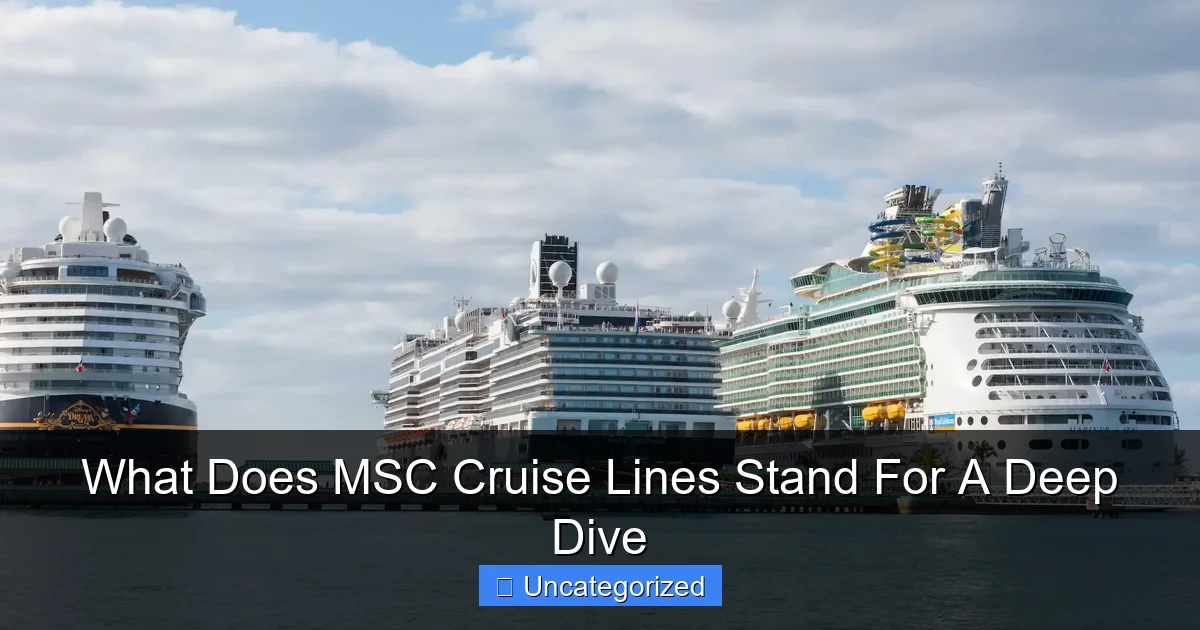
Featured image for what does msc cruise lines stand for
Image source: touristsecrets.com
MSC Cruise Lines stands for “Mediterranean Shipping Company,” a global leader in cruise vacations and container shipping. Far more than just an acronym, MSC represents a legacy of maritime excellence, combining European elegance with innovative, sustainable cruising experiences. With a rapidly expanding fleet and a strong focus on environmental responsibility, MSC Cruises redefines modern ocean travel.
Key Takeaways
- MSC stands for Mediterranean Shipping Company, rooted in global shipping expertise.
- Family-friendly focus with dedicated kids’ activities and flexible dining options.
- Eco-conscious innovation through LNG-powered ships and advanced sustainability tech.
- Global itineraries span 150+ destinations, emphasizing emerging ports.
- Affordable luxury balances value with high-end amenities and service.
- Multilingual staff ensure seamless service for international travelers.
📑 Table of Contents
- What Does MSC Cruise Lines Stand For? A Deep Dive
- The Origin Story: From Cargo to Cruises
- Core Values: Sustainability, Innovation, and Inclusivity
- The MSC Experience: What Sets It Apart
- Fleet and Itineraries: A Global Network
- Awards, Accolades, and Industry Leadership
- Conclusion: The Meaning Behind the Name
What Does MSC Cruise Lines Stand For? A Deep Dive
When you hear the name MSC Cruises, you might immediately think of luxury ocean voyages, exotic destinations, or family-friendly entertainment. But behind the glamorous brochures and onboard amenities lies a deeper story—a tale of heritage, innovation, and a global vision. So, what does MSC Cruise Lines stand for? At its core, MSC is more than just a cruise brand; it’s a symbol of Mediterranean Shipping Company, a legacy of maritime excellence, and a commitment to redefining the cruise experience for modern travelers.
Founded in 1970 by the Aponte family, MSC began as a cargo shipping company before venturing into the cruise industry in the late 1980s. Over four decades, it has evolved into one of the world’s fastest-growing cruise lines, known for its Italian flair, sustainability initiatives, and cutting-edge ship designs. But MSC isn’t just about the “what”—it’s about the “why.” Why does this brand resonate with millions of passengers? Why is it a leader in the European market and a rising star in North America? This deep dive explores the meaning behind the name, the values that drive its operations, and the unique offerings that set MSC apart in a competitive industry.
The Origin Story: From Cargo to Cruises
Roots in the Mediterranean Shipping Company
The acronym MSC stands for Mediterranean Shipping Company, a global logistics giant founded by Captain Gianluigi Aponte in Naples, Italy. Initially, the company focused on cargo shipping, leveraging its strategic location in the Mediterranean to connect Europe, Africa, and Asia. The Aponte family’s deep-rooted expertise in maritime operations laid the foundation for MSC Cruises, which launched in 1988 with the acquisition of its first vessel, the MSC Monterey.
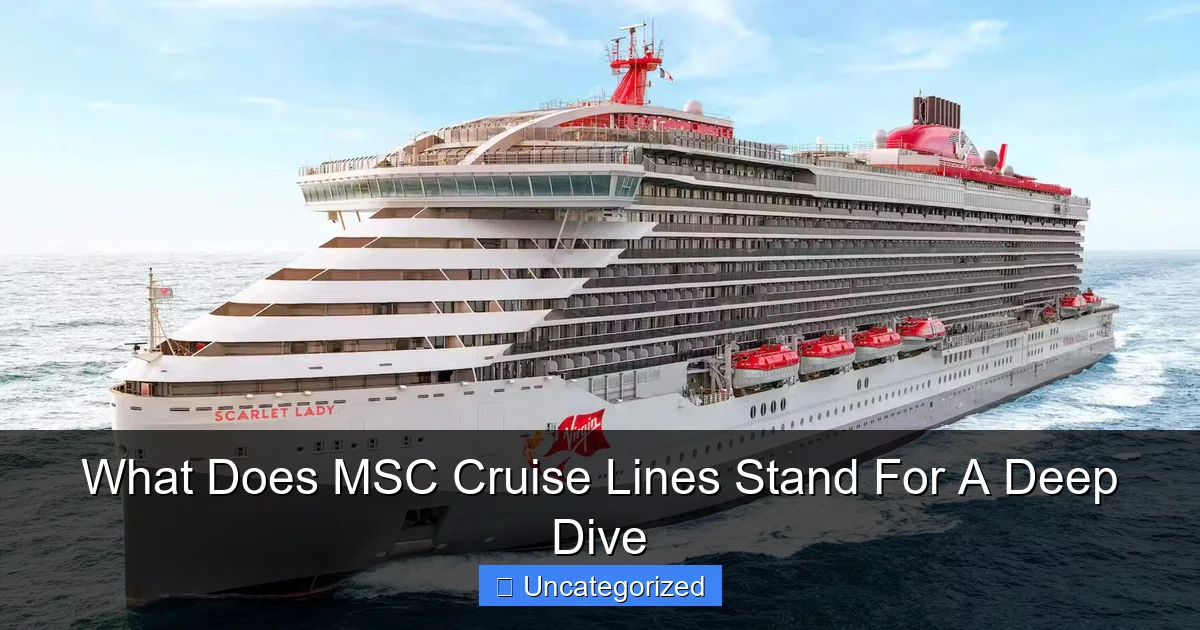
Visual guide about what does msc cruise lines stand for
Image source: touristsecrets.com
Fun fact: The Aponte family still owns and operates MSC Cruises today, ensuring a family-owned ethos permeates every aspect of the business. This contrasts with many competitors owned by larger conglomerates, giving MSC a unique, personalized touch.
The Birth of a Cruise Empire
MSC’s entry into the cruise industry was strategic. The Aponte family recognized the growing demand for affordable, high-quality vacations and capitalized on their shipping expertise to build a cruise division. Key milestones include:
- 1995: Rebranded as MSC Cruises, focusing exclusively on passenger travel.
- 2003: Launched the MSC Lirica, the first of its “Lirica-class” ships, designed with Italian elegance.
- 2010s: Expanded globally, targeting North America and Asia with new itineraries and larger vessels.
By 2023, MSC operated 21 ships, with 10 more under construction—a testament to its rapid growth. The brand’s success stems from its ability to blend cargo-shipping efficiency with cruise-industry creativity.
Why the Name Matters
The “MSC” name is more than a label—it’s a promise of reliability. Passengers know they’re booking with a company that understands the sea, from weather patterns to navigation. This expertise translates into smoother voyages, fewer itinerary disruptions, and a focus on safety. For example, during Hurricane Dorian in 2019, MSC rerouted ships proactively, minimizing guest inconvenience—a move praised by travel agents.
Core Values: Sustainability, Innovation, and Inclusivity
Environmental Stewardship
MSC Cruises is a leader in sustainable cruising, with a multi-billion-dollar investment in eco-friendly technologies. The brand’s MSC for Me initiative focuses on reducing emissions, waste, and energy consumption. Key projects include:
- LNG-Powered Ships: The MSC World Europa (2022) runs on liquefied natural gas (LNG), cutting CO2 emissions by 25%.
- Advanced Wastewater Treatment: All new ships use systems that purify wastewater to standards exceeding international regulations.
- Plastic-Free Commitment: By 2025, MSC aims to eliminate single-use plastics fleet-wide.
Tip: Look for MSC’s “Green Sail” certification, awarded to ships meeting strict sustainability benchmarks.
Innovation in Ship Design
MSC invests heavily in R&D to create ships that are both functional and futuristic. The Meraviglia-Plus class (e.g., MSC Grandiosa) features:
- An LED sky dome in the indoor promenade.
- Robotic bartenders at the “Robo Bar.”
- AI-powered navigation systems for optimal fuel efficiency.
Practical example: The MSC Seashore (2021) uses air lubrication technology to reduce hull friction, saving 5% on fuel consumption.
Inclusivity and Cultural Diversity
MSC caters to a global audience with multilingual staff, diverse dining options (from Italian trattorias to Indian curry houses), and itineraries spanning 150+ destinations. The brand’s “World Cruise” program, where passengers circumnavigate the globe in 117 days, reflects its commitment to inclusivity. Families, couples, and solo travelers all find tailored experiences, from kids’ clubs to adults-only zones.
Pro tip: Book a “MSC Yacht Club” suite for a VIP experience with private lounges, dedicated butlers, and priority dining—ideal for luxury seekers.
The MSC Experience: What Sets It Apart
Italian Flair Meets Global Appeal
MSC’s Italian heritage shines in its design, cuisine, and service. Ships feature:
- Venetian-style atriums with marble staircases.
- Authentic pizzerias using imported Italian ingredients.
- Opera performances in onboard theaters.
Yet, MSC avoids being a “Euro-centric” brand. In North America, ships offer Tex-Mex restaurants, Broadway-style shows, and partnerships with local destinations (e.g., a “Nashville Nights” theme in Tennessee ports).
Family-Friendly Features
MSC is a top choice for families, with:
- Four age-specific kids’ clubs (from toddlers to teens).
- Free kids’ fares on select sailings (a rarity in the industry).
- Interactive water parks with slides and splash zones.
Example: The MSC Fantasia has a “Doremi Family Club,” where parents can enjoy spa treatments while kids play supervised.
Cutting-Edge Entertainment
MSC partners with Cirque du Soleil to offer exclusive shows like “Joyà” on the MSC Bellissima. Other highlights include:
- Virtual reality gaming zones.
- Live DJ sets in rooftop bars.
- Interactive escape rooms.
Tip: Book entertainment packages early—shows often sell out.
Fleet and Itineraries: A Global Network
The Fleet: From Classic to Futuristic
MSC’s 21-ship fleet ranges from intimate vessels (e.g., MSC Armonia, 2,000 passengers) to mega-ships (e.g., MSC World Europa, 6,762 passengers). Below is a snapshot of key classes:
| Class | Ships | Key Features | Passenger Capacity |
|---|---|---|---|
| Lirica | MSC Armonia, Lirica, Opera, Sinfonia | Classic design, intimate ambiance | 1,500–2,000 |
| Meraviglia | MSC Meraviglia, Bellissima, Preziosa | LED sky dome, Cirque du Soleil shows | 4,500–5,700 |
| World Class | MSC World Europa, World America (2025) | LNG power, “World Promenade” | 6,700+ |
Destinations: From Mediterranean to Exotics
MSC’s itineraries cover:
- Mediterranean: Iconic ports like Barcelona, Venice, and Santorini.
- Caribbean: All-inclusive deals with stops in Nassau, St. Maarten, and MSC’s private island, Ocean Cay.
- Asia: New routes in Japan, Thailand, and Vietnam.
- World Cruises: 117-day voyages visiting 50+ countries.
Practical tip: For budget-friendly options, book repositioning cruises (e.g., Europe to Asia)—fares drop up to 40%.
Ocean Cay: A Private Island Oasis
MSC’s Ocean Cay Marine Reserve (Bahamas) is a standout feature. This eco-conscious island offers:
- White-sand beaches and snorkeling reefs.
- Evening light shows with sustainable fireworks.
- A focus on marine conservation (e.g., coral restoration).
Awards, Accolades, and Industry Leadership
Recognized Excellence
MSC’s commitment to quality has earned numerous awards, including:
- 2023 World Travel Awards: “Europe’s Leading Cruise Line” (12th consecutive win).
- 2022 Cruise Critic: “Best Value for Money” (large-ship category).
- 2021 Seatrade Awards: “Sustainability Initiative of the Year.”
These accolades reflect MSC’s ability to balance affordability with luxury.
Partnerships and Collaborations
MSC’s strategic alliances enhance its offerings:
- Cirque du Soleil: Exclusive shows on 12 ships.
- Jean-Christophe Novelli: Michelin-starred chef designing gourmet menus.
- F1 Experience: Onboard racing simulators on select ships.
Example: The MSC Seascape features a “Formula One Simulator,” letting guests race virtual tracks.
Future-Forward Vision
MSC’s 2025 roadmap includes:
- Five new LNG-powered ships.
- Expansion into the Chinese market.
- A “Zero-Emission” ship prototype using hydrogen fuel cells.
Fun fact: MSC’s parent company, Mediterranean Shipping Company, is also investing in autonomous cargo ships—a tech that could revolutionize passenger cruising.
Conclusion: The Meaning Behind the Name
So, what does MSC Cruise Lines stand for? It’s a brand that embodies maritime mastery, sustainable innovation, and global inclusivity. From its humble beginnings as a cargo line to its current status as a cruise powerhouse, MSC has stayed true to its roots while embracing the future. The name “MSC” isn’t just an acronym—it’s a symbol of trust, adventure, and the enduring allure of the sea.
For travelers, MSC offers more than a vacation; it delivers a curated experience where Italian elegance meets cutting-edge technology, and sustainability meets sensational entertainment. Whether you’re a family seeking kid-friendly fun, a couple craving romance, or an adventurer exploring new horizons, MSC’s values and offerings align with your dreams. The next time you board an MSC ship, remember: you’re not just cruising—you’re part of a legacy built on the waves of the Mediterranean and the vision of a family who dared to sail further.
Ready to explore? With MSC, the world’s your oyster—and the journey is as meaningful as the destination.
Frequently Asked Questions
What does MSC Cruise Lines stand for?
MSC stands for Mediterranean Shipping Company, the world’s largest privately-owned shipping and logistics operator. The cruise line was launched by the parent company in 1987 to expand its maritime services.
Is MSC Cruise Lines part of a larger company?
Yes, MSC Cruise Lines is a subsidiary of MSC Group, which operates the Mediterranean Shipping Company. The parent company’s core business in container shipping heavily influences MSC Cruises’ global operations and expansion strategy.
What does MSC Cruise Lines stand for in terms of brand values?
MSC Cruise Lines emphasizes European heritage, family-friendly experiences, and innovative ship design. The brand stands for blending luxury with accessibility, offering diverse itineraries worldwide while maintaining Italian-inspired hospitality.
How did MSC Cruise Lines get its name?
The name derives from the parent company’s acronym, Mediterranean Shipping Company. Using “MSC” for the cruise line creates brand consistency across the group’s shipping and travel divisions, reinforcing its maritime roots.
Are MSC Cruise Lines and Mediterranean Shipping Company the same?
No, but they’re closely related. MSC Cruise Lines handles passenger travel, while Mediterranean Shipping Company focuses on cargo. Both operate under the MSC Group umbrella, sharing resources and infrastructure.
What does MSC Cruise Lines stand for compared to other cruise brands?
MSC stands out for its rapid fleet expansion, eco-friendly ship technology, and value-driven pricing. Unlike premium competitors, it combines modern amenities with affordable fares, appealing to first-time cruisers and budget-conscious travelers.