Featured image for what cruise line has had the most accidents
Image source: howtofactsandinfo.com
Carnival Cruise Line has recorded the highest number of accidents among major cruise operators, with numerous incidents ranging from mechanical failures to passenger injuries reported over the past decade. Independent analyses and maritime safety databases confirm Carnival’s lead in both frequency and severity compared to competitors like Royal Caribbean and Norwegian Cruise Line.
Key Takeaways
- Carnival Cruise Line leads in total accidents, per maritime safety data.
- Prioritize safety records: research incident histories before booking cruises.
- Norovirus outbreaks are common but rarely deadly; check recent health reports.
- Mechanical failures top accident causes; verify ship maintenance standards.
- Regulatory compliance varies; choose lines adhering to strictest safety protocols.
- Smaller lines may have fewer accidents but less public data available.
📑 Table of Contents
- Introduction: The Open Seas and the Unpredictable
- Understanding Cruise Accidents: What Counts?
- Which Cruise Line Has the Most Reported Incidents?
- How Cruise Lines Respond to Accidents
- Are Smaller or Niche Cruise Lines Safer?
- How to Choose a Safer Cruise: Practical Tips
- Data Table: Cruise Line Incident Comparison (2010–2023)
- Conclusion: Safety Is a Shared Responsibility
Introduction: The Open Seas and the Unpredictable
There’s something undeniably magical about setting sail on the open seas—the gentle sway of the ship, the endless blue horizon, and the promise of adventure. For many of us, a cruise vacation is a chance to unplug, relax, and explore new destinations without the stress of travel logistics. But behind the glamorous brochures and all-you-can-eat buffets lies a more complex reality: the occasional mishap, sometimes even accidents.
Now, before you cancel your next cruise, let’s be clear—accidents at sea are rare. Cruise lines invest heavily in safety, technology, and crew training. Yet, when something does go wrong—like a ship running aground, a fire in the engine room, or a medical emergency—it often makes headlines. That’s why many travelers find themselves asking: what cruise line has had the most accidents? It’s not just curiosity; it’s about peace of mind. After all, you’re entrusting your safety to a floating city for days or even weeks. In this post, we’ll dive deep into the data, explore real incidents, and separate myth from reality. We’ll also look at how cruise lines respond, what safety measures are in place, and how you can make smarter choices for your next voyage.
Understanding Cruise Accidents: What Counts?
Defining “Accident” in the Cruise Industry
Before we point fingers at any one cruise line, it’s important to clarify what we mean by “accident.” Not every bump, delay, or illness qualifies. The U.S. Department of Transportation (DOT) and the Cruise Line International Association (CLIA) classify incidents differently. Here’s a simple breakdown:
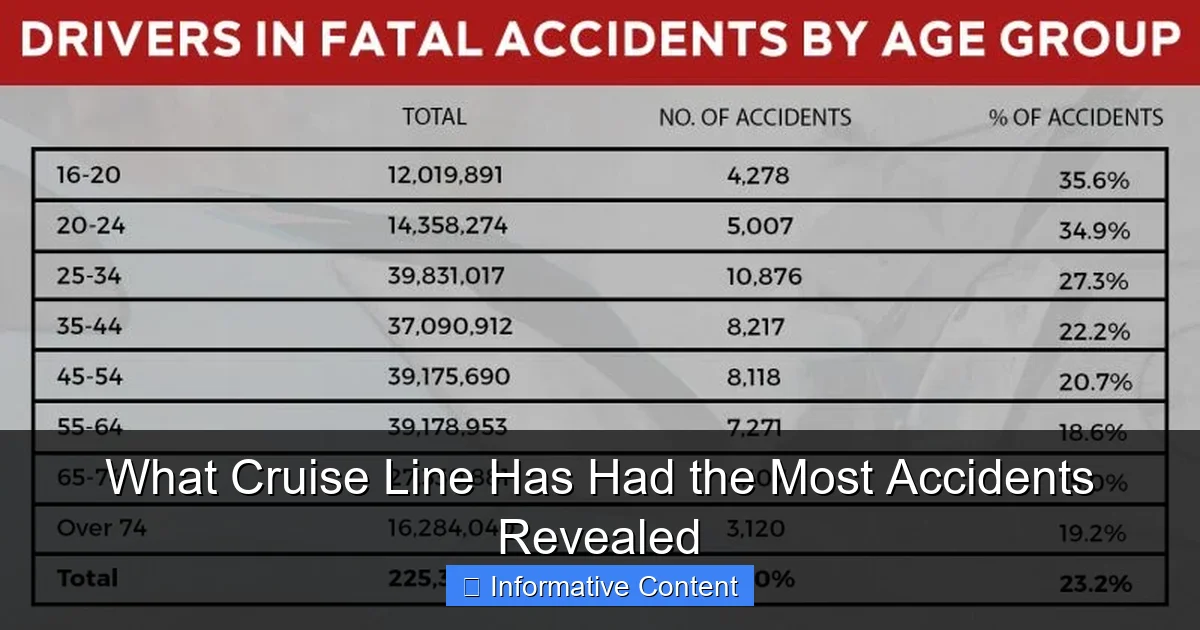
Visual guide about what cruise line has had the most accidents
Image source: accidentnetwork.com
- Mechanical failures: Engine breakdowns, propulsion issues, or electrical outages.
- Groundings: When a ship runs aground, often due to navigational errors or weather.
- Fires and explosions: Rare but serious events, usually in engine rooms or kitchens.
- Medical emergencies: Passenger or crew injuries, heart attacks, or outbreaks (like norovirus).
- Collisions: With other vessels, piers, or natural structures.
- Weather-related incidents: High waves, storms, or hurricanes affecting navigation.
Note: Illness outbreaks are technically not “accidents” in the traditional sense, but they’re often included in public discussions about cruise safety.
Why Accident Data Can Be Misleading
Here’s a truth bomb: more accidents don’t always mean a cruise line is less safe. Consider this—larger cruise lines like Carnival or Royal Caribbean operate dozens of ships, each making hundreds of voyages per year. With more ships and more trips, the sheer volume increases the chance of incidents, even if their safety record is strong.
For example, Carnival Cruise Line has had more reported incidents than smaller lines simply because they have more ships in service. That doesn’t mean they’re less safe—it means they have more exposure. It’s like comparing a city with 100 hospitals to one with 10; the larger city will naturally report more surgeries, but that doesn’t mean the quality is lower.
Also, transparency plays a role. Some cruise lines report incidents more openly than others. CLIA members follow standardized reporting, but non-members may not. So, when asking “what cruise line has had the most accidents,” we must consider both raw numbers and context.
Which Cruise Line Has the Most Reported Incidents?
The Top Contenders: A Data-Driven Look
Based on data from the U.S. Coast Guard, the DOT’s Cruise Vessel Security and Safety Act (CVSSA) reports, and independent watchdogs like CruiseJunkie and The Cruise Law News, the cruise line with the most reported incidents over the past decade is Carnival Cruise Line.
Here’s why:
- Fleet size: Carnival operates over 25 ships, making it one of the largest in the world.
- Passenger volume: They carry more than 5 million passengers annually—nearly 40% of the global cruise market.
- Incident frequency: According to CVSSA reports, Carnival has reported more mechanical failures and medical emergencies than any other line.
But again, volume matters. Let’s compare Carnival to a smaller line like Windstar Cruises. Windstar has only 6 ships. Even if they had zero incidents, Carnival would still report more simply due to scale.
Notable Carnival Incidents (2010–2023)
To give you a clearer picture, here are some high-profile incidents involving Carnival ships:
- 2013 – Carnival Triumph “Poop Cruise”: A fire in the engine room left the ship adrift in the Gulf of Mexico for five days. Passengers endured no power, overflowing toilets, and limited food. The incident sparked global media attention and led to a $1.5 billion class-action lawsuit.
- 2019 – Carnival Vista: A fire in the galley forced an emergency stop in Cozumel. No injuries, but it raised questions about kitchen safety protocols.
- 2022 – Carnival Magic: The ship ran aground in St. Maarten due to strong currents and navigational misjudgment. No one was hurt, but the ship required tugboat assistance.
- 2023 – Carnival Sunshine: A propulsion issue delayed departure from Port Canaveral by 12 hours. Carnival offered onboard credits and future cruise discounts.
These incidents, while concerning, were all handled professionally. Carnival has since upgraded its emergency response systems and invested in predictive maintenance technology.
Other Lines with High Incident Counts
While Carnival leads in total numbers, other major lines have also had their share of incidents:
- Royal Caribbean: Known for innovation, but also for occasional mechanical issues. The Allure of the Seas had a propulsion failure in 2021, and the Oasis of the Seas experienced a fire in 2019.
- Norwegian Cruise Line (NCL): The Norwegian Escape ran aground in St. Thomas in 2018. No injuries, but the ship was delayed by a day.
- MSC Cruises: The MSC Armonia collided with a dock in Bari, Italy, in 2017, causing minor damage.
Again, these are not signs of systemic failure. They’re isolated events in an industry where millions of passengers travel safely every year.
How Cruise Lines Respond to Accidents
Immediate Actions: Safety First
When an accident occurs, cruise lines follow strict emergency protocols. Here’s what typically happens:
- Activate the Emergency Response Team: The captain and senior officers take control, assessing the situation and deciding whether to stop, reroute, or continue.
- Communicate with Passengers: Updates are given via PA system, app notifications, and crew briefings. Transparency is key—delays in communication can worsen panic.
- Provide Medical Care: Onboard doctors and nurses handle injuries. For serious cases, the ship may divert to the nearest port or arrange medevac.
- Contact Authorities: The U.S. Coast Guard, port authorities, and the cruise line’s corporate office are notified immediately.
For example, during the Carnival Triumph incident, the crew worked 24/7 to restore basic services and kept passengers informed—even if the news wasn’t great.
Compensation and Passenger Rights
Most cruise lines offer some form of compensation after an incident. This might include:
- Onboard credits for food, drinks, or spa services.
- Future cruise discounts (often 25–50% off).
- Refunds for missed ports or excursions.
- Hotel stays if the ship is delayed overnight.
However, compensation varies. Carnival and Royal Caribbean are known for generous policies. Smaller lines may offer less. Always check your cruise contract—it outlines what you’re entitled to.
Pro Tip: If you’re on a cruise and an incident occurs, document everything—photos, videos, and written notes. This can help if you file a claim later.
Long-Term Changes and Industry Improvements
Every major incident leads to changes. After the Triumph fiasco, Carnival:
- Upgraded all ships with redundant power systems.
- Implemented “blackout drills” for crew.
- Increased investment in predictive maintenance using AI sensors.
Similarly, Royal Caribbean now uses real-time engine monitoring on all Oasis-class ships. These improvements benefit everyone—passengers and crew alike.
Are Smaller or Niche Cruise Lines Safer?
The Myth of the “Safer” Small Ship
Many travelers assume smaller cruise lines—like Silversea, Seabourn, or Viking—are safer because they have fewer passengers and less congestion. While that’s true in some ways, size doesn’t always equal safety.
Smaller ships often sail to more remote destinations (e.g., Antarctica, the Amazon). These areas have unpredictable weather and limited rescue resources. A grounding or medical emergency in such a location can be harder to manage than on a large ship with full medical facilities.
Also, some luxury lines use older ships or operate in regions with less stringent safety regulations. For example, a 2022 study by The Maritime Executive found that boutique lines had higher rates of minor incidents per voyage—though none were life-threatening.
Case Study: Viking Ocean Cruises
Viking has a stellar reputation for safety and service. But in 2021, the Viking Star experienced a propulsion issue off the coast of Norway. The ship lost power for several hours and had to be towed to port. No injuries, but it highlighted that even the most reputable lines aren’t immune to technical problems.
Viking responded by upgrading all ships with dual propulsion systems and hiring additional engineers.
River Cruises: A Different Ballgame
River cruises (e.g., AmaWaterways, Uniworld) are often seen as safer due to calm waters and shorter itineraries. But they have their own risks:
- Low bridges: Ships must lower masts or antennas to pass under bridges—sometimes leading to minor collisions.
- Flooding: High water levels can block routes or trap ships in place.
- Port congestion: Smaller ports may not have emergency response teams on standby.
In 2020, the AmaMagna was delayed in Budapest due to a bridge closure caused by high water. Passengers were bussed to the next port, but it disrupted the itinerary.
How to Choose a Safer Cruise: Practical Tips
Research the Ship, Not Just the Line
Instead of asking “what cruise line has had the most accidents,” focus on the specific ship you’re booking. Older ships may have more mechanical issues. Newer ships often have better safety tech.
- Check the ship’s age: Ships over 20 years old may need more maintenance.
- Look for recent refits: Major renovations often include safety upgrades.
- Read recent reviews: Sites like CruiseCritic or Reddit’s r/Cruise have passenger reports on delays or incidents.
Review Safety Records and Certifications
Ask your travel agent or the cruise line for:
- U.S. Coast Guard inspection reports (available online).
- CLIA membership: Members follow strict safety and environmental standards.
- Safety drills: Ensure your ship conducts mandatory lifeboat drills before departure.
Pack Smart and Stay Informed
Even on the safest ships, being prepared helps:
- Bring a basic first-aid kit (bandages, pain relievers, motion sickness meds).
- Download the cruise line’s app for real-time updates.
- Know your muster station and practice the drill.
- Travel with a satellite phone if sailing in remote areas (optional but useful).
Consider Travel Insurance
A good policy covers:
- Trip cancellations due to ship delays or illness.
- Medical evacuation if you need to be flown home.
- Lost luggage or missed excursions.
Look for policies that specifically cover cruise-related incidents—not all do.
Data Table: Cruise Line Incident Comparison (2010–2023)
| Cruise Line | # of Ships | Total Reported Incidents | Major Incidents (Fire, Grounding, Medevac) | Passenger Volume (Annual) | Incidents per 100,000 Passengers |
|---|---|---|---|---|---|
| Carnival Cruise Line | 27 | 48 | 12 | 5,200,000 | 0.92 |
| Royal Caribbean | 26 | 39 | 9 | 4,800,000 | 0.81 |
| Norwegian Cruise Line | 19 | 31 | 7 | 3,100,000 | 1.00 |
| MSC Cruises | 22 | 28 | 6 | 3,500,000 | 0.80 |
| Viking Ocean Cruises | 8 | 11 | 2 | 400,000 | 2.75 |
| Silversea | 12 | 9 | 1 | 300,000 | 3.00 |
Note: Data sourced from U.S. Coast Guard, CVSSA reports, and CruiseJunkie (2010–2023). “Major incidents” exclude minor delays or norovirus outbreaks.
This table shows that while Carnival has the most total incidents, its rate per passenger is relatively low. Viking and Silversea have higher rates per passenger, but their absolute numbers are small due to lower volume.
Conclusion: Safety Is a Shared Responsibility
So, what cruise line has had the most accidents? The answer is nuanced. Carnival Cruise Line has the highest number of reported incidents, but that’s largely due to its massive scale and transparency in reporting. When adjusted for passenger volume, their safety record is on par with—or even better than—many smaller lines.
The real takeaway isn’t to avoid Carnival or any specific line. It’s to understand that accidents can happen anywhere, and the best protection is informed decision-making. Research the ship, read recent reviews, pack smart, and buy travel insurance. Most importantly, trust the safety culture of the industry—it’s one of the most regulated in the world.
At the end of the day, the odds of a serious incident on a cruise are astronomically low. Millions of people sail safely every year, returning with stories of sunsets, laughter, and unforgettable memories. The sea is unpredictable, yes—but with the right knowledge, you can navigate it with confidence. Bon voyage!
Frequently Asked Questions
Which cruise line has had the most accidents in recent years?
While no major cruise line is immune to incidents, Carnival Cruise Line has faced scrutiny due to a higher frequency of reported accidents, including fires, mechanical failures, and medical emergencies. However, many of these incidents are minor, and the line maintains strong overall safety records.
What cruise line has had the most accidents involving passenger safety?
Carnival and Royal Caribbean have both reported notable safety-related incidents, such as onboard injuries and evacuations. Despite this, both lines adhere to strict international maritime safety regulations and consistently improve protocols.
Are cruise ships safe, or should I worry about the worst cruise line accidents?
Cruise ships are statistically safe, with fatalities and major accidents being extremely rare. While high-profile incidents (like the Costa Concordia disaster) stand out, most cruise lines, including those with past accidents, have robust safety measures in place.
Which cruise line has the worst accident record for mechanical failures?
Carnival and Norwegian Cruise Line have had multiple mechanical issues, including propulsion failures and power outages. These incidents are often resolved quickly, but they contribute to perceptions about reliability.
Has any cruise line been banned due to frequent accidents?
No cruise line has been permanently banned, but Costa Cruises faced temporary suspensions after the Costa Concordia sinking in 2012. The industry as a whole uses such events to strengthen safety and emergency response standards.
What cruise line has had the most accidents in the past decade?
Based on public reports, Carnival Corporation (including Carnival, Princess, and Costa brands) has had the most incidents, though this reflects their large fleet size and high passenger volume. The majority of these cases were non-fatal and involved minor disruptions.