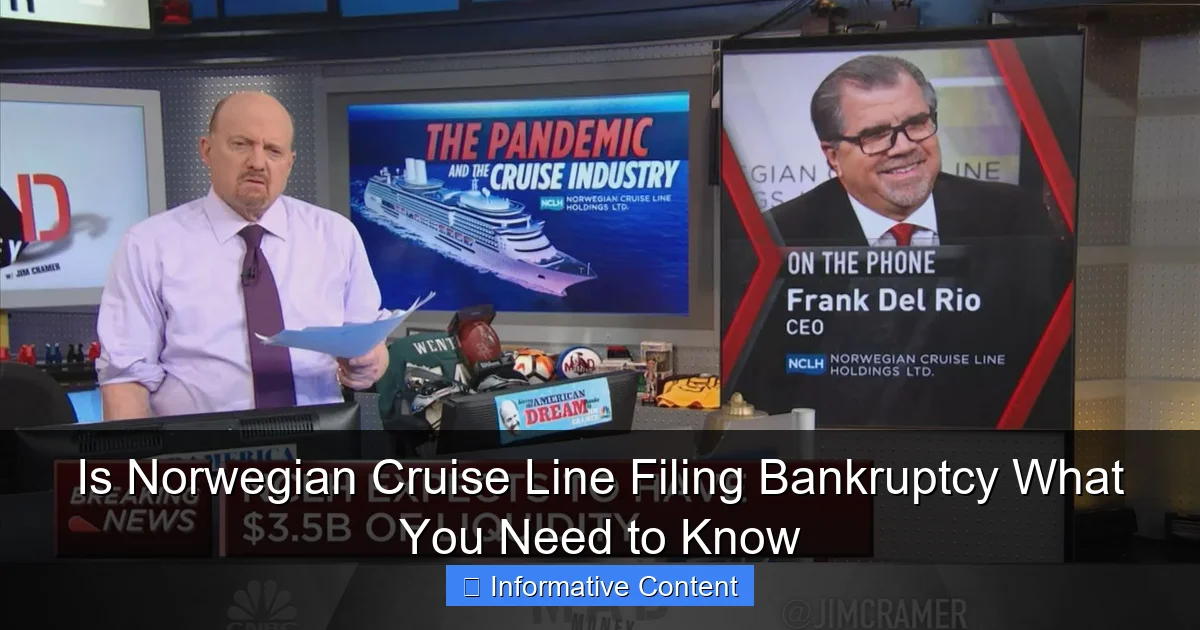
Featured image for is norwegian cruise line filing bankruptcy
Image source: image.cnbcfm.com
Norwegian Cruise Line is not currently filing for bankruptcy, despite market rumors and financial challenges faced during the pandemic. The company has taken strategic steps—including debt restructuring and cost-cutting measures—to stabilize operations and maintain liquidity. While financial caution remains, NCL continues sailing with strong future bookings and no active bankruptcy filings.
Key Takeaways
- No bankruptcy filing: Norwegian Cruise Line remains operational and financially stable.
- Monitor official updates: Check NCL’s investor relations for real-time financial disclosures.
- Bookings are safe: Cruises continue as scheduled; no cancellations due to financial issues.
- Review travel insurance: Protect investments with policies covering unforeseen disruptions.
- Stock volatility: Share prices may fluctuate, but fundamentals remain strong.
- Industry recovery: NCL benefits from post-pandemic travel demand rebound.
📑 Table of Contents
- Is Norwegian Cruise Line Filing Bankruptcy? What You Need to Know
- The Current Financial Health of Norwegian Cruise Line
- Bankruptcy Rumors: Separating Fact from Fiction
- What a Bankruptcy Filing Would Mean for Travelers
- How NCL Is Adapting to Survive (and Thrive)
- The Bigger Picture: Is the Cruise Industry Sustainable?
- Conclusion: Should You Worry?
Is Norwegian Cruise Line Filing Bankruptcy? What You Need to Know
Imagine you’re sipping a piña colada on the deck of a Norwegian Cruise Line (NCL) ship, the sun setting over the Caribbean Sea. You’ve saved for months, maybe years, for this dream vacation. Then, a headline pops up on your phone: “Norwegian Cruise Line Filing Bankruptcy?” Your heart skips a beat. Panic sets in. Is your vacation about to sink? Are your hard-earned dollars going down the drain?
You’re not alone. The cruise industry has faced massive turbulence since 2020, and rumors of financial trouble have swirled around major players like NCL. But before you start canceling reservations or demanding refunds, let’s take a deep breath and dive into the facts. In this post, we’ll explore whether Norwegian Cruise Line is actually filing for bankruptcy, what it means for you as a traveler or investor, and how to make sense of the headlines. Whether you’re a first-time cruiser, a loyal NCL fan, or just curious about the company’s future, this guide will help you separate fact from fiction—no life jacket required.
The Current Financial Health of Norwegian Cruise Line
Recent Financial Performance: The Numbers Tell the Story
Let’s start with the cold, hard data. As of 2023, Norwegian Cruise Line Holdings (NCLH), the parent company of NCL, reported total revenue of $4.8 billion, a massive rebound from the $1.3 billion in 2021. While this is still below pre-pandemic levels (which peaked at $6.5 billion in 2019), it shows strong recovery. But revenue alone doesn’t tell the whole story. The real concern is debt.
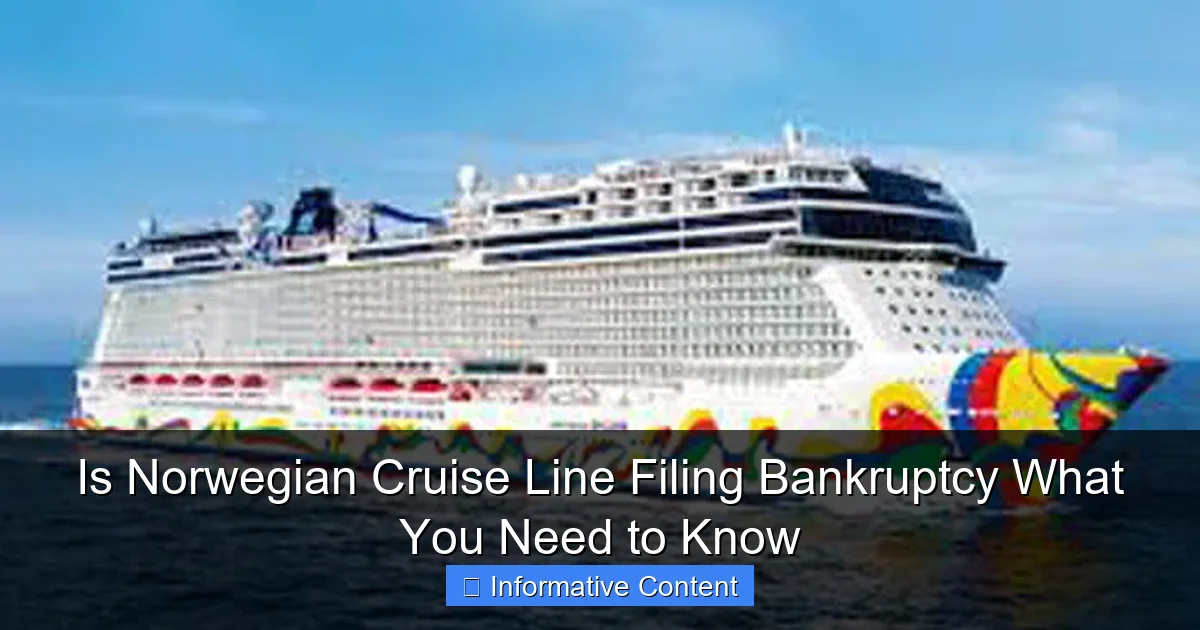
Visual guide about is norwegian cruise line filing bankruptcy
Image source: ieyenews.com
NCLH currently carries a staggering $13.5 billion in total debt, up from $9.4 billion in 2019. That’s a 44% increase in just four years. High debt isn’t necessarily a death sentence—many companies operate with leverage—but it becomes risky when cash flow is inconsistent. In 2022, NCLH reported a net loss of $2.2 billion, though 2023 saw a narrower loss of $500 million. The trend is positive, but the debt load remains a red flag.
Here’s a relatable analogy: Think of NCL like a friend who lost their job during the pandemic, maxed out credit cards to cover expenses, and is now slowly getting back on their feet. They’re earning again, but they’re still paying off those credit cards. Is their financial future doomed? Not necessarily—but they’re walking a tightrope.
Debt Management and Liquidity: Can NCL Stay Afloat?
One of the biggest questions is whether NCL can service its debt. The company has taken several steps to improve liquidity:
- Refinancing debt: In 2022, NCLH extended maturity dates on $1.5 billion of debt, giving them breathing room.
- Cost-cutting: They reduced operating expenses by 30% during the pandemic, including staff reductions and route optimizations.
- Asset sales: NCL sold two older ships (Pride of America and Norwegian Jade) to raise $400 million.
These moves helped. As of Q1 2024, NCLH reported $2.1 billion in cash and cash equivalents—enough to cover short-term obligations. But long-term debt maturities loom. The company has $3.2 billion due between 2025 and 2026. If they can’t refinance or generate enough cash, that’s when bankruptcy chatter starts.
Tip: If you’re an investor, watch NCLH’s quarterly earnings reports like a hawk. Look for “debt-to-equity ratio” and “interest coverage ratio”—these metrics show how well they can handle debt payments.
Stock Performance and Market Sentiment
Wall Street’s view of NCL is mixed. The stock (NCLH) has been volatile, trading between $12 and $28 over the past two years. In 2023, shares rose 45% as travel demand rebounded, but 2024 has seen a pullback due to inflation concerns. Analysts are divided:
- Buy ratings: Some see NCL as undervalued, citing pent-up demand and premium pricing power.
- Hold/Sell ratings: Others worry about high debt and potential recession impacts on discretionary spending.
For travelers, stock price isn’t as critical as operational stability—but if NCL’s stock plummets, it could signal deeper problems. Keep an eye on news headlines, but don’t overreact to short-term swings.
Bankruptcy Rumors: Separating Fact from Fiction
Where Do These Rumors Come From?
Bankruptcy rumors about NCL started gaining traction in 2020, when the pandemic shut down global cruising. Headlines like “Cruise Industry Collapse” and “Norwegian Cruise Line Filing Bankruptcy” spread like wildfire. But here’s the truth: NCL has never filed for Chapter 11 bankruptcy. Not in 2020. Not in 2023. Not ever.
So why the rumors? Three reasons:
- Industry-wide panic: When Carnival and Royal Caribbean took on massive debt, people assumed NCL was in the same boat.
- Misinterpreted news: In 2021, NCLH filed an SEC document warning of “substantial doubt” about its ability to continue as a going concern. This is standard language for companies with high debt—it doesn’t mean bankruptcy is imminent.
- Clickbait headlines: Some media outlets sensationalize “bankruptcy” to drive clicks, even when the situation is nuanced.
Example: In 2021, a viral tweet claimed NCL was “days away from bankruptcy.” The tweet got 100K retweets—but it was based on a misreading of an earnings call. The company later clarified: “We are not filing bankruptcy. We are actively managing our liquidity.”
What Chapter 11 vs. Chapter 7 Means for NCL
If NCL *were* to file bankruptcy, it wouldn’t necessarily mean the end of the company. Here’s the difference:
- Chapter 11 (Reorganization): The company continues operating while restructuring debt. Think of it like a company hitting pause to renegotiate loans, sell assets, and emerge leaner. This is the most likely scenario if NCL ever files.
- Chapter 7 (Liquidation): The company shuts down, sells all assets, and pays creditors. This is rare for large, established companies like NCL.
In Chapter 11, cruise operations would likely continue. Your bookings? They’d probably be honored—or at least refunded. But there could be changes: fewer ships, modified itineraries, or altered loyalty programs. The key takeaway: Bankruptcy doesn’t mean “game over.” It means “reset button.”
How NCL’s Competitors Are Faring
NCL isn’t alone in its debt challenges. The entire cruise industry took a beating:
| Company | Total Debt (2023) | Debt Increase Since 2019 |
|---|---|---|
| Norwegian Cruise Line | $13.5B | 44% |
| Carnival Corporation | $32.5B | 110% |
| Royal Caribbean | $22.1B | 85% |
Compared to its peers, NCL’s debt load is high but not catastrophic. Carnival’s debt is more than double NCL’s, yet it’s still operating. The cruise industry is cyclical—it’s survived recessions, pandemics, and even terrorist attacks. NCL’s brand strength, loyal customer base, and premium positioning give it a fighting chance.
What a Bankruptcy Filing Would Mean for Travelers
Your Cruise Bookings: Safe or at Risk?
Let’s address the elephant in the room: If NCL files for Chapter 11, will your cruise still happen? The short answer: Probably yes. Here’s why:
- Cruise lines are essential businesses: Ships are floating assets. If NCL liquidates, another operator would likely buy the fleet and keep sailing.
- Customer deposits are protected: NCL holds deposits in escrow accounts, which are legally separate from operating funds. In a bankruptcy, these funds are usually safe.
- Precedent from past bankruptcies: When small cruise lines like Celestyal Cruises filed Chapter 11 in 2020, most itineraries continued with minimal disruption.
That said, there are no guarantees. In rare cases, itineraries could be canceled or modified. For example, if NCL needs to sell ships to raise cash, your cruise might be rerouted or delayed.
Tip: If you’re worried, book with a credit card. Under U.S. law, credit card purchases over $50 are protected if the service isn’t delivered (Fair Credit Billing Act). You can dispute charges if your cruise is canceled.
Loyalty Programs: Will Your Points Disappear?
NCL’s loyalty program, Latitudes, is a big perk for repeat cruisers. But could it vanish in a bankruptcy?
- In Chapter 11: Loyalty programs are often preserved as a way to retain customers. Think of airlines—when Delta filed Chapter 11 in 2005, SkyMiles continued.
- In Chapter 7: All assets, including customer data, are liquidated. Your points would likely expire.
To protect yourself, use your points sooner rather than later. Redeem them for upgrades, onboard credits, or future cruises. If you have a large points balance, consider booking a cruise within the next 12–18 months.
Travel Insurance: Your Safety Net
Travel insurance is your best defense against uncertainty. Look for a policy that covers:
- Bankruptcy protection: Some policies (like Allianz or Travel Guard) cover cancellations due to carrier bankruptcy.
- Trip interruption: If your cruise is cut short, you’ll get reimbursed for unused portions.
- 24/7 emergency assistance: If you’re stranded mid-cruise, the insurer can help arrange alternative travel.
Pro tip: Buy insurance within 14 days of your initial deposit. This ensures coverage for pre-existing conditions and bankruptcy protection.
How NCL Is Adapting to Survive (and Thrive)
New Revenue Streams: Beyond Just Cruising
NCL isn’t just relying on ticket sales to survive. They’ve diversified in smart ways:
- Onboard spending: NCL pushes premium experiences like specialty dining, spa packages, and shore excursions. In 2023, onboard revenue hit $1.2 billion—a record high.
- Private destinations: Harvest Caye (Belize) and Great Stirrup Cay (Bahamas) give NCL exclusive ports, reducing reliance on third-party fees.
- Partnerships: NCL teamed up with Airbnb and Expedia to bundle cruise packages, reaching new customers.
These strategies are paying off. NCL’s average revenue per passenger has risen from $250 in 2019 to $320 in 2023. That’s a 28% increase—proof that people are willing to pay more for unique experiences.
Fleet Modernization: Bigger, Better, Greener
NCL is investing heavily in new ships. The Norwegian Prima, launched in 2022, is the first in a new class of vessels with:
- 32% more space per passenger
- Energy-efficient engines (cutting fuel use by 20%)
- AI-powered navigation systems
By 2027, NCL plans to add four more Prima-class ships. These investments signal confidence in the future—no company spends billions on new ships if they’re preparing to shut down.
Sustainability: A Key to Long-Term Success
Younger travelers care about sustainability, and NCL is responding. Initiatives include:
- LNG-powered ships: The Norwegian Encore runs on liquefied natural gas, reducing emissions by 25%.
- Plastic-free zones: NCL eliminated single-use plastics in 2020.
- Carbon offset programs: Passengers can pay $10 to offset their cruise’s carbon footprint.
These efforts aren’t just good PR—they’re essential for attracting eco-conscious travelers. In a 2023 survey, 68% of millennials said sustainability impacts their travel choices.
The Bigger Picture: Is the Cruise Industry Sustainable?
Long-Term Demand: Are People Still Cruising?
Despite the headlines, cruise demand is strong. In 2023, 31.5 million people took a cruise—surpassing pre-pandemic levels (29.7 million in 2019). The Cruise Lines International Association (CLIA) predicts 35 million cruisers by 2025.
Why the rebound?
- Pent-up demand: People are eager to travel after years of restrictions.
- New markets: Cruising is growing in Asia, Latin America, and the Middle East.
- All-inclusive appeal: Cruises offer convenience (meals, entertainment, lodging in one price).
For NCL, this is good news. The company’s focus on premium, experiential cruises aligns with this demand.
Regulatory and Economic Risks
The cruise industry isn’t out of the woods yet. Risks include:
- Recession: If the economy dips, discretionary spending (like cruises) could fall.
- Regulation: New environmental rules (e.g., EU emissions taxes) could increase costs.
- Geopolitical instability: Wars or natural disasters can disrupt itineraries.
But NCL has weathered storms before. During the 2008 recession, NCL’s revenue dropped 20%—but it recovered within two years. The company’s agility gives it an edge.
Conclusion: Should You Worry?
So, is Norwegian Cruise Line filing bankruptcy? No—not now, and probably not anytime soon. The company has challenges (especially debt), but it’s taking aggressive steps to adapt. For travelers, the risks are minimal if you:
- Book with a credit card
- Buy travel insurance
- Monitor news from reliable sources
For investors, NCL is a high-risk, high-reward play. The stock could soar if the company refinances debt and boosts margins—or sink if a recession hits.
At the end of the day, NCL’s future depends on execution. If they can keep innovating, managing debt, and delivering unforgettable experiences, they’ll sail through this storm. And if you’re dreaming of that Caribbean sunset? Go book your cruise. The water’s fine.
Frequently Asked Questions
Is Norwegian Cruise Line filing bankruptcy in 2024?
As of now, Norwegian Cruise Line (NCL) has not filed for bankruptcy in 2024. The company has taken strategic financial measures to stabilize operations and manage debt, showing signs of recovery post-pandemic.
What financial challenges is Norwegian Cruise Line currently facing?
NCL has faced significant debt burdens and operational hurdles due to global travel disruptions, but it has secured financing and implemented cost-saving initiatives to avoid bankruptcy. Its latest financial reports indicate gradual revenue improvement.
Has Norwegian Cruise Line filed for Chapter 11 bankruptcy protection before?
No, Norwegian Cruise Line has never filed for Chapter 11 bankruptcy. Despite pandemic-related setbacks, the company avoided formal bankruptcy by restructuring debt and raising capital through equity and asset sales.
How is Norwegian Cruise Line’s bankruptcy risk compared to other cruise lines?
NCL’s bankruptcy risk remains lower than some competitors due to aggressive financial restructuring and strong liquidity efforts. However, high debt levels mean ongoing monitoring of its financial health is essential for investors and travelers.
What happens to my cruise if Norwegian Cruise Line files for bankruptcy?
If NCL were to file for bankruptcy, your cruise may be protected under maritime laws or travel insurance policies. The company would likely continue operations during restructuring, but refunds or rebooking could be affected.
Are Norwegian Cruise Line’s stock and bond prices signaling bankruptcy risk?
While NCL stock and bond prices reflect market concerns about debt, recent performance suggests investor confidence in its recovery plan. No definitive signs of an imminent bankruptcy filing are evident in financial markets.