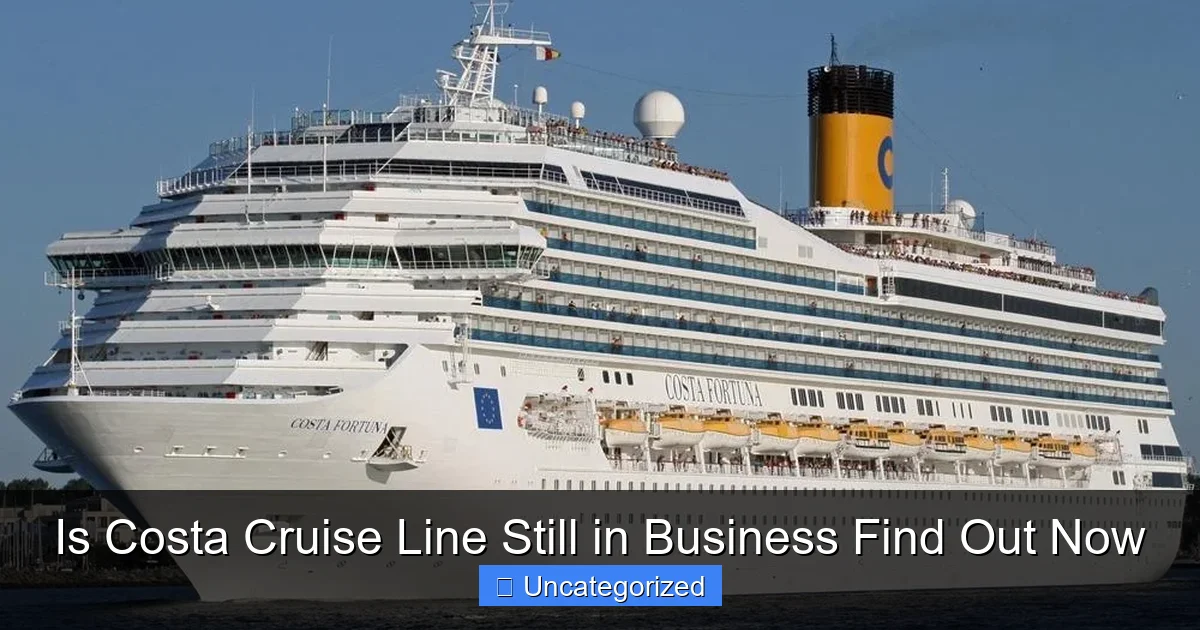
Featured image for is costa cruise line still in business
Image source: cruiseship.net
Yes, Costa Cruise Line is still in business and continues to operate as a prominent player in the cruise industry, offering vibrant, culturally rich voyages across Europe, Asia, and beyond. Despite pandemic-related pauses and fleet restructuring, the line has resumed full operations under Carnival Corporation, maintaining its signature Italian flair and commitment to global travelers.
Key Takeaways
- Costa Cruises is operational: Actively sailing with updated health protocols post-pandemic.
- Check official schedules: Verify current itineraries on Costa’s website for real-time updates.
- New ships launched: Fleet includes modern vessels like Costa Smeralda and Toscana.
- Europe-focused routes: Major itineraries cover Mediterranean, Northern Europe, and Caribbean.
- Book with confidence: Parent company Carnival Corp ensures financial stability and reliability.
- Enhanced safety measures: Review Costa’s health guidelines before booking your cruise.
📑 Table of Contents
- Is Costa Cruise Line Still in Business? The Current State of an Iconic Brand
- Costa Cruise Line: A Brief History and Brand Identity
- Current Fleet Status and Active Operations (2023–2024)
- Ownership and Financial Health: Is Costa Profitable?
- Recent Challenges and Controversies
- Future Plans and Upcoming Developments
- Conclusion: Yes, Costa Cruise Line Is Very Much in Business
Is Costa Cruise Line Still in Business? The Current State of an Iconic Brand
For decades, Costa Cruise Line has been synonymous with European-style cruising, offering vibrant, Italian-inspired voyages across the Mediterranean, Caribbean, and beyond. With a fleet known for its colorful hulls, lively onboard entertainment, and strong cultural identity, Costa Cruises carved out a unique niche in the global cruise industry. However, recent global events—especially the pandemic, fleet restructuring, and shifting ownership dynamics—have raised questions among travelers: Is Costa Cruise Line still in business?
The short answer is yes, but the landscape has changed significantly. While Costa Cruises remains operational, its operations have evolved in response to market demands, environmental regulations, and post-pandemic recovery. Whether you’re a loyal Costa cruiser planning your next vacation or a first-time traveler curious about the brand’s current status, understanding the nuances of its operations, fleet status, and future outlook is essential. This comprehensive guide dives deep into the current state of Costa Cruise Line, exploring its business model, fleet activity, recent developments, and what the future holds. From fleet updates to booking tips and sustainability initiatives, we’ll provide the most up-to-date and practical insights to help you make informed decisions about cruising with Costa.
Costa Cruise Line: A Brief History and Brand Identity
Origins and Evolution of the Costa Brand
Founded in 1854 as a shipping company in Genoa, Italy, Costa Crociere began transitioning into passenger cruising in the mid-20th century. The brand officially launched its first cruise ship, the Costa Carla, in 1947, marking the beginning of its transformation into a major player in the leisure cruise market. Over the decades, Costa expanded its fleet and routes, becoming known for its “Italian style at sea”—a blend of Mediterranean flair, gourmet Italian cuisine, and vibrant onboard culture.
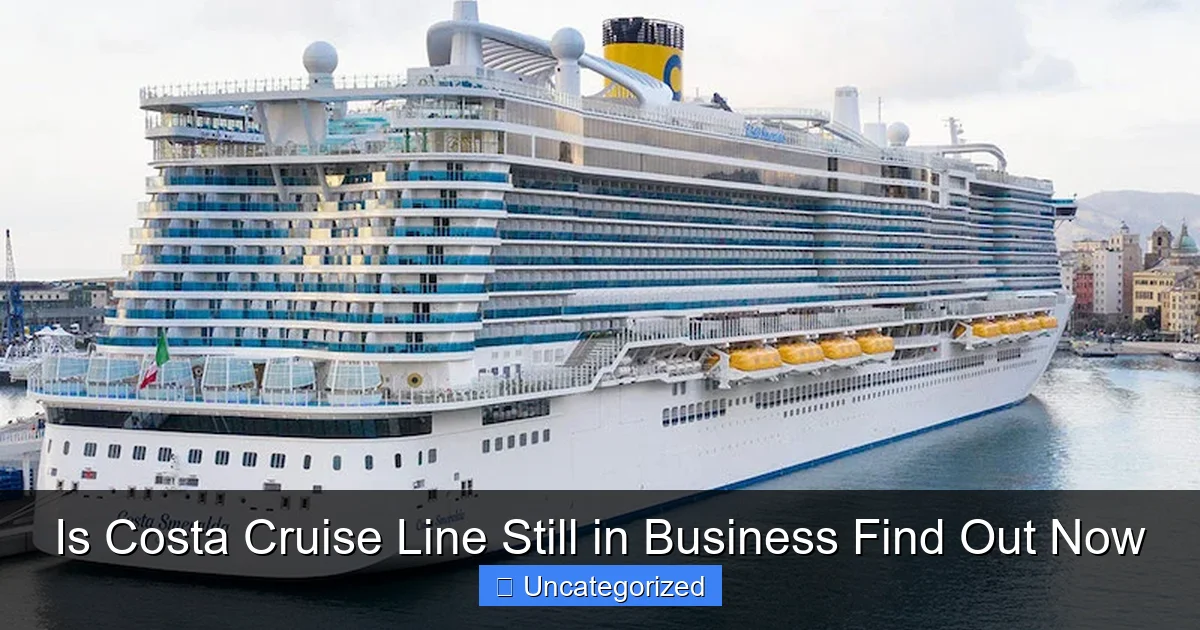
Visual guide about is costa cruise line still in business
Image source: cruiseindustrynews.com
By the 2000s, Costa had become one of the largest cruise operators in Europe and a dominant force in the Mediterranean market. In 2000, it was acquired by Carnival Corporation & Plc, the world’s largest cruise company, which provided financial stability and access to global distribution networks. Under Carnival’s ownership, Costa underwent significant modernization, launching new ships, expanding into Asian and North American markets, and investing heavily in branding and customer experience.
What Makes Costa Unique?
Costa Cruises distinguishes itself through several key brand pillars:
- Italian Heritage: From onboard language to food and décor, Costa emphasizes Italian culture. Expect espresso bars, pizza stations, and live Italian music.
- Family-Friendly Atmosphere: While not as kid-centric as some competitors, Costa offers excellent family programs, including kids’ clubs and multilingual entertainment.
- Global Reach with European Flair: Costa operates in over 50 countries, but its core identity remains rooted in European cruising traditions.
- Value-Oriented Pricing: Costa often positions itself as a mid-range brand, offering competitive pricing compared to luxury lines like Regent or Oceania.
Despite its global expansion, Costa has maintained a strong connection to its Italian roots, which continues to attract travelers seeking a culturally rich, energetic cruise experience.
Current Fleet Status and Active Operations (2023–2024)
Active Ships and Deployment
As of 2024, Costa Cruise Line operates a fleet of 11 active ships, with several more in various stages of retirement or rebranding. The fleet includes a mix of mid-sized and large vessels, ranging from 2,000 to over 6,000 passengers. Here’s a breakdown of the current active fleet and their primary deployment regions:
| Ship Name | Passenger Capacity | Year Built | Primary Region (2024) | Notes |
|---|---|---|---|---|
| Costa Smeralda | 6,554 | 2019 | Caribbean & Mediterranean | LNG-powered; flagship vessel |
| Costa Toscana | 6,554 | 2021 | Mediterranean | Also LNG-powered; sister to Smeralda |
| Costa Firenze | 4,232 | 2020 | Asia (China, Singapore) | Rebranded from Carnival Vista; China-focused |
| Costa Venezia | 4,232 | 2019 | Asia (Vietnam, Thailand) | Formerly Carnival Vista; Italian-themed |
| Costa Fascinosa | 3,780 | 2012 | South America & Caribbean | Seasonal repositioning |
| Costa Pacifica | 3,780 | 2009 | Mediterranean & Northern Europe | Popular for summer sailings |
| Costa Deliziosa | 2,828 | 2010 | World Cruises & Exotics | Longer itineraries; repositioning |
| Costa Favolosa | 3,780 | 2011 | Mediterranean | Family-friendly; summer focus |
| Costa Diadema | 4,947 | 2014 | Mediterranean & Canary Islands | Largest in fleet before LNG ships |
| Costa Serena | 3,780 | 2007 | Mediterranean & Baltic | Seasonal; popular for spring/summer |
| Costa Fortuna | 3,470 | 2003 | Mediterranean & Transatlantic | One of the older active ships |
Retired and Sold Ships
Several former Costa ships have been retired, sold, or repurposed in recent years. Notable examples include:
- Costa Luminosa: Sold to Seabourn in 2023 and renamed Seabourn Encore (later Seabourn Ovation), now operating under Seabourn’s luxury brand.
- Costa Magica: Sold to Peace Boat in 2023 and renamed Ocean Dream, now used for educational and cultural voyages.
- Costa NeoRomantica & Costa neoRiviera: Both retired and sold to Peace Boat or scrapped, reflecting Carnival’s strategy to modernize the fleet.
These sales are part of Carnival Corporation’s broader fleet optimization plan, which aims to reduce operational costs, improve fuel efficiency, and focus on newer, more sustainable vessels.
Booking Tips for 2024
To secure the best deals and ensure your preferred itinerary:
- Book Early for Summer 2024: Mediterranean sailings on Costa Smeralda and Toscana sell out fast.
- Consider Off-Peak Seasons: Cruises to the Caribbean or South America in late spring/fall offer lower prices and fewer crowds.
- Check for Repositioning Cruises: Ships like Costa Deliziosa offer transatlantic or world cruises at discounted rates during repositioning.
- Use Costa’s “Flexible Booking” Option: Allows free changes up to 15 days before departure (subject to fare difference).
Ownership and Financial Health: Is Costa Profitable?
Carnival Corporation’s Strategic Role
Costa Cruise Line is fully owned by Carnival Corporation & Plc, a dual-listed company (NYSE: CCL, LSE: CCL) that operates nine cruise brands, including Carnival Cruise Line, Princess, Holland America, and Seabourn. As of 2023, Carnival Corporation reported a total fleet of 92 ships across all brands, with Costa contributing approximately 12% of the total passenger capacity.
Despite the pandemic-induced losses (Carnival reported a net loss of $1.8 billion in 2022), the company has returned to profitability. In Q3 2023, Carnival posted a net income of $1.07 billion, driven by strong booking momentum, higher ticket prices, and cost-saving measures. Costa, as one of the core European brands, played a key role in this recovery, particularly in the Mediterranean and Asia markets.
Costa’s Revenue Streams and Market Position
Costa generates revenue through multiple channels:
- Ticket Sales: Accounts for ~60% of revenue, with average ticket prices ranging from $1,200 to $2,500 per person for a 7-day cruise.
- Onboard Spending: Includes bars, specialty dining, spa, excursions, and retail—typically 25–30% of total revenue.
- Partnerships: Collaborations with brands like Lavazza (coffee), Ferrero (chocolate), and Dolce & Gabbana (onboard boutiques) enhance guest experience and generate licensing fees.
Costa’s market share in Europe is estimated at 18%, making it the second-largest cruise line in the region after MSC Cruises (22%). In Asia, Costa holds a 7% share, with strong growth in China and Southeast Asia.
Financial Stability and Future Outlook
Costa is financially stable, supported by:
- Strong Backlog: As of late 2023, Costa had over 1.2 million booked guests for 2024–2025, with advance bookings up 15% year-over-year.
- Debt Management: Carnival has reduced its net debt by $3.2 billion since 2021, improving liquidity.
- New Ship Investments: The LNG-powered Smeralda and Toscana are attracting premium pricing and positive reviews.
While not as large as Carnival Cruise Line, Costa remains a profitable and strategically important brand for Carnival Corporation, especially in key European and Asian markets.
Recent Challenges and Controversies
The Pandemic Impact (2020–2022)
The global cruise industry was devastated by the COVID-19 pandemic, and Costa was no exception. In 2020, Costa suspended all operations for over a year, leading to massive financial losses and operational disruptions. The Costa Victoria and Costa Deliziosa became symbols of the crisis when they were stranded at sea with infected passengers.
Key challenges included:
- Refund disputes with customers.
- Delays in restarting operations due to port restrictions.
- Increased health and safety protocols, raising operating costs.
By 2022, Costa resumed sailings with enhanced sanitation, mandatory vaccination, and improved medical facilities. The brand also introduced “Costa Safe & Sound” health protocols, which are now standard across the fleet.
Environmental and Regulatory Pressures
Costa has faced criticism for its environmental footprint, particularly regarding emissions and waste management. In 2021, the Costa Smeralda was temporarily banned from docking in Venice due to its size and emissions, sparking debate about sustainable tourism.
In response, Costa has:
- Invested in LNG (liquefied natural gas) propulsion for new ships, reducing CO₂ emissions by up to 20%.
- Launched a “Planet Water” initiative to reduce single-use plastics by 80% by 2025.
- Partnered with Wärtsilä to develop hybrid power systems for future vessels.
While not a zero-emission brand yet, Costa is actively working toward Carnival Corporation’s goal of net-zero emissions by 2050.
Labor and Crew Welfare Issues
Like many cruise lines, Costa has faced scrutiny over crew working conditions. In 2022, a report by the International Transport Workers’ Federation (ITF) highlighted concerns about long shifts and mental health support. Costa has since:
- Improved crew rotation policies.
- Launched wellness programs, including onboard counseling and fitness facilities.
- Increased transparency in crew contracts and wages.
These efforts have helped rebuild trust with both employees and travelers.
Future Plans and Upcoming Developments
New Ships and Fleet Expansion
Costa has two new LNG-powered ships on order, scheduled for delivery in 2025 and 2027. These vessels will be larger than Smeralda and Toscana, with capacity for over 7,000 passengers. Key features include:
- Advanced air lubrication systems to reduce drag and fuel consumption.
- AI-powered energy management systems.
- Expanded wellness and entertainment zones.
Additionally, Costa plans to renovate three existing ships by 2026, adding new dining concepts, updated staterooms, and enhanced sustainability features.
Market Expansion and New Itineraries
Costa is aggressively expanding in Asia, with plans to:
- Launch a new “Costa Asia” brand identity focused on local cuisine and cultural experiences.
- Add new ports in Japan, Indonesia, and the Philippines.
- Offer “Costa+” packages with pre- and post-cruise land tours.
In Europe, Costa will focus on short cruises (3–5 nights) and eco-tourism itineraries to destinations like the Azores and the Norwegian fjords.
Technology and Guest Experience Innovations
Costa is investing in digital transformation:
- Costa App 3.0: Offers real-time navigation, digital boarding, and AI concierge.
- Smart Cabins: Voice-controlled lighting, climate, and entertainment (available on new ships).
- Virtual Reality Excursions: Pre-cruise VR previews of shore activities.
These innovations aim to enhance convenience and personalization, especially for tech-savvy travelers.
Conclusion: Yes, Costa Cruise Line Is Very Much in Business
So, is Costa Cruise Line still in business? The answer is a resounding yes—and it’s stronger than ever. While the past few years have brought unprecedented challenges, Costa has adapted, evolved, and positioned itself for long-term success. With a modern, LNG-powered fleet, a strong financial backbone from Carnival Corporation, and a clear strategy for growth in Asia and Europe, Costa is not just surviving—it’s thriving.
Travelers can expect continued innovation in sustainability, guest experience, and itinerary diversity. Whether you’re drawn to the vibrant energy of a Mediterranean cruise on Costa Smeralda, the exotic allure of an Asian voyage on Costa Venezia, or the cultural richness of a world cruise on Costa Deliziosa, Costa offers something for every type of cruiser.
For those considering a Costa cruise in 2024 or beyond, now is an excellent time to book. With flexible policies, new ships on the horizon, and a renewed focus on safety and sustainability, Costa Cruise Line remains a compelling choice for unforgettable sea adventures. Buon viaggio!
Frequently Asked Questions
Is Costa Cruise Line still in business in 2024?
Yes, Costa Cruise Line is still in business and operating globally in 2024. The cruise line continues to offer itineraries across Europe, Asia, and the Caribbean, with a modernized fleet and updated health and safety protocols.
What happened to Costa Cruise Line after the pandemic?
Costa Cruise Line resumed operations in 2021 after temporary suspensions due to the pandemic. The company implemented enhanced safety measures and gradually reintroduced ships to meet growing demand for international cruising.
Are Costa Cruise Line ships still sailing under the same brand?
Yes, Costa Cruise Line remains an independent brand under Carnival Corporation & plc. While sister brands like Carnival Cruise Line have expanded, Costa continues to operate with its Italian heritage and signature European-style service.
Has Costa Cruise Line reduced its fleet or services?
Costa has optimized its fleet by retiring older vessels but has also added newer ships like the *Costa Toscana* and *Costa Smeralda*. The cruise line still offers a wide range of itineraries, confirming its active status.
Why can’t I find recent reviews or news about Costa Cruise Line?
While Costa Cruise Line is still in business, it may have less visibility compared to larger brands. Check their official website or trusted travel platforms for updated schedules, customer reviews, and onboard experiences.
Is Costa Cruise Line safe to book for upcoming vacations?
Absolutely. Costa Cruise Line is still in business and maintains industry-standard safety certifications, including health protocols and emergency preparedness. Many 2024 and 2025 sailings are open for booking with flexible cancellation policies.