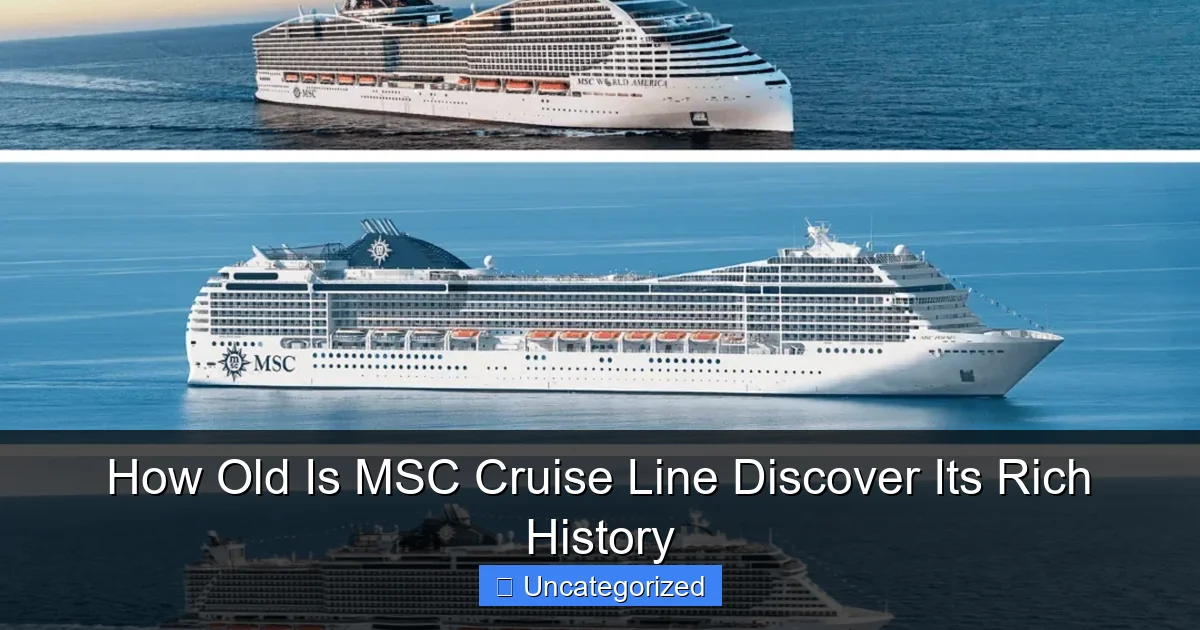
Featured image for how old is msc cruise line
Image source: cruiseradio.net
MSC Cruises was founded in 1987, making it a relatively young but rapidly expanding player in the cruise industry. Born from Italy’s maritime legacy, the company has grown into one of the world’s largest cruise lines, blending European elegance with global innovation.
Key Takeaways
- Founded in 1987: MSC Cruises began as a Mediterranean-focused cruise line.
- Family-owned roots: Started by the Aponte family, still shaping its legacy.
- Global expansion: Rapid growth since 2000s with new ships and destinations.
- Fleet evolution: From 2 to 23+ ships, reflecting modern luxury and innovation.
- Environmental focus: Pioneering LNG-powered ships for sustainable cruising.
- World Cruises: Offers world cruises, showcasing global reach and ambition.
📑 Table of Contents
- How Old Is MSC Cruise Line? Discover Its Rich History
- The Origins: A Family Legacy in Maritime Trade (1940s–1970)
- From Cargo to Cruising: The Birth of MSC Cruises (1987–1995)
- Fleet Expansion and Global Ambitions (1995–2010)
- Innovation and Sustainability: Shaping the Future (2010–2020)
- Global Reach and Cultural Impact (2020–Present)
- Key Milestones in MSC Cruises History
- Conclusion: A Legacy of Innovation and Growth
How Old Is MSC Cruise Line? Discover Its Rich History
When you think of luxurious, innovative, and culturally immersive cruising experiences, MSC Cruises undoubtedly comes to mind. As one of the fastest-growing cruise lines in the world, MSC has become a household name in the global vacation industry. But how old is MSC Cruise Line, and what is the story behind its meteoric rise from a regional shipping company to an international maritime powerhouse? The answer lies in a rich and dynamic history that spans over seven decades, blending tradition with cutting-edge innovation.
Founded in Italy and deeply rooted in the Mediterranean maritime tradition, MSC Cruises has evolved from a humble cargo shipping enterprise into a world-renowned cruise brand with a fleet of over 20 ships, serving more than 200 destinations across six continents. Whether you’re a seasoned cruiser or a first-time vacationer, understanding the origins and evolution of MSC Cruises offers valuable insight into what makes this company unique. In this comprehensive guide, we’ll explore the founding and early years, the transition from cargo to cruising, the expansion of the fleet, technological and environmental innovations, and the brand’s global impact. By the end, you’ll not only know how old MSC Cruise Line is, but also appreciate the legacy, vision, and ambition that have shaped its journey.
The Origins: A Family Legacy in Maritime Trade (1940s–1970)
Founding of Mediterranean Shipping Company
The story of MSC Cruises begins not on the high seas of luxury cruising, but in the bustling port of Naples, Italy, in 1947. That’s when Captain Angelo Aponte, a seasoned mariner with a vision, established the Mediterranean Shipping Company (MSC) as a small, family-run cargo shipping business. At the time, Europe was recovering from the devastation of World War II, and maritime trade was vital for rebuilding economies. Captain Aponte recognized the growing demand for reliable shipping routes between Italy and North Africa, and he set out to provide efficient, trustworthy service.
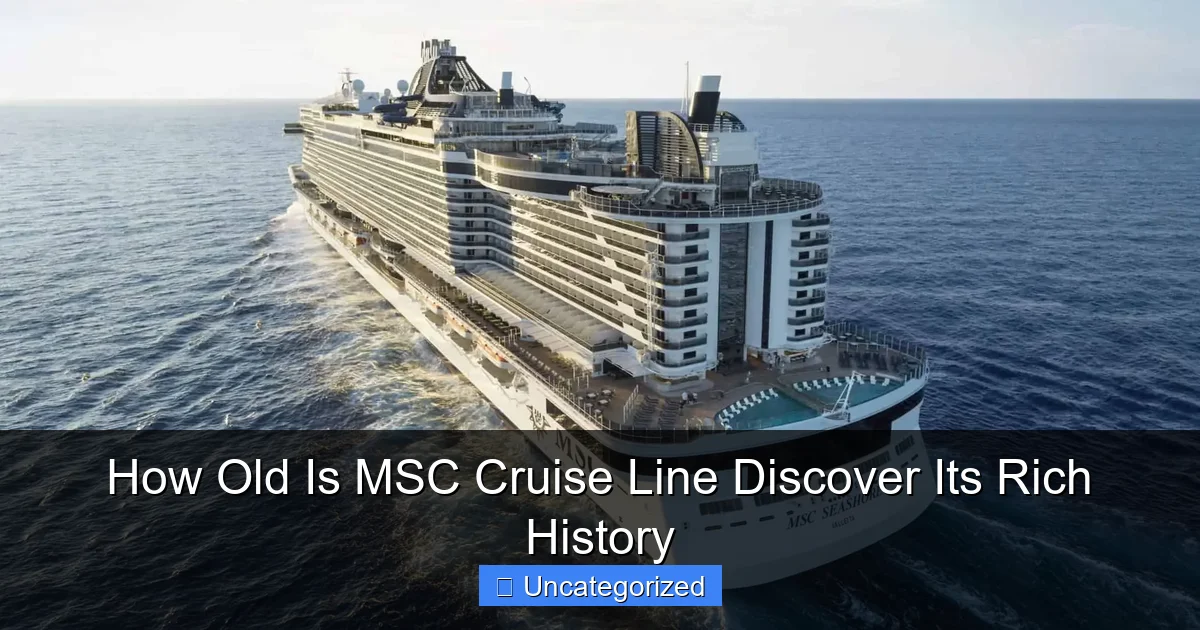
Visual guide about how old is msc cruise line
Image source: cruiseradio.net
Initially, MSC operated a single vessel, the MSC Angela, which transported goods such as textiles, food, and machinery across the Mediterranean. The company quickly gained a reputation for punctuality, safety, and customer service—values that remain central to the MSC brand today. The name “MSC” was chosen not for “Maritime Shipping Company” or “Mediterranean Shipping Corporation,” but specifically for Mediterranean Shipping Company, reflecting the founder’s deep connection to the region’s seafaring heritage.
Early Challenges and Strategic Growth
The early years were not without challenges. The post-war shipping industry was highly competitive, and MSC faced stiff competition from larger, state-owned carriers. However, Captain Aponte’s hands-on leadership and willingness to adapt gave the company a competitive edge. By the 1960s, MSC had expanded its routes beyond the Mediterranean to include the Middle East and parts of Asia. The company invested in modernizing its fleet, acquiring newer, more efficient vessels and adopting international shipping standards.
One key strategy was the decision to focus on containerization—the use of standardized shipping containers—which revolutionized global logistics. MSC became an early adopter of this technology, allowing it to streamline operations, reduce costs, and improve reliability. This foresight laid the foundation for future growth and positioned MSC as a forward-thinking player in the global shipping industry. By 1970, MSC had grown into a mid-sized shipping firm with a strong presence in key trade corridors, setting the stage for its next transformation.
From Cargo to Cruising: The Birth of MSC Cruises (1987–1995)
The Strategic Pivot to Passenger Travel
While MSC thrived in cargo shipping, the Aponte family saw an emerging opportunity in the leisure travel market. In the 1980s, cruise vacations were gaining popularity, especially in Europe and North America. The Apontes, led by Captain Aponte’s son, Gianluigi Aponte, recognized that their expertise in maritime operations could be leveraged to enter the cruise industry. In 1987, MSC Cruises was officially launched as a division of the Mediterranean Shipping Company, marking a bold strategic pivot.
The first step was acquiring a secondhand cruise ship—the MSC Melody, a former Norwegian Caribbean Line vessel built in 1966. The ship was refurbished and rebranded to reflect the Italian flair and Mediterranean elegance that would become MSC’s signature. The inaugural cruise departed from Genoa, Italy, in 1988, sailing to destinations in the Western Mediterranean. The launch was modest, but it signaled the beginning of a new era.
Early Challenges and Brand Identity
Breaking into the competitive cruise market was no easy feat. MSC faced skepticism from industry insiders who questioned whether a cargo shipping company could deliver the level of service and experience expected by cruise passengers. To overcome this, MSC invested heavily in crew training, onboard amenities, and guest experiences. The company emphasized authentic Italian hospitality, offering gourmet Italian cuisine, live music, and cultural programming that celebrated Mediterranean traditions.
One of the early differentiators was MSC’s focus on family-friendly cruising. Unlike some competitors that catered primarily to couples or retirees, MSC designed its ships with children’s clubs, family suites, and multilingual staff to appeal to families from diverse backgrounds. This inclusive approach helped MSC carve out a niche in the European market, particularly among Italian, French, and German travelers.
By 1995, MSC Cruises had grown to a fleet of three ships and established regular itineraries in the Mediterranean, the Caribbean, and Northern Europe. The brand was gaining recognition, and the Aponte family’s vision was beginning to bear fruit. The company had successfully transformed from a cargo operator into a credible cruise line—proof that innovation and adaptability can redefine an industry.
Fleet Expansion and Global Ambitions (1995–2010)
Acquisitions and New Builds
The late 1990s and early 2000s marked a period of aggressive expansion for MSC Cruises. With the cruise market booming, the company began acquiring additional vessels and commissioning new builds to meet growing demand. In 1995, MSC acquired the MSC Rhapsody, a former Royal Caribbean ship, and later added the MSC Symphony and MSC Opera to its fleet. These ships were modernized with enhanced amenities, including larger staterooms, expanded dining options, and state-of-the-art entertainment systems.
One of the most significant milestones came in 2003 with the launch of the MSC Lirica, the first ship designed and built specifically for MSC Cruises. This marked a shift from retrofitting older vessels to creating custom-built ships tailored to the brand’s vision. The Lirica class introduced a new standard in comfort and design, featuring Italian-inspired décor, spacious public areas, and advanced propulsion systems.
Entering the Global Market
As the fleet expanded, so did MSC’s global footprint. In 2004, the company launched its first transatlantic cruise, connecting Europe and the Caribbean. This was followed by the introduction of year-round Caribbean itineraries, targeting the lucrative North American market. To appeal to English-speaking travelers, MSC invested in English-language services, multilingual entertainment, and partnerships with U.S.-based travel agencies.
Another key development was the launch of the MSC Musica class in 2006, featuring ships like MSC Musica, MSC Orchestra, and MSC Poesia. These vessels were larger, more technologically advanced, and offered enhanced luxury amenities such as spa retreats, specialty dining, and Broadway-style shows. The Musica class helped position MSC as a premium cruise brand, capable of competing with industry leaders like Royal Caribbean and Carnival.
By 2010, MSC Cruises had grown to a fleet of nine ships, serving over 1.5 million passengers annually. The company had established a strong presence in Europe, the Caribbean, South America, and Asia. More importantly, it had developed a distinct brand identity—affordable luxury with Italian flair—that resonated with a broad range of travelers.
Innovation and Sustainability: Shaping the Future (2010–2020)
Technological Advancements
The 2010s were a decade of innovation for MSC Cruises. The company launched the MSC Seaside class in 2017, featuring ships designed with a revolutionary “open-air” concept. The MSC Seaside and MSC Seaview featured expansive outdoor promenades, glass-bottomed walkways, and innovative hull designs that maximized ocean views. These ships were built at the Fincantieri shipyard in Italy, showcasing MSC’s commitment to European craftsmanship and engineering.
Another breakthrough was the introduction of MSC for Me, a digital platform that enhanced the guest experience through personalized services. The system included a mobile app for itinerary planning, real-time ship navigation, digital check-in, and interactive wayfinding. Passengers could use the app to book excursions, order room service, or locate family members on board—making the cruise experience more seamless and enjoyable.
Environmental Responsibility
As environmental concerns grew, MSC Cruises took proactive steps to reduce its ecological footprint. The company became a leader in sustainable cruising, investing in advanced wastewater treatment systems, shore power connectivity, and energy-efficient technologies. The MSC Seaside class ships were designed with hybrid exhaust gas cleaning systems (scrubbers), reducing sulfur emissions by up to 97%.
In 2019, MSC announced the MSC World Europa, the first LNG-powered cruise ship in the MSC fleet. LNG (liquefied natural gas) significantly reduces greenhouse gas emissions, nitrogen oxides, and particulate matter. The ship, launched in 2022, features a dual-fuel engine and can run entirely on LNG, setting a new benchmark for environmental performance in the industry.
MSC also joined the Global Sustainable Tourism Council (GSTC) and committed to achieving net-zero emissions by 2050. These initiatives demonstrated that MSC was not just expanding its fleet, but also investing in the long-term health of the planet—a message that resonated with environmentally conscious travelers.
Global Reach and Cultural Impact (2020–Present)
Fleet Growth and Market Expansion
Despite the challenges of the global pandemic, MSC Cruises continued to grow. The company maintained its momentum by launching new ships, expanding into new markets, and enhancing guest experiences. In 2021, the MSC Virtuosa and MSC Grandiosa entered service, featuring the MSC Yacht Club—a private luxury enclave with butler service, exclusive lounges, and priority embarkation.
MSC also made significant inroads in the Asia-Pacific market, launching homeports in China, Japan, and Australia. The company partnered with local governments and tourism boards to create culturally immersive itineraries, such as “Cherry Blossom Cruises” in Japan and “Great Barrier Reef Expeditions” in Australia. These efforts helped MSC attract a new generation of travelers seeking authentic, destination-focused experiences.
Cultural Programming and Brand Identity
MSC Cruises has always celebrated its Italian roots, but in recent years, it has also embraced global cultural diversity. Onboard programming includes language classes, international cuisine festivals, and performances from artists around the world. The company has also partnered with UNESCO to promote cultural heritage sites along its itineraries, offering shore excursions that support local communities and preserve historical landmarks.
Another notable initiative is the MSC Foundation, launched in 2013 to support environmental conservation, education, and humanitarian projects. The foundation has funded coral reef restoration in the Caribbean, marine research in the Mediterranean, and disaster relief efforts in Southeast Asia. These efforts have enhanced MSC’s reputation as a responsible corporate citizen and strengthened its brand loyalty among socially conscious travelers.
Today, MSC Cruises operates a fleet of 23 ships (as of 2024), with several more under construction, including the MSC World America, set to debut in 2025. The company serves over 2.5 million passengers annually and offers itineraries in more than 200 destinations worldwide. From its humble beginnings in Naples to its current status as a global leader, MSC Cruises has proven that a family-owned business can achieve international success through vision, innovation, and resilience.
Key Milestones in MSC Cruises History
| Year | Event | Significance |
|---|---|---|
| 1947 | Founded as Mediterranean Shipping Company (MSC) | Launched as a cargo shipping firm by Captain Angelo Aponte |
| 1987 | MSC Cruises division established | Pivoted from cargo to passenger cruising |
| 1988 | First cruise on MSC Melody | Inaugural voyage from Genoa, Italy |
| 2003 | Launch of MSC Lirica | First ship built specifically for MSC Cruises |
| 2006 | Launch of MSC Musica class | Marked entry into premium cruising segment |
| 2017 | Launch of MSC Seaside | Revolutionary open-air design and digital guest experience |
| 2022 | Launch of MSC World Europa | First LNG-powered cruise ship in the fleet |
| 2024 | Fleet reaches 23 ships | Global presence across six continents |
Conclusion: A Legacy of Innovation and Growth
So, how old is MSC Cruise Line? The answer is both simple and profound. While the MSC Cruises division was officially founded in 1987, its roots trace back to 1947 with the creation of the Mediterranean Shipping Company. That means the company’s maritime legacy spans 77 years, with over 37 years dedicated specifically to passenger cruising. This rich history is not just about longevity—it’s about transformation, resilience, and a relentless pursuit of excellence.
From a single cargo vessel in postwar Naples to a fleet of LNG-powered, digitally enhanced cruise ships sailing the world, MSC Cruises has redefined what it means to be a modern cruise line. The company has stayed true to its Italian heritage while embracing global innovation, sustainability, and cultural inclusivity. Whether you’re drawn to the MSC Yacht Club’s luxury, the Seaside class’s oceanfront design, or the company’s commitment to environmental stewardship, MSC offers something for every type of traveler.
As MSC Cruises continues to grow—with new ships, new destinations, and new technologies on the horizon—its story is far from over. The company’s journey reminds us that success is not just about how old you are, but how well you adapt, innovate, and serve your customers. For anyone planning their next vacation, MSC Cruises isn’t just a cruise line—it’s a legacy of the sea, waiting to be explored.
Frequently Asked Questions
How old is MSC Cruise Line?
MSC Cruise Line, officially known as MSC Cruises, was founded in 1987, making it 36 years old as of 2023. The company began as a small Mediterranean operation and has since grown into one of the world’s largest cruise lines.
What is the history behind MSC Cruise Line’s founding?
MSC Cruise Line traces its roots to the Mediterranean Shipping Company (MSC), a global shipping firm established in 1970. The cruise division launched in 1987 to leverage the parent company’s maritime expertise and expand into leisure travel.
How old is MSC Cruise Line compared to other major cruise brands?
At 36 years old, MSC Cruise Line is younger than legacy brands like Carnival (1972) and Royal Caribbean (1968). However, its rapid fleet expansion and modern ships have positioned it as a top competitor in the industry.
When did MSC Cruise Line expand beyond the Mediterranean?
MSC Cruise Line began global expansion in the late 1990s, with itineraries to the Caribbean and South America. By the 2000s, it had established year-round operations in multiple regions, including Asia and the Middle East.
How has MSC Cruise Line evolved over the years?
Since its founding in 1987, MSC Cruise Line has grown from a single ship to a fleet of over 20 modern vessels. Its focus on luxury, sustainability, and family-friendly experiences has driven its success as a global leader in cruising.
What milestones mark MSC Cruise Line’s journey?
Key milestones include launching its first newbuild ship in 2003, introducing the groundbreaking “MSC Yacht Club” in 2008, and debuting the world’s largest LNG-powered cruise ship in 2022. These innovations highlight its 36-year evolution.