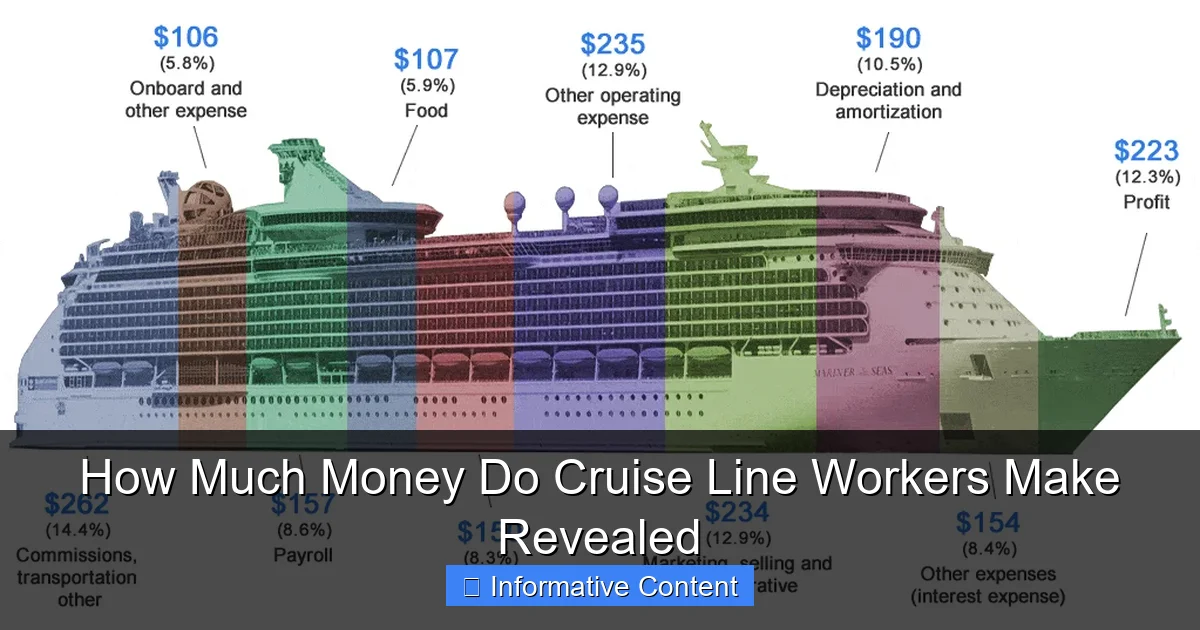
Featured image for how much money do cruise line workers make
Image source: cruzely.com
Cruise line workers earn an average of $1,500 to $3,500 per month, with pay varying by role, experience, and cruise line. Entry-level positions like housekeeping and food service start lower, while specialized roles like engineers and officers can make $5,000+ monthly, including tips and bonuses. Salaries often include free room, board, and travel perks, significantly boosting overall value.
Key Takeaways
- Salaries vary widely by role, experience, and cruise line size.
- Entry-level staff earn $1,000–$2,500 monthly, often with tips.
- Officers and specialists can make $5,000+ per month tax-free.
- Free room and board significantly boosts take-home value.
- Longer contracts (6–10 months) increase annual earnings potential.
- Gratuities and bonuses add 20–50% extra income for service staff.
📑 Table of Contents
- How Much Money Do Cruise Line Workers Make Revealed
- Factors That Influence Cruise Line Salaries
- Breakdown of Salaries by Job Role
- The Hidden Costs and Benefits of Cruise Line Work
- Top Cruise Lines and Their Pay Scales
- Tips to Maximize Your Earnings as a Cruise Line Worker
- Conclusion: Is Working on a Cruise Ship Worth It?
How Much Money Do Cruise Line Workers Make Revealed
Imagine waking up to the sound of waves, the sun rising over turquoise waters, and a fresh ocean breeze every single morning. For many cruise line workers, this isn’t a vacation—it’s their daily reality. But behind the glamorous scenes of all-you-can-eat buffets, nightly entertainment, and exotic ports lies a workforce that keeps the ship running smoothly. And a common question lingers: how much money do cruise line workers make?
It’s a question I’ve asked myself after watching a cruise ship glide into port, lights twinkling like a floating city. I’ve wondered about the people behind the polished smiles, the chefs in the galley, the deckhands in the sun, and the engineers in the engine room. Are they paid fairly? Do they earn enough to save money while living and working on the water? The answer isn’t as simple as you might think. Cruise line pay varies dramatically based on role, experience, company, and even the flag the ship sails under. In this post, we’ll peel back the curtain and explore the real numbers, the hidden costs, and the surprising perks that come with working on a cruise ship. Whether you’re dreaming of a career at sea or just curious, this is your insider guide to cruise line salaries.
Factors That Influence Cruise Line Salaries
When it comes to how much money do cruise line workers make, there’s no one-size-fits-all answer. A lot depends on several key factors. Let’s break them down so you can understand why two people doing similar jobs might earn very different wages.
Visual guide about how much money do cruise line workers make
Image source: cruisesolutioner.com
1. Job Role and Department
The biggest factor is your position on the ship. Cruise lines are like small floating cities, with departments ranging from hospitality and entertainment to engineering and medical services. Naturally, pay scales vary widely.
- Entry-level service roles (like room stewards or waiters) typically start at $1,000–$1,800 per month.
- Skilled trades (electricians, plumbers, HVAC technicians) earn $2,500–$4,000 monthly.
- Officers and management (cruise directors, chefs, engineers) can make $3,000–$8,000+ per month.
- Medical staff (doctors, nurses) often earn $5,000–$12,000 per month, depending on experience.
For example, a junior waiter on a Carnival cruise might earn around $1,200/month, while a senior chef on a luxury line like Regent Seven Seas could pull in $6,000. The difference? Responsibility, skill level, and the type of guest experience expected.
2. Cruise Line Company and Brand Tier
Not all cruise lines pay the same. A worker on a budget-friendly line like Carnival or Royal Caribbean may earn less than someone on a luxury brand like Seabourn or Silversea.
- Mainstream lines (Carnival, Royal Caribbean, Norwegian): Pay is competitive but leans toward volume and efficiency. Salaries are decent, but tips can be a major income booster.
- Premium lines (Princess, Holland America): Slightly higher base pay, better benefits, and more guest interaction, which can mean better tips.
- Luxury lines (Crystal, Regent, Seabourn): Higher base salaries, smaller guest-to-staff ratios, and more personalized service. Workers here often earn 20–50% more than on mainstream ships.
I once spoke with a bartender who worked on both Carnival and Silversea. He told me, “On Carnival, I made $1,500 base and $800 in tips. On Silversea, it was $3,200 base and $400 in tips. The money was better, and the stress was lower.”
3. Experience and Certification
Like any job, experience matters. A newly hired deckhand with no sea time will earn less than one with five years under their belt. Certifications also play a role.
- STCW certification (basic safety training) is mandatory and helps secure entry-level jobs.
- Advanced certifications (like GMDSS, firefighting, or medical first aid) can boost pay by $200–$500/month.
- Specialized skills (sommelier, sommelier, mixology, or language fluency) can lead to higher tips and faster promotions.
One cruise director I met started as a youth counselor. After learning three languages, earning a hospitality certification, and working five contracts, she now earns $7,000/month—triple what she made in her first year.
4. Ship Flag and Labor Laws
This is a lesser-known but critical factor. Cruise ships are registered under different countries (called “flags of convenience”), like the Bahamas, Panama, or Liberia. These countries have different labor laws and tax rules.
- Workers on ships flagged in countries with strong labor protections (e.g., Norway) may have better pay and working conditions.
- Most cruise lines use flags with lower labor standards to cut costs, which can affect wages.
- Some contracts include tax-free pay if you’re not a citizen of the ship’s flag country.
For instance, a Filipino crew member working on a Bahamian-flagged ship might earn $1,400/month tax-free, while a U.S. citizen on the same ship could be taxed if they’re considered a U.S. resident.
Breakdown of Salaries by Job Role
Now that we’ve covered the influencing factors, let’s dive into actual numbers. Below is a realistic breakdown of what different cruise line workers earn, based on data from crew forums, job boards, and firsthand accounts.
1. Service and Hospitality Staff
These are the faces of the cruise experience—waiters, room stewards, bartenders, and baristas. They work long hours but often earn tips that boost their income.
- Waiter/Waitress: $1,000–$1,800 base + $300–$1,200 in tips = $1,300–$3,000/month
- Room Steward/Stewardess: $1,100–$1,700 base + $200–$800 in tips = $1,300–$2,500/month
- Bartender: $1,200–$2,000 base + $400–$1,500 in tips = $1,600–$3,500/month
- Barista: $1,000–$1,600 base + $100–$600 in tips = $1,100–$2,200/month
Tip: Bartenders on luxury lines often earn more in tips due to higher guest spending. One bartender on a Regent ship told me she once earned $2,000 in tips during a 10-day cruise because guests were celebrating anniversaries and buying premium cocktails.
2. Entertainment and Guest Experience
From cruise directors to fitness instructors, these roles are about keeping guests happy and engaged.
- Cruise Director: $3,500–$7,000/month (varies by experience and line)
- Entertainer (singer, dancer): $2,000–$4,000/month + occasional performance bonuses
- Youth Counselor: $1,500–$2,500/month
- Fitness Instructor: $1,800–$3,000/month (higher on luxury lines)
Entertainers often get paid per contract (e.g., 3–6 months), and their income can include housing, food, and a small stipend for costumes. One dancer I spoke with said she earned $3,200/month on a Royal Caribbean ship but had to pay for her own dance shoes and hair extensions.
3. Technical and Engineering Roles
These are the unsung heroes—mechanics, electricians, and engineers who keep the ship running. They work in hot, noisy engine rooms but are highly valued.
- Engineer (Junior): $2,500–$3,800/month
- Electrician: $2,800–$4,200/month
- HVAC Technician: $3,000–$4,500/month
- Chief Engineer: $6,000–$12,000/month
One electrician from India shared that he earns $3,600/month on a Norwegian Cruise Line ship. “I work 12-hour shifts, but I save 80% of my pay. No rent, no food bills. It’s a great way to build a future.”
4. Medical and Safety Personnel
Medical staff are essential, especially on long voyages. Their pay reflects the responsibility.
- Doctor (General Practitioner): $6,000–$12,000/month
- Nurse: $3,500–$6,000/month
- Medical Technician: $2,500–$4,000/month
Doctors often work 3-month contracts and are given private cabins. One doctor told me, “I make more than I did in my clinic back home, and I travel the world. It’s not easy, but it’s worth it.”
5. Management and Leadership
These roles come with higher pay, longer hours, and more responsibility.
- Hotel Director: $5,000–$9,000/month
- Chief Purser: $4,500–$7,500/month
- Executive Chef: $5,000–$8,000/month
- Captain (Master): $8,000–$15,000/month (plus bonuses)
The captain’s pay is among the highest, but it comes with immense pressure. A former captain I interviewed said, “You’re responsible for 3,000 lives. The pay is good, but the stress is real.”
The Hidden Costs and Benefits of Cruise Line Work
Now, before you pack your bags and apply for a job at sea, let’s talk about the real cost of cruise line work. While the salary numbers look appealing, there are hidden factors that affect your take-home pay and quality of life.
1. No Rent, No Food—But No Freedom Either
One of the biggest perks is that your housing and meals are free. You live in a cabin (often shared with a roommate), and food is provided in the crew mess. This can save you $1,000–$2,000/month compared to living on land.
- But cabins are small—think dorm room size.
- You’re away from family for 6–12 months at a time.
- You can’t leave the ship during port stops unless you’re on duty or have free time (and even then, it’s limited).
A room steward from the Philippines told me, “I save $1,500/month because I don’t pay rent. But I miss my kids. I video call them every day, but it’s not the same.”
2. Long Hours and High Pressure
Most crew work 10–14 hour days, 7 days a week. You get one day off every few weeks, and even then, you might be on call.
- Waiters often work from 7 AM to 11 PM during busy cruises.
- Engineers can be called in for emergencies at any hour.
- Entertainers rehearse during the day and perform at night.
One fitness instructor said, “I love my job, but by the end of a 6-month contract, I’m exhausted. I need a month off just to recover.”
3. Taxes and Deductions
While many workers earn tax-free income (especially non-citizens), some face deductions.
- U.S. citizens may owe taxes if they’re considered residents.
- Some lines deduct for laundry, uniforms, or Wi-Fi.
- Health insurance is usually covered, but dental and vision may not be.
One American waiter shared, “I thought I’d keep all my money, but the IRS still wants a cut. I pay about 10% in taxes when I file.”
4. Tips: The Wild Card
Tips can double your income—but they’re unpredictable.
- On budget lines, tips are lower because guests spend less.
- On luxury lines, tips are higher but more consistent.
- Some lines use tip pooling, which spreads tips among staff.
A bartender on a luxury line said, “I make $2,000/month in tips during peak season. But in winter, it drops to $500. You have to save for the slow months.”
5. Career Growth and Networking
Despite the challenges, cruise work offers unique opportunities.
- You meet people from all over the world.
- You gain skills in hospitality, leadership, and crisis management.
- Many workers move into shore-side roles (hotel management, event planning, training).
One former cruise director now runs a tourism company in Thailand. “The experience I got on the ship opened doors I never imagined.”
Top Cruise Lines and Their Pay Scales
Let’s compare some of the biggest names in cruising and what they pay their workers. This isn’t an official ranking, but based on crew reports, job postings, and industry surveys.
| Cruise Line | Entry-Level Waiter | Senior Chef | Chief Engineer | Perks |
|---|---|---|---|---|
| Carnival Cruise Line | $1,100–$1,500 + tips | $3,500–$5,000 | $7,000–$10,000 | Free Wi-Fi, crew parties, short contracts (6 months) |
| Royal Caribbean | $1,200–$1,600 + tips | $4,000–$5,500 | $7,500–$11,000 | Training programs, career advancement, modern crew lounges |
| Norwegian Cruise Line | $1,100–$1,550 + tips | $3,800–$5,200 | $7,200–$10,500 | Free shore excursions, flexible contracts |
| Princess Cruises | $1,300–$1,700 + tips | $4,500–$6,000 | $8,000–$12,000 | Better cabins, more vacation time, premium training |
| Seabourn | $2,000–$2,800 + tips | $6,000–$8,000 | $10,000–$15,000 | Small ships, high guest-to-staff ratio, luxury environment |
Note: These figures are approximate and can vary by contract, experience, and ship. Luxury lines like Seabourn and Regent pay more but have stricter hiring standards.
Tips to Maximize Your Earnings as a Cruise Line Worker
If you’re serious about working on a cruise ship, here are practical tips to boost your income and career.
1. Choose the Right Line for Your Goals
Want to save money fast? Go for a luxury line with high base pay. Want tips and volume? Mainstream lines can offer that. Do your research and apply to lines that match your priorities.
2. Learn a Second (or Third) Language
Fluency in Spanish, French, or German can make you more valuable—especially on international cruises. Some lines even offer language bonuses.
3. Specialize in High-Demand Skills
Become a sommelier, mixologist, or certified trainer. These roles often earn more in tips and have faster promotion paths.
4. Work Longer Contracts (But Take Breaks)
Many lines offer bonuses for completing 9–12 month contracts. But don’t burn out—take at least one month off between contracts to recharge.
5. Network and Ask for Promotions
Build relationships with your supervisors. Ask for feedback and express interest in advancement. Many promotions come from internal referrals.
6. Save Smartly
Since you’re not paying rent, save 50–70% of your income. Open a high-yield savings account and avoid impulse spending in port.
One crew member from the Philippines told me, “I worked three contracts back-to-back and saved $20,000. I used it to start a small business back home. It was worth the sacrifice.”
Conclusion: Is Working on a Cruise Ship Worth It?
So, how much money do cruise line workers make? The answer is: it depends. But with smart choices, hard work, and a bit of luck, you can earn a solid income while traveling the world.
You won’t get rich overnight. The hours are long, the pressure is high, and you’ll miss home. But the trade-offs can be worth it. You’ll save money, gain life-changing experiences, and build a global network. Whether you’re a bartender in the Caribbean, an engineer in the Mediterranean, or a cruise director in Alaska, you’re part of a unique community that thrives on adventure.
And if you’re thinking about applying? Do it with your eyes open. Research the line, understand the contract, and prepare for the realities of life at sea. But don’t let fear hold you back. For many, cruise work isn’t just a job—it’s a journey. And who knows? You might just find your dream life on the open ocean.
Frequently Asked Questions
How much money do cruise line workers make on average?
The average salary for cruise line workers ranges from $1,500 to $3,500 per month, depending on role, experience, and cruise line. Entry-level positions like housekeeping or dining staff typically earn less, while specialized roles (e.g., engineers or entertainment staff) can make significantly more.
Do cruise line workers make good money compared to land-based jobs?
Cruise line workers often earn competitive wages, especially considering free room and board, which reduces living expenses. However, salaries may be lower than land-based equivalents due to the unique work environment and contract-based nature of employment.
How much do cruise line workers make in tips or bonuses?
Tips can add $200–$1,000+ monthly, particularly for front-facing roles like waitstaff or bartenders. Some cruise lines also offer performance-based bonuses, but these vary widely by company and season.
What factors affect how much money cruise line workers make?
Key factors include job role, seniority, cruise line prestige, contract length, and destination. For example, luxury cruise lines often pay higher wages, while longer contracts may include incremental raises or completion bonuses.
Are salaries for cruise line workers higher on luxury cruise lines?
Yes, luxury cruise lines like Regent or Seabourn typically offer higher base pay and better tips due to premium service standards and affluent clientele. Salaries can be 20–30% above industry averages for similar roles.
How much do cruise line workers make after taxes and deductions?
Most cruise lines provide tax-free or low-tax wages (depending on home country), but deductions for uniforms, training, or medical fees may apply. Net income often ranges from 80–95% of gross pay, depending on the contract terms.