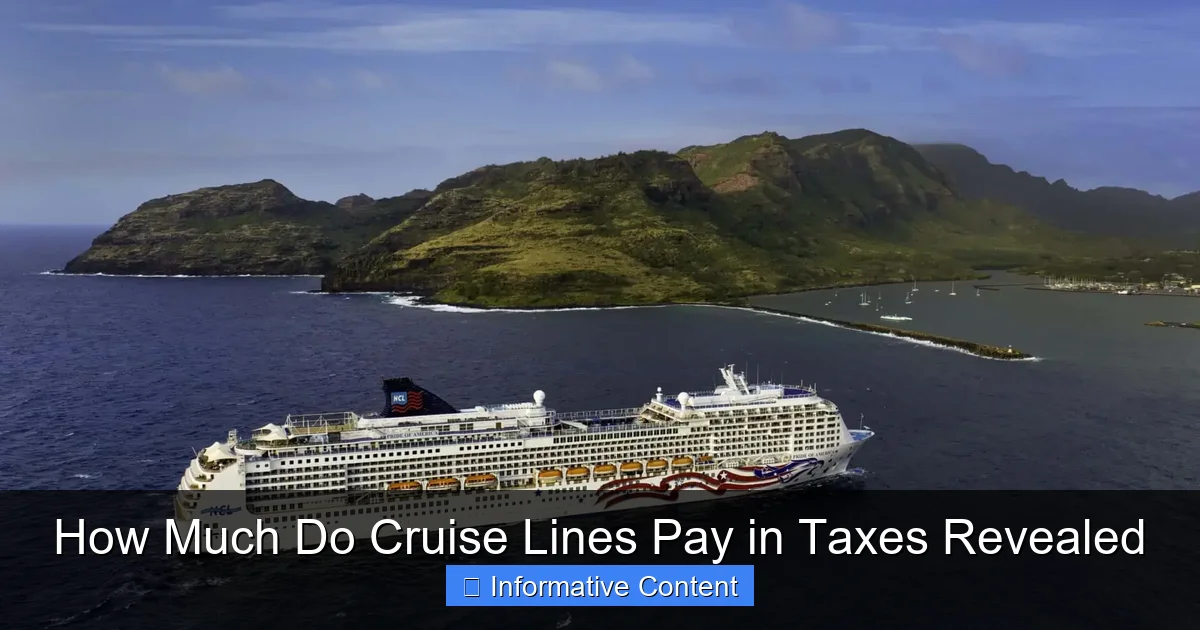
Featured image for how much do cruise lines pay in taxes
Image source: cruiseradio.net
Cruise lines pay remarkably little in U.S. federal income taxes—often $0—despite generating billions in revenue, thanks to legal loopholes and offshore registrations. By incorporating ships under foreign flags, major companies like Carnival and Royal Caribbean avoid the 21% U.S. corporate tax rate, effectively sidestepping tens of millions in annual tax obligations.
Key Takeaways
- Cruise lines often pay minimal U.S. taxes due to foreign registration and loopholes.
- Many operate under foreign flags to legally reduce tax burdens and increase profits.
- Port fees and local taxes add up but remain a small share of overall revenue.
- Tax incentives attract cruise lines to specific countries, shaping global itineraries.
- Transparency remains limited—exact tax payments are rarely disclosed publicly.
- Passenger taxes fund infrastructure like ports, not cruise line operations.
📑 Table of Contents
- How Much Do Cruise Lines Pay in Taxes Revealed
- Why Cruise Lines Pay Little in U.S. Federal Income Tax
- International Tax Rules and How Cruise Lines Benefit
- State, Local, and Environmental Taxes: What Cruise Lines Actually Pay
- How Cruise Lines Use Tax Credits and Incentives
- The Bigger Picture: Is This Fair?
- Summary Table: Cruise Line Tax Breakdown (2023 Estimates)
- The Bottom Line: Transparency and Change Ahead
How Much Do Cruise Lines Pay in Taxes Revealed
Imagine boarding a massive floating city—glittering pools, endless buffets, Broadway-style shows, and a crew ready to serve your every need. Now picture this: while passengers enjoy the sun and sea, the cruise line quietly navigates a complex web of tax rules across multiple countries. It’s a world few travelers think about, but one that shapes everything from ticket prices to environmental policies. So, how much do cruise lines pay in taxes? The answer might surprise you. It’s not a simple number, and it’s definitely not a one-size-fits-all situation.
You might assume that billion-dollar cruise companies pay hefty tax bills, like other major corporations. After all, Carnival Corporation, Royal Caribbean Group, and Norwegian Cruise Line Holdings each generate billions in annual revenue. But the reality is far more nuanced. Cruise lines operate in a global, mobile, and highly regulated industry where tax obligations depend on where ships are registered, where they sail, where employees live, and even how they structure their finances. This blog dives deep into the tax landscape of the cruise industry, revealing the surprising truth behind how much—or how little—these floating giants actually pay. Whether you’re a curious traveler, a finance enthusiast, or someone concerned about corporate responsibility, this breakdown will give you the real story behind the numbers.
Why Cruise Lines Pay Little in U.S. Federal Income Tax
Let’s start with the big one: the United States. If you’ve ever taken a cruise out of Miami or Port Canaveral, you might assume the cruise line pays U.S. federal income tax on the profits from those trips. After all, the ships leave American ports, serve American passengers, and often employ American crew. But here’s the twist: most major cruise lines pay little to no federal income tax in the U.S. How is that possible?
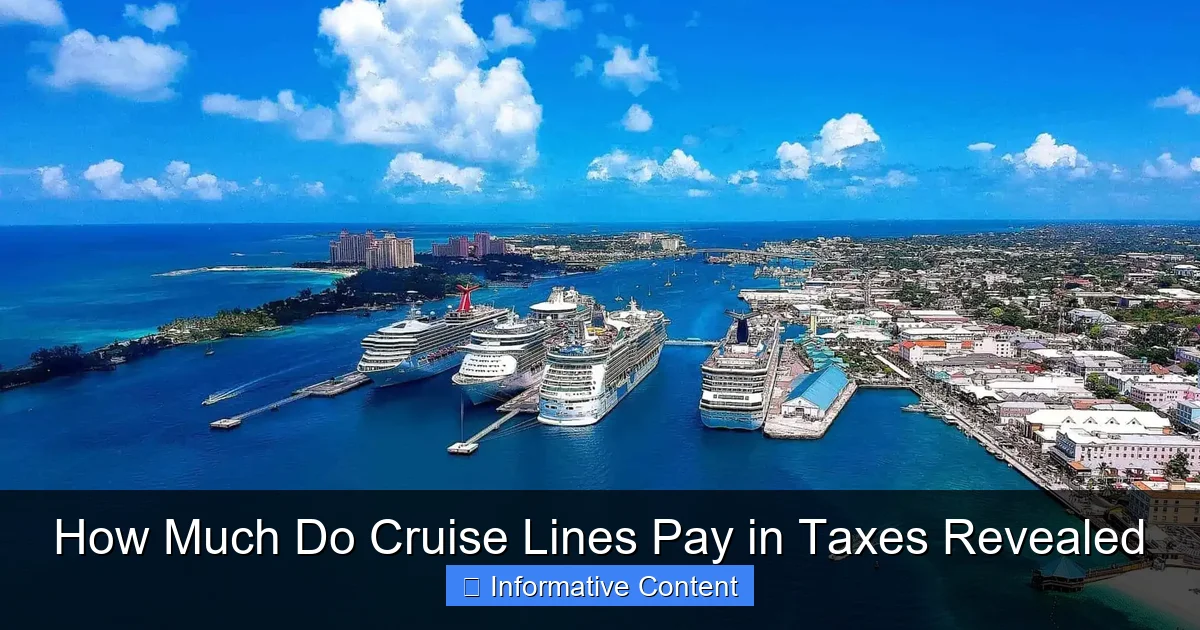
Visual guide about how much do cruise lines pay in taxes
Image source: cruiseradio.net
The Role of Ship Registration (Flagging)
The key lies in ship registration, also known as “flagging.” Cruise lines don’t register their ships under the U.S. flag—instead, they choose countries like the Bahamas, Panama, Bermuda, or Liberia. Why? Because these nations offer what are called open registries, which are essentially tax-friendly systems for international shipping. When a ship is flagged under one of these countries, it falls under that nation’s tax laws—not the U.S.’s. For example, a Carnival cruise ship registered in Panama is taxed under Panamanian maritime law, not U.S. corporate tax law.
This doesn’t mean the cruise line is breaking the law. It’s perfectly legal under international maritime rules. The International Maritime Organization (IMO) allows ships to be registered in any country, regardless of where the company is headquartered. So even though Carnival Corporation is based in Miami, its ships fly the Panamanian flag. That means U.S. tax authorities can’t tax the profits earned at sea—only income earned on U.S. soil, like ticket sales or port fees. And even those are often minimized through clever financial structuring.
Profit Shifting and Tax Havens
Cruise lines also use profit shifting strategies. They set up subsidiaries in low-tax or no-tax jurisdictions. For example, Carnival has a significant presence in Bermuda, a well-known tax haven. By routing certain revenues—like licensing fees, management services, or intellectual property—through these subsidiaries, they can legally reduce their taxable income in higher-tax countries.
Let’s say a cruise line earns $100 million in ticket sales. It might pay $10 million in “management fees” to a Bermudan subsidiary for “services rendered.” That $10 million is no longer counted as U.S. profit. The Bermudan subsidiary pays little or no tax. The result? Lower overall tax liability. This isn’t unique to cruise lines—tech giants like Apple and Amazon use similar tactics. But in the cruise world, the mobility of ships makes it even easier to justify these arrangements.
Real-World Example: Carnival’s Tax Record
According to public financial filings, Carnival Corporation reported $1.8 billion in U.S. federal income tax expense between 2013 and 2022. Sounds like a lot, right? But during that same period, it earned over $80 billion in revenue. That’s an effective U.S. federal tax rate of less than 2.25%—far below the statutory corporate tax rate of 21%. In some years, Carnival reported zero U.S. federal income tax liability, despite billions in revenue.
This isn’t due to tax evasion. It’s due to legal deductions, foreign tax credits, and the fact that most of its income is classified as foreign-source income (because ships are flagged abroad). The U.S. tax code allows companies to defer taxes on foreign earnings until they’re repatriated. Since cruise lines rarely bring that money back to the U.S., they never pay the tax.
International Tax Rules and How Cruise Lines Benefit
While U.S. federal tax is a major concern, cruise lines also navigate a patchwork of international tax rules. And guess what? They’re designed to be favorable—especially for shipping companies.
The Concept of “Flag of Convenience” Tax Regimes
Many of the countries where cruise ships are registered—like Panama, the Bahamas, and Liberia—offer what’s known as a tonnage tax. Unlike traditional corporate income tax, which taxes profits, tonnage tax is based on the ship’s size (tonnage) and days at sea. It’s a flat fee per ton, per day, and it’s usually very low.
For example, under Liberia’s tonnage tax system, a cruise ship might pay $0.10 per gross ton per year. A 150,000-ton ship (like Royal Caribbean’s Symphony of the Seas) would pay about $15,000 annually—regardless of whether it makes $1 billion or loses money. Compare that to a 21% corporate tax on $1 billion in profits ($210 million), and you see why cruise lines love this model.
Double Taxation Avoidance Agreements
Many countries have double taxation treaties with flag countries. These agreements prevent the same income from being taxed twice. For cruise lines, this means they can operate in a country like Spain or Italy, earn revenue there, and only pay tax under the flag country’s system—not the local country’s corporate tax. This is especially helpful in popular cruise regions like the Mediterranean or Caribbean.
Port Fees vs. Income Tax: A Key Distinction
You might think cruise lines pay a lot in port fees and docking charges. And they do—sometimes millions per year. But these are not income taxes. They’re user fees, like parking for a car. They cover services like waste disposal, water, and security. They don’t go toward general government revenue like income taxes do. In fact, some ports offer discounts or rebates to cruise lines that bring in more passengers, creating a win-win for tourism.
For example, in 2022, the Port of Miami collected about $220 million in cruise-related fees. But that money is reinvested into port infrastructure and operations. It doesn’t count as tax revenue for the U.S. government. Meanwhile, the cruise lines using that port may pay zero federal income tax on the billions they earn from Miami departures.
State, Local, and Environmental Taxes: What Cruise Lines Actually Pay
While federal income tax is minimal, cruise lines do pay other taxes—especially at the state and local levels. These can add up, but they’re still far less than traditional businesses pay.
State Sales and Use Taxes
In the U.S., cruise lines pay state sales tax on goods and services purchased locally. This includes fuel, food, supplies, and maintenance. For example, when a cruise ship docks in Florida, it buys fuel from a local supplier. That purchase is subject to Florida’s 6% sales tax. The same applies in California, Texas, and other states.
These taxes are real and unavoidable. But they’re based on spending, not profit. So if a cruise line spends $50 million on supplies in a year, it might pay $3 million in sales tax. That’s significant, but it’s not tied to how much money the company makes. A struggling cruise line pays the same rate as a profitable one.
Local Port and Tourism Taxes
Many cities and counties impose local tourism taxes or head taxes on cruise passengers. For example, the city of Key West, Florida, charges $1 per passenger per day. In 2023, with over 2 million cruise passengers visiting Key West, that generated $2 million for the city.
These taxes are usually passed on to passengers as a line item on their bill. So while the cruise line collects the fee, it doesn’t come out of their pocket. In fact, some lines even add a small administrative fee. The real burden falls on travelers.
Environmental Levies and Carbon Fees
As environmental concerns grow, some regions are introducing eco-taxes or carbon fees for cruise ships. The European Union’s Emissions Trading System (EU ETS), set to include maritime emissions starting in 2024, will require cruise lines to buy carbon allowances for emissions in EU waters. Similarly, the city of Venice, Italy, has proposed a €5 fee per passenger to fund environmental cleanup.
These are new and evolving. But they’re not income taxes. They’re regulatory fees aimed at reducing environmental harm. Cruise lines are adapting—some are investing in cleaner fuels, shore power connections, and LNG-powered ships to reduce fees and improve public image.
Tip for travelers: If you’re concerned about where your money goes, look for cruise lines that voluntarily contribute to local conservation efforts or pay into port improvement funds. Some, like Lindblad Expeditions, include eco-levies in their pricing and donate to marine protection programs.
How Cruise Lines Use Tax Credits and Incentives
Beyond avoiding taxes, cruise lines actively seek out tax breaks and incentives. Governments around the world use these to attract cruise business, boost tourism, and create jobs.
Government Subsidies and Tax Abatements
Some countries and cities offer tax abatements or subsidies to cruise lines. For example, in 2021, the government of Greece offered tax incentives to cruise lines that homeported ships in Piraeus (Athens’ port) to revive tourism after the pandemic. These included reduced port fees and temporary income tax exemptions for local operations.
In the Caribbean, islands like Aruba and the Cayman Islands have offered customs duty exemptions on imported goods for cruise ships. This reduces operating costs and, indirectly, increases profitability—without raising ticket prices.
Investment Tax Credits
When cruise lines build new ships or upgrade existing ones, they can claim investment tax credits in some countries. For example, the U.S. offers the Investment Tax Credit (ITC) for renewable energy projects. While cruise ships aren’t solar panels, some lines have installed solar panels or battery systems to reduce emissions. These upgrades may qualify for partial tax credits.
Norwegian Cruise Line, for instance, installed solar panels on its Norwegian Encore ship. While the tax credit wasn’t huge, it helped offset the cost and improve the line’s sustainability profile—a win-win for PR and the bottom line.
Employee-Based Incentives
Cruise lines also benefit from employment tax incentives. In the U.S., companies that hire veterans, long-term unemployed, or workers in designated opportunity zones can receive tax credits. While cruise lines employ mostly international crew, they often hire shore-side staff in high-tax countries. These local employees can qualify the company for tax breaks.
For example, Royal Caribbean’s headquarters in Miami employs thousands of U.S. workers. The company may claim Work Opportunity Tax Credits (WOTC) for hiring certain demographics. These credits reduce federal tax liability—even if the cruise operations themselves pay little tax.
The Bigger Picture: Is This Fair?
Now that we’ve seen how cruise lines structure their taxes, a natural question arises: Is this fair? After all, these companies benefit from public infrastructure—ports, roads, emergency services, tourism promotion—yet contribute little to general government revenue.
Public Perception and Corporate Responsibility
Many travelers and taxpayers feel uneasy about cruise lines paying minimal taxes while generating massive profits. In 2020, during the pandemic, some cruise lines received federal aid (like the Paycheck Protection Program), even as they continued to pay dividends to shareholders. This sparked outrage and calls for reform.
Advocacy groups argue that cruise lines should pay their “fair share.” They point to the environmental impact of ships—air pollution, water discharge, and port congestion—as reasons for higher taxes. Some even call for a global cruise tax, similar to the proposed digital services tax for tech companies.
Efforts Toward Reform
There are signs of change. The EU is pushing for a maritime carbon tax under its “Fit for 55” climate plan. The U.S. Congress has debated bills to tax foreign-flagged cruise ships on U.S.-source income. And some states, like California, are exploring passenger-based environmental fees for large cruise vessels.
But progress is slow. Cruise lines have powerful lobbying groups, and many governments rely on tourism revenue. A sudden tax hike could lead to fewer ships, fewer jobs, and economic pain in port cities. So instead of broad reforms, we’re seeing incremental changes—like higher port fees, stricter emissions rules, and voluntary sustainability programs.
What Travelers Can Do
As a traveler, you can’t control tax policy—but you can vote with your wallet. Choose cruise lines that are transparent about their environmental and tax practices. Look for companies that:
- Publicly report carbon emissions and reduction goals
- Contribute to local communities through port improvement funds
- Use cleaner fuels or shore power when available
- Pay into regional environmental levies voluntarily
You can also support advocacy groups pushing for fairer tax policies, like the Cruise Ship Reform Coalition or Friends of the Earth. Awareness is the first step toward change.
Summary Table: Cruise Line Tax Breakdown (2023 Estimates)
| Tax Type | Typical Rate | Who Pays? | Notes |
|---|---|---|---|
| U.S. Federal Income Tax | 0%–5% (effective) | Cruise Line | Based on foreign-source income; minimal due to flagging |
| Tonnage Tax (Flag Country) | $0.05–$0.30 per gross ton/year | Cruise Line | Fixed fee; not based on profit |
| State Sales Tax | 4%–10% | Cruise Line | On goods/services purchased locally |
| Port Fees | $5–$50 per passenger | Cruise Line (collected from passengers) | User fees, not income tax |
| Environmental Levies | €5–€50 per passenger (EU); $1–$10 (U.S.) | Passenger (collected by cruise line) | Funds conservation and emissions reduction |
| Carbon Allowances (EU ETS) | €50–€100 per ton of CO2 | Cruise Line | Starting 2024; applies to EU voyages |
Remember, this table reflects estimates based on public data and industry averages. Actual amounts vary by company, ship, route, and year.
The Bottom Line: Transparency and Change Ahead
So, how much do cruise lines pay in taxes? The short answer: very little in income tax, but significant amounts in fees, sales tax, and environmental levies. They’ve mastered the art of legal tax minimization through ship flagging, profit shifting, and international agreements. And while they’re not breaking the law, their tax practices raise important questions about fairness, sustainability, and corporate responsibility.
But the tide may be turning. As climate change becomes a top priority, governments are starting to demand more from cruise lines. New regulations, carbon taxes, and public pressure are forcing the industry to adapt. We’re seeing more investment in green technology, greater transparency in reporting, and even voluntary contributions to local communities.
As a traveler, you have power. By choosing responsible cruise lines, supporting eco-friendly policies, and staying informed, you can help shape a future where cruise vacations don’t come at the expense of the planet or public coffers. After all, the ocean belongs to all of us—not just the companies that sail on it.
Frequently Asked Questions
How much do cruise lines pay in taxes compared to other industries?
Cruise lines often pay lower effective tax rates than many industries due to international tax structures and flagging ships in foreign countries. While U.S. corporations typically pay a 21% federal tax rate, major cruise operators average 10-15% globally by leveraging tax havens and foreign subsidiaries.
Why do cruise lines pay so little in taxes in the U.S.?
Cruise lines minimize U.S. tax liability by registering ships under foreign flags (like Panama or the Bahamas) and basing operations overseas. This allows them to avoid corporate income taxes on international voyages, which constitute the majority of their business.
Do cruise lines pay any taxes to the ports they visit?
Yes, cruise lines pay port fees, docking charges, and local taxes (e.g., passenger head taxes) to ports. These fees vary by location but are often a small fraction of their revenue compared to the taxes traditional businesses pay.
How do cruise lines use tax loopholes to reduce tax burdens?
By incorporating in low-tax jurisdictions and structuring revenue through offshore entities, cruise lines legally defer or avoid high tax rates. For example, Carnival Corporation is headquartered in Miami but incorporated in Panama for tax efficiency.
Are cruise lines subject to environmental or carbon taxes?
Some regions, like the EU, are introducing carbon pricing for maritime transport, but most cruise lines currently face minimal environmental taxes. However, upcoming regulations may increase these costs significantly in the next decade.
What percentage of revenue do cruise lines allocate for taxes?
On average, cruise lines allocate 1-3% of revenue for direct taxes, far below the 10-20% typical for land-based hospitality businesses. This disparity stems from tax strategies tied to their global operations and ship registry choices.