Featured image for how cruise lines sell unsold cabins
Image source: theanswerguide.com
Cruise lines use dynamic pricing and last-minute deals to sell unsold cabins, slashing prices as departure dates near to fill every berth. They partner with third-party sellers, offer exclusive perks like onboard credits, and leverage data analytics to target bargain-seeking travelers. This strategy minimizes losses, boosts occupancy rates, and turns potential empty cabins into last-minute revenue wins.
Key Takeaways
- Dynamic pricing adjusts cabin rates in real-time to fill unsold inventory.
- Last-minute deals attract budget travelers with steep discounts near departure dates.
- Upgrade auctions let passengers bid on premium cabins, increasing revenue per booking.
- Partner promotions bundle cabins with flights or hotels to boost sales.
- Loyalty perks offer free upgrades or discounts to repeat customers first.
- Repositioning cruises sell unsold cabins on one-way routes at lower prices.
📑 Table of Contents
- How Cruise Lines Sell Unsold Cabins and Maximize Revenue
- 1. Dynamic Pricing: The Engine Behind Last-Minute Deals
- 2. Repositioning Cruises: Filling the Gaps Between Seasons
- 3. Third-Party Partnerships and Opaque Booking Sites
- 4. Loyalty Programs and Past Passenger Perks
- 5. Onboard Upselling and Last-Minute Cabin Releases
- 6. Data-Driven Strategies: The Future of Unsold Cabin Sales
How Cruise Lines Sell Unsold Cabins and Maximize Revenue
Imagine booking a cruise vacation only to find out that half the ship is empty. It’s a scenario no cruise line wants to face. Unsold cabins are a costly problem—each empty bed means lost revenue from not just the fare, but also onboard spending on food, drinks, excursions, and more. The stakes are high, and cruise companies have turned into savvy sales machines, using a mix of pricing tricks, last-minute deals, and strategic partnerships to fill every berth before departure.
As someone who’s watched cruise deals shift from luxury splurges to bargain-hunter’s goldmines, I’ve always been fascinated by how these massive floating cities stay full. It’s not magic—it’s a well-oiled system of supply, demand, and smart marketing. In this post, we’ll dive into the clever (and sometimes sneaky) tactics cruise lines use to sell unsold cabins. Whether you’re a budget traveler hunting for a deal or just curious about the business behind the brochure, this is your insider’s guide to how cruise lines keep their ships afloat—literally and financially.
1. Dynamic Pricing: The Engine Behind Last-Minute Deals
Dynamic pricing is the heartbeat of how cruise lines sell unsold cabins. Unlike hotels or airlines that might adjust prices daily, cruise lines use complex algorithms that monitor booking patterns, competitor pricing, and even weather forecasts to tweak fares in real time. The goal? Maximize revenue while minimizing empty beds.
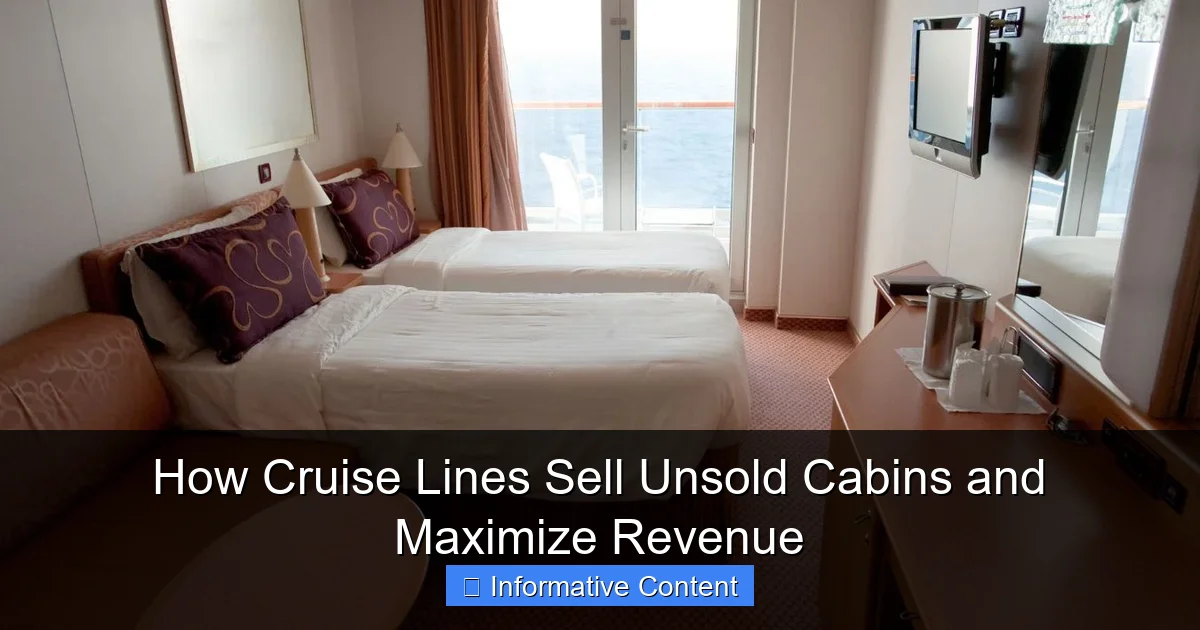
Visual guide about how cruise lines sell unsold cabins
Image source: media.mytravelhive.com
How Dynamic Pricing Works
Think of it like a seesaw. When demand is high—say, for a summer Alaska cruise—prices go up. But as departure nears and cabins sit empty, the seesaw tips the other way. Prices drop, sometimes dramatically, to attract last-minute bookers. Cruise lines use software that pulls data from:
- Booking velocity: How fast cabins are selling at any given time.
- Competitor pricing: If Norwegian is offering a 40% off sale, Carnival might match or beat it.
- Historical data: Past performance on similar itineraries helps predict demand.
- Seasonality: Shoulder seasons (like late fall in the Caribbean) see steeper discounts.
For example, Royal Caribbean’s “Last-Minute Deals” page often features cruises at 50–70% off brochure rates just 30–60 days before departure. These aren’t just random markdowns—they’re calculated moves to fill cabins without undercutting future pricing.
Why It Works for Travelers
Dynamic pricing is a win-win. Cruise lines recover some revenue from unsold inventory, while travelers snag incredible deals. I once booked a 7-night Eastern Caribbean cruise on Carnival for $499 per person—half the original price—because the ship had 150 empty cabins just three weeks before departure. The cruise line still made money (they’d already paid for fuel and crew), and I got a luxury vacation at a budget price.
Tips for Travelers
- Monitor pricing trends: Use tools like Cruiseline.com or Cruise Critic’s Price Tracker to see if prices are rising or falling.
- Book early for peak seasons: Dynamic pricing means higher prices for holidays and summer, so lock in early.
- Be flexible: The best deals go to travelers who can book on short notice (30–90 days out).
2. Repositioning Cruises: Filling the Gaps Between Seasons
Here’s a secret most travelers don’t know: cruise ships don’t stay in one region year-round. When Alaska’s season ends in September, ships “reposition” to the Caribbean, Asia, or Europe. These transoceanic voyages—often lasting 10–20 days—are a goldmine for selling unsold cabins because they’re less popular than standard 7-night cruises.
What Are Repositioning Cruises?
Repositioning cruises are one-way voyages where ships move between seasonal routes. For example, a ship might sail from Vancouver to Los Angeles in October, then head to Hawaii, and finally to Australia. These cruises often include multiple sea days (days at sea with no stops), which can be a turnoff for some travelers—but a dream for others who want relaxation and value.
Why They’re a Lifesaver for Unsold Inventory
Repositioning cruises are prime candidates for unsold cabins because:
- They’re long: Fewer people can take 2-week vacations, so demand is lower.
- They’re one-way: Travelers need to arrange flights home, adding complexity.
- They’re “boring” to some: Sea days mean no ports, which deters port-heavy cruisers.
But cruise lines turn these “flaws” into strengths. They slash prices—sometimes offering repositioning cruises for as little as $30–$40 per day. For instance, a 14-day Panama Canal repositioning cruise might cost $600 per person, compared to $1,200+ for a standard 7-night Caribbean cruise. The ship still generates revenue, and travelers get an extended vacation at a fraction of the cost.
Real-World Example
Holland America’s “Grand Voyages” often include repositioning legs. In 2023, their 18-day Panama Canal cruise from Miami to San Diego dropped to $899 per person (including taxes) just 45 days before departure—a 60% discount. The ship had 300 empty cabins, but the deep discount attracted retirees, remote workers, and deal-hunters.
Tips for Travelers
- Look for repositioning cruises in spring/fall: These are the most common times for ship movements.
- Pack for sea days: Bring books, movies, or hobbies to enjoy the downtime.
- Factor in flights: One-way cruises mean you’ll need to book a return flight, which can eat into savings.
3. Third-Party Partnerships and Opaque Booking Sites
Cruise lines don’t rely solely on their own websites to sell unsold cabins. They partner with third-party platforms—some transparent, some “opaque”—to offload inventory quietly and avoid devaluing their brand.
Opaque Booking Sites: The Hidden Deal Hubs
Ever heard of Hotwire or Priceline? These sites use “opaque” pricing, where you book a cruise without knowing the line or ship until after payment. It’s a win for cruise lines because:
- Brand protection: Discounts don’t appear on the cruise line’s official site, preserving perceived value.
- Bulk sales: Sites like Vacations To Go buy hundreds of cabins at a time, guaranteeing a sale.
- Anonymity: Travelers who book opaque deals are often less brand-loyal, so cruise lines don’t worry about upsetting loyal customers.
For example, a 7-night Mediterranean cruise might retail for $1,200 on Carnival’s website, but Hotwire could offer it for $699—with the line only revealed after booking. The cruise line fills the cabin and avoids undercutting its own pricing.
Travel Agencies and Consolidators
Travel agents and consolidators (like Cruise.com or Expedia) also play a big role. These partners:
- Buy cabins in bulk: They purchase “blocks” of cabins at a discount, then resell them at a markup (or discount).
- Offer bundled deals: Packages with airfare, hotels, or excursions make the cruise more attractive.
- Target niche markets: Some agencies specialize in senior cruises, group travel, or themed voyages (e.g., music festivals at sea).
Royal Caribbean’s partnership with Costco is a great example. Costco members can book exclusive “Cruise with More” packages with free onboard credit, upgrades, or discounts—all without Royal Caribbean appearing to slash prices publicly.
Tips for Travelers
- Check opaque sites for deep discounts: But read the fine print—some deals exclude taxes or port fees.
- Work with a travel agent: Many offer perks like free upgrades or onboard spending money.
- Compare bundled vs. unbundled prices: Sometimes, a “free” airfare add-on isn’t a good deal if the base fare is inflated.
4. Loyalty Programs and Past Passenger Perks
Cruise lines know that loyal customers are their best salespeople. That’s why they use loyalty programs to sell unsold cabins—by rewarding repeat cruisers with exclusive deals, upgrades, and last-minute access.
How Loyalty Programs Fill Cabins
Most cruise lines have tiered loyalty programs (e.g., Carnival’s VIFP Club, Royal Caribbean’s Crown & Anchor Society). Benefits include:
- Early access to sales: Loyalty members get 24–48 hours to book before deals go public.
- Exclusive discounts: Members-only pricing can be 10–30% lower than public rates.
- Free upgrades: Empty balcony or suite cabins might be offered to high-tier members for the price of an interior room.
- Onboard perks: Free drinks, priority dining, or spa credits sweeten the deal.
For example, Norwegian Cruise Line’s Latitudes program offers “Last-Minute Latitudes” deals to members just 2–3 weeks before departure. These cabins are often priced 50% below retail but come with free Wi-Fi or specialty dining credits to make the deal irresistible.
Case Study: Carnival’s “Flash Sales”
Carnival’s VIFP Club sends “Flash Sales” to members via email—often with 48-hour booking windows. In 2023, a 5-night Bahamas cruise dropped to $399 per person (including taxes) for members, while the same cabin cost $749 on Carnival’s website. The sale filled 200 cabins in 24 hours.
Tips for Travelers
- Join loyalty programs: Even one cruise can get you into the entry tier, which often has perks.
- Check your email: Last-minute deals are often sent to members first.
- Ask for upgrades: High-tier members can sometimes negotiate free upgrades at check-in.
5. Onboard Upselling and Last-Minute Cabin Releases
Even after the ship leaves port, cruise lines aren’t done selling unsold cabins. They use onboard tactics to convert last-minute bookings and fill any remaining inventory.
Last-Minute Cabin Releases
Some cabins are held back until the final days before departure. Why? To:
- Protect high-paying customers: Suites and balconies are reserved for full-fare bookers.
- Create urgency: “Only 5 cabins left!” signs drive impulse buys.
- Test pricing: If demand is high, they might not need discounts.
At the port, cruise lines often have “on-the-spot” sales teams offering deals to walk-up passengers. For example, a family might show up with a flight delay and book a last-minute cabin at 30% off—saving the cruise line from a total loss.
Onboard Upselling
Once the cruise starts, unsold cabins aren’t a total loss. Cruise lines use onboard promotions to:
- Offer upgrades: Empty balcony cabins might be sold for $20–$50 per night.
- Promote future cruises: “Book your next cruise” events offer discounts or onboard credit.
- Fill crew cabins: Some lines let passengers book unused crew quarters (often cheaper and quieter).
Princess Cruises’ “CruiseNext” program lets passengers book their next cruise onboard with a small deposit and receive 10% off the fare. It’s a win-win: the cruise line secures a future booking, and the passenger gets a discount.
Tips for Travelers
- Ask at check-in: “Are there any upgrades available?” can land you a balcony for a fraction of the price.
- Visit the future cruise desk: Onboard bookings often come with perks like free gratuities or airfare credits.
- Consider crew cabins: They’re often quieter and cheaper—but check the location first.
6. Data-Driven Strategies: The Future of Unsold Cabin Sales
The future of selling unsold cabins is all about data. Cruise lines are using AI, machine learning, and customer analytics to predict demand, personalize deals, and even automate pricing.
AI and Predictive Analytics
Imagine a system that can predict which cabins will remain unsold 60 days before departure—and automatically adjust pricing. That’s where cruise lines are headed. AI tools can:
- Predict demand: Based on historical data, weather, and economic trends.
- Personalize offers: Send targeted emails to customers likely to book (e.g., a past cruiser who loves Alaska).
- Optimize marketing spend: Focus ads on high-conversion audiences (e.g., retirees for repositioning cruises).
Norwegian Cruise Line’s “Future Cruise Program” uses AI to analyze past bookings and offer personalized discounts to customers who haven’t booked in 12+ months.
Table: Cruise Line Unsold Cabin Sales Tactics (2023 Data)
| Tactic | % of Unsold Cabins Filled | Average Discount | Time to Sell |
|---|---|---|---|
| Dynamic Pricing | 45% | 30–50% | 30–90 days |
| Repositioning Cruises | 25% | 50–70% | 60–120 days |
| Opaque Booking Sites | 15% | 40–60% | 45–90 days |
| Loyalty Programs | 10% | 20–30% | 14–30 days |
| Onboard Upselling | 5% | 10–20% | 1–7 days |
Tips for Travelers
- Use AI-powered tools: Sites like Cruise Critic’s Price Tracker use algorithms to predict price drops.
- Sign up for personalized offers: Many cruise lines let you customize deal alerts (e.g., “notify me for Alaska cruises”).
- Book during “soft” periods: AI shows that mid-week bookings (Tuesday–Thursday) often get the best rates.
Selling unsold cabins isn’t just about slashing prices—it’s about smart, data-driven strategies that balance revenue, customer experience, and brand value. For travelers, that means incredible opportunities to cruise for less. The key is to stay flexible, monitor deals, and be ready to jump when the price is right. Whether you’re a first-time cruiser or a seasoned veteran, the art of the unsold cabin deal is your ticket to unforgettable adventures at bargain prices.
Frequently Asked Questions
How do cruise lines sell unsold cabins at the last minute?
Cruise lines use dynamic pricing, flash sales, and last-minute deals to offload unsold cabins. They partner with travel agents and online platforms to offer steep discounts, often 20–50% off, to fill ships before departure.
What strategies do cruise lines use to maximize revenue from empty cabins?
Beyond discounts, lines use cabin upgrades, onboard credits, and package deals (e.g., free drinks or Wi-Fi) to entice bookings. They also reassign unsold cabins to loyalty members or crew as complimentary upgrades.
Are unsold cruise cabins sold through third-party websites?
Yes, many cruise lines work with third-party sites like Expedia or VacationsToGo to sell unsold cabins. These platforms specialize in last-minute inventory, helping lines reach bargain-hunting travelers.
How do cruise lines sell unsold cabins without devaluing their brand?
They limit public discounts by offering deals exclusively to past guests or loyalty program members. This keeps public prices stable while quietly filling cabins through targeted promotions.
Do cruise lines auction unsold cabins?
Some lines use reverse auctions or “name your price” models via their own websites or partners. Bidders submit offers, and the line accepts the highest viable bid close to departure.
What happens to cabins that remain unsold right before departure?
Lines may offer them to staff, travel agents, or charities for free or at minimal cost. Occasionally, they’re used as crew accommodations or simply left empty to maintain service standards.