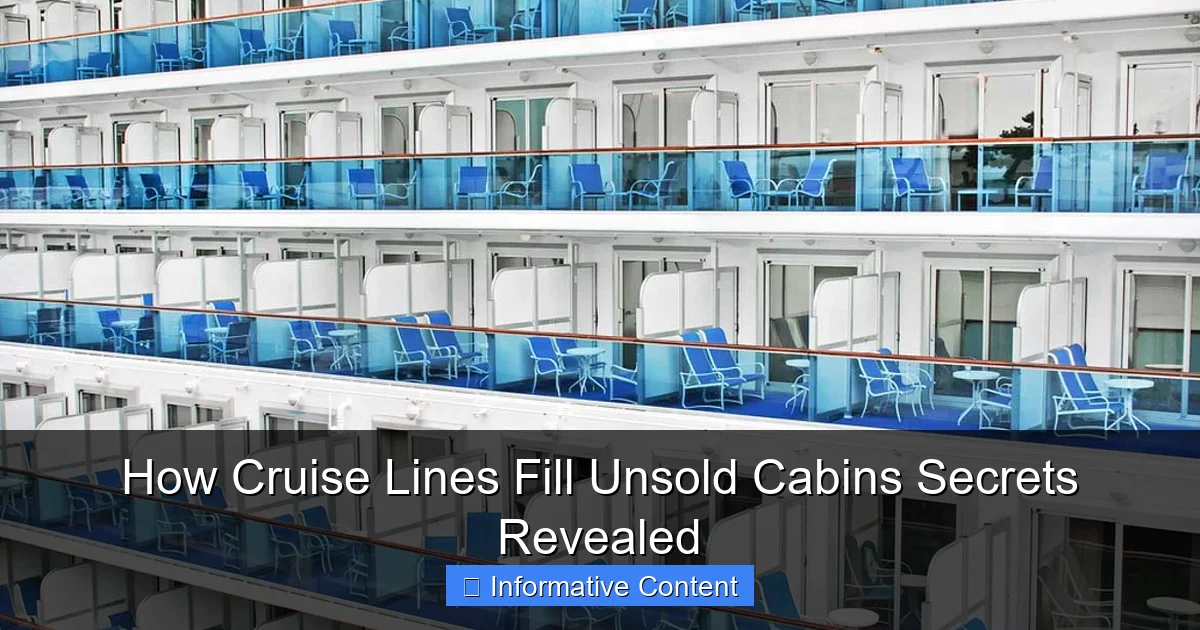
Featured image for how cruise lines fill unsold cabins
Image source: cruisedeals.expert
Cruise lines use dynamic pricing and last-minute deals to fill unsold cabins, slashing prices days before departure. They also partner with travel agents, offer free upgrades, and leverage loyalty programs to entice bookings. Behind the scenes, algorithms and revenue management teams work 24/7 to maximize occupancy and profits.
Key Takeaways
- Dynamic pricing adjusts fares in real-time to attract last-minute bookings.
- Loyalty perks incentivize repeat customers to fill remaining cabins.
- Travel agent deals offer bulk discounts to move unsold inventory fast.
- Upgrade offers entice guests to book higher-category cabins at lower rates.
- Social media flash sales create urgency with limited-time public deals.
- Repositioning cruises attract bargain hunters with unique itineraries.
📑 Table of Contents
- How Cruise Lines Fill Unsold Cabins: The Hidden Tactics Behind the Scenes
- 1. Dynamic Pricing: The Art of Adjusting Fares in Real Time
- 2. Last-Minute and “Flash” Sales: Creating Urgency and Scarcity
- 3. Strategic Partnerships and Third-Party Channels
- 4. Upgrades, Loyalty Programs, and Incentivized Bookings
- 5. Repositioning Cruises and Off-Peak Sailings: Turning Weakness into Opportunity
- 6. The Role of Data Analytics and AI in Modern Cabin Management
- Conclusion: The Real Secret to Filling Unsold Cabins
How Cruise Lines Fill Unsold Cabins: The Hidden Tactics Behind the Scenes
Picture this: It’s a week before your dream cruise, and you’re scrolling through travel deals, hoping for a last-minute steal. Suddenly, you see it—a luxury balcony cabin on a seven-day Caribbean cruise for less than half the original price. Your heart races. Is it too good to be true? Probably not. What you’re seeing is a carefully crafted strategy by cruise lines to fill unsold cabins before departure. And they’re really good at it.
Unsold cabins are the cruise industry’s worst nightmare. Each empty room means lost revenue not just from the fare, but also from onboard spending—think specialty dining, spa treatments, shore excursions, and even drinks packages. A single empty cabin on a 3,000-passenger ship might cost the line $5,000 to $10,000 in total potential earnings. Multiply that by hundreds of unsold rooms, and the financial stakes skyrocket. So, how do cruise lines turn these empty berths into profit? It’s not magic—it’s a mix of psychology, timing, partnerships, and smart pricing. In this post, we’ll pull back the curtain on the how cruise lines fill unsold cabins, revealing the secrets, tactics, and real-world examples that keep ships sailing at full capacity.
1. Dynamic Pricing: The Art of Adjusting Fares in Real Time
One of the most powerful tools cruise lines use to fill unsold cabins is dynamic pricing—a strategy borrowed from the airline and hotel industries. Instead of locking in prices months in advance, cruise lines constantly monitor demand, booking pace, and market conditions, adjusting fares to maximize occupancy.
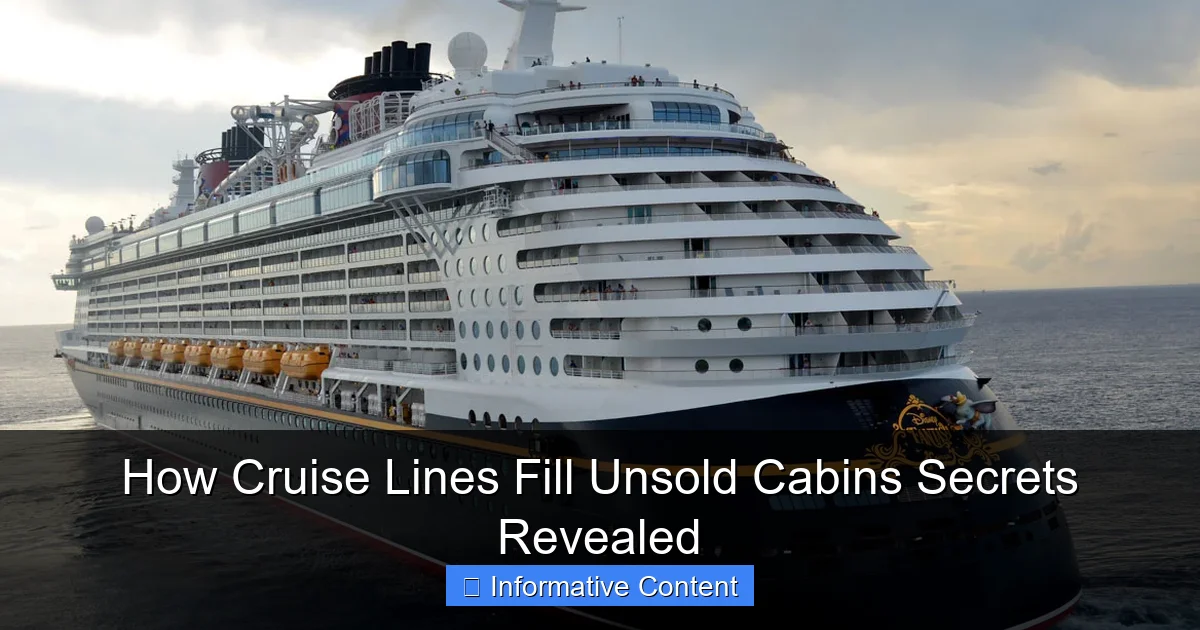
Visual guide about how cruise lines fill unsold cabins
Image source: cruisedeals.expert
How Dynamic Pricing Works
Imagine a cruise launching with a base fare of $1,200 per person for an oceanview cabin. As the departure date nears and bookings are slower than expected, the line’s revenue management system kicks in. It analyzes data like:
- Current booking rate compared to historical averages
- Competitor pricing on similar routes
- Seasonal demand (e.g., summer vs. shoulder seasons)
- Weather forecasts and port availability
Based on this, the system might lower the fare to $899, then $749, and eventually $599 as departure approaches. But here’s the trick: they don’t lower prices across the board. Instead, they create targeted discounts—available only to certain audiences, through specific channels, or for limited time windows.
Real-World Example: Carnival’s “Flash Sale” Strategy
Carnival Cruise Line often runs “Flash Sales” on their website and email list, offering 48-hour discounts on select sailings. For instance, a 7-night Alaska cruise might drop from $1,599 to $999 per person, but only if booked within two days. These sales are timed when the line detects a slowdown in bookings. The urgency drives conversions, and the limited-time nature prevents earlier bookers from demanding refunds or price adjustments.
Pro Tip: When to Book for the Best Deals
If you’re flexible, consider booking 60–90 days before departure. This is when cruise lines typically start aggressive discounting to fill unsold cabins. However, avoid booking too late (within 14 days) unless you’re okay with higher risk—last-minute deals are rare unless the ship is still half-empty. Use price-tracking tools like CruiseSheet or VacationStarter to monitor price drops and set alerts.
2. Last-Minute and “Flash” Sales: Creating Urgency and Scarcity
Scarcity sells. And cruise lines know it. When unsold cabins pile up, they don’t just quietly lower prices—they create a sense of urgency and exclusivity to spark action. Enter: last-minute and flash sales.
The Psychology Behind Urgency
Human psychology plays a huge role here. When people see a “Limited Time Offer” or “Only 10 Cabins Left at This Price,” their fear of missing out (FOMO) kicks in. Cruise lines amplify this by:
- Countdown timers on websites
- “Last Chance” email subject lines
- Highlighting low cabin availability in search results
For example, Royal Caribbean’s “Last-Minute Cruises” page often shows a red banner: “Only 3 Cabins Left!”—even if the ship is only 70% full. The message isn’t about total occupancy; it’s about perceived scarcity.
Case Study: Norwegian Cruise Line’s “Sail Away” Program
Norwegian’s “Sail Away” deals are legendary among budget travelers. These are deeply discounted cabins (sometimes up to 70% off) offered 1–2 months before departure. But there’s a catch: these cabins are often interior or obstructed-view rooms, and they don’t include extras like beverage packages or Wi-Fi. The trade-off? A rock-bottom price. The line fills unsold cabins while still making money from onboard spending. Passengers who book Sail Away deals often spend more on drinks, excursions, and dining than they saved on the fare.
How to Find These Hidden Gems
- Subscribe to cruise line newsletters—they’re the first to know about flash sales
- Follow cruise deal websites like Cruise Critic and CruiseSheet
- Check social media (Facebook groups, Twitter/X) for real-time deal alerts
- Use browser extensions like Honey to track price changes
Remember: Flash sales are often non-refundable and may have limited flexibility. Read the fine print!
3. Strategic Partnerships and Third-Party Channels
When direct sales aren’t enough, cruise lines turn to partners. This is where strategic partnerships come into play—collaborations with travel agents, airlines, credit card companies, and even employers.
Travel Agents: The Unsung Heroes
Travel agents still book a massive portion of cruise sales—around 60% in the U.S. Why? Because they have access to exclusive deals and can bundle cruises with flights, hotels, and tours. Cruise lines give agents special rates or “agent-only” discounts to incentivize bookings. For example, a travel agent might offer a 7-night Mediterranean cruise at $899, while the same cabin is $1,099 on the cruise line’s website. The agent pockets a small commission, the line fills a cabin, and the customer saves money.
Airline and Credit Card Partnerships
Many cruise lines partner with airlines and credit card companies to offer bundled deals. For instance:
- Delta Vacations offers cruise packages with Delta flights, often at a discount
- Chase Ultimate Rewards lets you book cruises using points, and they sometimes add bonus points for cruise redemptions
- Marriott Bonvoy has cruise partnerships with Royal Caribbean and Celebrity, offering members exclusive rates
These partnerships help cruise lines reach new audiences and fill unsold cabins through cross-promotion. A traveler booking a flight might see a pop-up: “Add a cruise for $299 more!”—a price so low it’s almost a loss leader, but it fills a cabin and drives future loyalty.
Corporate and Group Bookings
Another under-the-radar channel? Corporate and group bookings. Companies book cruises for employee rewards, incentive trips, or team retreats. These groups often book last-minute or during off-peak seasons when cruise lines are desperate to fill cabins. In return, the line offers discounted rates, free upgrades, or onboard credits. For example, a tech company might book 20 cabins on a repositioning cruise (a one-way voyage between regions) at 40% off, helping the line avoid sailing half-empty during a low-demand season.
4. Upgrades, Loyalty Programs, and Incentivized Bookings
Sometimes, the best way to fill a cabin isn’t to lower the price—it’s to make the existing price feel like a steal. That’s where upgrades, loyalty programs, and incentives come in.
Complimentary Upgrades: The “Free Balcony” Trick
Have you ever booked an oceanview cabin and arrived to find you’ve been upgraded to a balcony? It’s not random. Cruise lines use upgrades strategically to fill higher-category cabins that aren’t selling. For example, if balcony rooms are sitting empty, the line might offer a free upgrade to oceanview guests—but only if they’re flexible with cabin location. This fills a premium cabin at no extra cost to the line, while making the passenger feel like they’ve scored a win.
Loyalty Programs: Rewarding Repeat Customers
Cruise loyalty programs (like Royal Caribbean’s Crown & Anchor, Carnival’s VIFP, or Norwegian’s Latitudes) are goldmines for filling unsold cabins. These programs:
- Offer exclusive discounts on future sailings
- Provide early access to sales and promotions
- Give members free upgrades, onboard credits, or priority boarding
For instance, a Platinum-tier Crown & Anchor member might receive an email: “Book a balcony cabin on our 10-night Europe sailing and get a free specialty dining package.” The cabin was already priced low, but the added perk pushes the member to book—filling a cabin that might have stayed empty.
Onboard Incentives: Booking Your Next Cruise While Sailing
Here’s a clever tactic: cruise lines often offer onboard incentives to book your next cruise while still at sea. For example:
- “Book your next cruise today and get $200 onboard credit”
- “Lock in this fare and pay nothing for 12 months”
- “Free balcony upgrade on your next sailing”
These offers are designed to capture passengers at their peak happiness—when they’re relaxed, enjoying the ship, and less price-sensitive. The line fills unsold cabins on future sailings while increasing customer lifetime value.
5. Repositioning Cruises and Off-Peak Sailings: Turning Weakness into Opportunity
Not all cruises are created equal. Some sail during low-demand periods, or on routes with fewer passengers. These are prime candidates for unsold cabins. But cruise lines don’t give up—they turn these “weak” sailings into opportunities.
What Are Repositioning Cruises?
Repositioning cruises happen when a ship moves from one region to another (e.g., Europe to the Caribbean) for seasonal operations. These are often long voyages (10–14 days) with multiple sea days. They’re less popular than short, destination-heavy cruises, so they’re more likely to have unsold cabins.
How Cruise Lines Market These Sailings
Instead of hiding these cruises, lines market them as “adventure” or “bucket list” experiences. They highlight:
- Unique itineraries (e.g., transatlantic, Panama Canal)
- Lower prices (often 30–50% off regular fares)
- More time to enjoy the ship’s amenities (spas, pools, shows)
For example, a 14-day transatlantic repositioning cruise from Miami to Barcelona might cost $999 per person, while a 7-day Caribbean cruise costs $1,299. The line fills unsold cabins by appealing to budget travelers, retirees, and those seeking a relaxed, sea-focused vacation.
Off-Peak Sailings: Winter in the Caribbean, Anyone?
Winter is peak season for Caribbean cruises—but what about January? After the holidays, demand drops. Cruise lines respond with aggressive pricing, bundled deals, and themed sailings (e.g., “Winter Escape,” “Wellness Cruise”). They might even partner with wellness brands to offer yoga, meditation, or fitness-focused itineraries, attracting a niche audience.
Pro Tip: Repositioning Cruises = Big Savings
If you’re flexible with dates and destinations, repositioning cruises can save you hundreds. Look for sailings that:
- Cross oceans or major waterways
- Have 5+ sea days
- Travel between regions with seasonal demand shifts
Just be prepared for fewer port calls and more time at sea. It’s not for everyone—but for the right traveler, it’s a steal.
6. The Role of Data Analytics and AI in Modern Cabin Management
Today’s cruise lines don’t rely on gut feelings. They use data analytics and AI to predict demand, optimize pricing, and fill unsold cabins with precision.
Predictive Modeling: Forecasting Demand
Advanced algorithms analyze historical booking data, weather patterns, economic trends, and even social media sentiment to predict how many cabins will sell. If a sailing is projected to be 80% full, the system automatically triggers discount strategies 30–60 days out.
AI-Powered Personalization
Modern cruise websites use AI to personalize offers. For example, if you’ve browsed Alaska cruises before, you might see a pop-up: “Only 2 Cabins Left at $799—book now!” The offer is tailored to your interests and browsing history, increasing the chance of conversion.
Real-Time Pricing Adjustments
Some lines use real-time pricing engines that adjust fares multiple times a day based on booking pace. If a cabin category fills faster than expected, prices rise. If it lags, prices drop. This ensures the line maximizes revenue while minimizing empty cabins.
Example: MSC Cruises’ “Smart Pricing”
MSC Cruises uses a proprietary pricing engine called “Smart Pricing” that adjusts fares daily based on demand. It’s so effective that the line often achieves 95%+ occupancy—even on new or repositioning sailings.
Data Table: Common Cruise Line Pricing Strategies
| Strategy | When Used | Typical Discount | Best For |
|---|---|---|---|
| Flash Sales | 60–90 days before departure | 30–50% off | Flexible travelers |
| Last-Minute Deals | 30 days or less | 40–70% off | Spontaneous bookers |
| Sail Away (NCL) | 30–60 days out | 50–70% off | Budget travelers |
| Repositioning Cruises | Seasonal transitions | 30–50% off | Adventure seekers |
| Loyalty Perks | Year-round | Free upgrades, credits | Repeat customers |
Conclusion: The Real Secret to Filling Unsold Cabins
At the end of the day, the how cruise lines fill unsold cabins isn’t about one magic trick. It’s a symphony of strategies—dynamic pricing, urgency-driven sales, strategic partnerships, loyalty incentives, smart marketing, and cutting-edge data science. Each tactic plays a role, and the best lines use them in harmony.
For travelers, this is great news. It means incredible deals are out there—if you know where and when to look. Whether it’s a last-minute flash sale, a repositioning cruise, or a loyalty perk, there’s always a way to score a lower fare. The key is flexibility, timing, and a bit of research.
So next time you see a “too good to be true” cruise deal, don’t dismiss it. It might just be the cruise line’s clever way of filling an unsold cabin—and your chance to sail in style for less. Happy cruising!
Frequently Asked Questions
How do cruise lines fill unsold cabins at the last minute?
Cruise lines often offer steep last-minute discounts, flash sales, or free upgrades to fill unsold cabins. They may also partner with travel agencies or auction sites to sell remaining inventory quickly. This ensures no cabin goes empty, maximizing revenue per sailing.
What strategies do cruise lines use to fill unsold cabins before departure?
Lines use targeted email campaigns, loyalty program perks, and “mystery pricing” (e.g., “pay only what you want”) to entice bookings. They might also add free perks like onboard credit or drink packages to sweeten deals for late bookers.
Do cruise lines give away unsold cabins for free?
While rare, cruise lines may comp cabins to travel influencers, VIPs, or frequent cruisers to fill ships. More commonly, they deeply discount cabins or offer “buy one, get one free” deals to avoid sailing with empty berths.
How do cruise lines fill unsold cabins without devaluing their brand?
They use opaque booking channels like cruise auction sites or private sales to hide discounts from the public. This lets them attract bargain hunters while maintaining advertised prices for full-fare passengers.
Can you get a free upgrade if a cruise has unsold cabins?
Yes! Booking late (within 60 days of departure) increases your chances of a free upgrade, as cruise lines prioritize filling higher-category cabins over leaving them empty. Loyalty members also get priority for unsold suite upgrades.
Why don’t cruise lines just lower prices earlier to fill unsold cabins?
They balance early bookings (at higher prices) with last-minute sales to maximize profits. Dynamic pricing algorithms adjust rates closer to departure, but lines avoid early cuts to protect revenue from customers willing to pay full price.