Featured image for could norwegian cruise line go bust
Image source: cruisefever.net
Norwegian Cruise Line (NCL) faces financial strain due to high debt and post-pandemic recovery challenges, but a complete collapse is unlikely in the near term. The company has taken aggressive cost-cutting measures, refinanced debt, and seen strong booking demand, signaling resilience despite industry headwinds. While not immune to economic shocks, NCL’s strategic moves and loyal customer base provide a buffer against bankruptcy—for now.
Key Takeaways
- Norwegian Cruise Line is financially stable despite pandemic-related challenges, with strong liquidity and recovery efforts.
- Monitor quarterly earnings closely to assess debt management and revenue rebound post-pandemic.
- Book refundable fares to protect yourself if financial instability arises unexpectedly.
- Demand for cruising is rebounding, boosting NCL’s long-term viability and investor confidence.
- Government and private financing has helped NCL stay afloat during industry downturns.
- Watch for rising fuel costs and interest rates, which could impact future profitability.
📑 Table of Contents
- The Storm Beneath the Surface: Is Norwegian Cruise Line in Financial Trouble?
- Norwegian Cruise Line’s Financial Health: A Deep Dive
- Industry-Wide Challenges Affecting NCL’s Survival
- How NCL Compares to Competitors: A Survival Battle
- Could Norwegian Cruise Line Go Bust? Bankruptcy Scenarios
- What You Can Do: Tips for Travelers and Investors
- The Verdict: Is Norwegian Cruise Line Doomed or Resilient?
The Storm Beneath the Surface: Is Norwegian Cruise Line in Financial Trouble?
The cruise industry, once a symbol of unbridled luxury and carefree vacationing, found itself in uncharted waters during the global pandemic. With ships anchored, ports closed, and revenues plummeting, even industry giants like Norwegian Cruise Line faced existential threats. Fast forward to 2024, and while the sun appears to be shining on the sector again, questions linger: Could Norwegian Cruise Line go bust? For travelers, investors, and employees alike, the financial health of this major player is more than a curiosity—it’s a critical concern. With over 30 ships, a presence in 100+ destinations, and a workforce of thousands, the potential collapse of Norwegian Cruise Line (NCL) would send shockwaves across the global tourism economy.
Norwegian Cruise Line Holdings Ltd. (NCLH), which also operates Oceania Cruises and Regent Seven Seas Cruises, has been on a rollercoaster ride. After a 2020-2021 period of record losses and debt accumulation, the company has made strides toward recovery. Yet, with rising interest rates, inflation, and geopolitical instability, the road to financial stability remains bumpy. This article dives deep into the financial, operational, and market factors that determine whether Norwegian Cruise Line could face bankruptcy or emerge stronger than ever. Whether you’re a loyal cruiser, a potential investor, or simply curious about the cruise industry’s future, here’s what you need to know.
Norwegian Cruise Line’s Financial Health: A Deep Dive
Debt Load and Liquidity Position
One of the most pressing concerns for Norwegian Cruise Line is its debt burden. At the end of Q1 2024, NCLH reported total debt of approximately $12.4 billion, including long-term loans, bonds, and lease obligations. While this is down from a peak of $14.5 billion in 2021, it remains significantly higher than pre-pandemic levels (around $6.5 billion in 2019). High debt increases financial risk, especially in an era of rising interest rates. With the U.S. Federal Reserve maintaining a restrictive monetary policy, the cost of servicing this debt has surged.
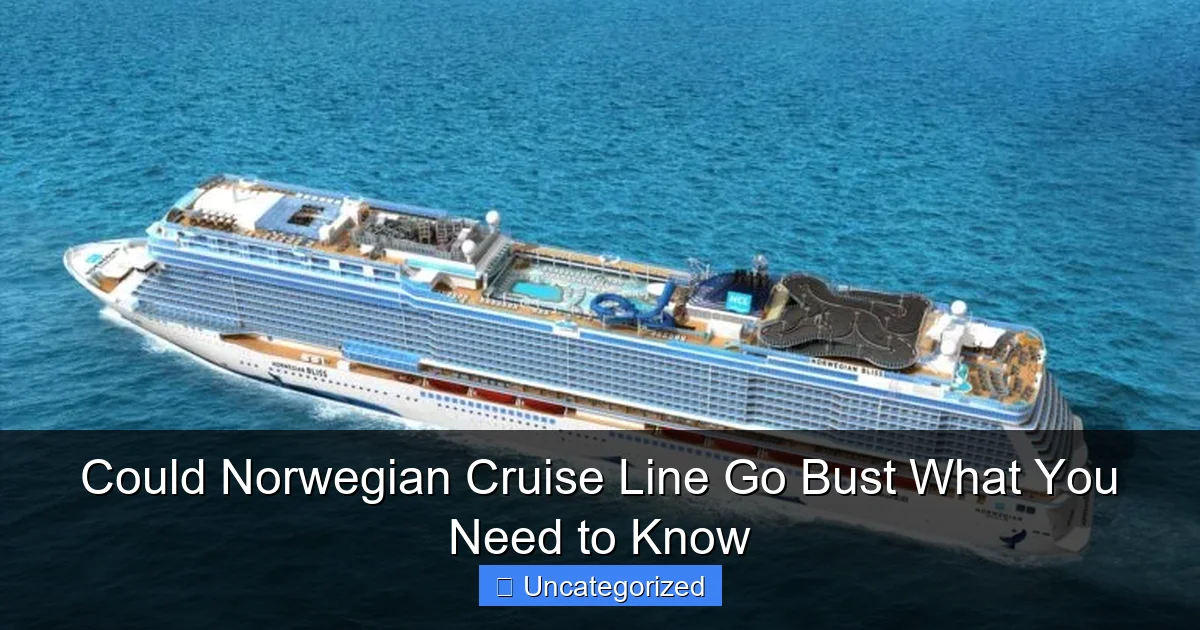
Visual guide about could norwegian cruise line go bust
Image source: cruisefever.net
To manage liquidity, NCLH has taken several steps:
- Issuing new equity and convertible notes to raise capital.
- Selling and leasing back ships to unlock cash (e.g., the sale-leaseback of Norwegian Encore in 2022).
- Implementing cost-cutting measures, including reduced corporate overhead and operational efficiencies.
Despite these efforts, the company’s debt-to-equity ratio stood at 4.2x in 2023, well above the industry average of 2.8x for major cruise lines like Carnival and Royal Caribbean. This indicates that NCLH is more leveraged and vulnerable to economic downturns.
Revenue Recovery and Profitability Trends
On the positive side, Norwegian Cruise Line has seen a strong rebound in revenue. In 2023, the company reported total revenue of $8.5 billion, a 78% increase from 2022 and nearing pre-pandemic levels. Occupancy rates have climbed to over 105% (due to double occupancy and third/fourth berths), and average ticket prices have risen by 12% year-over-year, driven by demand for premium experiences and new ships.
However, profitability remains inconsistent. While Q3 2023 saw a net income of $344 million, Q4 2023 reported a net loss of $180 million due to seasonal factors and higher fuel and labor costs. The company’s operating margin (EBITDA) improved to 22% in 2023, but it still lags behind competitors like Royal Caribbean (28%) and Carnival (25%). This suggests that while demand is strong, cost pressures are eating into margins.
Cash Flow and Burn Rate
Cash flow is a critical indicator of survival. In 2023, NCLH generated $1.2 billion in operating cash flow, a significant improvement from a $1.8 billion outflow in 2021. The company also reduced its monthly cash burn rate from $250 million in 2020 to $60 million in early 2024. This progress is encouraging, but the burn rate could spike if a new crisis (e.g., global recession, pandemic resurgence) hits.
Moreover, NCLH has $3.8 billion in debt maturing between 2024 and 2026. Without refinancing at favorable rates or generating sufficient cash, this could trigger a liquidity crunch. The company has already started refinancing some debt, but rising interest rates could make this more expensive.
Industry-Wide Challenges Affecting NCL’s Survival
Global Economic and Geopolitical Risks
Norwegian Cruise Line doesn’t operate in a vacuum. The broader cruise industry is highly sensitive to macroeconomic conditions. Key threats include:
- Inflation and rising costs: Fuel prices, food, and labor costs have increased by 15-20% since 2021, squeezing profit margins.
- Geopolitical instability: Conflicts in the Middle East, Eastern Europe, and the Red Sea have disrupted itineraries. For example, NCL has had to reroute ships away from the Red Sea due to Houthi attacks, adding fuel and time costs.
- Recession risks: A U.S. or global recession could reduce discretionary spending on cruises. In 2022, cruise demand dipped during the “sticky inflation” period, though it rebounded quickly.
These factors are beyond NCL’s control but directly impact its bottom line. Unlike airlines, which can adjust capacity more easily, cruise lines face long lead times for ship deployment and high fixed costs.
Environmental and Regulatory Pressures
The cruise industry is under increasing scrutiny for its environmental impact. NCL has committed to reducing greenhouse gas emissions by 30% by 2030 and achieving net-zero by 2050. While this is a positive goal, it comes with a hefty price tag. The company is investing in LNG-powered ships (e.g., Norwegian Prima), shore power connections, and carbon offset programs.
However, compliance costs are rising. The EU’s Emissions Trading System (ETS) now includes cruise ships, and California’s strict air quality regulations require ships to use cleaner fuels in port. These regulations could increase operating costs by 5-10% over the next decade. If NCL fails to meet these standards, it could face fines or reputational damage.
Labor Shortages and Crew Costs
The cruise industry is also grappling with a global labor shortage. Post-pandemic, many crew members left the industry, and recruiting new ones has been challenging. NCL has had to offer higher wages, signing bonuses, and improved living conditions to attract staff. In 2023, crew wages rose by 18% year-over-year.
This trend is likely to continue. With inflation eroding real wages, cruise lines must balance cost control with employee satisfaction. Poor crew retention could lead to operational disruptions, affecting guest experience and brand loyalty.
How NCL Compares to Competitors: A Survival Battle
Debt and Financial Leverage Comparison
Norwegian Cruise Line’s financial position is weaker than some of its rivals. Here’s how it stacks up:
| Cruise Line | Total Debt (2023, $B) | Debt-to-Equity Ratio | Net Income (2023, $M) | Operating Margin (2023) |
|---|---|---|---|---|
| Norwegian Cruise Line | 12.4 | 4.2x | 164 | 22% |
| Royal Caribbean | 19.1 | 3.1x | 1,700 | 28% |
| Carnival Corporation | 27.5 | 2.8x | 1,200 | 25% |
| MSC Cruises | 14.8 (est.) | 2.5x (est.) | 800 (est.) | 24% (est.) |
While NCL’s debt is lower than Carnival and Royal Caribbean, its debt-to-equity ratio is the highest, indicating greater financial risk. Royal Caribbean, despite higher total debt, has stronger profitability and cash flow. Carnival, the industry leader, has the best balance sheet and lowest leverage.
Market Positioning and Brand Strength
Norwegian Cruise Line has a unique advantage: its brand identity. Known for “Freestyle Cruising” (no fixed dining times, open bars, casual dress), NCL appeals to younger, more adventurous travelers. This has helped it capture market share in the premium segment, competing with Royal Caribbean’s “Royal Amplified” ships.
However, NCL’s fleet is smaller (32 ships vs. Carnival’s 92 and Royal Caribbean’s 65), limiting its ability to absorb shocks. For example, when a ship is out of service for maintenance, NCL has fewer alternatives to fill the gap. In contrast, Carnival can redeploy ships across its 10 brands.
Innovation and New Ship Investments
NCL is betting on innovation to stay competitive. The company has ordered six new ships, including the LNG-powered Norwegian Prima (2022) and Norwegian Viva (2023), with more to come through 2027. These ships feature cutting-edge technology, larger staterooms, and enhanced sustainability features.
But new ships come at a cost. The Prima-class vessels cost around $1 billion each, and delivery delays (due to supply chain issues) have increased expenses. If these ships don’t perform as expected, NCL could face a financial setback.
Could Norwegian Cruise Line Go Bust? Bankruptcy Scenarios
When Would Bankruptcy Be Likely?
Bankruptcy (or restructuring) would only occur under extreme conditions. For NCL, the following scenarios could trigger financial collapse:
- Debt default: If NCL cannot refinance maturing debt or generate enough cash to service it, creditors could force a Chapter 11 filing.
- Prolonged revenue decline: A new pandemic, global recession, or geopolitical crisis that lasts 12+ months could drain liquidity.
- Loss of investor confidence: If stock prices and credit ratings continue to decline, NCL may lose access to capital markets.
- Failed turnaround strategy: If cost-cutting measures or new ship investments fail to boost profitability.
In 2020, NCL came close to this scenario but avoided bankruptcy through government support, asset sales, and debt restructuring.
Precedents in the Cruise Industry
NCL is not the first cruise line to face financial peril. In 2020, several smaller operators collapsed, including:
- Pullmantur Cruises: Entered administration in 2020 after parent company Royal Caribbean withdrew support.
- Dream Cruises: Ceased operations in 2022 due to financial difficulties.
Even major players like Costa Cruises (Carnival) and P&O Cruises Australia paused operations temporarily. However, no major cruise line has filed for bankruptcy since the 1990s, thanks to deep-pocketed parent companies and government aid.
How Bankruptcy Would Work
If NCL were to file for Chapter 11 (U.S. reorganization bankruptcy), the process would likely involve:
- Debt restructuring: Negotiating with creditors to reduce debt, extend maturities, or convert debt to equity.
- Asset sales: Selling ships or ports to raise cash.
- Operational changes: Cutting routes, reducing fleet size, or merging with a competitor.
- Continued operations: Unlike liquidation, Chapter 11 allows the company to keep running while restructuring.
Passengers with existing bookings would likely be protected, as cruise lines typically honor tickets during bankruptcy proceedings. However, future itineraries could be canceled or altered.
What You Can Do: Tips for Travelers and Investors
For Travelers: Protecting Your Cruise Investment
If you’re considering a cruise with Norwegian Cruise Line, here’s how to safeguard your trip:
- Book with a credit card: This offers protection if the company goes bust or cancels your trip. Look for cards with travel insurance benefits.
- Purchase travel insurance: Choose a policy that covers financial insolvency. Companies like Allianz and Travel Guard offer this.
- Monitor news and ratings: Follow financial news and credit rating agencies (e.g., Moody’s, S&P) for updates on NCL’s financial health.
- Book shorter cruises: A 3-4 day cruise carries less risk than a 14-day trip if disruptions occur.
- Use a travel agent: Reputable agents have contingency plans and can help rebook if needed.
Example: In 2020, many passengers who booked through travel agents were able to get refunds or rebooked on other lines when NCL paused operations.
For Investors: Assessing the Risk-Reward Tradeoff
If you’re considering investing in NCL stock or bonds, evaluate the following:
- Valuation: NCL stock trades at a P/E ratio of 18x (2024), below Carnival (25x) but above Royal Caribbean (12x). This suggests mixed sentiment.
- Debt covenants: Check if NCL is close to breaching loan agreements, which could trigger default.
- Growth potential: NCL’s new ships and expansion into Asia could drive long-term growth, but execution risk is high.
- Diversification: Avoid overexposure. Consider a portfolio with multiple cruise stocks or sectors.
Tip: Use stop-loss orders to limit downside risk. If NCL stock drops below a certain level (e.g., $15/share), sell automatically.
For Employees and Stakeholders
If you work for NCL or rely on it for business (e.g., port vendors, excursion providers):
- Diversify income sources: Don’t depend solely on NCL for revenue.
- Stay informed: Attend company briefings and monitor SEC filings (10-K, 10-Q reports).
- Network: Build relationships with other cruise lines to explore backup opportunities.
The Verdict: Is Norwegian Cruise Line Doomed or Resilient?
So, could Norwegian Cruise Line go bust? The short answer is: unlikely in the near term, but not impossible in a worst-case scenario. NCL has made remarkable progress in recovering from the pandemic, with strong demand, improved cash flow, and a modernizing fleet. However, its high debt, rising costs, and vulnerability to external shocks keep it on shaky ground.
The company’s survival will depend on several factors:
- Economic stability: A prolonged recession or inflation spike could tip the balance.
- Debt management: Successfully refinancing maturing debt at reasonable rates.
- Operational efficiency: Controlling costs while maintaining quality.
- Market demand: Sustained consumer interest in cruising, especially among younger demographics.
For travelers, the risk of NCL going bust is low, but not zero. By taking precautions like travel insurance and booking with flexibility, you can cruise with confidence. For investors, NCL offers high-reward potential but comes with high risk. Diversification and careful monitoring are essential.
Ultimately, Norwegian Cruise Line is a resilient company with a strong brand and loyal customer base. While it may not be out of the woods yet, it’s far from sinking. The storm may not be over, but with prudent management and a bit of luck, NCL could emerge stronger—sailing into a brighter, more sustainable future.
Frequently Asked Questions
Could Norwegian Cruise Line go bust in the current economic climate?
While Norwegian Cruise Line (NCL) has faced financial challenges due to the pandemic and rising fuel costs, it has taken steps to improve liquidity, including cost-cutting and asset sales. As of 2023, the company remains operational, but ongoing global economic pressures could impact its long-term stability.
What signs indicate that Norwegian Cruise Line might be at risk of bankruptcy?
Investors and travelers watch for red flags like mounting debt, declining bookings, or delayed ship orders. NCL’s recent financial reports show improved revenue, but high leverage ratios and interest expenses remain concerns for potential insolvency.
Has Norwegian Cruise Line ever filed for bankruptcy before?
No, Norwegian Cruise Line has never filed for bankruptcy, even during the 2008 financial crisis or the 2020 pandemic. The company restructured debt and raised capital to survive past downturns, suggesting resilience in crises.
How does Norwegian Cruise Line’s financial health compare to other cruise lines?
NCL’s debt-to-equity ratio is higher than Carnival but lower than some smaller competitors. All major cruise lines faced similar pandemic-related losses, but NCL’s focus on premium pricing and newer ships may aid recovery.
If Norwegian Cruise Line went bust, what would happen to my booked cruise?
If NCL ceased operations, passengers would likely receive refunds via travel insurance or credit card chargebacks. The company’s escrow accounts for customer deposits also offer some protection against sudden collapse.
Is it safe to book a Norwegian Cruise Line vacation amid bankruptcy rumors?
While no company is risk-free, NCL continues to operate and honor reservations. Booking with travel insurance and monitoring quarterly earnings reports can help mitigate concerns about financial instability.