Featured image for could carnival cruise lines go out of business
Image source: a.travel-assets.com
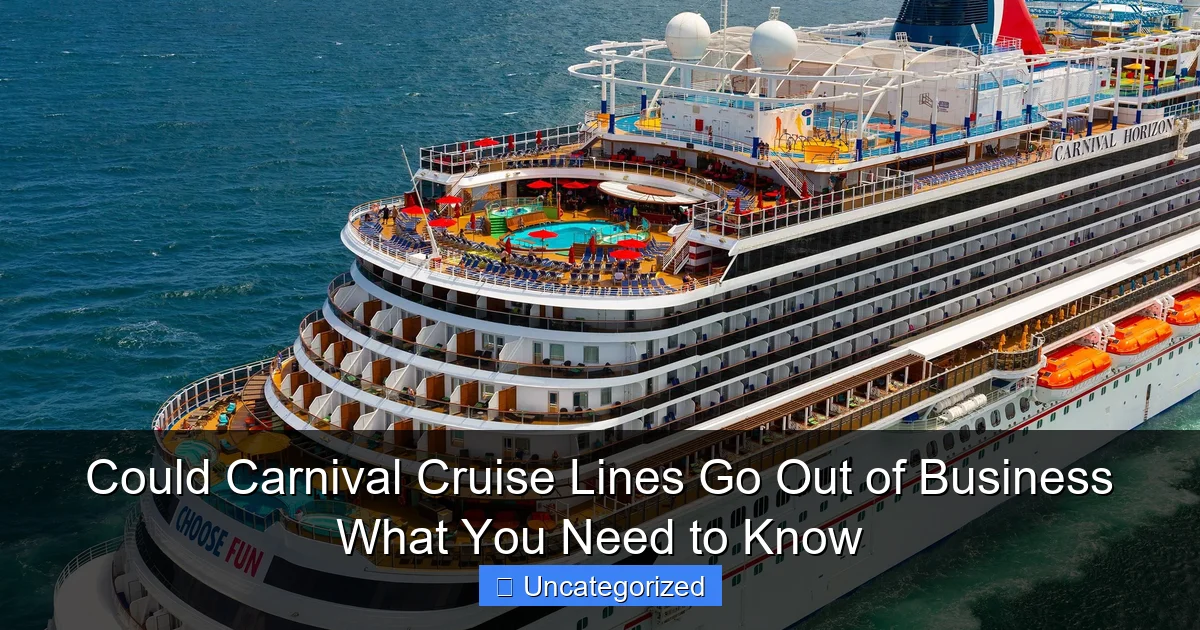
Carnival Cruise Lines faces significant financial strain due to pandemic-related losses and mounting debt, raising real concerns about its long-term survival. While the company has taken aggressive cost-cutting measures and secured emergency funding, ongoing operational challenges and fluctuating travel demand could threaten its recovery. For travelers, this means potential disruptions—but also rare opportunities for deals as Carnival fights to stay afloat.
Key Takeaways
- Carnival is financially stable despite pandemic-related challenges and debt.
- Monitor quarterly earnings to assess long-term recovery and profitability.
- Book with confidence as customer demand and operations remain strong.
- Travel insurance is key to protect against unforeseen disruptions or cancellations.
- Diversify cruise plans but don’t rule out Carnival’s future offerings.
- Watch for fleet updates as modernization signals strategic growth commitment.
📑 Table of Contents
- Could Carnival Cruise Lines Go Out of Business? What You Need to Know
- 1. The Financial Health of Carnival Cruise Lines: A Closer Look
- 2. Market Position and Competitive Landscape
- 3. Risks and Challenges Facing Carnival
- 4. Strategic Initiatives and Future Outlook
- 5. Could Carnival Actually Go Out of Business? A Realistic Assessment
- 6. What This Means for Travelers and Investors
Could Carnival Cruise Lines Go Out of Business? What You Need to Know
The cruise industry has long been a symbol of luxury, adventure, and escape—offering travelers the chance to explore exotic destinations while enjoying all-inclusive amenities. Among the giants of this industry, Carnival Cruise Lines stands as one of the most recognizable names. With its iconic red, white, and blue funnel, Carnival has been a dominant player for decades, offering affordable, fun-focused vacations to millions of passengers annually. From its founding in 1972 to its current fleet of over 20 ships, Carnival has built a brand synonymous with value, entertainment, and mass-market appeal.
But in recent years, the cruise industry has faced unprecedented challenges—global pandemics, geopolitical instability, rising operational costs, and shifting consumer preferences. These pressures have sparked a critical question among travelers, investors, and industry analysts: Could Carnival Cruise Lines go out of business? While the idea may seem far-fetched to some, the reality is that no company, regardless of size or legacy, is immune to financial distress or market shifts. This article delves into the financial health, operational strategies, market position, and long-term sustainability of Carnival Cruise Lines. We’ll examine the risks, explore potential scenarios, and provide actionable insights for travelers, shareholders, and industry watchers alike. Whether you’re planning your next vacation or analyzing investment opportunities, understanding the future of Carnival is essential in today’s volatile travel landscape.
1. The Financial Health of Carnival Cruise Lines: A Closer Look
Debt and Liquidity: The Pandemic Hangover
The most pressing concern for Carnival Cruise Lines in recent years has been its mountain of debt. When the COVID-19 pandemic hit in early 2020, cruise ships were grounded globally. With zero revenue for over a year, Carnival was forced to borrow heavily to survive. According to its 2023 annual report, the company’s total debt stood at approximately $30 billion, a staggering increase from pre-pandemic levels of around $10 billion. This debt burden includes high-interest bonds, revolving credit facilities, and government-backed loans.
Visual guide about could carnival cruise lines go out of business
Image source: cruisemapper.com
While Carnival has managed to stay afloat through aggressive cost-cutting, asset sales (such as older ships), and equity offerings, the high debt-to-equity ratio remains a red flag. As of Q1 2024, the company’s debt-to-EBITDA ratio was around 12x—well above the healthy threshold of 3–4x for most industries. This means Carnival is spending a significant portion of its revenue just servicing debt, limiting its ability to reinvest in new ships, technology, or marketing.
However, it’s not all doom and gloom. Carnival has made notable progress in improving liquidity. By 2023, it had raised over $25 billion in capital through a mix of debt refinancing, equity issuance, and government support. The company also extended debt maturities, pushing major repayments out to 2026–2028. This “kicking the can down the road” strategy gives Carnival breathing room, but it’s not a permanent solution.
Revenue Recovery and Profitability
On the revenue front, Carnival has shown encouraging signs of recovery. In 2023, the company reported $21.6 billion in revenue, a 75% increase from 2022 and nearing pre-pandemic levels. Occupancy rates have rebounded to over 95% on many routes, and onboard spending (which includes drinks, excursions, and retail) has surged due to pent-up demand.
Despite this, profitability remains a challenge. In 2023, Carnival posted a net loss of $1.1 billion, though this was a significant improvement from the $6.1 billion loss in 2022. The company attributes losses to high fuel costs, inflationary pressures on labor and supplies, and ongoing debt interest payments. Analysts at Moody’s and S&P continue to rate Carnival’s credit as “junk” (Ba3 and BB-, respectively), reflecting ongoing concerns about long-term solvency.
Tip for travelers: If you’re concerned about Carnival’s stability, consider booking through a third-party travel agency that offers trip protection. This can safeguard your investment in case of unforeseen cancellations or financial collapse.
Cost Management and Operational Efficiency
Carnival has taken aggressive steps to reduce costs. These include:
- Retiring 20 older, less-efficient ships between 2020 and 2022, saving an estimated $500 million annually in operating costs.
- Renegotiating labor contracts to align with current demand.
- Investing in fuel-efficient technologies, such as LNG-powered ships (e.g., Carnival Jubilee).
- Streamlining port operations and reducing turnaround times.
These measures have improved operational margins, but the pace of improvement must accelerate to offset rising interest expenses. The company’s goal is to achieve positive free cash flow by 2025, a critical milestone for reducing reliance on debt.
2. Market Position and Competitive Landscape
Dominance in the Mass-Market Segment
Carnival Cruise Lines holds a unique position as the largest cruise operator in the world by passenger capacity. With a fleet of 22 ships (as of 2024) and a focus on affordability and fun, it dominates the mass-market segment. Unlike luxury lines like Regent or Seabourn, Carnival targets middle-income families, first-time cruisers, and budget-conscious travelers. Its “Fun Ships” branding, with features like water parks, comedy clubs, and themed parties, appeals to a broad demographic.
This market positioning gives Carnival a competitive edge. While luxury and premium cruise lines cater to a niche audience, Carnival’s volume-driven model allows it to generate steady revenue even in uncertain times. In 2023, Carnival carried over 6 million passengers—more than Royal Caribbean and Norwegian combined in terms of volume.
Competition from Rivals
Despite its size, Carnival faces stiff competition. Royal Caribbean International has invested heavily in larger, more technologically advanced ships (e.g., Icon of the Seas, the world’s largest cruise ship at 250,800 GT). These vessels offer premium experiences at mid-tier prices, drawing customers away from Carnival’s traditional value proposition.
Norwegian Cruise Line Holdings has also gained market share through innovative itineraries, flexible dining, and strong digital marketing. Additionally, new entrants like Virgin Voyages and Celebrity Cruises are targeting younger, experience-driven travelers—a demographic Carnival is trying to attract with its “Carnival Horizon” and “Carnival Celebration” ships.
One key differentiator for Carnival is its brand loyalty program, VIFP (Very Important Fun Person), which rewards repeat cruisers with perks like free upgrades and priority boarding. With over 30 million members, this program is a powerful retention tool.
Geographic and Demographic Shifts
Carnival has diversified its market reach beyond North America. In recent years, it has expanded into:
- Europe: With homeports in Barcelona, Rome, and London.
- Asia-Pacific: Partnering with local operators to tap into growing middle-class demand in China, Japan, and Australia.
- Caribbean and Alaska: Maintaining strong seasonal presence in high-demand regions.
However, geopolitical risks—such as the war in Ukraine affecting Mediterranean routes or tensions in the South China Sea—can disrupt itineraries. Carnival’s ability to pivot quickly to alternative ports is crucial for maintaining revenue.
3. Risks and Challenges Facing Carnival
Geopolitical and Environmental Volatility
Cruise lines are highly vulnerable to external shocks. The Russia-Ukraine conflict forced Carnival to cancel dozens of Black Sea and Baltic itineraries, resulting in $200 million in lost revenue in 2022. Similarly, the Israel-Hamas war led to the suspension of Eastern Mediterranean cruises in late 2023.
Environmental regulations also pose a threat. The International Maritime Organization (IMO) has mandated a 40% reduction in carbon emissions by 2030. Carnival is investing in LNG (liquefied natural gas) and shore power, but retrofitting older ships is costly. Failure to comply could result in fines or restricted access to ports.
Labor Shortages and Inflation
The cruise industry is labor-intensive, relying on thousands of crew members from over 100 nationalities. Post-pandemic, many workers left the industry due to poor working conditions and long contracts. Carnival now faces a global crew shortage, leading to higher wages and recruitment costs. In 2023, the company spent $1.8 billion on crew compensation—up 22% from 2021.
Inflation has also driven up the cost of food, fuel, and supplies. Carnival’s fuel expense rose 35% in 2023 due to global oil price fluctuations. While the company uses hedging strategies to mitigate risk, prolonged high prices could erode margins.
Reputation and Public Perception
Carnival has faced criticism for:
- COVID-19 outbreaks: Early in the pandemic, the Diamond Princess and Carnival Freedom experienced high infection rates, damaging public trust.
- Environmental impact: Cruise ships are often labeled as “floating polluters” due to emissions and waste.
- Overcrowding: Popular ports like Cozumel and Nassau have complained about overtourism.
To address these issues, Carnival has launched sustainability initiatives, such as banning single-use plastics and partnering with environmental NGOs. However, rebuilding trust takes time.
4. Strategic Initiatives and Future Outlook
Fleet Modernization and Innovation
Carnival is investing $3.5 billion in new ships through 2026, including:
- Carnival Jubilee (2023): First LNG-powered ship in the fleet.
- Carnival Firenze (2024): A “Fun Ship” with Italian-themed entertainment.
- Future LNG vessels: Three additional ships on order.
These ships feature energy-efficient engines, advanced wastewater treatment, and AI-driven guest services. The goal is to reduce emissions by 20% by 2030 while enhancing the passenger experience.
Digital Transformation and Personalization
Carnival has launched the HUB App, which allows guests to book excursions, order drinks, and access real-time ship information. The app also uses AI to personalize offers based on guest preferences. In 2023, 85% of guests used the app, up from 50% in 2021.
The company is also testing facial recognition for boarding and digital keycards, reducing wait times and improving security.
Partnerships and Diversification
Carnival is exploring new revenue streams through:
- Land-based resorts: Developing a private island in the Bahamas (Carnival CocoCay) with expanded attractions.
- Travel insurance partnerships: Offering bundled packages with Allianz and AIG.
- Corporate charters: Targeting MICE (Meetings, Incentives, Conferences, Exhibitions) markets.
These initiatives aim to reduce reliance on ticket sales alone.
5. Could Carnival Actually Go Out of Business? A Realistic Assessment
Bankruptcy Scenarios
While Carnival is not on the brink of collapse, several scenarios could push it toward bankruptcy:
- Prolonged economic recession: A global downturn could reduce discretionary spending, leading to lower bookings.
- Debt default: If Carnival fails to refinance $5 billion in maturing debt by 2026, creditors could force restructuring.
- Major safety incident: A catastrophic event (e.g., ship fire, collision) could trigger lawsuits and regulatory shutdowns.
- Regulatory crackdown: Stricter environmental or labor laws could make operations unsustainable.
However, bankruptcy doesn’t always mean liquidation. Carnival could undergo a Chapter 11 restructuring (like Norwegian did in 2020), where it renegotiates debt, sells assets, and emerges leaner.
Parent Company Support
Carnival Cruise Lines is a subsidiary of Carnival Corporation & plc, the world’s largest cruise operator. The parent company owns nine brands, including Princess, Holland America, and Costa. This diversified portfolio provides a financial cushion. If Carnival Lines struggles, the parent can redirect resources from more profitable brands.
For example, in 2020, Carnival Corporation shifted capital from Costa Cruises to support the Carnival brand. This “cross-subsidization” model enhances overall stability.
Investor and Analyst Perspectives
Analysts are divided. Some, like those at Goldman Sachs, rate Carnival as “Buy,” citing strong demand and cost-cutting progress. Others, like UBS, maintain a “Sell” rating, warning of “debt overhang and execution risk.”
Long-term, Carnival’s fate hinges on three factors:
- Ability to generate consistent free cash flow.
- Success in reducing debt-to-EBITDA below 6x by 2026.
- Maintaining brand relevance in a competitive market.
6. What This Means for Travelers and Investors
For Travelers: Should You Book with Carnival?
Yes—but with precautions:
- Buy travel insurance with “financial insolvency” coverage.
- Book through a reputable agency that offers trip protection.
- Monitor Carnival’s financial news before final payment.
- Choose itineraries with flexible ports to avoid last-minute changes.
Remember: Even if Carnival restructures, cruises will likely continue under a new financial structure.
For Investors: Is Carnival a Buy?
Carnival’s stock (CCL) is volatile but offers high risk/reward potential. Consider:
- Bull case: Strong demand, debt reduction, and fleet modernization could drive stock to $30+ by 2026.
- Bear case: A recession or debt crisis could send shares below $10.
Diversify your portfolio and consult a financial advisor before investing.
Long-Term Outlook
The cruise industry is resilient. Despite challenges, global cruise demand is expected to grow 4% annually through 2030. Carnival, with its scale, brand, and strategic initiatives, is well-positioned to survive—and possibly thrive—if it manages debt and innovation effectively.
| Metric | 2020 | 2021 | 2022 | 2023 | 2024 (Est.) |
|---|---|---|---|---|---|
| Revenue (in billions) | $1.8 | $2.6 | $12.2 | $21.6 | $24.5 |
| Net Income (Loss) | ($10.2B) | ($9.5B) | ($6.1B) | ($1.1B) | ($0.3B) |
| Total Debt (in billions) | $28.5 | $29.1 | $30.2 | $30.0 | $29.5 |
| Passengers (millions) | 0.5 | 1.2 | 4.1 | 6.3 | 7.0 |
| Fleet Size | 24 | 22 | 22 | 22 | 23 |
The future of Carnival Cruise Lines is not written in stone. While the company faces significant challenges—especially around debt and market competition—its scale, brand loyalty, and strategic initiatives provide a strong foundation for recovery. The idea of Carnival going out of business is not imminent, but it’s not impossible. The next 2–3 years will be critical as the company navigates debt reduction, fleet modernization, and shifting consumer trends.
For travelers, the message is clear: Carnival is still a viable option for affordable, fun-filled vacations—provided you take sensible precautions. For investors, the stock remains a high-risk, high-reward play. And for the industry, Carnival’s journey will serve as a case study in resilience, adaptation, and the enduring appeal of sea travel. One thing is certain: as long as people dream of sun, sand, and adventure, the call of the sea—and the Carnival funnel—will continue to sail.
Frequently Asked Questions
Could Carnival Cruise Lines go out of business in the near future?
While Carnival Cruise Lines is a major player in the cruise industry, no company is immune to financial challenges. However, its strong brand recognition, diversified fleet, and ongoing cost-cutting measures make a near-term bankruptcy unlikely.
What factors could lead to Carnival Cruise Lines going out of business?
Sustained global travel restrictions, massive debt burdens, or another industry-wide crisis could strain Carnival’s finances. Yet, the company has weathered past downturns through refinancing, asset sales, and operational adjustments.
Is it safe to book a cruise with Carnival given bankruptcy concerns?
Yes, Carnival offers customer protections like refunds or rebooking if a sailing is canceled. Additionally, cruise lines often hold customer deposits in trust accounts, reducing financial risk for travelers.
How does Carnival’s financial health compare to other cruise lines?
Carnival has one of the largest fleets and revenue streams, but it also carries significant pandemic-era debt. Competitors like Royal Caribbean and Norwegian face similar pressures, but all three have taken steps to stabilize operations.
Would a Carnival bankruptcy cancel my upcoming cruise?
Not necessarily—even in bankruptcy, Carnival would likely continue operations to preserve brand value. However, travelers should review cancellation policies and consider travel insurance for added protection.
What happens to my money if Carnival Cruise Lines goes out of business?
In the rare event of liquidation, your cruise fare may be refunded through trust accounts or credit card chargebacks. Travel insurance with “financial default” coverage can also safeguard your investment.