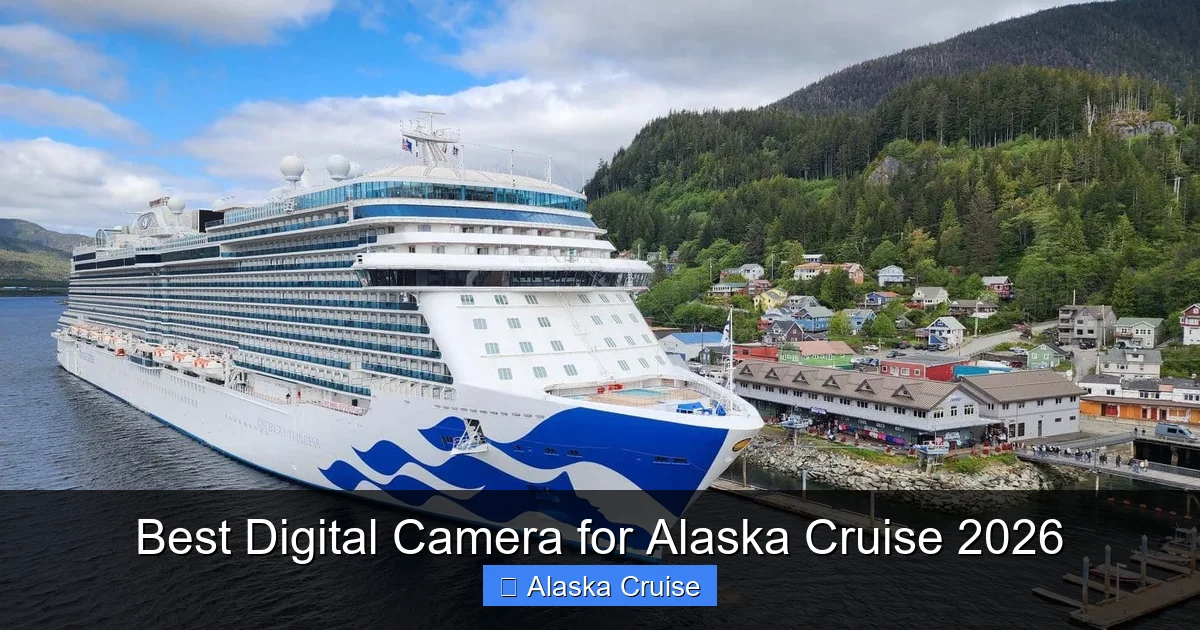
Choosing the best digital camera for Alaska cruise 2026 means balancing zoom power, weather resistance, and image quality in rugged, unpredictable conditions. Whether you’re photographing breaching whales, towering glaciers, or misty fjords, the right camera ensures your memories last a lifetime.
Key Takeaways
- Prioritize zoom range: Alaska’s wildlife and landscapes are often distant—opt for cameras with 30x optical zoom or higher to capture detailed shots without disturbing nature.
- Weather sealing is essential: Rain, snow, and sea spray are common on Alaskan cruises; choose a camera with robust weather resistance to protect your gear.
- Image stabilization matters: Shaky hands or boat movement can blur photos—look for optical or 5-axis stabilization for sharper images.
- Compact and lightweight design: You’ll be carrying your camera all day; a portable model with long battery life is ideal for shore excursions.
- Manual controls and RAW support: For advanced users, manual settings and RAW file capture allow greater creative control and post-processing flexibility.
- Fast autofocus and burst mode: Wildlife moves quickly—cameras with quick autofocus and high-speed shooting help you capture the perfect moment.
- Consider battery life and storage: Remote locations mean limited charging options—bring extra batteries and high-capacity memory cards.
📑 Table of Contents
Why Your Camera Choice Matters on an Alaska Cruise
An Alaska cruise in 2026 isn’t just a vacation—it’s a once-in-a-lifetime adventure filled with jaw-dropping scenery, rare wildlife, and awe-inspiring natural phenomena. From the thunderous calving of glaciers in Glacier Bay to the silent glide of a humpback whale through icy waters, every moment deserves to be captured. But here’s the catch: Alaska’s environment is as beautiful as it is unforgiving. Sudden rain, salty sea spray, freezing temperatures, and long days on deck mean your camera needs to be more than just a point-and-shoot.
You’re not just taking snapshots—you’re documenting an epic journey. Whether you’re a casual traveler or a budding photographer, the right digital camera can make the difference between a blurry whale tail and a gallery-worthy shot of a bear catching salmon in a rushing stream. That’s why choosing the best digital camera for Alaska cruise 2026 isn’t just about megapixels—it’s about reliability, versatility, and performance in the wild.
Alaska’s landscapes are vast and often distant. Wildlife doesn’t pose for photos, and weather changes in minutes. A smartphone might work for quick snaps, but it won’t deliver the detail, zoom, or low-light performance needed for professional-quality images. That’s where a dedicated digital camera shines. With the right model, you can capture the intricate patterns of ice formations, the vibrant colors of the northern lights, and the raw power of nature—all while keeping your gear safe from the elements.
Top Features to Look for in an Alaska Cruise Camera
Visual guide about Best Digital Camera for Alaska Cruise 2026
Image source: travelmole.com
When shopping for the best digital camera for Alaska cruise 2026, it’s easy to get overwhelmed by specs and marketing buzzwords. But focus on what really matters: features that enhance your experience in Alaska’s unique environment. Here are the must-have capabilities to prioritize.
Optical Zoom: Get Closer Without Moving
One of the biggest challenges on an Alaska cruise is distance. Wildlife like whales, sea lions, and bears are often far from shore or your ship. A powerful optical zoom lets you get close-up shots without disturbing the animals or risking your safety. Look for cameras with at least 30x optical zoom—this means the lens physically extends to magnify the image, preserving quality unlike digital zoom, which just crops and enlarges.
For example, a 30x zoom on a 24mm wide-angle lens gives you an effective reach of 720mm—perfect for capturing a bald eagle perched on a distant tree or a pod of orcas swimming near the glacier. Some top models even offer 50x or 60x zoom, ideal for serious wildlife photographers. But remember: higher zoom ranges often mean larger lenses, so balance reach with portability.
Weather Resistance: Survive the Elements
Alaska’s weather is famously unpredictable. One minute it’s sunny, the next it’s pouring rain or snowing. Sea spray from waves can coat your camera in saltwater, and sudden temperature drops can fog up lenses. That’s why weather sealing is non-negotiable.
Look for cameras labeled as “weather-resistant” or “splash-proof.” These models have sealed buttons, ports, and lens mounts to prevent moisture and dust from entering. Some even offer freeze resistance, which is crucial if you’re shooting in sub-zero temperatures during a glacier hike or winter wildlife tour.
For instance, the Olympus Tough TG-6 is built like a tank—it’s waterproof up to 50 feet, shockproof from 7 feet, crushproof, and freeze-proof down to 14°F. While it’s not a zoom powerhouse, it’s perfect for kayaking, hiking, or unexpected downpours. On the other hand, the Sony RX10 IV offers weather sealing and a massive 24-600mm zoom, making it a favorite among serious photographers.
Image Stabilization: Steady Shots on a Moving Boat
Even the steadiest hands can’t compensate for the constant rocking of a cruise ship or the vibrations of a Zodiac boat. Image stabilization (IS) helps reduce blur caused by camera shake, especially at long zoom lengths or in low light.
Optical image stabilization (OIS) is preferred over digital stabilization because it physically adjusts the lens or sensor to counteract movement. Some cameras offer 5-axis stabilization, which corrects for pitch, yaw, roll, and horizontal/vertical shifts—ideal for capturing sharp images while on the move.
For example, the Panasonic Lumix FZ300 features 5-axis hybrid IS and a constant f/2.8 aperture, allowing for crisp shots even in dim light. This is especially useful during early morning or late evening excursions when light is low but the scenery is magical.
Battery Life and Power Management
You’ll be out all day exploring ports like Juneau, Ketchikan, or Skagway. Charging opportunities are limited, and you don’t want to miss a shot because your battery died. Look for cameras with long battery life—ideally 300+ shots per charge—or ones that support USB charging so you can top up with a power bank.
Some models, like the Canon PowerShot SX70 HS, offer eco modes that extend battery life by dimming the screen or turning off Wi-Fi when not in use. Others, like the Nikon Coolpix P1000, have removable batteries, so you can carry spares easily.
Pro tip: Bring at least two fully charged batteries and a portable charger. Store batteries in a warm place (like inside your jacket) in cold weather—lithium-ion batteries drain faster in the cold.
Size, Weight, and Portability
You’ll be carrying your camera from the ship to shore excursions, hiking trails, and wildlife tours. A heavy DSLR might offer superior image quality, but it’s impractical for long days on the go. Compact bridge cameras or high-end point-and-shoots strike the best balance between performance and portability.
For example, the Sony RX100 VII is pocket-sized but packs a 1-inch sensor, 24-200mm zoom, and fast autofocus—perfect for travelers who want pro-level quality without the bulk. Meanwhile, the Panasonic Lumix FZ1000 II offers a larger 1-inch sensor and 16x zoom in a slightly bigger body, ideal for those who want more zoom without going full DSLR.
Top Camera Recommendations for Alaska Cruise 2026
Now that you know what to look for, here are five top digital cameras that excel on an Alaska cruise. Each offers a unique blend of zoom, durability, and image quality to suit different needs and budgets.
1. Sony Cyber-shot RX10 IV – Best Overall
The Sony RX10 IV is widely regarded as the best digital camera for Alaska cruise 2026 thanks to its incredible 24-600mm zoom lens, fast autofocus, and robust weather sealing. It features a 20.1MP 1-inch sensor, 4K video, and 24fps burst shooting—perfect for capturing fast-moving wildlife.
Its built-in lens means no need to carry extra gear, and the magnesium alloy body is dust and moisture resistant. The only downside? It’s on the pricier side, but for serious photographers, it’s worth every penny.
2. Panasonic Lumix FZ300 – Best for Stabilization
If you’re shooting from a moving boat or in low light, the FZ300’s 5-axis stabilization and constant f/2.8 aperture are game-changers. With a 24-600mm zoom and 4K video, it delivers sharp, vibrant images in challenging conditions. It’s also splash-proof and freeze-resistant, making it ideal for Alaskan weather.
3. Canon PowerShot SX70 HS – Best Budget Zoom
For under $600, the SX70 HS offers a massive 65x optical zoom (21-1365mm equivalent), 20.3MP sensor, and 4K video. It’s lightweight, easy to use, and great for beginners. While it lacks weather sealing, a rain cover or protective case can help. It’s perfect for travelers who want extreme zoom without breaking the bank.
4. Nikon Coolpix P1000 – Best for Extreme Zoom
Want to photograph a bear from a mile away? The P1000’s 125x optical zoom (24-3000mm) is unmatched. It’s a beast of a camera—literally. At over 3 pounds, it’s not for the faint of heart, but for wildlife enthusiasts, it’s a dream tool. It also has 4K video, RAW support, and a built-in electronic viewfinder.
Just be prepared for a learning curve and the need for a sturdy tripod at full zoom.
5. Olympus Tough TG-6 – Best for Adventure
If your Alaska cruise includes kayaking, hiking, or glacier walks, the TG-6 is your rugged companion. Waterproof, shockproof, and freeze-proof, it’s built to handle anything. While its zoom is limited to 4x, it excels in macro photography—perfect for capturing ice crystals, tiny sea creatures, or intricate rock formations.
It also has built-in underwater modes and GPS, making it ideal for documenting your entire adventure.
Photography Tips for Alaska Cruise Success
Having the right camera is only half the battle. To get the most out of your Alaska cruise photography, follow these practical tips.
Shoot in RAW for Maximum Flexibility
RAW files capture more data than JPEGs, giving you greater control in post-processing. This is especially useful in Alaska’s variable lighting—bright snow, dark forests, and overcast skies can confuse automatic settings. With RAW, you can adjust exposure, white balance, and shadows without losing quality.
Most advanced compact cameras support RAW. Just remember: RAW files are larger, so bring extra memory cards.
Use a Polarizing Filter for Glaciers and Water
A polarizing filter reduces glare and enhances colors, making glaciers appear bluer and water clearer. While many cameras don’t support screw-on filters, some like the Sony RX10 IV have built-in filter threads. Alternatively, use post-processing tools to simulate polarization effects.
Golden Hour is Your Best Friend
The “golden hour”—shortly after sunrise and before sunset—offers soft, warm light that enhances landscapes and wildlife. In Alaska, summer days are long, so you’ll have plenty of time. Plan your excursions around these times for the most flattering light.
Protect Your Gear
Use a rain cover or plastic bag with a hole for the lens when shooting in wet conditions. Keep your camera in a padded case when not in use, and avoid changing lenses in dusty or wet environments. Silica gel packs in your camera bag help absorb moisture.
Respect Wildlife and Regulations
Never approach animals too closely—use your zoom instead. Follow park guidelines and cruise line rules. Disturbing wildlife is not only dangerous but also illegal in many areas.
Accessories to Enhance Your Alaska Photography
Your camera is the star, but the right accessories can elevate your shots.
Tripod or Monopod
Essential for long-exposure shots of waterfalls, northern lights, or night photography. A compact travel tripod like the Joby GorillaPod is lightweight and flexible.
Extra Batteries and Memory Cards
Bring at least two batteries and multiple 64GB+ memory cards. Label them to avoid confusion.
Lens Cleaning Kit
Salt spray, snow, and fingerprints can ruin shots. Carry a microfiber cloth, lens pen, and blower to keep your lens spotless.
Portable Power Bank
Charge your camera on the go, especially during long shore excursions.
Camera Strap or Harness
A comfortable, secure strap prevents drops and keeps your camera accessible.
Conclusion: Capture Alaska’s Magic with the Right Camera
An Alaska cruise in 2026 promises unforgettable sights—majestic glaciers, playful whales, towering mountains, and untouched wilderness. To truly preserve these moments, you need more than a smartphone. The best digital camera for Alaska cruise 2026 combines powerful zoom, weather resistance, image stabilization, and portability to handle the challenges of this rugged environment.
Whether you choose the all-in-one power of the Sony RX10 IV, the extreme zoom of the Nikon P1000, or the rugged durability of the Olympus TG-6, your camera should match your adventure style. Pair it with smart accessories and photography techniques, and you’ll return home with a portfolio of images that do justice to Alaska’s grandeur.
Remember: it’s not about having the most expensive gear—it’s about having the right tool for the job. Invest in a camera that lets you focus on the experience, not the technical struggles. With the right preparation, your Alaska cruise photos will be as breathtaking as the journey itself.
Frequently Asked Questions
What is the best zoom range for Alaska wildlife photography?
A 30x optical zoom or higher is ideal for capturing distant wildlife like whales and bears without disturbing them. Cameras with 50x to 125x zoom, like the Nikon P1000, offer extreme reach for detailed shots.
Do I need a weather-sealed camera for an Alaska cruise?
Yes. Alaska’s weather includes rain, snow, and sea spray. A weather-sealed camera protects against moisture and dust, ensuring your gear lasts the entire trip.
Can I use a smartphone instead of a digital camera?
Smartphones are convenient but lack the zoom, low-light performance, and durability needed for Alaska’s conditions. A dedicated camera delivers superior image quality and reliability.
How do I protect my camera from cold weather?
Keep batteries warm by storing them inside your jacket. Use a protective case and avoid sudden temperature changes, which can cause condensation. Choose a freeze-resistant model if possible.
What’s the advantage of shooting in RAW format?
RAW files retain more image data, allowing greater flexibility in editing exposure, color, and detail. This is especially helpful in Alaska’s variable lighting conditions.
Should I bring a tripod on my Alaska cruise?
Yes, especially for long-exposure shots of waterfalls, glaciers, or the northern lights. A compact, lightweight tripod is ideal for travel and shore excursions.