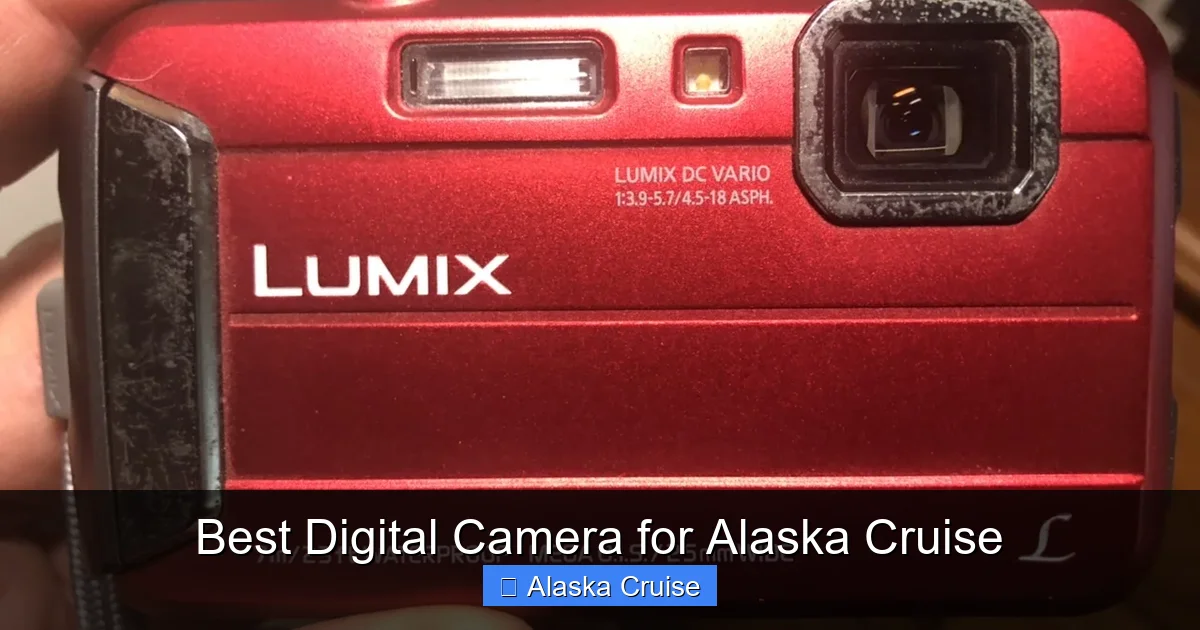
Choosing the best digital camera for an Alaska cruise means balancing portability, weather resistance, zoom power, and image quality. Whether you’re photographing breaching whales, towering glaciers, or snow-capped peaks, the right camera ensures you don’t miss a single breathtaking moment.
Key Takeaways
- Weather sealing is essential: Alaska’s climate is unpredictable—rain, snow, and sea spray demand a rugged, weather-resistant camera.
- Optical zoom matters more than megapixels: A powerful zoom (30x or higher) lets you capture distant wildlife like bears and eagles without disturbing them.
- Compact size enhances usability: You’ll be on boats, hiking trails, and crowded decks—lightweight, portable cameras are easier to handle.
- Image stabilization is a game-changer: Rough seas and windy conditions make steady shots difficult; built-in stabilization helps prevent blur.
- Fast autofocus improves wildlife shots: Animals move quickly—cameras with responsive autofocus capture sharp, in-focus images.
- Battery life and storage are critical: Cold weather drains batteries fast; bring extras and high-capacity memory cards.
- Consider hybrid photo/video capabilities: Many travelers want to record video of glaciers calving or whales spouting—4K video is a valuable feature.
📑 Table of Contents
- Why the Right Camera Makes All the Difference on an Alaska Cruise
- Top Features to Look for in a Camera for Alaska Cruises
- Best Digital Cameras for Alaska Cruises: Top Picks
- Tips for Shooting Stunning Photos on Your Alaska Cruise
- What to Avoid When Choosing a Camera
- Conclusion: Capture Alaska’s Wonder with Confidence
Why the Right Camera Makes All the Difference on an Alaska Cruise
An Alaska cruise isn’t just a vacation—it’s a once-in-a-lifetime visual feast. From the towering blue glaciers of Glacier Bay to the playful humpback whales near Juneau, every moment feels like a scene from a nature documentary. But if you’re relying on your smartphone or an outdated point-and-shoot, you might end up with blurry, underexposed, or poorly framed shots that don’t do justice to the raw beauty around you.
That’s why choosing the best digital camera for Alaska cruise adventures is so important. The right camera doesn’t just take pictures—it becomes your storytelling partner. It helps you freeze time: a bald eagle diving for salmon, a sea otter floating on its back, or the Northern Lights dancing over a fjord. With the right gear, you can return home with images that feel as vivid and powerful as the memories themselves.
But Alaska’s environment is as demanding as it is stunning. You’ll face cold temperatures, high humidity, sudden rain showers, and long days on the water. Your camera needs to be tough enough to handle it all. At the same time, you don’t want to lug around a heavy DSLR that slows you down on shore excursions. The ideal camera strikes a balance—compact yet capable, rugged yet user-friendly.
In this guide, we’ll walk you through everything you need to know to pick the perfect digital camera for your Alaska cruise. From key features to look for, to top camera recommendations, and practical tips for shooting in the wild, we’ve got you covered. Whether you’re a beginner or a seasoned photographer, this guide will help you capture Alaska like a pro.
Top Features to Look for in a Camera for Alaska Cruises
Visual guide about Best Digital Camera for Alaska Cruise
Image source: i.pinimg.com
When shopping for the best digital camera for Alaska cruise trips, it’s easy to get overwhelmed by specs and marketing jargon. But focus on these five essential features, and you’ll be well on your way to making a smart choice.
Weather Sealing and Durability
Alaska’s weather is famously fickle. One minute it’s sunny and calm, the next you’re dodging rain or snow. On a cruise, you’re constantly exposed to sea spray, wind, and moisture. A camera with weather sealing—protection against dust, moisture, and light rain—is non-negotiable. Look for models labeled “weather-resistant” or “splash-proof.” These can handle the occasional splash from a wave or a sudden downpour without shutting down.
For example, the Olympus Tough TG-6 is built like a tank. It’s waterproof up to 50 feet, shockproof from 7 feet, and freeze-proof down to 14°F. That means you can take it kayaking, hiking, or even snorkeling without worry. While it’s not a zoom powerhouse, its ruggedness makes it ideal for adventurous cruisers.
Optical Zoom Range
You won’t always be close to the action. Wildlife like bears, whales, and eagles keep their distance, and glaciers can be miles away. A camera with a strong optical zoom lets you get close without physically moving—keeping you safe and the animals undisturbed.
Optical zoom (not digital zoom) maintains image quality as you zoom in. Aim for at least 20x optical zoom, but 30x or more is even better. The Panasonic Lumix FZ300, for instance, offers a 24x optical zoom (equivalent to 600mm), perfect for capturing distant whales or mountain goats on cliffs.
Image Stabilization
Even the steadiest hands can’t compensate for a rocking boat or strong winds. Image stabilization (IS) technology reduces blur caused by camera shake, especially at long zoom lengths or in low light. Look for 5-axis stabilization or optical stabilization systems.
The Sony RX10 IV has excellent stabilization built into its lens, allowing you to shoot sharp photos at 600mm even in choppy conditions. This feature is a lifesaver when you’re on a Zodiac boat approaching a glacier or trying to photograph a bird in flight.
Autofocus Speed and Accuracy
Wildlife doesn’t wait. A whale might breach for just a second. A bear might turn and look right at you—then disappear into the trees. Fast, accurate autofocus ensures you don’t miss these fleeting moments.
Cameras with phase-detection autofocus (PDAF) or advanced contrast-detection systems lock onto subjects quickly. The Canon PowerShot SX70 HS, for example, uses Dual Sensing IS and a fast autofocus system to track moving animals with precision.
Battery Life and Cold Weather Performance
Cold temperatures drain batteries faster. A camera that lasts all day in warm weather might die by lunch in Alaska. Check battery life ratings (measured in shots per charge) and consider bringing spare batteries. Some cameras, like the Nikon Coolpix P1000, have removable batteries, making it easy to swap in a fresh one.
Also, keep batteries warm when not in use—store them in an inner pocket close to your body. Cold batteries lose power quickly, but warming them up can restore some life.
Best Digital Cameras for Alaska Cruises: Top Picks
Now that you know what to look for, let’s dive into our top recommendations. These cameras have been tested and praised by travelers and photographers for their performance in Alaska’s demanding conditions.
1. Panasonic Lumix FZ300
The Panasonic Lumix FZ300 is a favorite among cruise photographers. It combines a 24x optical zoom (25–600mm equivalent), 4K video, and full weather sealing in a compact body. The lens stays at f/2.8 throughout the zoom range, meaning better low-light performance and faster shutter speeds.
Its 5-axis image stabilization keeps shots steady, even on a moving boat. The touchscreen makes it easy to focus and frame shots, and the built-in Wi-Fi lets you transfer photos to your phone for quick sharing.
Best for: Travelers who want a balance of zoom, image quality, and durability.
2. Sony RX10 IV
If budget isn’t a concern, the Sony RX10 IV is a powerhouse. It features a 24–600mm zoom lens, a 1-inch sensor for excellent image quality, and blazing-fast autofocus. It shoots 4K video and can capture 24 frames per second—perfect for action shots.
The build is solid, with weather sealing and a comfortable grip. The electronic viewfinder is bright and clear, even in bright sunlight.
Best for: Serious photographers who want DSLR-like performance in a compact body.
3. Canon PowerShot SX70 HS
With a massive 65x optical zoom (21–1365mm equivalent), the Canon SX70 HS lets you get incredibly close to distant subjects. It’s great for wildlife and scenic vistas. The camera has image stabilization, 4K video, and a vari-angle screen for creative angles.
It’s lightweight and easy to use, making it ideal for beginners. The zoom range is unmatched in its class.
Best for: Wildlife enthusiasts who want extreme zoom without the bulk of a telephoto lens.
4. Nikon Coolpix P1000
The Nikon P1000 is in a league of its own when it comes to zoom. Its 125x optical zoom (24–3000mm equivalent) lets you photograph the moon, distant glaciers, or whales from miles away. It has 4K video, RAW shooting, and built-in Wi-Fi.
The body is larger than most, but the zoom capability is worth it for serious wildlife shooters. Use a tripod or monopod for stability at full zoom.
Best for: Photographers who want the ultimate zoom for wildlife and landscapes.
5. Olympus Tough TG-6
For adventurers who want a camera that can go anywhere, the TG-6 is unbeatable. It’s waterproof, shockproof, crushproof, and freeze-proof. It’s perfect for kayaking, hiking, or exploring tide pools.
While its zoom is limited (4x optical), it excels in macro photography and underwater shots. It also has built-in GPS and compass—great for logging your adventures.
Best for: Active travelers who need a rugged, go-anywhere camera.
Tips for Shooting Stunning Photos on Your Alaska Cruise
Having the right camera is just the first step. How you use it makes all the difference. Here are some practical tips to help you capture Alaska’s magic.
Shoot During Golden Hour
The best light happens during the “golden hours”—shortly after sunrise and before sunset. The soft, warm light enhances colors and reduces harsh shadows. In summer, Alaska has nearly 24 hours of daylight, so you’ll have plenty of time to shoot.
Try to be on deck early in the morning or late in the evening. The low angle of the sun creates long shadows and rich textures, especially on glaciers and mountains.
Use a Polarizing Filter
A polarizing filter reduces glare from water and enhances sky contrast. It makes clouds pop and brings out the blue in glaciers. Many bridge cameras have built-in filters, or you can buy screw-on filters for interchangeable lens cameras.
On a cruise, you’ll be shooting over water constantly—this filter is a must-have.
Get Low for Wildlife Shots
Animals look more dramatic when photographed at their eye level. When on shore excursions, crouch down or use a low angle to capture bears, eagles, or sea otters. This perspective adds intimacy and power to your images.
Shoot in Burst Mode
Wildlife moves fast. Use burst mode (continuous shooting) to capture a sequence of actions—like a whale breaching or a bird taking flight. You can later pick the best frame.
Most cameras have burst modes that shoot 5–10 frames per second. Just make sure your memory card is fast enough to keep up.
Protect Your Gear
Even weather-sealed cameras need care. Use a rain cover or plastic bag with a hole for the lens when it’s wet. Keep your camera in a padded case when not in use.
Avoid changing lenses in the rain or snow—moisture can get inside the camera body. If you must, do it quickly in a sheltered area.
Backup Your Photos Daily
Don’t risk losing your shots. Bring a portable hard drive or use cloud storage to back up photos each night. Memory cards can fail, and phones can get lost.
Some cameras, like the Sony RX10 IV, support dual memory card slots for automatic backup.
What to Avoid When Choosing a Camera
Not all cameras are created equal—especially for Alaska. Here are some common pitfalls to avoid.
Over-Reliance on Digital Zoom
Digital zoom crops and enlarges the image, reducing quality. Always prioritize optical zoom. If a camera boasts “50x zoom” but only 10x is optical, the rest is digital—avoid it.
Ignoring Battery Life
A camera that dies halfway through a glacier tour is useless. Check real-world battery performance, not just manufacturer claims. Bring at least one spare battery.
Choosing a Heavy DSLR Without a Plan
While DSLRs offer excellent image quality, they’re heavy and require multiple lenses. On a cruise, you’ll be walking, climbing, and boarding small boats. A heavy setup can slow you down.
Unless you’re a professional, a high-end bridge camera or mirrorless model is often a better choice.
Forgetting About Storage
4K video and high-resolution photos fill up memory cards fast. Bring multiple high-capacity cards (64GB or 128GB) and format them before your trip.
Conclusion: Capture Alaska’s Wonder with Confidence
An Alaska cruise is more than a trip—it’s a visual journey through one of the planet’s last great wildernesses. The glaciers, wildlife, and landscapes are unlike anything you’ll see elsewhere. To truly preserve those memories, you need a camera that’s up to the challenge.
The best digital camera for Alaska cruise adventures isn’t necessarily the most expensive or the most advanced. It’s the one that fits your style, handles the conditions, and helps you capture the moments that matter. Whether you choose the rugged Olympus TG-6, the zoom-heavy Nikon P1000, or the versatile Panasonic FZ300, the key is to be prepared.
Pack extra batteries, protect your gear, and shoot during golden hour. Use burst mode for wildlife, and don’t forget to back up your photos. With the right camera and a few smart techniques, you’ll return home with a gallery of images that tell the story of your Alaskan adventure—vivid, powerful, and unforgettable.
So as you set sail into the wild beauty of Alaska, make sure your camera is ready. Because the best moments don’t wait—and neither should you.
Frequently Asked Questions
What type of camera is best for an Alaska cruise?
A weather-sealed bridge camera with strong optical zoom (20x or more) and image stabilization is ideal. Models like the Panasonic Lumix FZ300 or Canon SX70 HS offer the right mix of power, portability, and durability.
Can I use my smartphone instead of a camera?
Smartphones are convenient, but they lack the zoom, weather resistance, and low-light performance needed for Alaska’s conditions. For serious photography, a dedicated camera is strongly recommended.
Do I need a telephoto lens for wildlife?
Yes. Wildlife in Alaska is often far away. A camera with a long optical zoom (30x or more) lets you capture detailed shots without disturbing animals.
How do I protect my camera from the cold?
Keep spare batteries warm in an inner pocket, use a weather-resistant case, and avoid sudden temperature changes. Let your camera acclimate slowly when moving from cold to warm areas.
Should I bring a tripod?
A lightweight travel tripod or monopod can help stabilize long zoom shots, especially on windy days. However, it’s not essential for most cruise activities.
What’s the best time of day to take photos in Alaska?
Golden hour—just after sunrise and before sunset—offers the most flattering light. In summer, the extended daylight gives you more opportunities to shoot.