Featured image for are there any cruise lines that don’t require vaccinations
Image source: cbs12.com
Yes, some cruise lines don’t require vaccinations, but options are limited and often depend on itinerary, duration, and local regulations. Smaller luxury or private yacht-style lines—such as SeaDream Yacht Club and certain river cruises—may offer more flexible health policies compared to major carriers, especially on shorter or domestic routes. Always verify current requirements directly with the cruise line before booking, as rules can change rapidly.
Key Takeaways
- Some cruise lines allow unvaccinated travelers but may impose testing or masking rules.
- Check policies carefully: Rules vary by cruise line, destination, and time of booking.
- Norwegian Cruise Line offers sailings without vaccination mandates for select itineraries.
- Smaller or luxury lines may have more flexible health requirements—research thoroughly.
- Prepare for changes: Policies can update quickly based on health conditions.
- Travel insurance is essential when cruising without full vaccination coverage.
📑 Table of Contents
- The Changing Face of Cruise Travel: Vaccination Policies Uncovered
- Why Vaccination Policies Vary Between Cruise Lines
- Cruise Lines That Allow Unvaccinated Passengers (With Conditions)
- Medical and Religious Exemptions: How to Apply
- Testing Requirements and Onboard Health Protocols for Unvaccinated Travelers
- Future Trends: Will Vaccine-Free Cruising Return?
- Final Thoughts: Planning Your Cruise Without Vaccinations
The Changing Face of Cruise Travel: Vaccination Policies Uncovered
The world of cruise travel has undergone a dramatic transformation since the onset of the global pandemic. What was once a carefree vacation choice has now become a complex decision-making process, with health and safety protocols taking center stage. Among the most debated topics in the cruising community is the requirement for vaccinations. For many travelers, getting vaccinated is a simple step toward protecting themselves and others, but for others, it presents a significant barrier to enjoying the open seas. This has led to an urgent question: Are there any cruise lines that don’t require vaccinations?
As travel restrictions continue to evolve, cruise lines have adopted a wide range of policies—some mandating full vaccination, others offering testing alternatives, and a select few allowing unvaccinated passengers under specific conditions. Whether you’re immunocompromised, have medical exemptions, personal beliefs, or simply prefer to avoid vaccinations, knowing your options is essential. This comprehensive guide dives deep into the current landscape of cruise line vaccination requirements, explores the lines that are more flexible, and provides practical advice to help you plan your next voyage with confidence. We’ll analyze policies, compare cruise lines, and offer real-world examples so you can make an informed decision that aligns with your health, values, and vacation goals.
Why Vaccination Policies Vary Between Cruise Lines
The cruise industry is not a monolith. With dozens of cruise lines operating globally—ranging from luxury megaships to intimate river cruises—each company sets its own health and safety protocols based on a mix of corporate policy, government regulations, destination requirements, and public health guidance. This explains why vaccination requirements are far from uniform across the industry.

Visual guide about are there any cruise lines that don’t require vaccinations
Image source: images.seattletimes.com
Corporate Health and Safety Mandates
Many major cruise lines, such as Royal Caribbean, Norwegian Cruise Line, and Carnival, implemented strict vaccine mandates during the peak of the pandemic. These were driven by internal health advisory boards, insurance requirements, and a desire to restore consumer confidence. For example, Royal Caribbean International required all guests 12 and older to be fully vaccinated until late 2022, when they began allowing unvaccinated travelers with a negative PCR test within 72 hours of embarkation.
However, not all lines followed the same path. Smaller, niche operators—particularly those focused on private charters or river cruises—often took a more relaxed approach due to lower passenger density, shorter itineraries, and less reliance on large port infrastructure.
Port and Country Regulations
Even if a cruise line allows unvaccinated travelers, port entry rules can override onboard policies. For instance, the Bahamas, a popular destination for Caribbean cruises, required all travelers to be vaccinated for much of 2021–2022. This meant that even if a cruise line didn’t mandate vaccines, passengers would still be denied entry to the island unless they complied with local laws.
Similarly, countries like Canada, Australia, and parts of the European Union have at times enforced strict border controls requiring proof of vaccination for all incoming travelers, including cruise passengers. These external regulations often force cruise lines to align their policies with the strictest port of call, regardless of their own internal stance.
Ship Capacity and Passenger Density
Smaller ships and river cruises often have more flexibility. With fewer than 200 passengers, these vessels can implement rapid testing and contact tracing more efficiently. This allows lines like AmaWaterways or Scenic Luxury Cruises to permit unvaccinated travelers with pre-departure testing, while megaships with 5,000+ guests may feel compelled to enforce stricter rules to minimize outbreak risks.
For example, Viking Ocean Cruises initially required full vaccination for all guests but later introduced a “test-to-sail” option for unvaccinated passengers on select itineraries, particularly those with lower-risk destinations.
Cruise Lines That Allow Unvaccinated Passengers (With Conditions)
While most major cruise lines now require vaccinations, several have introduced exemptions or testing-based alternatives that allow unvaccinated travelers to sail—under specific conditions. It’s important to note that these policies are subject to change, often depending on the itinerary, season, and global health climate.
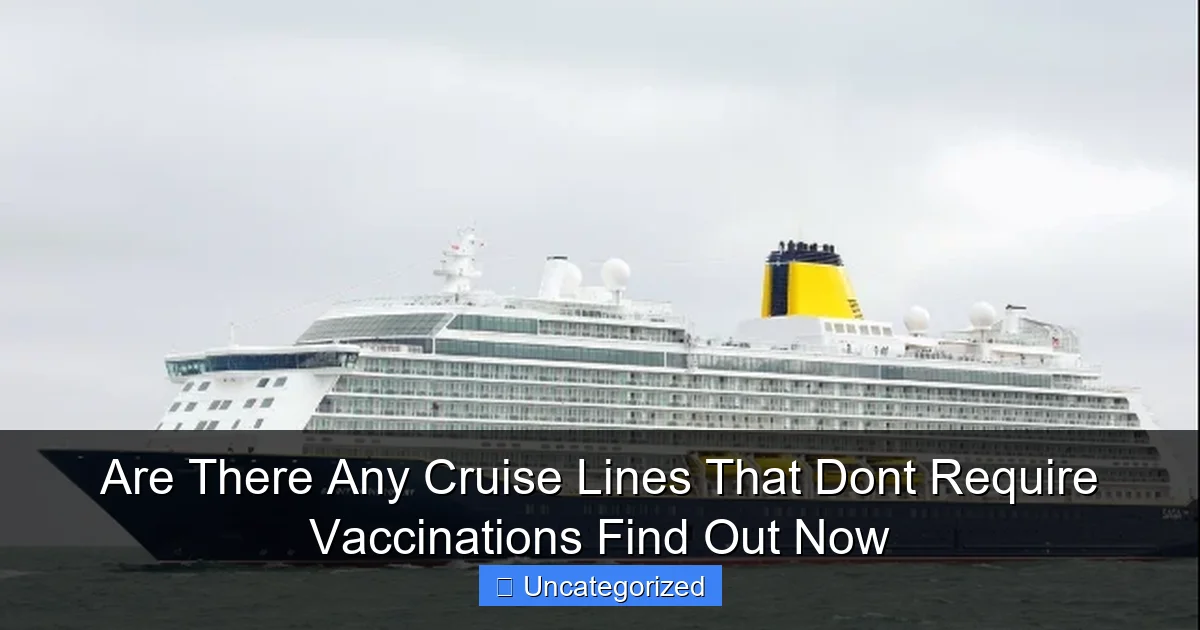
Visual guide about are there any cruise lines that don’t require vaccinations
Image source: maritime-executive.com
1. Carnival Cruise Line – Test-Based Entry
Carnival has adopted a “vaccinated or tested” policy for most of its U.S.-based departures. As of 2023–2024, unvaccinated guests aged 5 and older must provide a negative PCR test taken within 72 hours prior to embarkation. This policy applies to cruises from ports like Miami, Port Canaveral, and Galveston.
Important Notes:
- Children under 5 are exempt from both vaccination and testing requirements.
- Unvaccinated guests may face additional health screenings at embarkation.
- Some international itineraries (e.g., transatlantic or European) may still require vaccination due to port rules.
Pro Tip: Book through Carnival’s “Cruise with Confidence” program for flexible cancellations if your test comes back positive within 10 days of sailing.
2. Royal Caribbean International – Flexible Testing Options
Royal Caribbean allows unvaccinated passengers on most North American itineraries, provided they present a negative PCR test within 72 hours of embarkation. The line also offers rapid antigen testing at the terminal for a fee (around $75–$100), which can be used as an alternative if a PCR test isn’t available.
Key Features:
- Unvaccinated guests cannot participate in certain onboard activities, such as indoor fitness classes or high-risk excursions, during outbreaks.
- Masking may be required in crowded areas, even for unvaccinated passengers.
- Some private islands (e.g., CocoCay) have separate health rules—check in advance.
Example: A family with two unvaccinated teens can sail on the *Harmony of the Seas* from Port Canaveral with pre-travel testing, but they must avoid crowded theaters and dining rooms during peak hours.
3. Norwegian Cruise Line (NCL) – Conditional Acceptance
NCL’s policy varies by departure region. For U.S. and Caribbean cruises, unvaccinated guests aged 5+ must show a negative PCR test within 72 hours. However, for cruises departing from Europe (e.g., Mediterranean), vaccination is still mandatory for all guests 12 and older due to EU health regulations.
Special Consideration:
- NCL offers a “Test & Sail” package at select ports, including pre-embarkation testing and on-site medical support.
- Unvaccinated guests may be required to purchase additional travel insurance covering medical quarantine.
4. Smaller and Niche Operators – More Flexibility
Several smaller cruise lines, particularly those operating river cruises or boutique ocean vessels, have maintained more lenient policies. For example:
- American Cruise Lines (U.S. coastal and river cruises): Allows unvaccinated guests with a negative test within 48 hours. No vaccine mandate for domestic itineraries.
- Lindblad Expeditions (Alaska, Galapagos, Antarctica): Requires vaccination for most international trips, but offers exemptions with a doctor’s note and pre-departure testing for domestic U.S. voyages.
- Windstar Cruises: Permits unvaccinated travelers on select Caribbean and South Pacific routes with a negative PCR test. Masks are recommended but not enforced.
Tip: These lines often have smaller guest-to-staff ratios, making it easier to accommodate special health requests.
Medical and Religious Exemptions: How to Apply
For travelers who cannot get vaccinated due to medical conditions or sincerely held religious beliefs, most major cruise lines offer exemption processes—but they are not guaranteed and often come with additional requirements.
Medical Exemptions
Cruise lines typically require a signed letter from a licensed physician stating that the guest has a medical contraindication to vaccination (e.g., severe allergy to vaccine components, autoimmune disorders, or recent organ transplant). The letter must include:
- The guest’s full name and date of birth
- The specific medical reason for exemption
- The physician’s license number and contact information
- A statement that the condition is documented in the patient’s medical record
Example: A passenger with a documented anaphylactic reaction to a previous vaccine can apply for a medical exemption on Royal Caribbean. If approved, they must take a PCR test within 72 hours and may be subject to enhanced screening at boarding.
Note: Cruise lines are not required to grant medical exemptions, and decisions are final. Always submit exemption requests at least 30 days before departure.
Religious Exemptions
Religious exemptions are more complex and vary significantly between lines. Some cruise companies, like Carnival and NCL, accept religious waivers but require:
- A signed statement from the guest explaining the religious belief opposing vaccination
- Documentation from a religious leader (e.g., priest, rabbi, imam) confirming the authenticity of the belief
- A commitment to follow all alternative health protocols (testing, masking, social distancing)
Important: Cruise lines may deny religious exemptions if they believe the belief is not sincerely held or if the itinerary includes high-risk destinations. For example, a cruise to the South Pacific during a dengue outbreak might not accept any exemptions, regardless of reason.
What Happens If Your Exemption Is Denied?
If your exemption is rejected, you have three options:
- Cancel your booking with a full refund (if within the cruise line’s cancellation policy window).
- Re-book on a different itinerary that allows unvaccinated travelers (e.g., a U.S. domestic cruise instead of a European one).
- Appeal the decision—some lines have a secondary review process, but success is rare.
Pro Tip: Always have a backup plan. Consider booking a refundable cruise or using a travel agent who can negotiate on your behalf.
Testing Requirements and Onboard Health Protocols for Unvaccinated Travelers
Even if you’re allowed to sail without vaccination, cruise lines impose additional health and safety measures to mitigate risk. These protocols are designed to protect both unvaccinated guests and the broader passenger population.
Pre-Departure Testing
Most cruise lines require unvaccinated guests to provide a negative PCR test within 72 hours of embarkation. Some also accept rapid antigen tests, but only if administered by a certified healthcare provider (not home tests). For example:
- Royal Caribbean: Accepts PCR or rapid antigen tests with a QR code from a verified lab.
- Carnival: Only PCR tests accepted; home tests are not valid.
- Norwegian: PCR or rapid test with official documentation (e.g., email or printout from a clinic).
Tip: Book your test early—many labs are backlogged, especially during peak travel seasons.
Onboard Testing and Monitoring
Unvaccinated passengers may be required to undergo additional testing during the cruise, especially on longer voyages (7+ days). For example:
- Royal Caribbean conducts mid-cruise PCR tests for unvaccinated guests on transatlantic crossings.
- Windstar Cruises performs daily temperature checks and random antigen tests for unvaccinated travelers.
- Some lines use wearable health monitors (e.g., wristbands that track temperature and heart rate) to detect early signs of illness.
Restricted Access and Activity Limitations
To reduce exposure, unvaccinated guests may face limitations on:
- Indoor dining in crowded restaurants
- Participation in high-contact activities (e.g., dance floors, group fitness)
- Shore excursions in high-risk destinations (e.g., crowded markets, public transportation)
Example: On a Carnival cruise to the Western Caribbean, unvaccinated guests can visit private beaches but may be excluded from excursions involving local buses or indoor attractions.
Masking and Social Distancing
While most cruise lines have lifted mask mandates, unvaccinated passengers are often encouraged—or required—to wear masks in enclosed public spaces. For instance:
- Norwegian Cruise Line recommends masking for unvaccinated guests during embarkation and disembarkation.
- American Cruise Lines requires masks in medical centers and elevators.
Future Trends: Will Vaccine-Free Cruising Return?
The future of vaccination policies in cruising is uncertain but likely to become more flexible as global health improves and public confidence returns. Here are key trends to watch:
1. Regionalization of Policies
Expect cruise lines to adopt itinerary-specific rules rather than one-size-fits-all mandates. For example, a cruise to the Caribbean may allow unvaccinated travelers with testing, while a Mediterranean voyage might still require vaccination due to EU regulations.
2. Rise of “Health Passports” and Digital Verification
Lines like Princess Cruises and Holland America are investing in digital health platforms (e.g., VeriFLY, CommonPass) that allow guests to upload test results, vaccine records, and exemption documents. This could streamline the boarding process for unvaccinated travelers in the future.
3. Increased Use of Rapid Testing
As rapid PCR and antigen tests become faster and more affordable, cruise lines may shift toward on-demand testing at ports, reducing the burden on travelers to arrange pre-departure tests. Carnival and Royal Caribbean already offer this at select terminals.
4. Growth of Private and Charter Cruises
High-net-worth travelers are increasingly opting for private charters or small-group cruises, where vaccination policies can be customized. Companies like Silversea and Regent Seven Seas offer private voyages with tailored health protocols, including no vaccine requirements for exclusive groups.
5. Potential for “Vaccine-Optional” Zones
Some cruise lines are exploring the idea of designated areas on ships where unvaccinated guests can congregate with enhanced ventilation and distancing—similar to airline “vaccine sections.” While not yet implemented, this could become a reality on future vessels.
Data Table: Cruise Line Vaccination Policies (2024 Overview)
| Cruise Line | Unvaccinated Allowed? | Required Test | Exemptions Accepted? | Notes |
|---|---|---|---|---|
| Carnival Cruise Line | Yes (U.S. departures) | PCR within 72h | Medical & Religious | No home tests accepted |
| Royal Caribbean | Yes (most regions) | PCR or Rapid Antigen | Medical & Religious | Onboard testing for long cruises |
| Norwegian Cruise Line | Yes (U.S./Caribbean) | PCR within 72h | Medical & Religious | Europe: Vaccine required |
| American Cruise Lines | Yes | PCR within 48h | Medical only | No religious exemptions |
| Windstar Cruises | Yes (select routes) | PCR within 72h | Medical & Religious | Masks recommended |
| Viking Ocean Cruises | Limited (test-to-sail) | PCR within 72h | Medical only | Not available on all ships |
Final Thoughts: Planning Your Cruise Without Vaccinations
So, are there any cruise lines that don’t require vaccinations? The answer is a qualified yes. While the majority of major cruise lines now mandate vaccinations for most international and long-haul itineraries, a growing number of operators—especially in the U.S. domestic and niche markets—allow unvaccinated travelers with pre-departure testing, medical or religious exemptions, or both.
Success in booking a vaccine-free cruise depends on several factors: your destination, the cruise line’s current policy, the availability of testing, and your willingness to comply with additional health protocols. Always verify policies directly with the cruise line or a trusted travel agent, as rules can change with little notice. Keep documentation (test results, exemption letters) organized and accessible, and consider purchasing comprehensive travel insurance that covers medical quarantine and trip interruptions.
As the travel industry continues to adapt, the trend is moving toward flexibility, personalization, and technology-driven health verification. Whether you’re avoiding vaccines for health, religious, or personal reasons, the options are expanding. With careful planning and the right information, you can still enjoy the magic of cruising—on your own terms.
Remember: the sea is vast, and so are your choices. Bon voyage!
Frequently Asked Questions
Are there any cruise lines that don’t require vaccinations for passengers?
Yes, some smaller or niche cruise lines may not enforce strict vaccination mandates, especially on shorter or domestic itineraries. However, policies vary widely, so always check directly with the cruise line before booking.
Which cruise lines don’t require COVID-19 vaccines?
A few cruise lines, like certain river or luxury operators, have relaxed their COVID-19 vaccination requirements as of 2023. Keep in mind that destinations and ports may still enforce their own rules, regardless of the cruise line’s policy.
Do any major cruise lines allow unvaccinated travelers?
Most major cruise lines (e.g., Carnival, Royal Caribbean) still require vaccinations for most itineraries, but exceptions may exist for medical or religious reasons. Some lines offer alternatives like testing protocols for unvaccinated guests—confirm specifics before sailing.
Are there any cruise lines that don’t require vaccinations for children?
Cruise lines often follow the same vaccination rules for all passengers, but children under a certain age (usually 5+) may be exempt. For the latest policies, review the cruise line’s health guidelines, as rules change frequently.
Can I find last-minute cruises without vaccination requirements?
Some cruise lines may relax requirements for last-minute bookings, especially on repositioning or less popular routes. However, relying on this is risky—always verify the current policy to avoid denied boarding.
Do river cruise lines have fewer vaccination rules than ocean cruise lines?
Many river cruise lines, operating in regions with lower health risks, may have more lenient policies compared to large ocean liners. Still, “are there any cruise lines that don’t require vaccinations” depends on the itinerary and local regulations—always double-check.