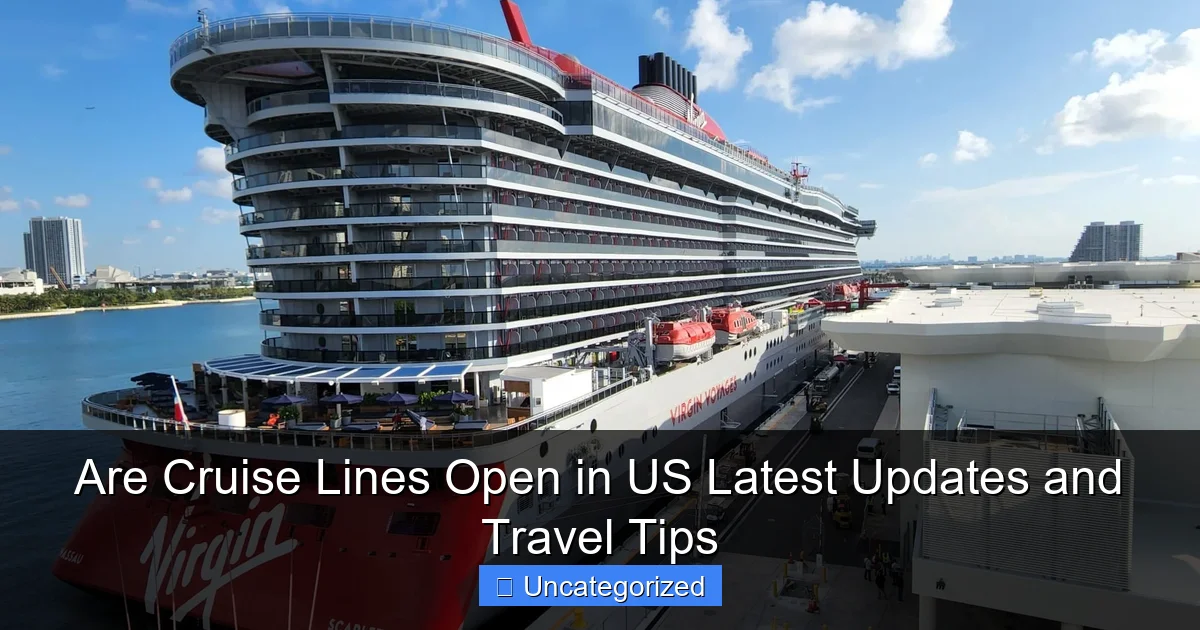
Featured image for are cruise lines open in us
Image source: cruisefever.net
Yes, cruise lines are open in the U.S. as of 2024, with major operators like Carnival, Royal Caribbean, and Norwegian sailing from key ports under updated health and safety protocols. While most restrictions have lifted, travelers should verify vaccination requirements, check for itinerary changes, and review cancellation policies to ensure a smooth experience—book flexible fares and stay informed through official cruise line updates.
Key Takeaways
- Most US cruise lines are open with enhanced health protocols in place.
- Check vaccination requirements before booking—policies vary by cruise line and destination.
- Book flexible fares to accommodate potential last-minute itinerary changes.
- Review port entry rules—some destinations restrict unvaccinated travelers.
- Travel insurance is essential to cover cancellations or medical emergencies onboard.
- Pre-cruise testing may be needed depending on departure port and cruise line.
📑 Table of Contents
- Are Cruise Lines Open in the US? Latest Updates and Travel Tips
- Current Status of U.S. Cruise Line Operations
- Health and Safety Protocols: What’s Changed?
- Popular U.S. Cruise Itineraries and Destinations
- Booking Tips and Best Times to Sail
- Essential Travel Tips for a Smooth Cruise Experience
- Data Snapshot: U.S. Cruise Industry in 2024
Are Cruise Lines Open in the US? Latest Updates and Travel Tips
The cruise industry, once brought to a near standstill by global disruptions, is now experiencing a robust rebound across the United States. After years of uncertainty, travelers are once again flocking to ports from Miami to Seattle, eager to set sail on the open seas. Whether you’re a seasoned cruiser or planning your first voyage, the question on everyone’s mind is: Are cruise lines open in the US? The short answer is yes—most major cruise lines have resumed operations, with new itineraries, enhanced health protocols, and exciting destinations on the horizon. But the landscape has changed, and understanding the latest updates is essential for a smooth and safe journey.
In 2023 and into 2024, the U.S. cruise industry has not only reopened but is thriving, with passenger volumes nearing or surpassing pre-pandemic levels. According to the Cruise Lines International Association (CLIA), over 31 million passengers are expected to sail globally in 2024, with a significant portion embarking from U.S. ports. From Alaska to the Caribbean, cruise lines like Royal Caribbean, Carnival, Norwegian, and Princess are operating full fleets, introducing new ships, and offering innovative experiences. However, the return to normalcy hasn’t been without its challenges—evolving health guidelines, fluctuating international entry requirements, and seasonal weather impacts all play a role in shaping today’s cruise environment. This comprehensive guide will walk you through the current state of U.S. cruise operations, provide up-to-date insights, and equip you with practical travel tips to make the most of your next voyage.
Current Status of U.S. Cruise Line Operations
Major Cruise Lines Resuming Full Operations
As of early 2024, all major cruise lines operating in the United States have resumed regular sailings. Carnival Cruise Line, one of the largest operators, has returned to full capacity, with ships like the Carnival Horizon and Carnival Breeze offering year-round Caribbean and Mexican itineraries. Similarly, Royal Caribbean International has launched its highly anticipated Icon of the Seas, the world’s largest cruise ship, which sails from Miami to the Eastern and Western Caribbean. Norwegian Cruise Line (NCL) continues to expand its fleet with vessels like the Norwegian Prima, offering unique experiences in Alaska and Europe, while also operating domestic routes.

Visual guide about are cruise lines open in us
Image source: cruisemaven.com
Princess Cruises has resumed its popular Alaska season, with ships departing from Seattle and San Francisco, and Disney Cruise Line has expanded its offerings with new destinations in the Bahamas and the Pacific Coast. Smaller luxury lines such as Oceania Cruises and Regent Seven Seas have also returned to full operations, focusing on longer, more immersive itineraries. The return of these lines signals a strong recovery, with many ships operating at 95–100% capacity during peak seasons.
Port Reopenings and Operational Hubs
U.S. cruise ports have reopened across the country, with major hubs like Miami (PortMiami), Fort Lauderdale (Port Everglades), Galveston (Texas), Los Angeles, and Seattle operating at full capacity. PortMiami, known as the “Cruise Capital of the World,” handled over 6.8 million passengers in 2023—a record high. Port Everglades followed closely, serving as a primary departure point for Carnival, Royal Caribbean, and Celebrity Cruises.
Alaska ports such as Ketchikan, Juneau, and Skagway are fully operational during the summer season (May–September), welcoming thousands of cruisers daily. The Port of Seattle has also seen a resurgence, with cruise traffic up 35% compared to 2022. Notably, some smaller or seasonal ports, such as those in the Great Lakes, are operating on limited schedules due to weather and demand, but most are open for business.
Seasonal and Geographic Variations
While most U.S. cruise operations are year-round, certain regions are seasonal. For example, Alaska cruises are only available from May through September due to weather conditions and daylight hours. Similarly, Canada and New England cruises typically run from late summer to early fall (August–October). In contrast, Caribbean, Mexico, and Hawaii cruises operate year-round, with peak demand during winter months (December–March) as travelers seek warm-weather escapes.
Additionally, some cruise lines have shifted their focus to domestic itineraries. For instance, Royal Caribbean now offers “cruise to nowhere” or short 3–4 day coastal voyages along the West Coast, targeting travelers who prefer shorter trips or are still cautious about international travel. These domestic options have become increasingly popular, especially among first-time cruisers.
Health and Safety Protocols: What’s Changed?
Updated CDC and CLIA Guidelines
The U.S. Centers for Disease Control and Prevention (CDC) officially ended its Conditional Sailing Order in July 2022, shifting to a voluntary program for cruise lines. This means that while the CDC no longer mandates specific health protocols, it continues to monitor cruise ship outbreaks through its Vessel Sanitation Program (VSP) and provides guidance to the industry. Cruise lines are now responsible for implementing their own health and safety measures, often going beyond CDC recommendations to ensure passenger confidence.
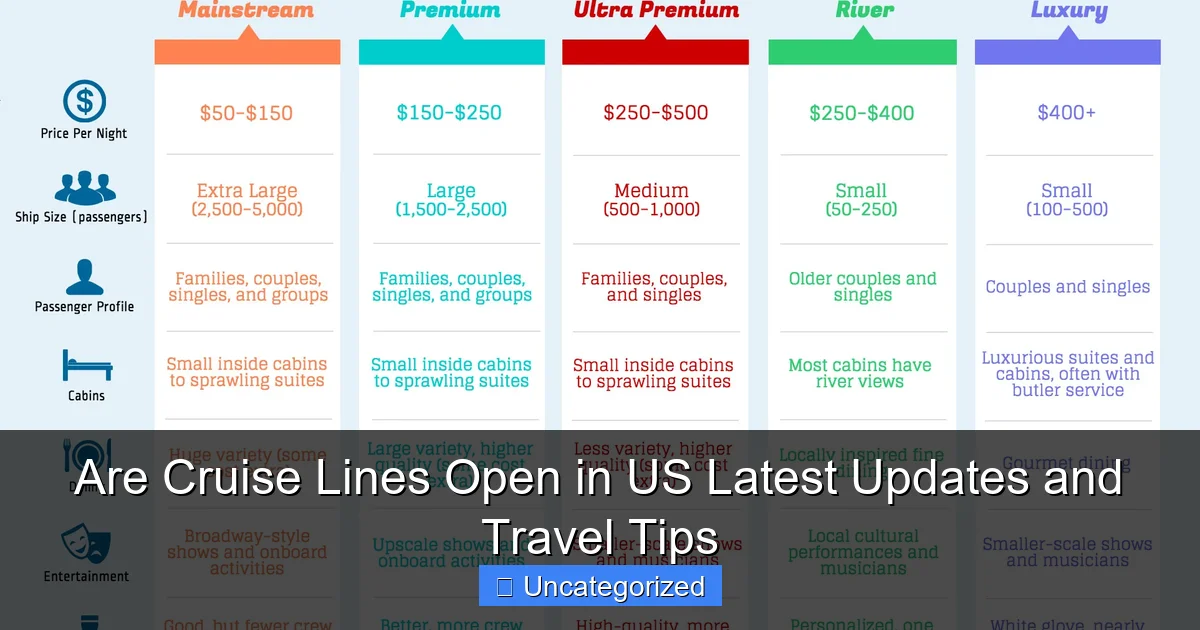
Visual guide about are cruise lines open in us
Image source: d3s9bgz0ch5ert.cloudfront.net
The Cruise Lines International Association (CLIA), representing over 95% of global cruise capacity, has established a Global Health and Safety Framework. This includes mandatory vaccination policies for most lines, enhanced cleaning procedures, improved air filtration (HEPA filters in 90% of ships), and medical facilities equipped to handle outbreaks. While policies vary by cruise line, most follow a “layered approach” combining vaccination, testing, and sanitation.
Vaccination and Testing Requirements
As of 2024, most major cruise lines require passengers to be fully vaccinated against COVID-19. For example:
- Carnival Cruise Line: All guests aged 12 and older must be vaccinated. Children under 12 may sail with a negative PCR test taken within 72 hours of boarding.
- Royal Caribbean: Vaccination required for ages 12+; unvaccinated children must test negative within 3 days of embarkation.
- Norwegian Cruise Line: Vaccination mandatory for all guests over 12; no testing required for vaccinated travelers.
- Disney Cruise Line: Vaccination required for ages 5+; children under 5 must test negative within 2 days.
Some lines, like MSC Cruises and Costa Cruises, have relaxed testing requirements for vaccinated passengers but still recommend pre-travel testing. Unvaccinated passengers are generally not permitted on international itineraries due to foreign entry restrictions.
Onboard Medical Facilities and Emergency Response
Modern cruise ships are equipped with advanced medical centers staffed by licensed doctors and nurses. Most ships now have isolation rooms, onboard testing capabilities, and telemedicine services to monitor and treat passengers. In the event of an outbreak, cruise lines have protocols to:
- Isolate affected individuals
- Enhance cleaning in common areas
- Modify itineraries to avoid restricted ports
- Coordinate with local health authorities for medical evacuations if necessary
For example, when a norovirus outbreak occurred on the Norwegian Breakaway in 2023, the ship rerouted to a U.S. port and worked with the CDC to contain the spread. Such incidents are rare but underscore the importance of preparedness.
Popular U.S. Cruise Itineraries and Destinations
Caribbean and Mexico: The Most Sought-After Routes
The Caribbean remains the most popular cruise destination from U.S. ports, accounting for over 40% of all sailings. Popular itineraries include:
- Eastern Caribbean: Stops at St. Thomas, St. Maarten, and Puerto Rico (7-day cruises from Miami or Fort Lauderdale)
- Western Caribbean: Cozumel, Grand Cayman, Jamaica (5–7 day voyages from Galveston or New Orleans)
- Southern Caribbean: Barbados, St. Lucia, Aruba (longer 10–14 day cruises, often from Fort Lauderdale)
Mexico’s Yucatán Peninsula and Baja California are also hot spots, with ports like Cozumel, Cabo San Lucas, and Ensenada offering rich culture, beaches, and adventure activities. Carnival’s “Fun Ship” concept thrives here, with themed parties and shore excursions like snorkeling in the Great Maya Reef.
Alaska: A Summer Must-Do
Alaska cruises are a bucket-list experience, with glacier viewing, whale watching, and wildlife tours drawing nature lovers. Most itineraries depart from Seattle or Vancouver (Canada) and include stops at:
- Juneau: State capital, gateway to Mendenhall Glacier
- Skagway: Gold Rush history and White Pass Railway
- Ketchikan: Totem poles and salmon fishing
- Glacier Bay National Park: UNESCO site with massive tidewater glaciers
Princess Cruises and Holland America Line dominate this market, offering 7-day “Inside Passage” voyages. The 2024 season runs from May 4 to September 28, with over 1.3 million passengers expected.
Hawaii, Pacific Coast, and Specialty Cruises
For a domestic escape, Hawaii cruises from Los Angeles or San Diego are gaining popularity. Royal Caribbean’s Navigator of the Seas offers 10-day voyages stopping at Kauai, Oahu, and Hawaii Island. These cruises include cultural shows, luaus, and volcano hikes.
West Coast itineraries from San Francisco and Seattle explore the California Coast, British Columbia, and even Mexico’s Pacific Riviera. Additionally, specialty cruises—such as food and wine voyages (Celebrity Cruises), music-themed trips (Norwegian’s “Norwegian Getaway”), and wellness cruises (Holland America’s “Holland America Line Wellness”)—are on the rise, catering to niche interests.
Booking Tips and Best Times to Sail
When to Book for the Best Deals
Timing is everything when it comes to cruise pricing. To save money, consider these booking strategies:
- Book 6–9 months in advance for peak seasons (winter Caribbean, summer Alaska). Early bird discounts and onboard credit offers are common.
- Look for last-minute deals (1–2 months before departure) for off-peak sailings. Cruise lines often slash prices to fill empty cabins.
- Use “shoulder seasons” (April–May for Caribbean, September–October for Alaska) for lower prices and fewer crowds.
- Monitor flash sales via cruise line websites, travel agencies, or apps like Vacations To Go.
For example, in 2023, Carnival offered a “Buy One, Get One 50% Off” deal for summer Alaska cruises, saving families hundreds of dollars.
Choosing the Right Cruise Line and Cabin
Not all cruise lines are created equal. Consider your travel style:
- Families with kids: Choose Disney Cruise Line or Carnival (water slides, kids’ clubs, family suites).
- Romantic getaways: Opt for luxury lines like Regent Seven Seas or Seabourn (all-inclusive, gourmet dining).
- Adventure seekers: Look to Hurtigruten or Lindblad Expeditions (small ships, active excursions).
- First-time cruisers: Start with Royal Caribbean or Norwegian (user-friendly, diverse activities).
Cabin selection also matters. Balcony cabins offer privacy and views but cost more. Interior cabins are budget-friendly and quieter. Avoid cabins near elevators, engine rooms, or nightclubs to minimize noise.
Understanding Inclusions and Add-Ons
Most cruise fares include accommodations, meals, entertainment, and basic activities. However, extras like specialty dining, shore excursions, alcohol packages, and Wi-Fi are often add-ons. To avoid surprise charges:
- Pre-book shore excursions through the cruise line (more reliable and often cheaper).
- Consider a drink package if you plan to consume alcohol regularly (Royal Caribbean’s “Deluxe Beverage Package” costs $70/day but can save money).
- Check Wi-Fi pricing—some lines offer free access for suite guests or loyalty members.
Essential Travel Tips for a Smooth Cruise Experience
Preparing for Embarkation Day
Embarkation day can be hectic, so plan ahead:
- Check-in online 3–7 days before sailing to save time at the port.
- Arrive early (10–11 AM) to avoid long lines. Late arrivals risk missing the ship.
- Bring a carry-on bag with essentials (medications, swimwear, ID)—checked bags may not reach your cabin until late afternoon.
- Download the cruise app (e.g., Royal Caribbean’s app) for boarding passes, schedules, and onboard messaging.
Navigating Health and Travel Documentation
Ensure you have:
- Valid passport (required for international cruises; recommended for domestic ones in case of emergencies)
- Vaccination records (digital or physical copy)
- Travel insurance with cruise-specific coverage (medical evacuation, missed ports, trip cancellation)
- Health declaration forms (submitted online before boarding)
Note: Some countries, like Canada, require electronic travel authorizations (e.g., eTA) for U.S. citizens. Check entry requirements for each port.
Onboard Etiquette and Safety
To enjoy your cruise:
- Follow muster drills—they’re mandatory and could save your life.
- Respect quiet hours (typically 10 PM–7 AM) in common areas.
- Use hand sanitizer stations frequently to prevent illness.
- Be mindful of seasickness—book lower-deck, mid-ship cabins for stability.
Data Snapshot: U.S. Cruise Industry in 2024
| Category | 2023 Data | 2024 Projection | Notes |
|---|---|---|---|
| Total U.S. Passengers | 12.8 million | 14.2 million | Up 11% from 2023 |
| Top Departure Ports | Miami, Fort Lauderdale, Galveston | Same + Seattle growth | Seattle up 35% |
| Average Cruise Duration | 7.2 days | 7.1 days | Shorter trips trending |
| Most Popular Destination | Caribbean (42%) | Caribbean (40%) | Alaska rising to 28% |
| Vaccination Rate (Passengers) | 94% | 96% | Higher among adults 18+ |
| New Ships Launched (2023–2024) | 8 | 12 | Includes Icon of the Seas |
The U.S. cruise industry is not just open—it’s evolving. With enhanced safety measures, diverse itineraries, and competitive pricing, now is an excellent time to set sail. Whether you’re dreaming of tropical beaches, icy fjords, or coastal cities, cruise lines are ready to welcome you back with open decks and unforgettable experiences.
As you plan your next voyage, remember to stay informed, book smart, and pack wisely. The open seas are calling, and with the right preparation, your cruise adventure can be as smooth as the calmest Caribbean waters. Bon voyage!
Frequently Asked Questions
Are cruise lines open in the US as of 2024?
Yes, most major cruise lines operating in the US are fully open and sailing, following strict health protocols. Check individual cruise line websites for the latest updates on itineraries and safety measures.
What are the current COVID-19 requirements for US cruises?
Most US cruise lines no longer require pre-travel testing or vaccination proof, but policies vary. Always confirm requirements with your cruise line, as international destinations may have different rules.
Can I book a cruise from a US port right now?
Absolutely! Cruise lines open in the US are accepting bookings for departures from major ports like Miami, Port Canaveral, and Galveston. Some sailings may have limited capacity, so early reservations are recommended.
Are there any travel advisories for US cruise ports?
The CDC and US State Department issue destination-specific advisories that may affect cruise itineraries. Monitor these alerts and your cruise line’s updates for potential port changes or cancellations.
Do I need travel insurance for a US cruise?
While not mandatory, travel insurance is highly recommended to cover unexpected cancellations, medical emergencies, or itinerary changes. Many cruise lines offer their own policies during booking.
Which cruise lines are open in the US for short getaways?
Popular lines like Royal Caribbean, Carnival, and Norwegian offer 3- to 7-day cruises from US ports. Smaller operators like Virgin Voyages and Margaritaville at Sea also provide short, themed sailings.