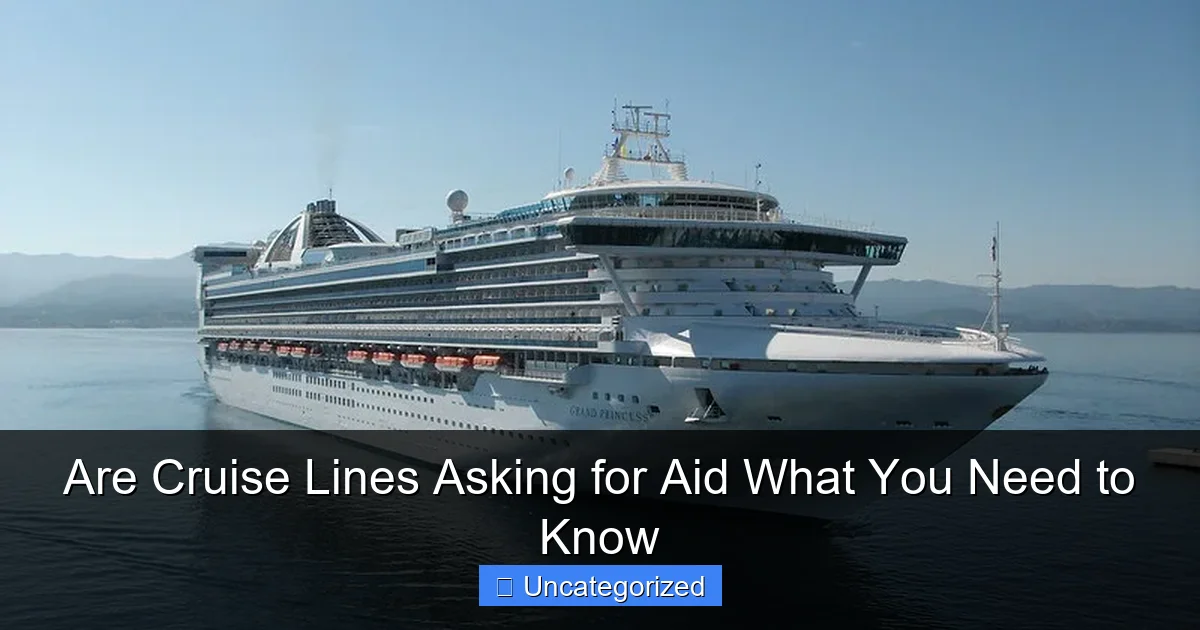
Featured image for are cruise lines asking for aid
Image source: borgenproject.org
Cruise lines are indeed seeking financial aid from governments and investors to survive ongoing industry challenges, including pandemic-related losses and rising operational costs. This support often comes with strict conditions, such as debt restructuring, job retention mandates, or sustainability commitments, shaping the future of cruising and passenger experiences. Stay informed to understand how these requests may impact pricing, services, and travel safety.
Key Takeaways
- Cruise lines are seeking aid due to pandemic-related financial losses and operational halts.
- Government support is limited; most aid comes via loans, not direct grants.
- Refund policies vary; always check terms before canceling or rebooking.
- Health protocols are costly—aid helps cover new sanitation and safety measures.
- Future bookings fund recovery; deposits keep cash flow steady amid uncertainty.
- Consumer patience pays: flexibility often leads to better deals and credits.
📑 Table of Contents
- Are Cruise Lines Asking for Aid? What You Need to Know
- Why Are Cruise Lines Seeking Financial Aid?
- Types of Aid Cruise Lines Are Requesting
- Impact on Passengers: What Travelers Should Know
- Government and Industry Response: A Global Perspective
- Long-Term Outlook: Will Cruise Lines Keep Asking for Aid?
- Data Table: Cruise Line Financial Aid Overview (2020–2024)
- Conclusion: Navigating the New Era of Cruise Travel
Are Cruise Lines Asking for Aid? What You Need to Know
The cruise industry, a once-thriving sector synonymous with luxury, relaxation, and global exploration, has faced unprecedented challenges in recent years. From global pandemics to economic downturns, climate-related disruptions, and geopolitical instability, cruise lines have been forced to navigate turbulent waters. As a result, a growing number of cruise operators are turning to governments, investors, and even passengers for financial support. But what exactly does this mean for travelers, investors, and the future of cruising? Are cruise lines asking for aid, and if so, how are they doing it—and what are the implications?
This comprehensive guide dives deep into the world of cruise line financial struggles, rescue packages, and the ripple effects on consumers and the broader travel industry. Whether you’re a frequent cruiser, a first-time traveler, or an investor keeping an eye on market trends, understanding the financial health of major cruise operators is essential. From government bailouts to private equity deals, restructuring plans, and consumer compensation, we’ll explore the full spectrum of aid requests, the motivations behind them, and what you need to know before booking your next voyage.
Why Are Cruise Lines Seeking Financial Aid?
The cruise industry operates on a massive scale, with multi-billion-dollar investments in ships, ports, and global logistics. However, this scale also makes it highly vulnerable to systemic shocks. When disruptions occur—be it a pandemic, a natural disaster, or a sudden drop in consumer confidence—the financial strain on cruise lines can be catastrophic. Let’s break down the primary reasons why cruise lines are increasingly seeking aid.

Visual guide about are cruise lines asking for aid
Image source: maritime-health.com
1. Pandemic-Induced Shutdowns and Revenue Loss
The most significant catalyst for aid requests in recent years was the COVID-19 pandemic. In early 2020, the U.S. Centers for Disease Control and Prevention (CDC) issued a No Sail Order, grounding most cruise operations worldwide. For months, ships sat idle in ports, with no revenue coming in while fixed costs—crew salaries, fuel, insurance, and maintenance—continued to pile up.
According to the Cruise Lines International Association (CLIA), the global cruise industry lost over $77 billion in economic output between March 2020 and March 2021. Passenger volume dropped by over 90%, with some lines reporting zero revenue for extended periods. This forced cruise companies to seek emergency funding to stay afloat.
Example: Royal Caribbean Group secured a $2.23 billion loan from a syndicate of banks in March 2020. Carnival Corporation raised over $6 billion through debt and equity offerings. These were not traditional profits but emergency lifelines to cover operational costs and avoid bankruptcy.
2. High Fixed Costs and Low Flexibility
Cruise ships are among the most expensive assets in the world. A single newbuild vessel can cost upwards of $1 billion. Unlike hotels or airlines, cruise ships have limited flexibility—they can’t be mothballed easily, and crew must be retained even during downtime. This creates a high fixed-cost structure.
When demand plummets, cruise lines can’t simply scale down operations. They must continue paying for port fees, insurance, crew salaries (even if docked), and fuel for generators. This inflexibility makes them especially vulnerable during crises, necessitating external aid to cover ongoing expenses.
3. Supply Chain and Operational Disruptions
Beyond pandemics, other disruptions—such as hurricanes, geopolitical tensions, or fuel price spikes—can force itinerary changes or cancellations. For instance, in 2022, Hurricane Ian caused multiple cruise lines to reroute ships, leading to lost revenue and increased fuel costs. Similarly, the Red Sea crisis in 2023–2024 forced rerouting of Asia-to-Europe itineraries, increasing fuel consumption by up to 30% on some routes.
These operational challenges often require short-term financial injections to cover unexpected expenses, such as fuel surcharges or crew overtime.
4. Environmental and Regulatory Pressures
As the world pushes for sustainability, cruise lines face mounting pressure to adopt cleaner technologies. Retrofitting ships with LNG (liquefied natural gas) engines, installing scrubbers, or developing hydrogen-powered vessels requires massive capital investment. While long-term benefits are clear, the upfront costs are staggering.
To meet new environmental regulations, companies like Norwegian Cruise Line Holdings have sought partnerships with green technology firms and applied for government grants to fund eco-friendly upgrades. In 2023, the European Union launched a €500 million fund to support sustainable maritime transport, which includes cruise ships.
Types of Aid Cruise Lines Are Requesting
Cruise lines don’t just ask for money—they seek various forms of aid tailored to their specific needs. These include government bailouts, private financing, debt restructuring, and even indirect consumer-based support. Let’s examine the most common types.
1. Government Bailouts and Stimulus Packages
During the pandemic, several cruise lines received indirect aid through national stimulus programs. For example:
- U.S. Paycheck Protection Program (PPP): While major cruise companies like Carnival and Royal Caribbean were initially excluded due to their foreign registrations, subsidiaries and U.S.-based operations (e.g., shore excursions, port services) accessed PPP funds. In 2020, over 500 cruise-related businesses in Florida received PPP loans totaling more than $300 million.
- UK’s Coronavirus Job Retention Scheme: P&O Cruises and Cunard, both part of Carnival, furloughed thousands of UK-based crew and shore staff, with the government covering up to 80% of salaries.
- Norway’s Maritime Support Package: Hurtigruten, a Norwegian cruise operator, received over $200 million in state-backed loans to cover pandemic losses.
Note: Most aid was not direct cash to cruise lines but support for employees, suppliers, and related industries. This indirect aid helped prevent mass layoffs and supply chain collapse.
2. Private Financing and Equity Raises
To avoid relying solely on governments, cruise lines turned to private markets. This included issuing new shares, convertible bonds, and high-interest loans.
- Carnival Corporation: Raised $6.4 billion in 2020–2021 through a mix of equity, debt, and asset sales. This included $1.5 billion in convertible notes with a 5.75% coupon.
- Norwegian Cruise Line Holdings: Issued $1.6 billion in senior secured notes and $675 million in common stock. The company also sold its private island, Great Stirrup Cay, to raise cash.
- Royal Caribbean: Secured $3.3 billion in revolving credit facilities and issued $1.1 billion in unsecured notes.
These moves diluted existing shareholders but kept the companies solvent. However, they also increased long-term debt burdens, with Carnival’s net debt rising from $9.5 billion in 2019 to $24.3 billion by 2022.
3. Debt Restructuring and Refinancing
As debt piled up, cruise lines negotiated with creditors to extend maturities, lower interest rates, or convert debt to equity. This is known as debt restructuring.
Example: In 2021, Norwegian Cruise Line Holdings restructured $3.5 billion in debt, extending maturities by 2–3 years and reducing interest payments. In exchange, lenders received warrants (options to buy stock at a set price), giving them upside if the company recovers.
Restructuring is less about “asking for aid” and more about renegotiating terms—but it’s a form of financial relief that prevents bankruptcy.
4. Consumer-Based Aid: Refunds, Credits, and Incentives
While not direct financial aid, cruise lines have used consumer compensation as a strategic tool to retain customers and rebuild trust.
- Future Cruise Credits (FCCs): During the pandemic, most lines offered FCCs instead of cash refunds. These credits could be used for future bookings, often with added incentives (e.g., $100 onboard credit per stateroom).
- “Book Now, Cruise Later” Programs: Companies like Princess Cruises offered 110% value on FCCs if customers rebooked within a year.
- Free Upgrades and Bonuses: To fill ships post-pandemic, lines offered free balcony upgrades, waived gratuities, and onboard spending credits.
This strategy helped cruise lines maintain customer loyalty and cash flow, even when ships weren’t sailing.
Impact on Passengers: What Travelers Should Know
If cruise lines are seeking aid, how does that affect you as a traveler? The answer is both direct and indirect. While most aid doesn’t come directly from passengers, the financial health of cruise companies influences pricing, service quality, safety, and long-term value. Here’s what you need to know.
1. Pricing and Value: Are Cruises Cheaper?
Yes and no. In the short term, cruise lines have offered aggressive discounts to stimulate demand. For example:
- In 2022–2023, Royal Caribbean offered 50% off select sailings.
- Norwegian Cruise Line ran “Free at Sea” promotions, including free airfare and beverage packages.
- Carnival offered $25 per day cruise rates on Caribbean routes.
However, these are not sustainable. As demand returns, prices are rising. According to Cruise Market Watch, average cruise prices in 2024 are 15–20% higher than pre-pandemic levels, driven by increased fuel, labor, and insurance costs. The aid received during the crisis helped avoid even steeper hikes—but don’t expect long-term rock-bottom pricing.
2. Safety and Sanitation: Post-Aid Improvements
Financial aid has funded major upgrades to health and safety protocols. After the pandemic, cruise lines invested heavily in:
- Advanced air filtration systems (e.g., MERV-13 filters).
- Contactless check-in and digital health verification.
- Onboard medical centers with telehealth capabilities.
- Enhanced cleaning and disinfection procedures.
For example, Carnival invested over $100 million in health tech across its fleet. These improvements, funded by emergency aid and private investment, now benefit all passengers.
3. Service Quality and Crew Welfare
Aid has also helped retain skilled crew. During the pandemic, thousands of crew were stranded at sea for months. Aid packages ensured they were paid and eventually repatriated. Now, cruise lines are offering:
- Higher wages and better benefits.
- Mental health support programs.
- Improved living conditions on board.
Happy crew = better service. This is a direct benefit to passengers.
4. Risk of Cancellations and Itinerary Changes
Even with aid, financial instability can lead to operational issues. In 2023, several smaller cruise lines (e.g., Cruise & Maritime Voyages, Celestyal Cruises) collapsed, leaving passengers stranded. While major lines are more stable, itinerary changes are common due to fuel costs, weather, or port fees.
Tip: Always purchase travel insurance that covers cruise-specific risks, including trip interruption, missed port calls, and medical evacuation.
Government and Industry Response: A Global Perspective
The way governments and international bodies respond to cruise line aid requests varies widely by region. Let’s examine key markets and their approaches.
1. United States: Limited Direct Aid, Focus on Indirect Support
The U.S. government did not provide direct bailouts to cruise lines due to their foreign registrations (most are incorporated in Liberia, Panama, or the Bahamas). However, it supported the broader ecosystem:
- Port cities like Miami, Port Canaveral, and Seattle received millions in federal aid to offset lost cruise-related revenue.
- The CARES Act included grants for small businesses in the travel sector, including cruise excursion operators.
- The CDC worked with cruise lines to develop the Conditional Sailing Order, allowing phased restarts.
This indirect support helped keep the industry connected to the U.S. economy.
2. Europe: Targeted Grants and Green Initiatives
European governments have been more proactive. For example:
- Spain provided €200 million in loans to cruise ports and operators in 2020.
- Italy’s “Restart Cruise” program offered tax breaks and subsidies for ships sailing from Italian ports.
- The EU’s Innovation Fund is financing zero-emission cruise technology projects.
Europe’s focus is on sustainability and long-term resilience, not just crisis response.
3. Asia: State-Owned Support and Market Protection
In countries like China and Japan, state-owned enterprises or close government-business ties have enabled direct aid. For example:
- China’s CSSC (China State Shipbuilding Corporation) provided low-interest loans to domestic cruise operators.
- Japan’s Ministry of Land, Infrastructure, Transport and Tourism funded port upgrades to attract more cruise traffic.
However, Asia’s cruise market remains smaller than the U.S. or Europe, limiting the scale of aid requests.
4. International Bodies: CLIA and IMO
The Cruise Lines International Association (CLIA) has lobbied for industry-wide support, including:
- Standardized health protocols.
- Access to global insurance pools.
- Recognition of cruise ships as essential maritime infrastructure.
The International Maritime Organization (IMO) has also introduced guidelines for safe resumption of cruising, supported by technical aid to developing nations.
Long-Term Outlook: Will Cruise Lines Keep Asking for Aid?
The question isn’t just whether cruise lines are asking for aid now, but whether they’ll continue to do so in the future. The answer depends on several factors.
1. Financial Recovery and Profitability
As of 2024, major cruise lines are returning to profitability. Carnival reported a net income of $1.3 billion in Q1 2024, its first profitable quarter since 2019. Royal Caribbean’s revenue reached $14.2 billion in 2023, up 30% year-over-year.
This recovery reduces the need for emergency aid. However, high debt levels remain a concern. Carnival’s debt-to-equity ratio is still above 3:1, meaning it’s highly leveraged.
2. Climate Change and Sustainability Costs
Future aid requests may shift from crisis relief to green investment. The IMO’s 2030 and 2050 emissions targets require massive spending. Cruise lines may seek:
- Government grants for LNG or hydrogen retrofits.
- Carbon credit programs.
- Public-private partnerships for shore power infrastructure.
For example, in 2023, MSC Cruises partnered with the Port of Barcelona to install shore power connections, funded partly by EU grants.
3. Geopolitical and Economic Risks
Ongoing conflicts (e.g., Red Sea, Ukraine), inflation, and fluctuating fuel prices could trigger future aid requests. Cruise lines may lobby for:
- Insurance subsidies during crises.
- Port fee waivers in high-risk zones.
- Emergency fuel cost relief programs.
4. Consumer Confidence and Demand
If demand remains strong, aid needs will decrease. But if another pandemic or global event hits, the industry could face a repeat of 2020. Cruise lines are now building financial resilience through diversified funding sources and emergency cash reserves.
Data Table: Cruise Line Financial Aid Overview (2020–2024)
| Cruise Line | Total Aid Received (2020–2024) | Primary Sources | Debt Increase (2019–2024) | 2024 Profitability Status |
|---|---|---|---|---|
| Carnival Corporation | $6.4 billion | Private debt, equity, asset sales | $14.8 billion | Profitable (Q1 2024) |
| Royal Caribbean Group | $3.3 billion | Bank loans, bonds, credit facilities | $10.2 billion | Profitable (2023) |
| Norwegian Cruise Line Holdings | $2.3 billion | Equity, debt, asset sales | $7.1 billion | Break-even (Q1 2024) |
| MSC Cruises | $1.5 billion | Family investment, green grants | $4.0 billion | Profitable (2023) |
| Hurtigruten (Norway) | $220 million | State-backed loans | $180 million | Restructured (2023) |
Conclusion: Navigating the New Era of Cruise Travel
So, are cruise lines asking for aid? The answer is a resounding yes—but with important nuances. While major players like Carnival, Royal Caribbean, and Norwegian have secured billions in emergency funding, most aid has come from private markets, not taxpayer dollars. Government support has been indirect, focusing on jobs, ports, and sustainability rather than direct cash injections to corporate balance sheets.
For travelers, this means a more resilient, safer, and increasingly sustainable cruise experience. The aid has funded health upgrades, crew welfare, and green technologies that benefit everyone on board. However, it also means higher prices in the long run, as companies work to repay debt and invest in the future.
As the industry evolves, future aid requests are likely to shift from crisis relief to strategic investment—especially in climate resilience, digital innovation, and global supply chain stability. For passengers, the key takeaway is to stay informed, book with reputable lines, purchase comprehensive insurance, and understand that the era of ultra-cheap cruises may be behind us.
The cruise industry is not just surviving—it’s adapting. And whether through private funding, government grants, or consumer loyalty, the support it receives today will shape the vacations of tomorrow. As you plan your next cruise, remember: behind every smooth sailing is a complex web of financial decisions, global cooperation, and a shared commitment to keeping the seas open for adventure.
Frequently Asked Questions
Are cruise lines asking for aid due to financial struggles?
Yes, some cruise lines have sought aid during economic downturns, such as the pandemic, to cover operational losses and maintain liquidity. Government loans, private funding, and restructuring efforts have been common forms of assistance.
Why are cruise lines asking for aid instead of using their reserves?
Cruise lines often operate with high fixed costs, including fuel, maintenance, and payroll, which deplete reserves quickly during prolonged disruptions. Aid helps them survive unexpected crises without massive layoffs or fleet reductions.
What types of aid are cruise lines asking for?
Cruise lines have requested direct financial aid, tax relief, low-interest loans, and relaxed regulations to stay afloat. Some governments have also offered wage subsidies to retain employees during slowdowns.
Has the public criticized cruise lines for asking for aid?
Yes, some argue that cruise lines should rely on their profits rather than public funds, especially given their history of environmental and labor controversies. However, supporters claim aid prevents broader economic harm to tourism-dependent regions.
How does asking for aid impact cruise line reputations?
Seeking aid can create mixed perceptions—some view it as a necessary survival strategy, while others see it as corporate dependency. Transparency about how funds are used can help mitigate reputational damage.
Are smaller cruise lines more likely to ask for aid than major companies?
Smaller cruise lines often lack the financial buffers of industry giants, making them more vulnerable during crises. As a result, they’re more likely to request aid or seek mergers to stay operational.