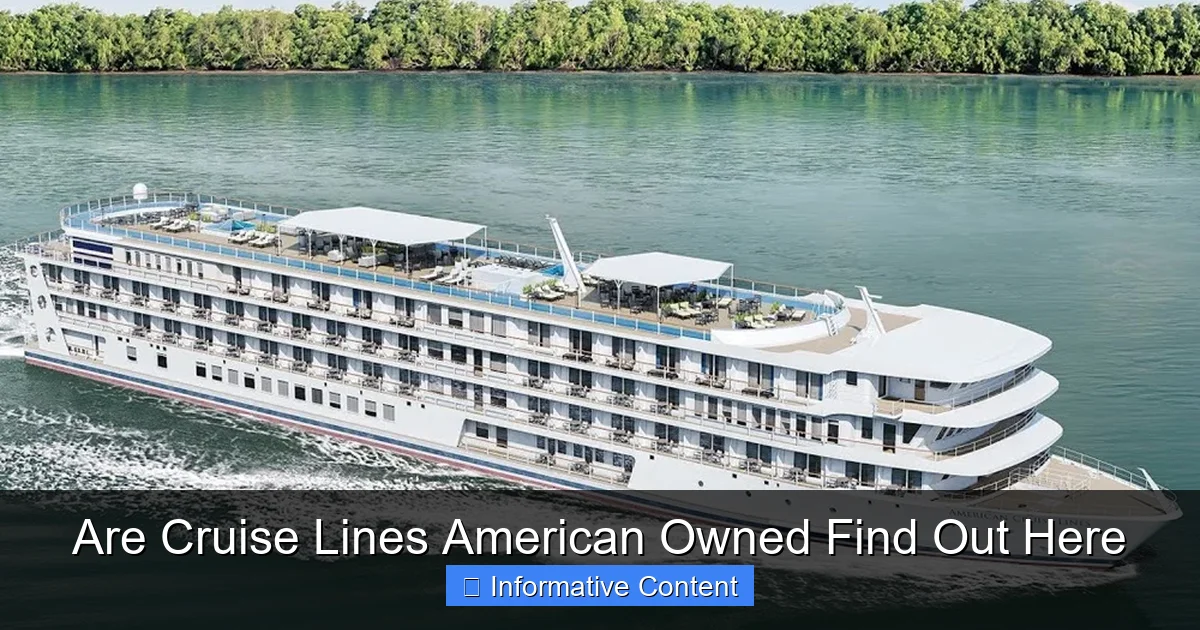
Featured image for are cruise lines american owned
Image source: cruisemapper.com
Most major cruise lines are not American-owned, despite operating in the U.S. market and employing thousands of Americans. Companies like Carnival, Royal Caribbean, and Norwegian are incorporated in foreign countries—such as Panama, Liberia, and Bermuda—for tax and regulatory advantages, though they maintain significant U.S. operations and customer bases. This global structure means your cruise vacation may not be as “American” as it seems, even when sailing from Miami or Los Angeles.
Key Takeaways
- Most major cruise lines are not American-owned: They operate under foreign flags for tax and regulatory benefits.
- Carnival Corporation and Royal Caribbean are global: Both have multinational ownership despite U.S. headquarters.
- Norwegian Cruise Line is Bermuda-based: Its parent company is incorporated outside the U.S. for financial advantages.
- American brands often use foreign ships: Vessels are registered in countries like Panama or the Bahamas.
- Patriotism doesn’t equal ownership: U.S.-based marketing doesn’t mean American control or registration.
📑 Table of Contents
- The Big Question: Are Cruise Lines American Owned?
- Understanding Cruise Line Ownership: A Global Industry
- Major Cruise Lines and Their Ownership: The Breakdown
- Why Do Cruise Lines Operate This Way?
- What This Means for Travelers: Practical Insights
- Data Table: Ownership of Major Cruise Lines
- Conclusion: The Truth About Cruise Line Ownership
The Big Question: Are Cruise Lines American Owned?
Picture this: You’re sipping a piña colada on the deck of a massive cruise ship, watching the sun dip below the horizon. The ocean breeze brushes your face, and you think, “This is the life.” But have you ever wondered who actually owns the ship you’re on? Are cruise lines American owned? Or are they part of a global empire with roots in Europe, Asia, or elsewhere?
It’s a fair question. After all, when you book a cruise, you’re not just buying a vacation—you’re investing in a brand, a service, and an experience. And for many travelers, especially Americans, there’s a natural curiosity about the origins of these floating resorts. Are the people behind the scenes American? Do they answer to a boardroom in Miami or a corporate giant in Europe? In this post, we’ll dive deep into the ownership of major cruise lines, break down the facts, and help you understand who’s really steering the ship. Whether you’re a seasoned cruiser or a first-timer, this guide will answer your questions and maybe even surprise you.
Understanding Cruise Line Ownership: A Global Industry
Cruising isn’t just a vacation—it’s a massive, global industry. And like most big industries, it’s shaped by international business, mergers, and strategic partnerships. So, are cruise lines American owned? The short answer: some are, but many aren’t. Let’s unpack this.
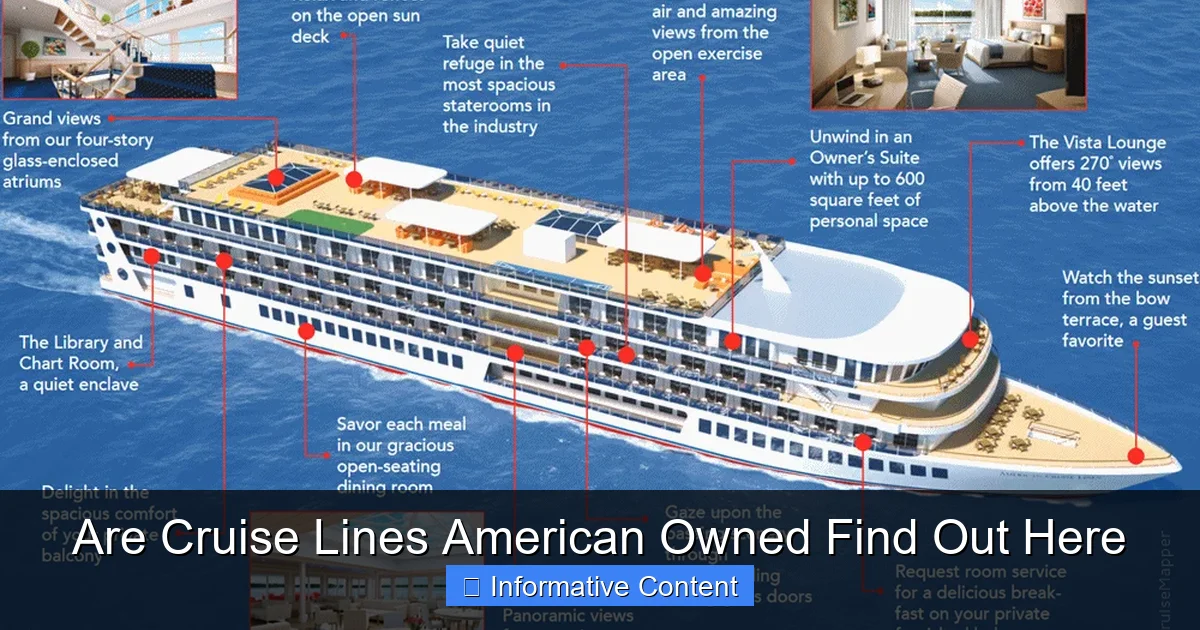
Visual guide about are cruise lines american owned
Image source: cruisemapper.com
Why Ownership Matters
When you book a cruise, you’re trusting a company to deliver safety, service, and value. Ownership can influence everything from onboard amenities to environmental policies. For example:
- An American-owned line might prioritize U.S. destinations and American-style dining.
- A foreign-owned line could have a more international crew, diverse menus, or even different labor laws.
- Corporate headquarters location can affect how responsive the company is to U.S. customer service issues.
So, ownership isn’t just about nationality—it’s about culture, priorities, and accountability.
The Global Nature of Cruise Operations
Cruise lines are unique because they operate in international waters, which means they’re subject to international regulations. This leads to a practice called “flagging”—registering ships in countries with favorable tax laws or labor regulations. For example:
- Many ships are flagged in the Bahamas, Panama, or Bermuda.
- This doesn’t mean the cruise line is owned by that country, but it affects how they’re taxed and regulated.
Fun fact: Over 70% of cruise ships worldwide are registered in just three countries: the Bahamas, Panama, and Liberia. This is a smart business move, but it can make ownership seem more complicated than it is.
Corporate Structures and Parent Companies
Here’s where things get interesting. Most major cruise brands don’t operate in isolation. They’re part of larger parent companies, often with international ties. For example:
- Royal Caribbean Group owns Royal Caribbean International, Celebrity Cruises, and Silversea.
- Carnival Corporation owns Carnival Cruise Line, Princess Cruises, Holland America, and others.
- Norwegian Cruise Line Holdings owns Norwegian Cruise Line, Oceania, and Regent Seven Seas.
These parent companies are publicly traded, meaning they’re owned by shareholders from all over the world. So even if a brand feels “American,” its ownership might be far more global.
Major Cruise Lines and Their Ownership: The Breakdown
Let’s get specific. Below, we’ll examine the ownership of the biggest names in cruising. This isn’t just about nationality—it’s about who’s calling the shots.
Royal Caribbean Group: American Roots, Global Reach
Brands: Royal Caribbean International, Celebrity Cruises, Silversea, TUI Cruises (50% ownership)
Headquarters: Miami, Florida (U.S.)
Ownership: Publicly traded on the NYSE (RCL)
Royal Caribbean Group is one of the most American-centric major cruise companies. It’s headquartered in Miami, and its largest market is the U.S. But here’s the twist: while it’s based in America, its shareholders are global. The company has investors from Europe, Asia, and beyond. So while it feels “American,” it’s truly a global enterprise.
Tip: If you’re booking a Royal Caribbean cruise, you’re supporting a U.S.-based company with American leadership, but the profits go to a worldwide pool of investors.
Carnival Corporation: The Largest, But Not Fully American
Brands: Carnival Cruise Line, Princess Cruises, Holland America, Costa Cruises, P&O Cruises, AIDA, Cunard, Seabourn
Headquarters: Miami, Florida (U.S.) and Southampton, UK (dual HQ)
Ownership: Publicly traded on the NYSE (CCL) and London Stock Exchange (CCL)
Carnival is the world’s largest cruise company, but it’s not fully American. In fact, it’s a dual-listed company, meaning it’s legally incorporated in both the U.S. and the UK. Carnival Cruise Line (the brand) is American-focused, but the parent company has deep European roots. Costa Cruises (Italy), AIDA (Germany), and P&O Cruises (UK) are all part of the Carnival family.
Example: If you book a Carnival Cruise Line vacation, you’re sailing with an American brand, but the corporate decisions are made by a transatlantic board.
Norwegian Cruise Line Holdings: American Brand, Global Parent
Brands: Norwegian Cruise Line, Oceania Cruises, Regent Seven Seas Cruises
Headquarters: Miami, Florida (U.S.)
Ownership: Publicly traded on the NYSE (NCLH)
Norwegian Cruise Line (NCL) is headquartered in Miami and heavily targets the U.S. market. But like the others, it’s publicly traded, so ownership is dispersed globally. The company also has strong ties to private equity—Apollo Global Management was a major investor until 2021.
Tip: NCL’s “Free at Sea” promotions and American-style dining make it feel homegrown, but its financial structure is international.
Smaller or Niche Lines: The Exceptions
Some cruise lines are more transparently American or foreign-owned:
- Viking Cruises: Founded by Norwegian billionaire Torstein Hagen, headquartered in Basel, Switzerland. Not American, despite U.S. marketing.
- Disney Cruise Line: Fully owned by The Walt Disney Company (U.S.). Truly American.
- MSC Cruises: Owned by the Italian MSC Group. Not American, despite U.S. expansion.
- Virgin Voyages: Owned by Virgin Group (UK), but operates primarily in the U.S. market.
These examples show that branding doesn’t always match ownership. A cruise line can feel “American” even if it’s not.
Why Do Cruise Lines Operate This Way?
You might be wondering: Why are so many cruise lines based in the U.S. but owned or operated globally? It’s not a coincidence. There are smart business reasons behind this structure.
Tax Optimization and Flagging
As mentioned earlier, cruise lines register their ships in countries with low corporate taxes or relaxed labor laws. This is called flagging. For example:
- Registering a ship in the Bahamas can reduce tax burdens.
- Using international crews (common in cruising) allows companies to pay lower wages than U.S. labor laws would require.
While this is legal, it’s a point of criticism. Some argue it undermines American jobs and worker protections. But from a business standpoint, it’s a cost-saving strategy.
Market Focus vs. Corporate Structure
Many cruise lines target the U.S. market because it’s the largest in the world. Over 12 million Americans take cruises each year. But targeting a market doesn’t require being American-owned. Think of it like this:
- McDonald’s sells burgers in India, but it’s still an American company.
- Similarly, a European-owned cruise line can dominate the U.S. market without being American.
Example: Costa Cruises (owned by Carnival) is Italian, but it sails from U.S. ports and markets heavily to American travelers.
Public Trading and Global Investment
Most major cruise companies are publicly traded, meaning anyone can buy shares. This dilutes ownership across nationalities. For instance:
- Royal Caribbean’s largest institutional investors include U.S. firms like Vanguard, but also European ones like BlackRock.
- Carnival’s dual listing means British and American investors both own significant stakes.
So, even if a cruise line is headquartered in Miami, its financial health depends on global markets.
What This Means for Travelers: Practical Insights
Now that we’ve covered the ownership landscape, let’s talk about what it means for you as a traveler. Ownership might not affect your onboard experience directly, but it can influence several factors.
Customer Service and Communication
American-owned or American-focused lines often have:
- U.S.-based customer service teams.
- Better understanding of American preferences (e.g., tipping, dining, entertainment).
- Faster response times for U.S. customers.
For example, if you’re on a Carnival Cruise Line ship and have an issue, you’re more likely to get a U.S. representative than if you’re on a Costa Cruises ship.
Onboard Culture and Amenities
Ownership can shape the onboard experience:
- American-owned lines: More American-style food, English-speaking crew, familiar entertainment (e.g., Broadway shows).
- Foreign-owned lines: More international cuisine, multilingual staff, cultural performances.
Tip: If you love American comforts, Carnival, Royal Caribbean, or NCL might feel more like home. If you want a more global vibe, try MSC or Costa.
Environmental and Labor Practices
Some travelers care about sustainability and worker treatment. Ownership can influence this:
- Lines with strong U.S. ties may adopt stricter environmental policies (e.g., Royal Caribbean’s sustainability goals).
- Lines using international crews might face criticism for labor practices, though most follow industry standards.
Example: Disney Cruise Line is known for its high standards in both safety and worker treatment, partly because of its American corporate culture.
Booking and Loyalty Programs
American-owned lines often have better integration with U.S. booking platforms and loyalty programs. For instance:
- Carnival’s loyalty program is tailored to American travelers.
- Royal Caribbean’s website is optimized for U.S. customers, with U.S.-based promotions.
But foreign-owned lines are catching up. MSC Cruises, for example, now has a robust U.S. marketing and booking system.
Data Table: Ownership of Major Cruise Lines
| Brand | Parent Company | Headquarters | Ownership Type | U.S. Focus? |
|---|---|---|---|---|
| Royal Caribbean International | Royal Caribbean Group | Miami, FL (U.S.) | Public (NYSE: RCL) | Yes |
| Carnival Cruise Line | Carnival Corporation | Miami, FL / Southampton, UK | Public (NYSE: CCL, LSE: CCL) | Yes |
| Norwegian Cruise Line | Norwegian Cruise Line Holdings | Miami, FL (U.S.) | Public (NYSE: NCLH) | Yes |
| Disney Cruise Line | The Walt Disney Company | Miami, FL (U.S.) | Private (Disney-owned) | Yes |
| MSC Cruises | MSC Group | Geneva, Switzerland | Private (family-owned) | No (but U.S. expansion) |
| Costa Cruises | Carnival Corporation | Genoa, Italy | Public (via Carnival) | No |
| Viking Cruises | Viking Holdings Ltd. | Basel, Switzerland | Private | No (but U.S. marketing) |
Conclusion: The Truth About Cruise Line Ownership
So, are cruise lines American owned? The answer is nuanced. While many major brands are headquartered in the U.S. and target American travelers, their ownership is often global. Public trading, international parent companies, and strategic flagging mean that even “American” cruise lines are part of a worldwide network.
For you, the traveler, this doesn’t have to be a dealbreaker. Ownership might influence customer service, onboard culture, or environmental practices, but it doesn’t define the quality of your vacation. What matters most is whether the cruise line delivers on your expectations—great service, amazing destinations, and unforgettable memories.
Here’s your takeaway: If you want a cruise that feels distinctly American, stick with brands like Carnival Cruise Line, Royal Caribbean, or Disney Cruise Line. If you’re open to a more global experience, don’t hesitate to try MSC, Costa, or Viking. And remember—no matter who owns the ship, the ocean is always neutral. So pack your bags, grab your sunscreen, and enjoy the ride. After all, the best cruise is the one you’ll never forget.
Frequently Asked Questions
Are cruise lines American owned?
While several major cruise lines are headquartered in the U.S., most are not technically American-owned due to international registration and parent companies based abroad. For example, Carnival Corporation & plc (a British-American dual-listed company) and Norwegian Cruise Line Holdings are incorporated in foreign jurisdictions.
Why aren’t most cruise lines fully American owned?
Cruise lines often register ships under “flags of convenience” (like Panama or Bermuda) to reduce taxes and regulations, which affects ownership classification. Even if a company has U.S. headquarters, its legal structure and stock ownership may span multiple countries.
Which major cruise lines have American ties?
Royal Caribbean Group and Norwegian Cruise Line Holdings are incorporated in the U.S. and have significant American operations, though their parent companies include global investors. Disney Cruise Line is a notable exception—fully owned by The Walt Disney Company.
Does American ownership matter for cruise passengers?
Not directly—ship registration impacts labor laws and safety standards more than passenger experience. However, U.S.-based customer service teams and marketing often cater to American travelers, regardless of legal ownership.
Are any cruise lines 100% American owned?
True 100% American-owned cruise lines are rare. Smaller operators like American Cruise Lines (ACL) focus on U.S. river and coastal voyages with full domestic ownership, but major global brands are typically multinational corporations.
How do I find out if a cruise line is American owned?
Check the company’s “About Us” section or SEC filings for ownership details. Look for terms like “incorporated in [country]” or “dual-listed” to understand the legal structure. The are cruise lines American owned debate often hinges on these technicalities.