Featured image for are cruise lines american companies
Image source: ik.imgkit.net
Most major cruise lines are not American companies, despite popular belief—brands like Carnival, Royal Caribbean, and Norwegian are incorporated in countries such as Panama, Liberia, and Bermuda to benefit from favorable maritime laws and tax structures. While they are headquartered in the U.S. and cater heavily to American travelers, their foreign registrations allow them to operate with greater financial flexibility and fewer regulatory constraints.
Key Takeaways
- Most cruise lines are foreign-owned: Despite U.S. operations, parent companies are based abroad.
- Cruise ships fly foreign flags: Legal registration avoids U.S. taxes and labor laws.
- U.S. passengers dominate bookings: Marketing targets Americans, but ownership isn’t American.
- Economic impact is global: Profits often flow overseas, not to U.S. shareholders.
- Regulations favor foreign flags: Cabotage laws push lines to register internationally.
📑 Table of Contents
- Are Cruise Lines American Companies? Find Out the Truth Here
- 1. The Big Picture: Who Owns the Major Cruise Lines?
- 2. Flag of Registry: Why Your Cruise Ship Isn’t Flying the Stars and Stripes
- 3. Crew and Labor: The Global Workforce Behind the Scenes
- 4. Taxes, Regulations, and the Business of Cruising
- 5. What Makes a Cruise Line “American”? Defining Nationality in a Global Industry
- 6. The Bottom Line: It’s Complicated
Are Cruise Lines American Companies? Find Out the Truth Here
Imagine standing on the deck of a massive cruise ship, the sun warming your skin, the ocean breeze tousling your hair, and a piña colada in hand. It’s easy to picture this scene as a classic American vacation—maybe even one booked through a familiar name like Carnival, Royal Caribbean, or Norwegian Cruise Line. After all, these brands dominate the cruise industry, with flashy ads on TV, social media campaigns, and offices in major U.S. cities. But here’s a question that might surprise you: Are these cruise lines truly American companies?
The answer isn’t as straightforward as you might think. While many of the most popular cruise lines are headquartered in the United States and serve millions of American passengers every year, the reality is far more complex. The cruise industry is a global web of ownership, registration, operations, and labor that stretches across continents. In this post, we’ll peel back the layers to uncover the truth behind cruise line ownership, registration, and what “American” really means in this industry. Whether you’re a curious traveler, a business enthusiast, or just someone who’s ever wondered why your cruise ship flies a foreign flag, you’re in the right place.
1. The Big Picture: Who Owns the Major Cruise Lines?
Let’s start with the basics—who actually owns the cruise lines we know and love? At first glance, the answer seems obvious. Carnival Cruise Line, Royal Caribbean, Norwegian Cruise Line, and Disney Cruise Line all sound undeniably American. Their marketing is all in English, their customer service reps are often based in the U.S., and their ships sail out of ports like Miami, Fort Lauderdale, and Galveston. But ownership tells a different story.
Visual guide about are cruise lines american companies
Image source: ik.imgkit.net
Headquarters vs. Parent Companies
Most major cruise lines are subsidiaries of larger corporate entities, and while their operational headquarters may be in the U.S., their ultimate parent companies often have international roots or are incorporated abroad for strategic reasons.
- Carnival Corporation & plc: This is the world’s largest cruise company, but it’s not just an American entity. Carnival operates under a dual-listed structure—Carnival Corporation (based in Miami, FL) and Carnival plc (based in Southampton, UK). Together, they own brands like Carnival Cruise Line, Princess Cruises, Holland America Line, and Costa Cruises. While Carnival Cruise Line is marketed as an American brand, the parent company is technically a dual U.S.-UK corporation.
- Royal Caribbean Group: Headquartered in Miami, this company owns Royal Caribbean International, Celebrity Cruises, and Silversea Cruises. It’s incorporated in the U.S. and publicly traded on the NYSE, making it one of the most “American” cruise companies in terms of ownership and governance.
- Norwegian Cruise Line Holdings Ltd.: Based in Miami, this company owns Norwegian Cruise Line, Oceania Cruises, and Regent Seven Seas Cruises. It’s incorporated in Bermuda—yes, that tiny island in the Atlantic—for tax and legal reasons. So while the brand feels American, the legal entity is not.
- Disney Cruise Line: A true American company. Fully owned by The Walt Disney Company, headquartered in Burbank, California, and incorporated in the U.S. This is the exception that proves the rule.
Why Does Incorporation Matter?
You might wonder: Does it really matter where a company is incorporated? In the cruise industry, it absolutely does. Incorporation determines tax obligations, regulatory oversight, and labor laws. Many cruise companies choose to incorporate in countries like Bermuda, the Cayman Islands, or Panama because of favorable tax laws and less stringent labor regulations. It’s not about avoiding responsibility—it’s about operating in a highly competitive, capital-intensive industry where every dollar counts.
For example, Norwegian Cruise Line Holdings pays minimal corporate taxes in Bermuda, which allows them to reinvest more into shipbuilding, marketing, and fleet expansion. But this also means they’re not technically an “American” company in the legal sense, even if their ships fly American flags (more on that later).
2. Flag of Registry: Why Your Cruise Ship Isn’t Flying the Stars and Stripes
Here’s a fun fact: very few cruise ships fly the U.S. flag. If you’ve ever looked up while boarding a ship, you might have noticed the flag fluttering above the stern—and it’s probably not the American flag. Instead, you’ll likely see the flags of countries like the Bahamas, Malta, Panama, or Liberia. Why?
What Is a Flag of Registry?
The flag a ship flies is known as its flag of registry. It determines which country’s laws govern the ship, including safety standards, labor laws, environmental regulations, and tax obligations. In maritime law, a ship is considered a “citizen” of the country whose flag it flies.
For cruise ships, the flag of registry is rarely the same as the country where the parent company is based. This is because of a concept called flagging out—registering a ship in a foreign country to take advantage of lower costs and looser regulations.
Why Cruise Lines Choose “Open Registries”
Many cruise ships are registered in countries known as open registries. These are nations that allow foreign-owned ships to fly their flag, often in exchange for a registration fee. The most popular open registries for cruise ships include:
- The Bahamas: Over 50% of all cruise ships are registered here. Carnival, Royal Caribbean, and Norwegian all have ships flagged in the Bahamas. It’s close to major U.S. ports, has a stable government, and offers favorable tax treatment.
- Malta: A member of the European Union, Malta offers strong maritime oversight while still being attractive for registration. Many luxury and European-focused cruise lines use the Maltese flag.
- Panama: Another popular choice, Panama has a long history as a flag state and offers low registration fees and minimal corporate taxes.
- Liberia: One of the world’s largest registries, Liberia offers competitive fees and a well-established maritime administration.
The U.S. Flag Exception: Why It’s Rare
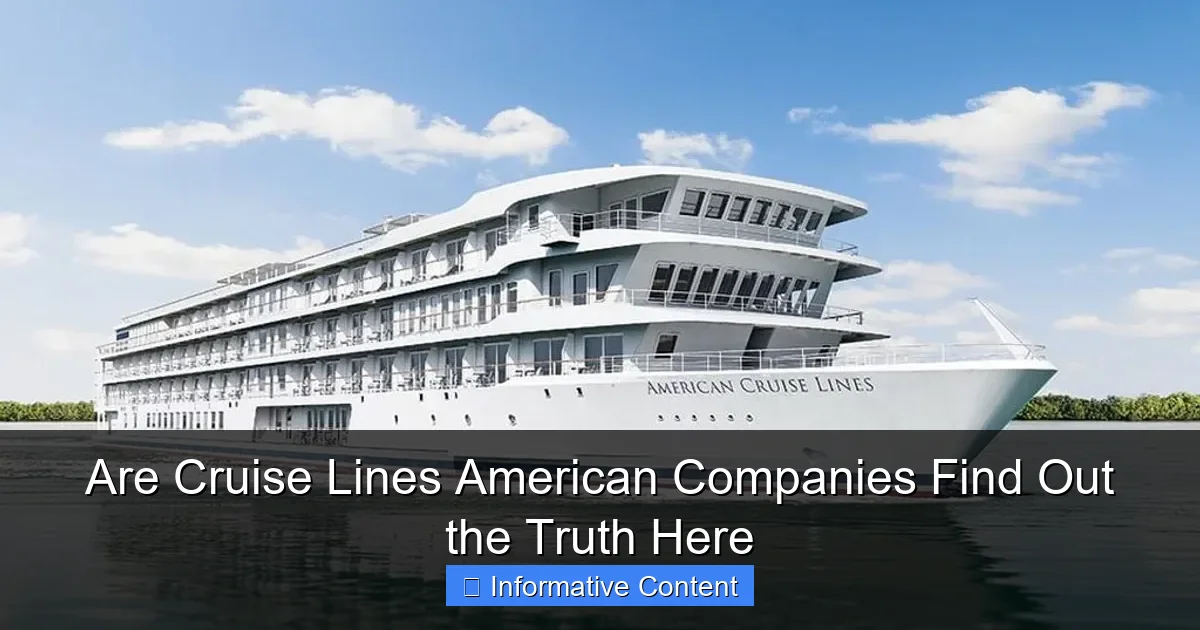
There are only a handful of cruise ships that fly the U.S. flag—mostly small vessels like American Cruise Lines and UnCruise Adventures, which operate river and coastal tours in Alaska, the Pacific Northwest, and the East Coast. Why so few?
- The Jones Act: This 1920 law requires that ships carrying passengers between U.S. ports must be U.S.-built, U.S.-owned, and U.S.-crewed. Building a cruise ship in the U.S. is extremely expensive—often 2-3 times more than in Asian or European shipyards. As a result, only a few niche operators comply.
- Labor Costs: U.S. flag ships must employ U.S. citizens or permanent residents, which increases crew expenses significantly. Most cruise lines rely on international crews (often from the Philippines, Indonesia, and Eastern Europe) to keep labor costs manageable.
- Regulatory Burden: U.S.-flagged ships are subject to stricter safety, environmental, and labor regulations, which can slow operations and increase compliance costs.
So while a ship may be owned by an American company and sail from an American port, it’s still a “foreign” vessel in the eyes of maritime law—just like a Toyota made in the U.S. is still a Japanese car.
3. Crew and Labor: The Global Workforce Behind the Scenes
Now let’s talk about the people who make your cruise experience magical: the crew. From the bartender serving your mojito to the engineer keeping the engines running, cruise ships rely on a truly global workforce. And this is another reason why calling cruise lines “American companies” oversimplifies the reality.
Where Do Cruise Crew Members Come From?
While the top executives and corporate offices may be based in the U.S., the majority of cruise ship crew members are not American. According to industry reports, the average cruise ship has crew from over 40 different countries.
- Philippines: The largest source of cruise crew, especially in hospitality roles like housekeeping, dining, and entertainment. The Philippines has a strong maritime training system and a long history in the cruise industry.
- India: A major source of engineers, IT staff, and technical crew. Many Indian nationals are trained in specialized maritime academies.
- Eastern Europe (Romania, Ukraine, Bulgaria): Common in hospitality, entertainment, and administrative roles.
- Latin America (Mexico, Colombia, Peru): Represented in food and beverage, spa, and retail.
- U.S. and Canada: Typically in higher-paid roles like officers, managers, and specialized staff (e.g., doctors, photographers).
Why International Crews?
There are several reasons cruise lines rely on international labor:
- Cost Efficiency: Paying international crew members is often more affordable than hiring U.S. citizens, especially for entry-level roles. Wages are still fair by global standards, but significantly lower than U.S. equivalents.
- Availability of Trained Personnel: Many countries have robust maritime training programs, producing skilled workers ready for sea duty.
- Flexibility: Crew members often sign contracts for 6-9 months, with no need for long-term visas or immigration. This makes staffing large fleets more manageable.
- Regulatory Simplicity: On foreign-flagged ships, labor laws are governed by the flag state, not the country of operation. This can reduce legal complexities.
It’s important to note that cruise lines are not exploiting labor. Most provide competitive wages, healthcare, training, and career advancement. But the fact remains: the people who serve you on a cruise are part of a global workforce, not an American one.
4. Taxes, Regulations, and the Business of Cruising
Now let’s dive into the financial side. How do cruise lines handle taxes, regulations, and business operations? This is where the “American” label gets even fuzzier.
Tax Optimization: A Global Strategy
Cruise companies are masters of tax optimization. Because they operate in international waters and are registered in multiple countries, they can structure their finances to minimize tax liability.
- Corporate Structure: As mentioned earlier, many cruise lines are incorporated in low-tax jurisdictions like Bermuda or the Cayman Islands. This allows them to reduce corporate income taxes on profits.
- Ship Registration: Registering ships in open registry countries often means lower tonnage taxes and fewer fees compared to the U.S. or EU.
- Passenger Revenue: Cruise lines earn most of their revenue from U.S. passengers, but the money flows through international subsidiaries. For example, when you book a Carnival cruise, your payment may go to a Bermuda-based entity, not the Miami office.
Regulatory Compliance: A Patchwork of Laws
Cruise ships must comply with a complex web of regulations:
- Flag State Regulations: The country where the ship is registered sets the baseline for safety, labor, and environmental standards.
- Port State Control: When a ship docks in a country (e.g., the U.S.), it must meet local laws, including health, immigration, and environmental rules.
- International Maritime Organization (IMO): Sets global standards for safety, emissions, and crew training.
- U.S. Laws (when applicable): For ships docking in the U.S., the Coast Guard enforces strict rules on sanitation, safety drills, and passenger rights.
For example, a Royal Caribbean ship flagged in the Bahamas must follow Bahamian labor laws for crew contracts, but when it docks in Miami, it must comply with U.S. Coast Guard inspections and CDC health standards. It’s a balancing act—and one that requires global coordination.
Environmental and Safety Standards
Modern cruise lines are under increasing pressure to reduce emissions, manage waste, and ensure passenger safety. Many have invested in LNG-powered ships, advanced wastewater treatment, and AI-driven safety systems. But again, these efforts are driven by international regulations (like IMO 2020) and port requirements, not just American laws.
5. What Makes a Cruise Line “American”? Defining Nationality in a Global Industry
So after all this, can we really say cruise lines are American? The answer depends on how you define “American.”
By Brand and Marketing: Yes
From a consumer perspective, most cruise lines feel American. They:
- Market heavily to U.S. audiences
- Use American English in all communications
- Offer U.S.-style dining and entertainment
- Employ U.S.-based customer service
- Dock at U.S. ports 80-90% of the time
For travelers, this is what matters most. You’re not booking a “Bermuda-incorporated cruise”—you’re booking a Carnival vacation.
By Ownership and Legal Structure: Not Always
Legally and financially, many cruise lines are multinational entities. They:
- Are incorporated abroad
- Pay minimal U.S. taxes
- Employ international crews
- Fly foreign flags
- Follow international regulations
In this sense, they’re more like global brands with American faces—similar to Apple (incorporated in Ireland) or Starbucks (headquartered in the U.S. but operating globally).
By Economic Impact: Partially
Cruise lines contribute significantly to the U.S. economy:
- They support over 400,000 U.S. jobs (in ports, travel agencies, and supply chains)
- They spend billions on U.S. goods and services
- They drive tourism to American destinations
But much of their profit is reinvested globally, not in the U.S. economy.
6. The Bottom Line: It’s Complicated
So, are cruise lines American companies? The truth is, it’s complicated. They’re American in spirit, branding, and customer focus—but global in ownership, operations, and structure. This hybrid model is what allows them to offer affordable, world-class vacations to millions of travelers.
Think of it like this: when you book a cruise, you’re not just choosing a company—you’re choosing a global experience. The ship may be registered in the Bahamas, the crew from 50 countries, and the parent company incorporated in Bermuda, but the dream? That’s pure American vacation magic.
| Cruise Line | Parent Company | Headquarters | Primary Flag of Registry | Incorporation |
|---|---|---|---|---|
| Carnival Cruise Line | Carnival Corporation & plc | Miami, FL | Bahamas | Dual U.S./UK |
| Royal Caribbean International | Royal Caribbean Group | Miami, FL | Bahamas | U.S. |
| Norwegian Cruise Line | Norwegian Cruise Line Holdings | Miami, FL | Bahamas | Bermuda |
| Disney Cruise Line | The Walt Disney Company | Orlando, FL | Bahamas | U.S. |
| Princess Cruises | Carnival Corporation & plc | Santa Clarita, CA | Bahamas | Dual U.S./UK |
Next time you set sail, take a moment to look up at the flag. It might not be red, white, and blue—but the adventure is still as American as apple pie. And now you know the full story behind the ship, the crew, and the company. That’s the truth about cruise lines: they’re global, they’re complex, and they’re here to make your vacation unforgettable.
Frequently Asked Questions
Are cruise lines American companies?
While some cruise lines have headquarters in the U.S., most are incorporated in foreign countries for tax and regulatory benefits. For example, Carnival Corporation is headquartered in Miami but incorporated in Panama.
Why aren’t major cruise lines considered American companies?
Most major cruise lines register their ships under “flags of convenience” (like the Bahamas or Bermuda) to reduce costs and avoid strict U.S. labor and environmental laws. This makes them legally foreign entities despite U.S. operations.
Is Royal Caribbean an American company?
Royal Caribbean Cruises Ltd. is headquartered in Miami and trades on the NYSE, but it’s incorporated in Liberia. So while it’s American-managed, it’s technically a foreign-flagged corporation.
Do American companies own cruise lines?
Yes, several U.S.-based corporations own major cruise lines, including Carnival Corporation (owns Princess, Holland America) and Norwegian Cruise Line Holdings. However, their legal incorporation and ships remain foreign-registered.
Why do cruise lines incorporate outside the U.S.?
Incorporating in countries like Panama or Bermuda helps cruise lines avoid U.S. corporate taxes, maritime regulations, and minimum wage laws. This structure is standard industry practice for cost efficiency.
Which cruise lines are truly American-owned and operated?
American Cruise Lines is one of the few fully U.S.-flagged and incorporated lines, operating river and coastal cruises. Most others, like Disney Cruise Line (U.S.-owned but Bahamian-flagged), use foreign registrations.